October 29th

On 29th October 1810, Hull Trinity House delivered the first Spurn lifeboat, arriving at the Point from South Shields towed by the brig Thomas. (and see 15.11)

On 29th October 1889, Daniel Patten, aged 25, died of enteric fever at the Colonial Hospital, Gibraltar; the former pupil of Hull Trinity House School was 2nd officer of the SS Marengo.

On 29th October 1829, Rawcliffe merchant and eccentric Jemmy Hirst, died aged 91.  He travelled in a wicker carriage, driven by sails or by his pet bull, Jupiter. Created a flying machine and other contraptions. Wore a waistcoat of drakes’ feathers, a lambskin hat 3 yards in circumference, harlequin breeches and a red coat with blue sleeves to the races. Went hunting riding his pet bull and used pigs as pointers.

Jemmy Hirst

October 28th


charterhouse.JPGOn 28th October 1451, the Mayor and town of Hull and the Prior and Convent of the Charterhouse reached agreement on 8 areas of dispute between them, chiefly relating to ownership of land and streets between the town walls and the Charterhouse, including the Trippett and the northern part of Pole Street, the rent due for them, and garden fences of the Charterhouse encroaching on the public highway.

On 28th October 1510, William Sedyngton of Flambrough claimed sanctuary at the church of St John, Beverley, for debt.

On 28th October 1880, during a storm, the Saffron, Jabez, and Earl of Derby separately crashed into the piers at Withernsea and Hornsea, 2 at Withernsea and 1 at Hornsea; both piers were substantially damaged. The Hornsea pier had only opened 5 months before, and was completely demolished in 1897. The Withernsea pier had been open 2 years, and was to have several more ships crash into it before being demolished, apart from the 2 remaining towers.

On 28th October 1910, the Aldbrough Rocket Brigade rescued the crew of the trawler Castor of Grimsby, which ran aground on Aldbrough beach, whilst the Hornsea Lifeboat crew took an hour against high winds to row to the site. Later the Secretary of the Hornsea branch of the RNLI said that Hornsea did not have strong men like they had in Bridlington and it was the worst place on the coast to get a lifeboat.

October 24th

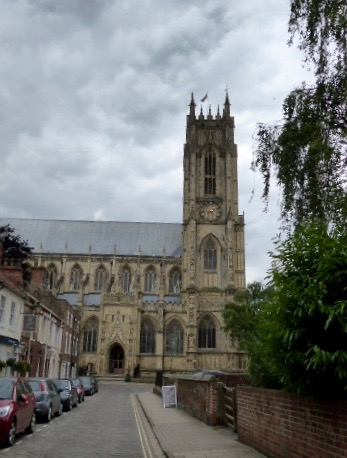
Beverley Minster


On 24th October 1530, at a Coroner’s inquest in Hutton Cranswick over the body of William Aunderson, the jurors reported that John Adayll, a labourer from Driffield, had on 23.10.1530 around 4p.m. assaulted him, with precogitated malice, with an iron fork, killing him instantly. Adayll immediately fled, with the townspeople of Hutton Cranswick pursuing him from town to town, but he escaped to ‘the privilege of Beverley’. Adayll does not appear in the sanctuary register for Beverley, though.

On 24th October 1850, John Branton, lifeboatman, drowned when the lifeboat overturned during the rescue of the brig Cumberland in the Humber near Kilnsea; John Welburn, the mate, was injured and died in 1852 from his injuries. The 9 members of the brig’s crew were rescued. An appeal raised £37 11s 6d for Branton’s widow and 6 children, and the RNLI added £5.

September 2nd

On 2nd September 1643, the Royalists under the Earl of Newcastle began the second siege of Hull. The Governor, Lord Ferdinand Fairfax, sold silver to the value of £400 4s to Hull Trinity House, in order to pay his soldiers. Trinity House sold the silver the following year at a slight profit.

On 2nd September 1861, the lease on Fishwicks’ Mill, butt Lane, Beverley, had expired, and the mill was demolished. The Council tried to repossess the land, but local people considered it to be common land, and 25-30 rioters destroyed the house and burnt it to the ground.

On 2nd September 1871, William (Billy) Ringrose was born in Ganton, where he became a carpenter, but was coached by a cricket professional employed by the Legard family at the Hall, and became a renowned professional cricketer, playing for 57 games for Yorkshire.

On 2nd September 1922, Hull Kingston Rovers played its first game at its new ground, Craven Park, losing 3-0 to Wakefield. The new grounds also had 14 tennis courts, and meeting rooms. The official opening did not take place until November. This was the club’s 4thground, the first 2 being in West Hull.

On 2nd September 1950, MV Dundalk Bay arrived in Hull from Mombasa, bringing 1,014 people displaced by WW2. After processing, they were dispersed to various camps throughout the UK. Many Poles, Latvians, Lithuanians and others unable to return to their homes came to find work and settle in England; some emigrated again to Canada.

On 2nd September 1967, the Flamborough lifeboat Friendly Forester rescued 6 people cut off by the tide.

Old Craven Park EAW207783

August 25th

On 25th August 1929, 4 boys were on the dockside on a Sunday evening when fire broke out. They helped to save equipment and rescued a cat from one of the trawlers. The fire destroyed the recently refurbished No 2 Market, 100 offices, 105 railway wagons, and set alight 7 trawlers, 3 of which were totally burnt out. Damage was variously valued at £250,000 and £750,000. The cause was probably an electrical fault.

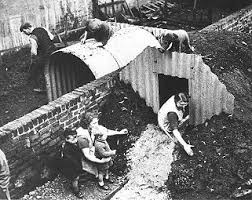
On 25th August 1940, 6 residents of Rustenburg Street, Hull, in their Anderson shelter, were the first fatalities due to Hull air raids. photo shows an Anderson shelter in construction.

On 25th August, 1956, A train of empty coaches hit the buffers at speed and went up onto the platform at Filey Holiday Camp Rail Station.  An enquiry found that the brakes were not properly coupled. Driver Goforth,  Fireman Bentley and Guard Wharam were slightly injured.

On 25th August 1972, the crew of the Flamborough lifeboat Friendly Forester rescued 2 people cut off by the tide at Flamborough.


Anderson shelter

August 14th

On 14th August 1715, John Burdas, bricklayer, aged 26, placed a “ffaine” (possibly a weather vane?) on top of the newly-repaired top of the steeple of St Patrick’s church. This required him to stand for some hours with one foot on the top stone and the other foot on the top of a ladder ‘to everyone’s wonder and admiration’.

On 14th August 1831,  William Stephenson of Beverley had his will registered at York Assizes, the main beneficiary being Dr Alexander Turnbull of Hull. The doctor sued witnesses to the will who alleged it had been improperly drawn up. He lost his case, and left Hull soon afterwards.

On 14th June 1934, coxswain George Leng of Flamborough lifeboat Forester rescued 4 men from the cliffs at Thornwick Bay; they were in danger of drowning and unable to climb higher, in great danger as the tide had not reached its height. He threw them a line and got them into the lifeboat.

On 14th August 1937, Hull Baseball Club won the National Baseball Assn Open Challenge Cup 5-1 against Romford Wasps. Baseball was played at Craven Park until the outbreak of WW2.

On 14th August 1943, a company of 200 ‘British Pioneers’ was drafted to Hull for work on the docks, due to an increase in the number of ships carrying cargoes of war materials.


Pat church

June 20th

Hull Corpn silver


On 20th June 1533, the Hull Mayor and town council sold to Sir Edmund Perkins the ornaments of the churches in the town, for £15. They also gave to Sir Frauncis Jobson, Treasurer of His Majesty’s jewellers, ’24oz of silver plate whereof 7oz were double gilt and the rest part gilt and plain white, handed over for His Majesty’s use’. photo shows some of today’s corporate treasures.

On 20th June 1579, Edward, son of Nicholas Symson of Thorpe, because of the outbreak of plague at Howden, had to be baptised at Eastrington rather than in the parish church.

On 20th June 1583, Hull agreed to 10s compensation to Richard Frere for the loss of hay and his cote during the time when plague was in the town.

On 20th June 1642, Maurice Corney, vicar of St Mary’s Hull and Capt William Thornton, comptroller of customs were discussed by Sir William Strickland, Mr Alured, Mr Peregrine Pelham and Mr John Hotham, as a danger to Parliament’s cause. Sir John Hotham ejected Corney from the town, and he left for York, despite being considered a hero for his work during the recent plague. Thornton was also turned out, and joined the King’s service.

On 20th June 1645, John Blenkarne, master of the Hull ship Anne Dorothy, was moored in Marstrand, Sweden. He accused crewmen Peacock and Dynnis of inciting mutiny when they came aboard drunk, threatened him, and after a night in custody refused to come aboard until threatened with imprisonment. When they returned to home port, the court of Trinity House fined them and jailed them for 24 hours.

On 20th June 1761, Beverley widow Elizabeth Courtney, of Walkergate, paid the bellman to go round the town announcing a reward of 3 guineas to anyone with information about bricks thrown through her windows the previous night.

On 20th June 1810, Hull Trinity House reported raising £300 in 9 weeks towards establishing a lifeboat at Spurn.

On 20th June 1895, an auction was held in 2 fields in Bransholme Lane, Sutton, of ‘The Sweep of the Scythe’ of 25 acres of ‘rich meadow’, and also the ‘Eatage of the Fog’ up to the end of the year. This appears to have been dialect for the sale of hay cut for fodder for cattle.


June 13th

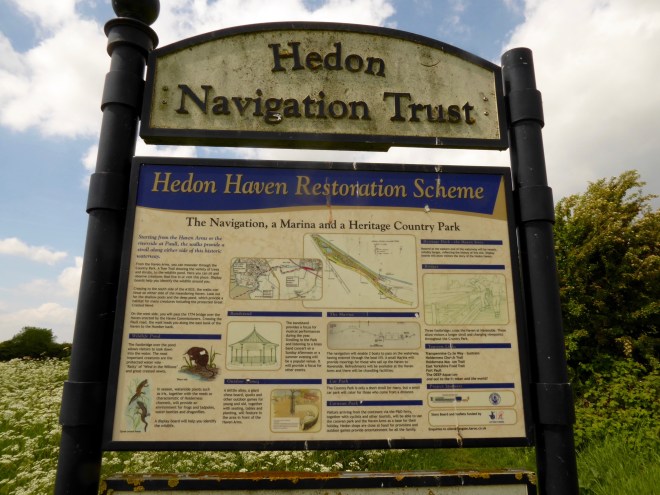
On 13th June 1774, the Hedon Haven Commissioners held their first meeting to create a canal between Hedon and the Humber, so that goods could reach Hedon at all times of the tide. The 44 Commissioners (including 3 knights, 4 clerics, and merchants such as Samuel Standidge, Benjamin Blaydes and Henry Maister) had powers of compulsory purchase of land and to prosecute anyone who obstructed navigation. The canal was opened in December 1775.

On 13th June 1893, William Maclagan, Archbishop of York, visited Spurn in a small boat, saw the lifeboat station, school and lighthouse, and agreed to provide weekly religious services at Spurn. He then walked 31/2 miles to Kilnsea before continuing to Patrington by carriage.

On 13th June 1943, Withernsea Central School teacher Miss Longdon r.eported in the school log that incendiary bombs fell on the school, burnt out Classroom 8 and caused ‘holes in the hall and on the platform’. Some classes had to be accommodated in the Methodist Chapel.

Hedon Haven

June 8th

On 8th June 1300, a year after Hull’s establishment, King Edward I gave a charter to allow the mayor and aldermen to pave the major streets, with a central gutter for ease of drainage. The work began in 1301.

On 8th June 1661, King Charles II wrote a letter to the Hull Mayor, prohibiting John Shaw from preaching in Holy Trinity, as he was too radical a Puritan. He retained his post as Master of the Charterhouse, and his sermons there continued to draw large crowds, but he resigned the following year.

On 8th June 1806, in a kitchen accident, in Hull, Mrs Lambert reported being struck on the back by a large hanging lump of sugar she had dislodged; she expected that if it had hit her on the head, she would have died.

On 8th June 1815, the Commissioner of Customs acquired the former Neptune Inn, Whitefriargate, as a Custom House. The Inn had opened in 1797, but had never made the expected profit of a first-class coaching inn. The building now houses Boots Chemists.

On 8th June 1821, the troopship Thomas of London was driven on to the Binks sands, in the Humber; the 26 troops, crew, 2 women and a child were rescued, and 1 woman drowned, despite brave attempts by the captain, Lieutenant Pritchard, to save her. The operation by Robert Richardson, master of the Spurn lifeboat, and crew, took 11 hours.

On 8th June 1829, Ira Aldridge, celebrated American actor of African heritage, performed in Hull for the first time, at the Theatre Royal, Humber Street; over a long and distinguished career he visited Hull several times, and performed at the Nag’s Head, Driffield in 1841.


Ira-Aldridge-Covent-Garden-1833-public-domain1

May 15th

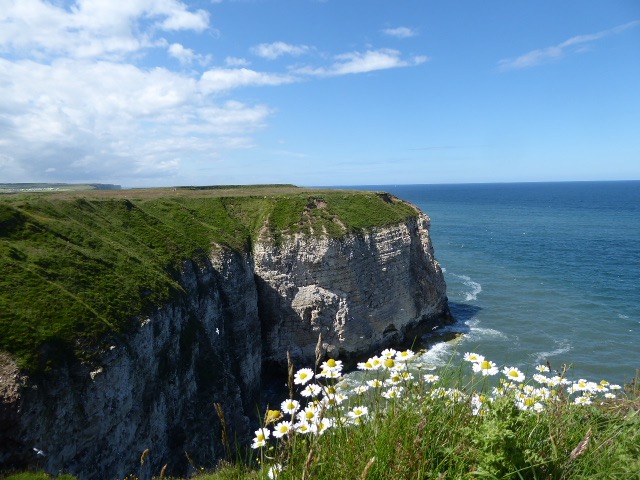
FlambroughOn 15th May 1498, Robert Barker of Wistow, near Selby claimed sanctuary at Beverley’s  church of St John, for the murder of John Towree at Wistow on 9th May.

On 15th May 1591, priest Robert Thorpe, and Thomas Watkinson were executed at York – Thorpe being hanged, drawn and quartered for treason, and Watkinson hanged as a felon for harbouring priests. Both were arrested at Menthorpe on Palm Sunday, when neighbours saw palms being taken into Watkinson’s house, by the local magistrate John Gates.

On 15th May 1613, Lady Grissell Clifford, Countess of Cumberland, died, aged 54 at Londesborough. She appears to have been generous to the local poor, and almost the entire female populations of Londesborough and Shipton attended her funeral. Memorial in Londesbrough church.

On 15th May 1618, Phillip Constable of Wassand Hall was killed in a duel at White Cross, Leven, by Edmund (or Edward) Percy. Constable buried in Goxhill. Difficult to verify any details, except that Philip Constable died in 1618, and that duels were considered a foreign introduction at the time.

On 15th May 1896, a temporary dam created during building work for the Fish Dock extension, Hull, burst, and the sudden rush of water smashed and sank the fishing smack Young Greg.

On 15th May 1951, motor mechanic Edward Slaughter, of the Flambrough lifeboat crew, was awarded an RNLI bronze medal and Mrs Porter’s Award (given annually for the bravest deed of the year by a lifeboat man). A boy was badly injured falling 150 feet from the Flambrough cliffs, and E.S. swam to him, got him on to a stretcher and guided the stretcher to the cliff top.