August 17th

On 17th August 1377, King Richard II issued a charter allowing the town of Hull to ensure the town walls and moats were kept in good repair, and to compel every householder to contribute to the cost of repair.

On 17th August 1427, Thomas Brygman, vicar of Foston, asked the Pope to relax the penances paid by those who did not visit church on holy days or give alms, because the church buildings were ruinous, and lacking a bell tower to call parishioners to prayer, and because the parishioners were too poor to repair the church. Their poverty was caused by ‘divers burdens’ imposed by King Henry to fight wars, and also because of the high mortality level in the area.

On 17th August 1863, Dr T.T. Pierson of Bridlington Quay apologised for signing a certificate at The Retreat asylum, Kilham, to declare a woman insane (whom he had known since they were at school) at the request of her husband; she turned out to be suffering only from the effects of alcohol.

On 17th August 1905, Hull merchant Frederick Harker was fined £2 plus costs for speeding at Harpham – travelling at 28 miles per hour in a 20mph zone. It was reported that the method used, of 3 police officers timing him over a measured distance, had not been used before.

On 17th August 1920, Sir Luke White, MP, died at Driffield, aged 75. Liberal MP for Buckrose since 1900, he died a pauper and under investigation for bankruptcy, having covered his political expenses by using money entrusted to him by the clients of his business as a solicitor.

On 17th August 1954, workers at King George Dock, Hull, began a strike against unsafe working conditions called the ‘Filling Strike’; within hours, 4,000 dockers were on strike and 60 ships lay idle. The strike ended after 11 days.


1954 dock strike

August 14th

On 14th August 1715, John Burdas, bricklayer, aged 26, placed a “ffaine” (possibly a weather vane?) on top of the newly-repaired top of the steeple of St Patrick’s church. This required him to stand for some hours with one foot on the top stone and the other foot on the top of a ladder ‘to everyone’s wonder and admiration’.

On 14th August 1831,  William Stephenson of Beverley had his will registered at York Assizes, the main beneficiary being Dr Alexander Turnbull of Hull. The doctor sued witnesses to the will who alleged it had been improperly drawn up. He lost his case, and left Hull soon afterwards.

On 14th June 1934, coxswain George Leng of Flamborough lifeboat Forester rescued 4 men from the cliffs at Thornwick Bay; they were in danger of drowning and unable to climb higher, in great danger as the tide had not reached its height. He threw them a line and got them into the lifeboat.

On 14th August 1937, Hull Baseball Club won the National Baseball Assn Open Challenge Cup 5-1 against Romford Wasps. Baseball was played at Craven Park until the outbreak of WW2.

On 14th August 1943, a company of 200 ‘British Pioneers’ was drafted to Hull for work on the docks, due to an increase in the number of ships carrying cargoes of war materials.


Pat church

August 12th

On 12th August 1349, the Meaux Abbot and 5 monks died of the Black Death; more were to die – only 10 of the 50 in the community survived. Afterwards, their serfs at Wawne went on strike, and the monks imprisoned them.

On 12th August 1536, North Ferriby Priory was dissolved (Prior and 8 monks, and 34 servants homeless and jobless); the first wave of Henry VIII closures followed an enquiry which found that the prior together with 2 of his canons had allegedly been guilty of fornication and 4 canons of abusing themselves.

On 12th August 1646, Robert Leedes of Molescroft swore an oath in support of Parliament. Having been a supporter of King Charles I, he was considered ‘delinquent’. As well as the oath, he was fined for lands and money worth £90.

On 12th August 1895,  Isaac Leggott, water bailiff, died instantly when a shell exploded at Alexandra Dock, Hull. It was thought to be an unexploded artillery shell, and Leggott had removed the fuse, prior to throwing it in the water. Henry Cook, dock gate man, was also seriously injured.

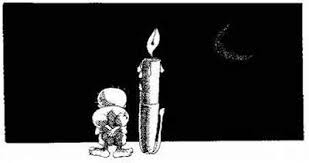
On 12th August 1987, Ismail Sowan, Hull College researcher, was arrested when police searched his flat in Westbourne Avenue in connection with the death of Palestinian cartoonist Naji al-Ali.  They found assault rifles, bomb-making equipment, explosive and grenades. Sowan, a Mossad agent, was arrested, imprisoned and deported.


naji al-ali

August 4th

On 4th August 1511, John Hessey, husbandman of Belby, nr Howden, claimed sanctuary at the church of St John, Beverley, for the murder of William Smyth of Didyngham (anyone know where this is?)

On 4th August 1652, Keyingham manor court fined 18 villagers for allowing their geese and pigs into the fields outside the stipulated times.

On 4th August 1795, Hull residents rioted against inflationary food prices and shortages. Much corn was being taken by the army, (Napoleonic Wars) in a year of poor weather. A few windows broken.

On 4th August 1834, John Venn, was born in Drypool, son of the vicar. Left Hull at age 8. Fellow of the Royal Society, famous mathematician, who introduced the Venn diagram. Commemorated in Hull University by the Venn Building. (d 4.4.1923) and by Drypool Bridge.

On 4th August 1851, G. Hought of Hutton Cranswick was killed by lightning, as he sheltered under a tree during a thunderstorm. He left a wife and 2 children.

On 4th August 1884, all 11 Walgate brothers of Aldbrough formed one cricket team in a match held at Rise Hall; the Walgates won the match by 3 wickets.

On 4th August 1969, HM Queen Elizabeth opened Queen Elizabeth Dock, the last major dock to be opened in Hull, accompanied by HRH Duke of Edinburgh and Princess Anne.


Drypool Bridge

July 30th

whalebone arch Pat.JPG

On 30th July  1526, Preston butcher John Erdy claimed sanctuary at the church of St John, Beverley, for felony and debt.

On 30th July 1643, the parish clerk of St Mary’s, Beverley, reported in the parish register that they buried 13 men killed on the King’s side in the Civil War.

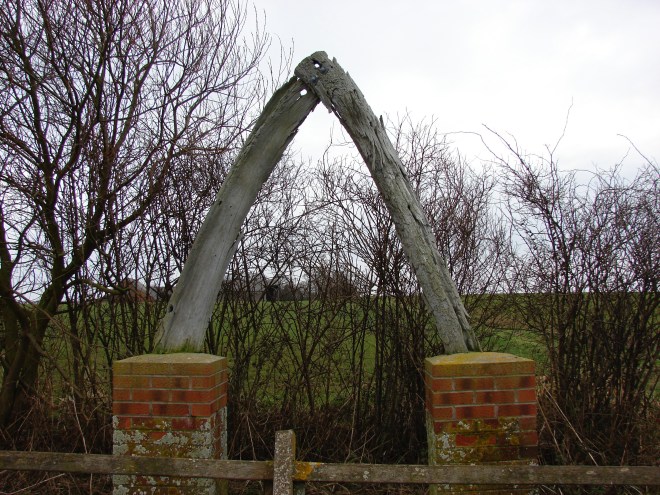
On 30th July 1782, the crew of Hull whaler Benjamin landed 135 butts of blubber and over 2 tons of whalebone, the product of 3 whales caught in the Davis Strait. (Rev George Lambert had shares in the ship). photo shows whalebone arch outside Patrington

On 30th July 1861, John Ellerthorpe, aged 55, rescued John Eaby, who had fallen into the Humber Dock Basin, Hull. This was Ellerthorpe’s 39thand last rescue. Named ‘The Hero of the Humber’, he was awarded with the Royal Humane Society’s Silver Medal.

On 30th July 1891, Mary Jane Langley, 18 years, of Westfield Farm, Long Lane (now Neat Marsh Road) Preston, was last seen alive when she walked to Marfleet and took the train to Hull to have her photo taken. Her body was found in a ditch near her home. Her throat had been cut. John Rennard was arrested and tried, but not convicted.


July 27th

On 27th July 1643, Hull widow Ann Stevenson, whose husband died at Beverley in Parliament’s service as a cannoneer, petitioned the town of Hull to pay her the 35 shillings wages due to him; the committee agreed, in view of her poverty, to let her have 20s.

On 27th July 1782, Rev George Lambert of Fish Street, Hull reported in his diary on a violent thunderstorm in the evening, and lightning killed a cow very near their house, and scorched the hedges.

On 27th July 1796, jockey George Heron was thrown by his horse at Hull racecourse, Newington, and killed.

On 27th July 1855, James McLoughlin, aged 13, asked Hull Magistrates Court for the protection of the court on account of his mother having beaten him severely with a stick and a fire poker because he would not go out stealing for her.

On 27th July 1996, HMS Rose visited Hull’s Albert Dock; this was an exact replica of a frigate built in Hull by the Blaydes yard in 1757 and sunk in Savannah, Georgia in 1779. The only difference from the original ship was that the sails were made from recycled plastic bottles.

HMS Rose replica

July 24th

On 24th July 1614, Ralph Hansby founded almshouses for 3 poor persons at Bishop Burton.

On 24th July 1622, Lawrence Taylor, rector of Londesborough,  died intestate, and the York Consistory (Ecclesiastical) Court gave custody of his 6 children, and a 7thchild born in October, to his brother William, to be supported until age 21. No information on the fate of his widow.

On 24th July 1894, John William Russell was shot dead on Albert Dock, Hull, by Arthur Kendall. Russell was trying to defend Crossland from Kendall. Kendall was convicted at York Assizes, his sentence commuted to penal servitude.

On 24th July 1912, a heavy cloudburst over Westwood brought flooding to Beverley town centre. Water was a foot deep on Walkergate.

On 24th July 1942, bus inspector Ernest Goddard, aged 50, and 14 others, including 5 children, were killed in an air raid on Withernsea; as well as 2 bombs, in Queen Street and the bowling green, the German Dornier bomber had used small arms fire on local people.

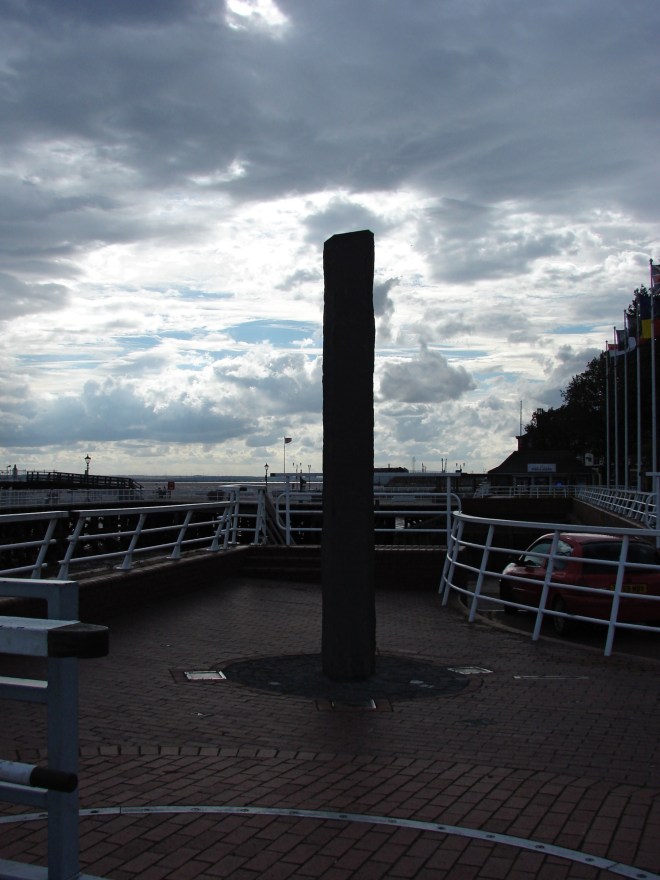
On 24th July 2011, 5 thieves stole the 300kg statue from Nelson Street, Hull; called Voyage, the statue was created by Steinunn Thorarinsdottir, as a symbol of the relationship between Hull and Iceland.  A replacement statue was unveiled 11.5.2012.

iceland statue plinth.JPGphoto shows the empty plinth.

July 23rd

On 23rd July 1525, carpenter John Algood of Wheldrake claimed sanctuary at the church of St John, Beverley, for debt.

On 23rd July 1856, Capt Bryan Stapleton became the first governor of the Yorkshire Catholic Reformatory School for Boys, at Holme on Spalding Moor.  The reformatory movement campaigned to keep children out of prisons, but the first Yorkshire school was Church of England only.

On 23rd July 1941, an air raid on Alexandra Dock, Hull, sank 3 lighters, killing 2 people and injuring 5, and damaged No 11 quay, 2 steamers and a diving boat.

On 23rd July 2012, the Royal Engineers carried out 15 controlled explosions on the beach at Mappleton, after a landslide (on Sat 21.7) revealed at least 1,000 rockets, grenades and bombs from WW2.

mappleton bomb

July 22nd

On 22nd July  1612 ( or possibly on 12.7) Hull-born navigator and explorer James Hall was employed by the Danish government to survey for minerals, and came upon a group of Greenland Inuit who recognised him from a previous voyage. He had been involved in kidnapping 4 people, who had never returned home. Hall was attacked and died that day of a spear wound in the side. William Baffin was master of the sister ship Patience on the same expedition. Hall was succeeded as master of the Heartsease by Andrew Barker, also of Hull.

On 22nd July 1643, Lord Ferdinando Fairfax was invited by the people of Hull to take up the post of Governor.

On 22nd July 1869, Albert Edward, Prince of Wales, later Edward VII, officially opened the new Albert Dock, Hull.

On 22nd July 1909, Sydney Buxton, Postmaster General, officially opened the new Post Office building in Lowgate, Hull. Despite precautions against action by suffragettes, Charlotte Marsh got close enough to speak to him, and was arrested. She was Yorkshire organiser for the Women’s Social & Political Union and had earlier been arrested at Riverside Quay.

On 22nd July 2004, Florence ‘Flo’ Bilton died aged 82. Goalkeeper, set up a women’s football team at Reckitt’s in 1963, and from  was influential in setting up the Women’s Football Association in 1969. Set up, trained and supported new women’s teams. Acted as membership secretary and chaperone for the national women’s team. Flo Bilton Trophy is contested by girls’ football teams in ER. (b c1921) photo shows 2017 cream plaque presentation in Hull Guildhall by (left) Karen Walker, 86 England caps.

flo bilton

July 16th

On 16th July 1796, 10 days after the introduction of the Dog Tax of 5s per dog per year, the Hull Advertiser reported a considerable number of rotting dog carcases, after owners killed their dogs and threw them in the street.

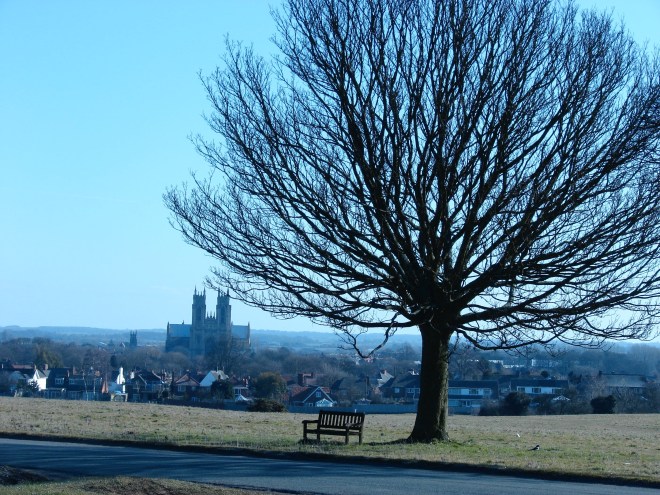
On 16th July 1802, Dorothy Wordsworth, sister of poet William, visited Beverley with friends, commenting on the beauty of the town and the minster.

On 16th July 1807, a Bastardy examination of Ann Linwood, single woman of Hedon
revealed that the father of her son, born on 28 Jun 1807 in Hull was gunsmith Owen Probin. Owen Probin was murdered 7 years later (the events are probably not related).

On 16th July 1885, Hull & Barnsley Railway and the Alexandra Dock officially opened.

On 16th July 1904, the Beverley Guardian reported a new phenomenon, ‘the hatless brigade’, when pedestriansof both sexes had been seen in Hornsea without any head covering whatsoever.minster beverley.JPG