August 17th

On 17th August 1377, King Richard II issued a charter allowing the town of Hull to ensure the town walls and moats were kept in good repair, and to compel every householder to contribute to the cost of repair.

On 17th August 1427, Thomas Brygman, vicar of Foston, asked the Pope to relax the penances paid by those who did not visit church on holy days or give alms, because the church buildings were ruinous, and lacking a bell tower to call parishioners to prayer, and because the parishioners were too poor to repair the church. Their poverty was caused by ‘divers burdens’ imposed by King Henry to fight wars, and also because of the high mortality level in the area.

On 17th August 1863, Dr T.T. Pierson of Bridlington Quay apologised for signing a certificate at The Retreat asylum, Kilham, to declare a woman insane (whom he had known since they were at school) at the request of her husband; she turned out to be suffering only from the effects of alcohol.

On 17th August 1905, Hull merchant Frederick Harker was fined £2 plus costs for speeding at Harpham – travelling at 28 miles per hour in a 20mph zone. It was reported that the method used, of 3 police officers timing him over a measured distance, had not been used before.

On 17th August 1920, Sir Luke White, MP, died at Driffield, aged 75. Liberal MP for Buckrose since 1900, he died a pauper and under investigation for bankruptcy, having covered his political expenses by using money entrusted to him by the clients of his business as a solicitor.

On 17th August 1954, workers at King George Dock, Hull, began a strike against unsafe working conditions called the ‘Filling Strike’; within hours, 4,000 dockers were on strike and 60 ships lay idle. The strike ended after 11 days.

 

1954 dock strike

August 12th

On 12th August 1349, the Meaux Abbot and 5 monks died of the Black Death; more were to die – only 10 of the 50 in the community survived. Afterwards, their serfs at Wawne went on strike, and the monks imprisoned them.

On 12th August 1536, North Ferriby Priory was dissolved (Prior and 8 monks, and 34 servants homeless and jobless); the first wave of Henry VIII closures followed an enquiry which found that the prior together with 2 of his canons had allegedly been guilty of fornication and 4 canons of abusing themselves.

On 12th August 1646, Robert Leedes of Molescroft swore an oath in support of Parliament. Having been a supporter of King Charles I, he was considered ‘delinquent’. As well as the oath, he was fined for lands and money worth £90.

On 12th August 1895,  Isaac Leggott, water bailiff, died instantly when a shell exploded at Alexandra Dock, Hull. It was thought to be an unexploded artillery shell, and Leggott had removed the fuse, prior to throwing it in the water. Henry Cook, dock gate man, was also seriously injured.

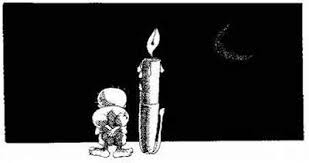
On 12th August 1987, Ismail Sowan, Hull College researcher, was arrested when police searched his flat in Westbourne Avenue in connection with the death of Palestinian cartoonist Naji al-Ali.  They found assault rifles, bomb-making equipment, explosive and grenades. Sowan, a Mossad agent, was arrested, imprisoned and deported.


naji al-ali

August 8th

On 8th August 1576, Sarah Houslay, aged 27, from Shipton(thorpe) was hanged with Edward de Satre at York Tyburn, outside Micklegate Bar, and their bodies buried near the River Foss. They were convicted of passing forged promissory notes at an inn in Leeds.

On 8th August 1586, John  Finglow or Fingley, aged 32, was executed by hanging, drawing and quartering at York for being a Catholic priest and reconciling English subjects to the Catholic church. Studied at Caius College, Cambridge, and was ordained at Reims in 1581. He was beatified in 1987 as a Catholic martyr. (baptised Barmby in the Marsh 1553)

On 8th August 1871,  William Colbeck was born in Myton Place, Hull. He took part in the first expedition to overwinter in the Antarctic, 1898-1900. Awarded Royal Geographic Society’s Back Award. Took part in the expedition to locate Captain Scott’s Discovery.  Cape Colbeck in the Ross Sea is named for him, and he is commemorated by a cream plaque in Hull. (Died 1930.)

On 8th August 1991, former Hull University student John McCarthy was released after 5 years as a hostage in  Beirut.


William_Colbeck_-_Southern_Cross_Expedition_1899.

August 4th

On 4th August 1511, John Hessey, husbandman of Belby, nr Howden, claimed sanctuary at the church of St John, Beverley, for the murder of William Smyth of Didyngham (anyone know where this is?)

On 4th August 1652, Keyingham manor court fined 18 villagers for allowing their geese and pigs into the fields outside the stipulated times.

On 4th August 1795, Hull residents rioted against inflationary food prices and shortages. Much corn was being taken by the army, (Napoleonic Wars) in a year of poor weather. A few windows broken.

On 4th August 1834, John Venn, was born in Drypool, son of the vicar. Left Hull at age 8. Fellow of the Royal Society, famous mathematician, who introduced the Venn diagram. Commemorated in Hull University by the Venn Building. (d 4.4.1923) and by Drypool Bridge.

On 4th August 1851, G. Hought of Hutton Cranswick was killed by lightning, as he sheltered under a tree during a thunderstorm. He left a wife and 2 children.

On 4th August 1884, all 11 Walgate brothers of Aldbrough formed one cricket team in a match held at Rise Hall; the Walgates won the match by 3 wickets.

On 4th August 1969, HM Queen Elizabeth opened Queen Elizabeth Dock, the last major dock to be opened in Hull, accompanied by HRH Duke of Edinburgh and Princess Anne.


Drypool Bridge

July 26th

On 26th July 1826, the Aire & Calder Navigation Company officially opened the new canal at Goole, locks for ships and barges, dock, and canal basin linking Goole to the west. A new town was built around the small hamlet of Goole (population in 1822: 450).

On 26th July 1845, Capt Dannatt and crew of Hull whaler Prince of Wales came across Sir John Franklin and his expedition to find the North West Passage, in Lancaster Sound, in the Arctic, and invited him and his officers on board. This was the last known sighting of the expedition.

On 26th July 1850, Hull Advertiser printed a report of the deaths by drowning during a riot of 4 Irish navvies (Patrick Langthon, John Dowling, Barney M’Jay and Thomas Twomey) working on the embankment of Sunk Island.

On 26th July 1986, 8 rail passengers and 1 person travelling in a van died when the van was struck by the 9.33 Bridlington to Hull train at Lockington level crossing, and the train was derailed. 51 people were injured, 10 of them seriously. There is a memorial to those who died in Driffield Memorial Garden.


lockington crash memorial

July 25th

On 25th July each year a traditional football match was held on St James Day, between Sutton and Wawne, starting at Foredyke bridge, boundary between the 2 villages, each village trying to get the ball home. Not known dates played or when abandoned.

On 25th July 1328, King Edward III is said to have closed down the Warter annual fair on St James Feast Day because of the number of murders that had been committed at the fair. There is a record that in 1300 certain manslaughters had been committed in the village by the canons’ men from Warter Priory. In 1328, King Edward III issued an order that it was an offence to go armed into any fair or market. Probably not aimed specifically at Warter.

On 25th July 1768, Joseph Hall was hanged at York Castle for coining at Hull. photo shows  medieval coins being made.

On 25th July 1873, William Dunwell, former Hull Trinity House School pupil, lost his life at sea by jumping overboard to save the life of a shipmate.

On 25th July 1911, Father Ottway, superintendant at the Yorkshire Catholic Reformatory at Market Weighton (actually in Holme on Spalding Moor) reported on rebellion from the boys, including threats to knife masters, which resulted in the attendance of 3 police officers and the thrashing of 6 or 7 boys.

coiner, Hanse Day


July 22nd

On 22nd July  1612 ( or possibly on 12.7) Hull-born navigator and explorer James Hall was employed by the Danish government to survey for minerals, and came upon a group of Greenland Inuit who recognised him from a previous voyage. He had been involved in kidnapping 4 people, who had never returned home. Hall was attacked and died that day of a spear wound in the side. William Baffin was master of the sister ship Patience on the same expedition. Hall was succeeded as master of the Heartsease by Andrew Barker, also of Hull.

On 22nd July 1643, Lord Ferdinando Fairfax was invited by the people of Hull to take up the post of Governor.

On 22nd July 1869, Albert Edward, Prince of Wales, later Edward VII, officially opened the new Albert Dock, Hull.

On 22nd July 1909, Sydney Buxton, Postmaster General, officially opened the new Post Office building in Lowgate, Hull. Despite precautions against action by suffragettes, Charlotte Marsh got close enough to speak to him, and was arrested. She was Yorkshire organiser for the Women’s Social & Political Union and had earlier been arrested at Riverside Quay.

On 22nd July 2004, Florence ‘Flo’ Bilton died aged 82. Goalkeeper, set up a women’s football team at Reckitt’s in 1963, and from  was influential in setting up the Women’s Football Association in 1969. Set up, trained and supported new women’s teams. Acted as membership secretary and chaperone for the national women’s team. Flo Bilton Trophy is contested by girls’ football teams in ER. (b c1921) photo shows 2017 cream plaque presentation in Hull Guildhall by (left) Karen Walker, 86 England caps.

flo bilton

July 20th

On 20th July 700 AD, St Osanne (or Osana or Osmanna) died aged 30 (at least, this is her saint’s day). Sister of Osred I, King of Northumbria (or daughter of Aldfrith), she was a nun at Jouarre, France. Her miracles are recorded: when a concubine of the Howden rector was so impious as to sit upon Osana’s tomb, Osana stuck her to it so that she could not be removed.

On 20th July 1332, Edward Balliol gathered a fleet of 88 ships in the Humber, and joined by a number of other Scottish nobles, set off for Fife to claim the Scottish throne from the Bruce family.

On 20th July 1413, Pope John XXI wrote to residents of West Hull villages, solemnly reminding them of the judgements to come if they did not maintain the water courses providing fresh water to Hull.

On 20th July 1495, John Halyday, carrier, of Watton, claimed sanctuary at the church of St John, Beverley, for the murder at Watton of Agnes Lathe.

On 20th July 1631, Henry Lord Clifford made the first payment to Dutch painter Hendrick de Keyser the younger, following a fashion for painting set by Charles I; de Keyser was employed for 7 years, unusual for a great house in the North. No work attributed to de Keyser has survived.

On 20th July 1662, Rev Nicholas Osgodby was reinstated as vicar of St Mary’s after being removed from his post during the Commonwealth.

On 20th July 1798, press gang officer Lieutenant Loten was attacked in the street in Hull by a sailor with a Greenland knife, and escaped to his house. A riot began which took the militia 3 hours to quell.

On 20th July 1934, the crew of Hull tug Autocrat were rescued when she was pulled over and sank near Whitton, in the Humber, while helping the Goole tug Salvage to refloat the SS Ouse. The tug was raised and returned to service.

St Mary's Beverley


July 13th

On 13th July 1496, Bartholomew Pereson of Driffield claimed sanctuary at the church of St John, Beverley, for the murder of John Elyot.

On 13th July 1854, 3 men and a boy drowned when they fell off the Dowthorpe as it was being launched. About 300 people had boarded the ship before the launch, and deliberately rocked the boat. Many fell into the water and 4 drowned. A tug “Ann Scarborough’ was capsized by the number of people trying to board her from the water.

On 13th July 1936, Oswald Mosley, leader of British Union of Fascists,  found himself unable to book a hall in Hull. Mosley planned to give a speech in Corporation Fields, to recruit blackshirts to his organisation, but they were met with a large and hostile group of local people, and a riot ensued. Mosley was not able to give his speech.

On 13th July 1951, a fire broke out in No 1 Shed, Humber Dock, Hull, destroying £100,000’s worth of cargo awaiting shipping. The probable cause was said to be a discarded cigarette, and made worse by a gas leak.

Dowthorpe July 1854?


July 12th

On 12th July 1537, Robert Aske of Aughton was hanged in chains outside Cliffords Tower, York, after being convicted of treason in Westminster, as the leader of the Pilgrimage of Grace.

On 12th July 1641, Sir Thomas Glemham resigned his post as Governor of Hull, having only been appointed the previous year.

On 12th July 1714, Elizabeth Hodgson, a single woman of Hedon, was sentenced at Hedon Quarter Sessions to be stripped to the waist and whipped with birch or willows from the Town Hall to Harrison Lane and from there to the jail and to remain in jail at hard labour until ‘sufficient security’ was found for her good behaviour. Her crime was to give birth to her 4thillegitimate child. There is no record of any punishment for the father. An Act of 1792 forbade whipping females for any reason whatsoever.

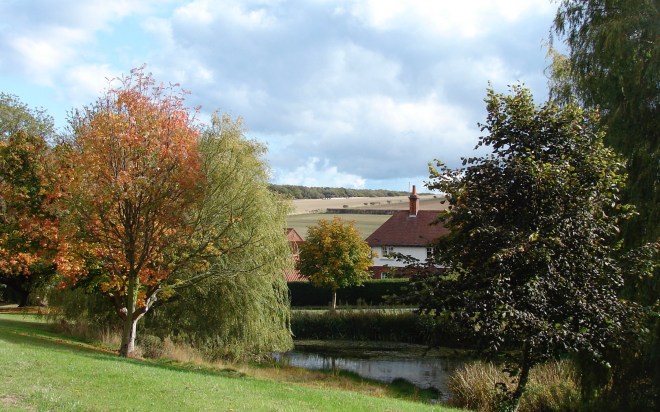
On 12th July 1826, (in one of the driest summers on record) Hessle banker Joseph Robinson Pease recorded in his diary there was no grass for the cattle, who had to be given linseed cake. Ponds and water tanks dry.  Around this time, too, the pond at Fridaythorpe dried up, and villagers went on a Sunday to nearby Fimber to take water from one of their 2 ponds, resulting in a pitched battle, referred to as ‘the Second Battle of Waterloo’. photo shows the remaining village pond at Fimber.

fimber pond.JPG