July 25th

On 25th July each year a traditional football match was held on St James Day, between Sutton and Wawne, starting at Foredyke bridge, boundary between the 2 villages, each village trying to get the ball home. Not known dates played or when abandoned.

On 25th July 1328, King Edward III is said to have closed down the Warter annual fair on St James Feast Day because of the number of murders that had been committed at the fair. There is a record that in 1300 certain manslaughters had been committed in the village by the canons’ men from Warter Priory. In 1328, King Edward III issued an order that it was an offence to go armed into any fair or market. Probably not aimed specifically at Warter.

On 25th July 1768, Joseph Hall was hanged at York Castle for coining at Hull. photo shows  medieval coins being made.

On 25th July 1873, William Dunwell, former Hull Trinity House School pupil, lost his life at sea by jumping overboard to save the life of a shipmate.

On 25th July 1911, Father Ottway, superintendant at the Yorkshire Catholic Reformatory at Market Weighton (actually in Holme on Spalding Moor) reported on rebellion from the boys, including threats to knife masters, which resulted in the attendance of 3 police officers and the thrashing of 6 or 7 boys.

coiner, Hanse Day


July 19th

On 19th July 1692, Elizabeth Howe, nee Jackson, aged 57,  was hanged for witchcraft at Salem, Massachusetts with 4 other women; at the age of 3, she was among the Puritans who emigrated from Rowley to found Rowley, Massachusetts.

On 19th July 1750, Hull soldier John Hasselbe made a sworn statement to John Wood, Deputy Mayor, that when he was on duty at Beverley Gate between 1.00 and 3.00, his musket went missing, and he suspected it had been stolen and concealed.

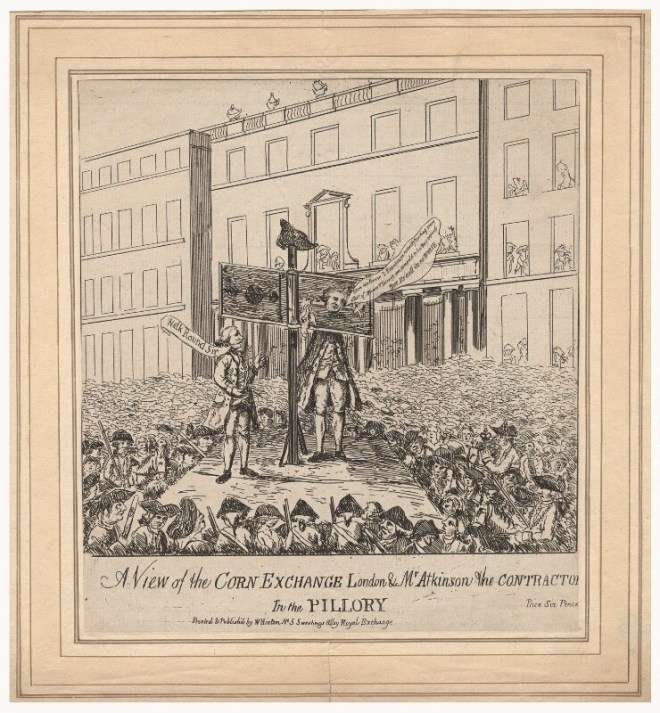
On 19th July 1783, Christopher Atkinson, MP for Hedon & corn factor, was tried in London for perjury, found guilty and committed to prison for 12 months, , first being pilloried at the Corn Exchange, London, and expelled from the House of Commons.  He resigned from his commercial post, but stood again as MP for Hedon in 1796 and 1802 and was elected. He later changed his name to Saville. picture shows Atkinson at the pillory

On 19th July 1786, Hull’s Rev George Lambert visited several sick parishioners, and commented on the contemporary habit of family and friends crowding into the room with the minister, so that the sick person was unable to speak openly.

On 19th July 1794, Edward Bogg, carpenter’s mate,  was shot and killed on board Hull fishing vessel Sarah and Elizabeth Off St Abb’s Head by the crew of a naval press gang on the frigate Aurora; 3 other crew were injured; the coroner’s court returned a verdict of wilful murder by Captain Essington; the captain was sent to the East Indies for several years and never stood trial.

On 19th July 1849, an All England Eleven cricket team played a 30-day match against a Hull amateur side at the Hull Athenaeum Club ground, Anlaby Road. Despite funding from the Hull Sheriff and both MPs, the entrance fee was 1s a day. The professionals won by an innings and 82 runs.

On 19th July 1919, 368 children living at Newland Homes, Cottingham Road, Hull, took part in official peace celebrations included games and setting fire to an effigy of the ex-Kaiser.chrisatkinson MP

July 18th

On 18th July 1509, Lockington labourer Christopher Wylton claimed sanctuary at the church of St John, Beverley, for theft.

On 18th July 1511, Tailor Thomas Mateson, of Stamford Bridge, claimed sanctuary at Beverley for the homicide of John Pott, also of Stamford Bridge, labourer.

On 18th July 1642, the first Hull siege ended after 17 days; as the Royalists withdrew to Beverley, they destroyed the sluice at Hull Bank, causing flooding in Newland, and probably set fire to St Andrew’s Church at Paull.

On 18th July 1833, the work of the Humber Pilots involved more than directing ships into harbour; the day’s work included: relaying 14 buoys; taking carpenters to Bull Float and relaying Transport buoy (at the entrance of the River Hull).

On 18th July 1878, Anthony Bannister JP died at Hessle aged 61; twice Sheriff and twice Mayor of Hull, Vice commodore of the Royal Yorkshire Yacht Club. Promoted the Hull to Withernsea rail line; he is commemorated by a street in Withernsea, by a statue in Hull, and an effigy in Hessle.

On 18th July 1929, Boothferry Bridge opened to traffic across the River Ouse, replacing the ferry which had operated there since the 14thcentury.

On 18th July 1941, Ernest Dean Hodgson of Deepdale Grove, Hull, member of the Rescue Service, was commended for the rescue of Mrs Pounder and her 3 children from a damaged air raid shelter in rustenburg St. For their actions on the same night, John Joseph McHugh of Lilly Grove, and Arthur George Dixon were both awarded the British Empire Medal.  The same raid caused major damage to Reckitt’s Dansom Lane HQ, about 75% of the buildings being destroyed.

On 18th July 1969, Barry Francis, 22, decky learner, was lost overboard from Hull trawler Arctic Vandal off the North Cape.

July 17th

On 17th July 1882, deckhand John Fryer, 18, was lost overboard from Hull trawler Superb in the North Sea.

On 17th July 1930, Amy Johnson sent a telegram to Ethel Leginska congratulating her on her brilliant pioneer achievement in conducting the Carl Rosa Opera Company’s production of Madame Butterfly  in London.

amy-leginska telegram

July 13th

On 13th July 1496, Bartholomew Pereson of Driffield claimed sanctuary at the church of St John, Beverley, for the murder of John Elyot.

On 13th July 1854, 3 men and a boy drowned when they fell off the Dowthorpe as it was being launched. About 300 people had boarded the ship before the launch, and deliberately rocked the boat. Many fell into the water and 4 drowned. A tug “Ann Scarborough’ was capsized by the number of people trying to board her from the water.

On 13th July 1936, Oswald Mosley, leader of British Union of Fascists,  found himself unable to book a hall in Hull. Mosley planned to give a speech in Corporation Fields, to recruit blackshirts to his organisation, but they were met with a large and hostile group of local people, and a riot ensued. Mosley was not able to give his speech.

On 13th July 1951, a fire broke out in No 1 Shed, Humber Dock, Hull, destroying £100,000’s worth of cargo awaiting shipping. The probable cause was said to be a discarded cigarette, and made worse by a gas leak.

Dowthorpe July 1854?


July 9th

On 9th July 1905, Robert Skilling, Hull chauffeur,  caused possibly Hornsea’s first motoring offence, when under the influence of drink, he drove at 20mph from Market Place into Newbegin without sounding his horn. About 200 people who had just come out of the parish church, had to scatter.  At Leven Petty Sessions Skilling was fined £3.

On 9th July 1915, Albert Baxter, private, and former Reckitt’s employee, died in action with the East Yorkshire Regiment and is buried in RE Farm Cemetery, Heuvelland.

On 9th July 1952, Henry Saunderson, aged 13, the son of the skipper of the Cape Duner,  was a cadet at the Boulevard Nautical School who joined his father for a pleasure trip during the summer break, and was lost overboard. His father presented a cup in his memory at the school’s prizegiving day.


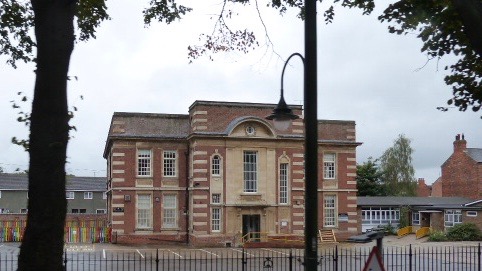
Nautical School Boulevard

July 2nd

On 2nd July 1642, the Royalist ship Providence, commissioned by Queen Henrietta Maria, evaded Parliamentary ships by entering Keyingham Creek, which was too narrow for the larger ships, and landed a consignment of arms from Holland for the Royalist army. With help from local people, they unloaded ammunition which was taken to the king at York.

On the same day, the Royalist army secured Hull Bridge, Tickton, on the Beverley side, to prevent attacks from Hull and stop provisions reaching Hull, and evicted constable William Cuthbert and his family at midnight.

On 2nd July 1644, Sir Thomas Metham of Metham near Howden,  died at the Battle of Marston Moor fighting on the Royalist side, captain of the Yorkshire gentlemen volunteers.

On 2nd July 1830, Hull whaler Progress was wrecked in a storm when iced in near the Davis Strait; 19 whalers were wrecked or lost that season, 4 of them from Hull.

On 2nd July 1837, Hull whaler Swan was sighted off Spurn Point as a memorial service was being held in Hull for the crew. They had been away for over a year and had been trapped in ice. 25 of the 48 crew had died.

On 2nd July 1954, Harold Macmillan, Minister of Housing and Local Government, approved the amended Hull Development Plan, regenerating the city after the bomb damage of the war. Hull Georgian Society lamented the loss of buildings such as many on High Street, the whole of Nile Street and houses in Lowgate. Not all of the proposals came about – there was to have been a ‘town park’ open area from Holy Trinity to Princes Dock.


June 29th

On 29th June 1643, Captain Hotham was arrested in Hull, but Sir John escaped and tried to cross the river to make his way to his fortified house at Scorborough. Not being able to cross at Stoneferry or Wawne, he rode to Beverley, where he found a troop of Parliamentary soldiers. He put himself at their head and ordered them to follow him.  Their commander, Matthew Boynton, countermanded the order and Hotham tried to escape through the streets, but was knocked off his horse and arrested. The Mayor, aldermen and other burgesses met to appoint a temporary Governor and committee, until Parliament could give directions.

On 29th June 1840, John Tasker was convicted of larceny at Beverley Sessions Court, and sentenced to 7 years’ transportation. At the same sessions, Joshua Needham was sentenced to 14 year’s transportation for receiving stolen goods.

On 29th June 1870, Frederick William Elwell was born in Beverley.  Painter and member of the Royal Academy, he painted portraits of King George V and TR Ferens, amongst others. His wife Mary was also an accomplished artist. (d 3.1.1958)

On 29th June 1939, the body of Thomas Smith, 27, spare hand, washed up at Paull, and was identified as one of the crew of the Lady Jeanette, which sank on 8.3.1939.

elwell

June 11th

On 11th June 1312, a miracle was recorded when some boys whose sight was failing had their eyes smeared with oil which flowed from the tomb of St John of Beverley. Their sight then began to improve.

On 11th June 1909, the Hornsea Golf Club officially opened; a large gathering of golfers from Hull, Leeds, Doncaster, Scarborough, Beverley and Bridlington took part in various competitions.

On 11th June  1925, John Ball, 17, deckhand of Michael St, Hull, was lost overboard from Hull trawler Wheatstone 182 miles ExN of Spurn.

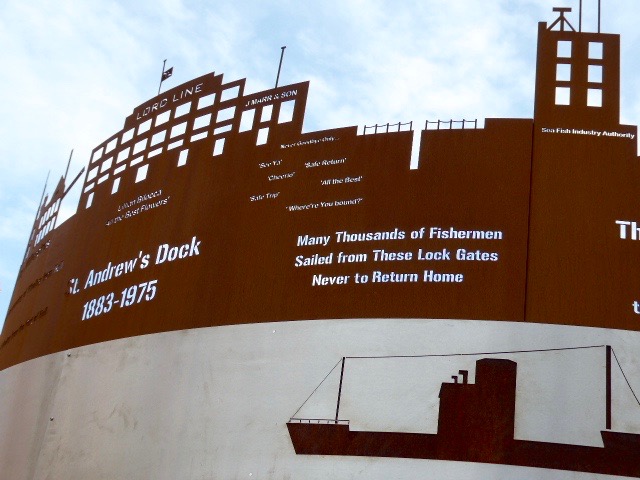
St Andrews Dock memorial


June 8th

On 8th June 1300, a year after Hull’s establishment, King Edward I gave a charter to allow the mayor and aldermen to pave the major streets, with a central gutter for ease of drainage. The work began in 1301.

On 8th June 1661, King Charles II wrote a letter to the Hull Mayor, prohibiting John Shaw from preaching in Holy Trinity, as he was too radical a Puritan. He retained his post as Master of the Charterhouse, and his sermons there continued to draw large crowds, but he resigned the following year.

On 8th June 1806, in a kitchen accident, in Hull, Mrs Lambert reported being struck on the back by a large hanging lump of sugar she had dislodged; she expected that if it had hit her on the head, she would have died.

On 8th June 1815, the Commissioner of Customs acquired the former Neptune Inn, Whitefriargate, as a Custom House. The Inn had opened in 1797, but had never made the expected profit of a first-class coaching inn. The building now houses Boots Chemists.

On 8th June 1821, the troopship Thomas of London was driven on to the Binks sands, in the Humber; the 26 troops, crew, 2 women and a child were rescued, and 1 woman drowned, despite brave attempts by the captain, Lieutenant Pritchard, to save her. The operation by Robert Richardson, master of the Spurn lifeboat, and crew, took 11 hours.

On 8th June 1829, Ira Aldridge, celebrated American actor of African heritage, performed in Hull for the first time, at the Theatre Royal, Humber Street; over a long and distinguished career he visited Hull several times, and performed at the Nag’s Head, Driffield in 1841.


Ira-Aldridge-Covent-Garden-1833-public-domain1