July 18th

On 18th July 1509, Lockington labourer Christopher Wylton claimed sanctuary at the church of St John, Beverley, for theft.

On 18th July 1511, Tailor Thomas Mateson, of Stamford Bridge, claimed sanctuary at Beverley for the homicide of John Pott, also of Stamford Bridge, labourer.

On 18th July 1642, the first Hull siege ended after 17 days; as the Royalists withdrew to Beverley, they destroyed the sluice at Hull Bank, causing flooding in Newland, and probably set fire to St Andrew’s Church at Paull.

On 18th July 1833, the work of the Humber Pilots involved more than directing ships into harbour; the day’s work included: relaying 14 buoys; taking carpenters to Bull Float and relaying Transport buoy (at the entrance of the River Hull).

On 18th July 1878, Anthony Bannister JP died at Hessle aged 61; twice Sheriff and twice Mayor of Hull, Vice commodore of the Royal Yorkshire Yacht Club. Promoted the Hull to Withernsea rail line; he is commemorated by a street in Withernsea, by a statue in Hull, and an effigy in Hessle.

On 18th July 1929, Boothferry Bridge opened to traffic across the River Ouse, replacing the ferry which had operated there since the 14thcentury.

On 18th July 1941, Ernest Dean Hodgson of Deepdale Grove, Hull, member of the Rescue Service, was commended for the rescue of Mrs Pounder and her 3 children from a damaged air raid shelter in rustenburg St. For their actions on the same night, John Joseph McHugh of Lilly Grove, and Arthur George Dixon were both awarded the British Empire Medal.  The same raid caused major damage to Reckitt’s Dansom Lane HQ, about 75% of the buildings being destroyed.

On 18th July 1969, Barry Francis, 22, decky learner, was lost overboard from Hull trawler Arctic Vandal off the North Cape.

July 1st

On 1st July 1643, cannoneer John Stevenson was buried in St Mary’s Beverley, having died in the town in a ‘great scrimmage’ in the Civil War (possibly the day before).

On 1st July 1801, Hull Subscription Mill Ltd opened to provide cheap flour to the poor of Hull, 3 years or so after the opening of Hull Anti-Mill, one of the first co-operatives in the country.

On 1st July 1830, the Hull whaler Eagle had been stuck in the ice of Baffin Bay for 5 days.   With the help of 200 men from nearby ships, Captain Matthew Wright and crew, were finally able to repair the keel and heave the ship upright again.

On 1st July 1903, Amy Johnson was born in St George’s Road, Hull. She went on to become the first woman to fly solo to Australia, and to break many aviation records. (d5.1.1941)

On 1st July 1918, Hull coroner Colonel Alfred Thorney held inquests on 2 early cases in the flu epidemic: Kate Denman, aged 11, daughter of a labourer of Hodgson Street, and Elsie Barton, aged 9, daughter of a soldier, of Arthur’s Terrace Courtney Street. Both died within 24 hours of being taken ill, of influenza followed by pneumonia.

On 1st July 1940, the first-ever daylight air-raid on the British mainland attacked Saltend oil terminal.  Between 16.40 and 17.00, bombs caused a 2,500-ton tank of oil to explode, and threatened to spread to other tanks. For preventing even greater damage, the following were all awarded the George Medal: Clifford Turner, leading fireman; William Sigsworth, Manager, Anglo-American Oil Co Ltd; George Samuel Sewell, engineer, Shell-Mex & BP Ltd; Jack Owen, fireman; George Archibald Howe, Manager, Shell-Mex & BP Ltd. No loss of life.

On 1st July 1976, Withernsea Lighthouse ceased operating, after 82 years, having been superseded by modern navigational aids. It is now open to the public as a museum to Kay Kendall, to local history and the lifeboat service.Withernsea

June 26th

On 26th June 1793, Captain William Hammond died aged 65 in Kirk Ella. Hull sea captain, shipowner and merchant, supporter of abolition, Chairman of Hull Dock Company, Warden of Trinity House, and diplomat. (He and David Hartley MP met Benjamin Franklin and John Adams in Paris on a possible spying mission) Buried in Welton. (b 1727 York). Photo shows a door in the Maritime Museum, former Dock Offices.

On 26th June 1854, at an event to celebrate the opening of the Hull-Withernsea railway line, 500 guests travelled from Hull on the first ever train (which was 20 minutes late, due to late arrival of guests) and part of the lunch marquee collapsed; there were no injuries. Joseph Robinson Pease in his diary recorded heavy showers and high winds threatened to tear the marquee to pieces, but that it subsided and all passed off well.

On 26th June 1920, the National Federation of Women Workers called its Hull laundry worker members out on strike, as they were paid less than in other towns. Hull Trades Council supported the strike and organised a parade on 17 July. Strike breakers were reported being smuggled in to work in laundry baskets.

Hull Dock Co

June 20th

Hull Corpn silver


On 20th June 1533, the Hull Mayor and town council sold to Sir Edmund Perkins the ornaments of the churches in the town, for £15. They also gave to Sir Frauncis Jobson, Treasurer of His Majesty’s jewellers, ’24oz of silver plate whereof 7oz were double gilt and the rest part gilt and plain white, handed over for His Majesty’s use’. photo shows some of today’s corporate treasures.

On 20th June 1579, Edward, son of Nicholas Symson of Thorpe, because of the outbreak of plague at Howden, had to be baptised at Eastrington rather than in the parish church.

On 20th June 1583, Hull agreed to 10s compensation to Richard Frere for the loss of hay and his cote during the time when plague was in the town.

On 20th June 1642, Maurice Corney, vicar of St Mary’s Hull and Capt William Thornton, comptroller of customs were discussed by Sir William Strickland, Mr Alured, Mr Peregrine Pelham and Mr John Hotham, as a danger to Parliament’s cause. Sir John Hotham ejected Corney from the town, and he left for York, despite being considered a hero for his work during the recent plague. Thornton was also turned out, and joined the King’s service.

On 20th June 1645, John Blenkarne, master of the Hull ship Anne Dorothy, was moored in Marstrand, Sweden. He accused crewmen Peacock and Dynnis of inciting mutiny when they came aboard drunk, threatened him, and after a night in custody refused to come aboard until threatened with imprisonment. When they returned to home port, the court of Trinity House fined them and jailed them for 24 hours.

On 20th June 1761, Beverley widow Elizabeth Courtney, of Walkergate, paid the bellman to go round the town announcing a reward of 3 guineas to anyone with information about bricks thrown through her windows the previous night.

On 20th June 1810, Hull Trinity House reported raising £300 in 9 weeks towards establishing a lifeboat at Spurn.

On 20th June 1895, an auction was held in 2 fields in Bransholme Lane, Sutton, of ‘The Sweep of the Scythe’ of 25 acres of ‘rich meadow’, and also the ‘Eatage of the Fog’ up to the end of the year. This appears to have been dialect for the sale of hay cut for fodder for cattle.


June 13th

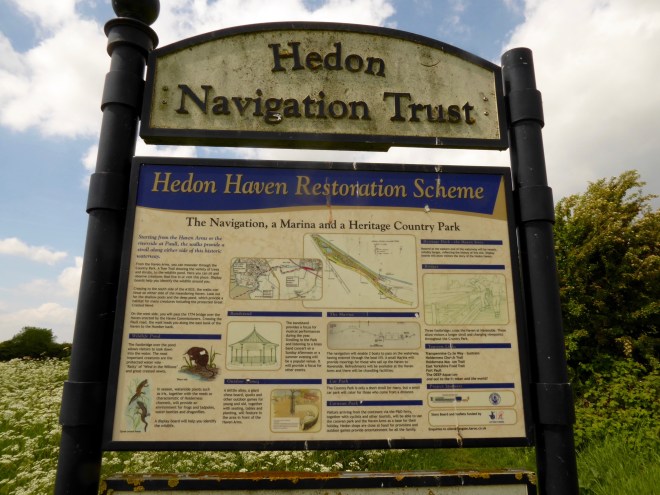
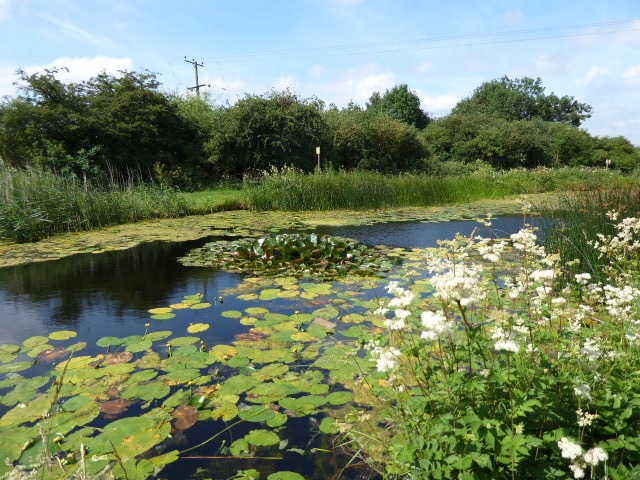
On 13th June 1774, the Hedon Haven Commissioners held their first meeting to create a canal between Hedon and the Humber, so that goods could reach Hedon at all times of the tide. The 44 Commissioners (including 3 knights, 4 clerics, and merchants such as Samuel Standidge, Benjamin Blaydes and Henry Maister) had powers of compulsory purchase of land and to prosecute anyone who obstructed navigation. The canal was opened in December 1775.

On 13th June 1893, William Maclagan, Archbishop of York, visited Spurn in a small boat, saw the lifeboat station, school and lighthouse, and agreed to provide weekly religious services at Spurn. He then walked 31/2 miles to Kilnsea before continuing to Patrington by carriage.

On 13th June 1943, Withernsea Central School teacher Miss Longdon r.eported in the school log that incendiary bombs fell on the school, burnt out Classroom 8 and caused ‘holes in the hall and on the platform’. Some classes had to be accommodated in the Methodist Chapel.

Hedon Haven

June 10th

On 10th June 1402, John Tutbury, Mayor of Hull, was granted a licence, with William Tyrry (Terry) and their companions, to profit from the seizure of goods aboard a Prussian ship heading for Scotland which they took ‘in the king’s service’. These days, we would call it piracy. When it became clear the ship they took had actually been transporting provisions to Henry’s troops in Berwick, Tutbury and Terry were ordered to pay compensation to the owners.

On 10th June 1708, Adam Alvin, manservant, murdered his employer, the Owthorne  vicar, Enoch Sinclare, with a spade, and later married Sinclare’s niece Mary; they later moved to Lincolnshire to run a public house. The body was not found for 4 years, when Mary’s sister revealed the concealed body. Alvin was tried, found guilty and hanged at York. Sinclare’s body, in a lead coffin, was one of those which fell into the sea, and was reinterred in the churchyard, which itself later fell into the sea.

On 10th June 1913, the Assembly Rooms, Seaside Road, Withernsea, were destroyed in a fire; the area became a skating rink, and later a fun fair and amusements.


W'sea pier

June 7th

On 7th June 1614, Francis Clifford, Earl of Cumberland, of Londesborough House, paid for the apprenticeship of his scullery-maid Grace. He trained in London as a barber-surgeon for 7 years, and the Earl continued to support him when he had to transfer employers, as his first employer killed a man (perhaps in the course of treatment).

On 7th June 1672, the residents of Sister-Kirks (Owthorne and Withernsea) reported hearing the sound of the naval battle of Solebay, off the coast of Suffolk. A fleet of 75 Dutch ships surprised a fleet of 93 Anglo-French ships at anchor.

On 7th June 1796, Sir Henry Etherington laid the foundation stone of Hull Anti-Mill, to provide cheaper flour. An early co-operative, it was funded by subscription by poor residents finding the price of flour beyond their reach.

On 7th June 1837, the Union steam packet was in the Humber basin, Hull, Preparing to cross the Humber, when it exploded. 3 other ferries were next to it; 23 people died. The engineer was later charged, but not convicted.

On 7th June 1915, Vere Campey Marshall made a statement to police, stating that he witnessed a 1,000 strong crowd outside the premises of Kress and Wagner, 163/5 Spring Bank, throwing stones, and a girl using a hammer to break a window. Police and military were sent to guard the premises. Anti-German feeling was strong during WW1.

May 21st

Leven canal

On 21st May 1801, Charlotta Bethell of Rise succeeded in getting an Act of Parliament to create the Leven Canal passed. (photo shows canal today)

On 21st May 1891, Sir Henry Cooper, physician and Mayor of Hull died aged 84. Local doctor who campaigned to improve living conditions before the cholera outbreak of 1847; urged the council to build decent homes for working people and offered to raise £2,000 himself if others would do the same.

On 21st May 1900, 4 days after the lifting of the siege of Mafeking, Hull’s Grosvenor Restaurant served a celebration menu reflecting the Boer War, with items such as ‘Kromeskies a la Baden Powell’, cod with Transvaal sauce, nonsuch tart a la Kitchener, and red, white and blue blancmange. Villagers at Nafferton celebrated the news with church bells, bands, a parade, dancing, followed by burning an effigy of Kruger stuffed with fireworks.

On 21st May 1927, English actress Kay Kendall was born at Withernsea; she died at the early age of 32, and a museum of her life was created in Withernsea Lighthouse.