March 31st

Andrew Marvell

On 31st March 1621, Andrew Marvell was born in Winestead to local vicar Andrew Marvell, who later became Master of Hull Charterhouse. Marvell junior was a renowned poet, and MP for Hull several times. During the Civil War, he travelled in Europe, prompting some to suggest he was employed as an English spy. He acted as London agent for Hull Trinity House. Died in Hull 1678, and is buried in St Giles in the Fields, London

On 31st March 1801, Captain Mitchinson, of the Hull whaler Blenheim, was found not guilty of the murder of 2 members of the Press Gang, (John Burnick and John Sykes) his defence being that he was handcuffed and locked in his cabin at the time. Burnick and Sykes were buried in Drypool Cemetery.

On 31st March 1941, having just completed a successful campaign for blood donors, Dr David Diamond, Deputy Medical Officer for Hull, was killed instantly when a land mine made a direct hit on the Shell Mex Building, Ferensway, the ARP Headquarters. A heavy raid on the docks destroyed offices, a garage, works, houses, dog kennels and warehouses at Albert, Alexandra, Town and Victoria Docks. A total of 200 deaths was recorded in March.

hull-blitz-shell-mex

March 16th

Kiplingcotes

On 16th March 1589, Robert Dalby (or Drury), priest, was executed for treason as a Catholic priest. Born in Hemingbrough, he was a Protestant minister, then ordained as a Catholic priest at Chalons in 1588, and was arrested on landing at Scarborough.

On 16th March 1660, the ship of Richard Williamson of Scarborough rammed the dolphin at the entrance to the River Hull, and was sunk. Trinity House was entitled to charge for repairs, but were lenient and only fined him £3.

On 16th March 1695, John Roxby & John Field (Ferriby) and Henry Watson and Benjamin Galland (Swanland) were chosen by the parish as Overseers for the Highways for the following year, Ferriby and Swanland being in the same parish, but choosing separate officers.

On 16th March 1879, Colonel Sir Tatton Benvenuto Mark Sykes, (usually known as Sir Mark) was born in Sledmere. He was a traveller, author, MP for Hull Central, advisor to the Government on Middle East affairs, and co-author of the Sykes-Picot Agreement, which partitioned the Ottoman Empire. (died of flu 16.2.1919)

On 16th March 1939, Jean Farrow of Hull was the first ever female winner of the Kiplingcotes Derby, on Masterful.

Sykes-Picotagmt1916


March 13th

On 13th March 1640, on instructions from the Duke of Northumberland, Sir Edward Osborne, for the Council in the North, arranged for 2,000 horse and men to be quartered in and around Hull, together with arms for them.

On 13th March 1801, Hull Trinity House sent a further 6 North Sea Pilots to Yarmouth to support the naval attack on Copenhagen.

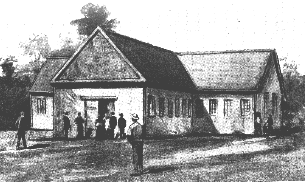
On 13th March 1827, Revd Richard Johnson died, aged about 71. Known as Australia’s First Preacher, he and his wife Mary joined the first Fleet, and he became chaplain to the prison colony of New South Wales in 1786. They created a school and both taught up to 200 children. He returned to Hull in 1800 and was curate to Rev Thomas Dykes at St John’s church for a time. (B Welton c1756) picture shows Australia’s first church, built by Richard Johnson in 1793

On 13th March 1942, Alexander Gallacher, 37, donkeyman, of Hull, died by enemy action, whilst a merchant seaman on board SS Destro, of Hull, off Tobruk.

first-church-Aus1793

March 12th

On 12th March 1511, Elizabeth Nelson, spinster of Pollington, claimed sanctuary at the church of St John, Beverley, for felony and murder of an infant (possibly her own child) at Hull.

On 12th March 1553, on the surrender to King Edward VI of the castle and fortifications at Hull, the King granted to Ralph Constable former monastery lands in Swine, Newton Grange, and all the extensive lands formerly belonging to the dissolved Hospital of St Sepulchre, Hedon. He was also the tenant of the site of Hull Charterhouse.

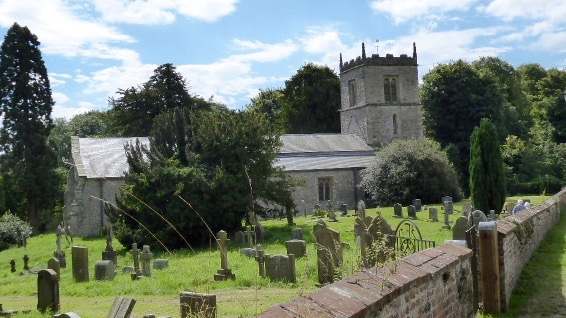
On 12th March 1622, Josias Lambert, schoolmaster, left the employment of Francis Clifford, Earl of Cumberland, after 9 months teaching ‘scholars’, which may have included some of the Londesborough House household staff and/or their children. The Earl also supported the village school at (Market) Weighton. photo shows Londesborough church

On 12th March 1647, Sir Matthew Boynton died at Bainton aged 56. Sheriff of Yorkshire twice, MP twice (once for Hedon and once for Scarborough), 1stBaronet, of Barmston. He helped capture Sir John Hotham when he intended to surrender Hull to the Royalists. His son Colonel Matthew Boynton was killed fighting for the Royalists in the Battle of Wigan Lane in 1651. (bapt 26.1.1591)

On 12th March 1697, the Brethren of Hull Trinity House charged almost £21 for the launch of the 60-gun Royal Navy ship HMS Kingston from Hessle. Work included laying buoys from the launching site to Hull.

Londesborough

March 9th

Trinity House

On 9th March 1767, Beverley Coroner’s Court jury found  (James?) Brown, aged 30, guilty of poisoning his wife, aged 45 and of independent means. Brown appears to have escaped to London, but was arrested and found guilty, his sentence commuted to 7 years’ transportation.

On 9th March 1801, at the request of the Admiralty, Hull Trinity House sent 12 Hull men as North Sea pilots to support the naval force at Yarmouth preparing to attack Copenhagen.

On 9th March 1858, servant Sarah West was overtaken by a severe snowstorm at Newbald Wold whilst returning from a visit to her parents in Market Weighton; she was under a snowdrift for 2 days, but was discovered by a shepherd and nursed back to health.

On 9th March 1984, Christopher Laverack, aged 9, of Anlaby, disappeared from his sister’s home, and his body was found in Beverley Beck 2 days later. It was not until 2012 that the murder enquiry was closed, when police identified his uncle, Melvyn Read, as the killer. Read had died in 2008.

March 7th

On 7th March 1759, the allowance Hull Trinity House paid to retired grocer William Robinson was stopped as William was given a place in the Charterhouse.

On 7th March 1803, Mr William Iveson, Steward of Francis Constable of Burton Constable, agreed to Hull Trinity House’s proposal to establish a lifeboat at Spurn. No further action was taken until 1810.

On 7th March 1866, Archbishop of York called a ‘day of humiliation’ when East Riding ministers were instructed to ‘exhort the people to accept this grievous murrain as a chastisement from the hand of our loving Father’, in response to the Great Cattle Plague. Rinderpest had been introduced from Russia through Hull cattle imports, leading to widespread slaughter, and restrictions on the movement of cattle. Many areas of the country were affected.

On 7th March 1888, Rev Henry Kemp, Master of Hull Charterhouse, died after 20 years in post, having pressed for change, including an end to evicting widows when their husband died.

On 7th March 1919, after the death of her husband, Central Hull MP Sir Mark Sykes, the Hull Conservative Party unanimously voted to invite Lady Edith Sykes to stand as candidate in the by-election.  Lady Edith cited her responsibility to her family as the reason for refusing their offer.

OLYMPUS DIGITAL CAMERA

February 10th

On 10th February 1644, Sir William Constable of Flamborough led Parliamentary troops from Hull in routing the Royalists at Kilham.

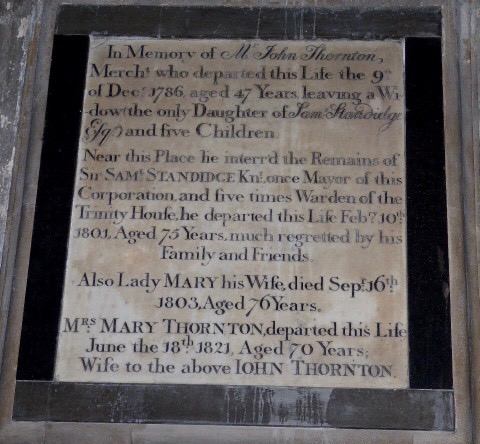
On 10th February 1801, Sir Samuel Standidge, aged 75, died at Thorngumbald. He was born at Bridlington, and at age 19 was taken prisoner by privateers and taken to Rhode Island. Later in life he traded goods to Rhode Island and bought lands in Holderness, building New York Farm, Preston, to mark his financial success in New York.  He is credited with restarting the Hull whaling industry, acting as master of his own whaler.  Sheriff of Hull, Mayor, and warden of Hull Trinity House 5 times. His memorial is  in St Mary’s Lowgate, Hull.

On 10th February 1866, 6 days after running aground on the Isle of Juist, Germany, 15 people were rescued from the rigging of the ‘Excelsior’ of Hull, where they survived without food and water. Mrs Newton was considered a hero for her support of her fellow survivors.

On 10th February 1871, at least 70 mariners lost their lives in Bridlington Bay in the Great Gale, including 6 lifeboatmen. 23 vessels were lost. There is a mass grave in the Bridlington Priory churchyard, and an annual Fishermen’s Service was held for 100 years.

On 10th February 1893, Revd Francis Orpen Morris died aged 82 at Nunburnholme. Vicar at Nafferton 1844-1854, rector of Nunburnholme to 1893. Irish-born naturalist and author of children’s books, and books on natural history and architecture. Anti-feminist, anti-hunting and opposed to Darwinism. (b25.3.1810)

On 10th February 1898, Commander Cave, of Humber guard ship Galatea, rescued the crew of SS Marbella in the River Humber, near Humber Dock, Hull. The Marbella had problems with its steering gear, and almost collided with 2 ships before hitting the Galatea. The only passenger had to swim to safety, and the Marbella’s cargo of 41 horses were all lost. The Galatea was itself later stranded on the Hebbles sandbank, but refloated later.

Saml Standidge memorial

February 4th

On 4th February 1516, John Holme, labourer, of Ottringham, claimed sanctuary at the church of St John ‘for divers felonies’.

On 4th February 1634, William Kitching, 39, of Little Driffield, and 9 other men, were hanged at York for rioting at Hull about corn, for demolishing the dwellinghouse of Edward Cooper, and for stealing clothes. None of those convicted were from Hull.

On 4th February 1783, Hull Trinity House accepted the proposal of Mr Blaydes of Hull to build a yacht for £500; they used the yacht Humber for 23 years.

On 4th February 1809, Ebenezer Bettison and 2 others, of Hull, drowned during a storm when going in a boat to secure a lighter which appeared to be in danger.

On 4th February 1821, Thomas Wilkinson Wallis was born in Hull. The son of a cabinet maker, he became a wood carver. He was a pprenticed to Thos Ward in Waterworks St, Hull, and trained at the Mechanics Institute. His work can be found in the Victoria & Albert Museum, London. photo shows one of his carvings

On 4th February 1900, Sir Leo Schultz (Joseph Leopold Schultz) was born in Hull. He was  the Leader of Hull City Council from 1945-79. Was awarded the OBE in 1946 for war work, including as an air raid warden, and for his campaign to provide all households with a bomb shelter. He was knighted in 1966 for services to local government. Honorary Doctor of Law Hull University 1979. d 1991. photo above

On 4th February 1968, Hull trawler Ross Cleveland capsized and sank with all but 1 of the 20 crew. An enquiry concluded the ship was unable to cope with ice build-up. The wreckage was located in 2002.

St Andrews Dock memorial

February 2nd

On 2nd February 1141, during the Anarchy, William of Aumale, Lord of Holderness and Earl of York led part of the cavalry protecting King Stephen, but were overrun by the Welsh and fled. The King was captured, and Matilda took the throne for a time. William remained loyal to Stephen.

On 2nd February 1786, Revd T.O. Rogers Hull opened the new Trinity House School with 36 pupils.

On 2nd February 1799, Capt Henry Gunter RN was in charge of HMS Nautilus when she was wrecked in a storm Off Flamborough Head; all the crew survived. She was leading a convoy of 22 merchantmen returning from the Baltic; one of the other ships was also wrecked.

On 2nd February 1801, Hull Trinity House paid relief of £1 1s to 4 seamen who had escaped from captivity in Russia.

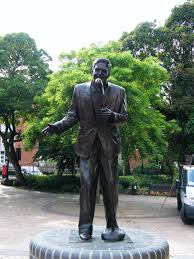
On 2nd February 1925, David Whitfield was born in Hull. A popular singer, he was the first UK male vocalist to earn a gold disc, and the first British artiste to reach No 1 simultaneously in the US and the UK. Commemorated by a statue outside the New Theatre. d 16.1.1980

David Whitfield


January 31st

Thos Ferres memorial

On 31st January 1631, Thomas Ferres died, aged 63. Mayor of Hull, Sheriff, and alderman, warden of Hull Trinity House. He left the Whitefriargate estate to Hull Trinity House, the rents to be used for the poor of the House. He also left bequests of over £1,000 to the poor. His memorial by local sculptor Earle is in Hull Minster.

On 31st January 1918, former Reckitt’s employee George William Trowell, 27, private with the East Yorkshire Regiment, win action on 23.4.17. No known grave. Was posted as missing, believed killed.  He was wounded in September 1916, discharged from hospital and returned to France.  He died in action on 23.4.17. He has no known grave.