October 15th

On 15th October 1536, Hull besieged by troops of local men, from of Holderness, Cottingham, Beverley and Hullshire supporting the Pilgrimage of Grace.  William Stapleton reported he had trouble restraining the Beverley men under his command from setting fire to shipping in Hull haven. He sentenced 2 ‘unmanageable’ followers to death, but reprieved both after inflicting one with the punishment of being towed behind a boat by a rope attached to his waist.

Pilgr Grace

October 12th

On 12th October 1536, 9,000 armed men from across East Yorkshire mustered on Market Weighton Hill as part of the Pilgrimage of Grace. Robert Aske led one group to York via Pocklington, and William Stapleton led a march on Hull, besieged it and captured it for the rebels. Holderness gentry Sir John Constable, Sir Wm Constable and Sir Ralph Ellerker had taken refuge in the town from the revolt.

On 12th October 1643, the Earl of Newcastle abandoned the 2ndsiege of Hull after 5 weeks and withdrew Royalist forces to York. To prevent pursuit, the Royalists destroyed bridges and roads and cut the banks of waterways as they retreated. The date was observed as a day of public thanksgiving in Hull until the Restoration.

On 12th October 1697, Robert Pattinson, Humber pilot, was fined 30shillings for damaging the ‘dolphin’ at the entrance to the River Hull while handling a vessel entering the Haven.

On 12th October 1767, Beverley gentleman John Courtney reported in his diary seeing a firework display for the first time, in the Market Place, paid for by subscription.

On 12th October 1896, at Hull Fair, one of the attrractions was the first showing in Hull of moving pictures, only 8 months after Louis Lumiere’s first performance, included scenes of Whitefriargate, the W’force Monument, the Corporation Pier, the Humber Ferry.

On 12th October 1933, Louis Armstrong performed at Beverley Road Baths, Hull, during his European Tour.


louis armstrong

October 11th

ON 11th October 1536, Marmaduke Thomson, vicar of Preston, rang the church bell and called parishioners to meet at Nuthill, where he swore in local men to join the Pilgrimage of Grace. Around 300 Holderness men left to assemble at Sutton Ings. (& see 10.10)

On 11th October 1643, 1500 Parliamentary troops left the besieged town of Hull and after 2 attempts and many hours’ fighting, drove the Royalists out of all their positions around the town.

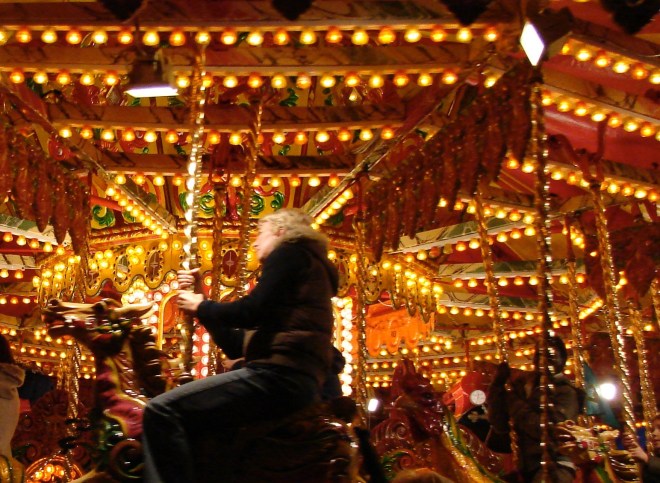
On 11th October 1782, Rev George Lambert described Hull Fair as ‘A season for the amusement of children and the gratification of gluttony’.

On 11th October 1929, Mrs Edith Robson officially opened Hedon Road Maternity Hospital, the successor to the free maternity home for poor mothers, which she gave as a gift, fully equipped, to Hull Corporation in 1915.


fair 07

October 10th

On 10th October 1536, a large crowd of armed men from Holderness supporting the Pilgrimage of Grace met on Beverley Westwood and Sutton Ings and chose captains.

On 10th October 1596, the Howden churchwardens gave 8d to Oswald Metcalfe, a poor man, licensed by My Lord Grace and the Council (i.e. given licence to beg while on his way to his home parish).

On 10th October 1918, former Reckitt’s employee gunner George Henry Saul, 26, died of wounds while serving with the Royal Garrison Artillery. Buried Etaples, France.

Pilgr Grace

October 8th

On 8th October 1536, Beverley men mustered on Westwood Low Green in response to the Lincolnshire rebellion against the Act of Dissolution. Elizabeth Stapleton encouraged them, despite the reluctance of her husband, and her brother-in–law William Stapleton became the rebels’ captain.

On 8th October 1643, Capt Strickland led a failed Royalist attack on Hull’s Hessle Gate, and was shot dead. Many of the attackers were killed.

On 8th October 1708, William Robinson died in Hull. Former Sheriff of Hull, donor of a hospital to Trinity House, left bread for 12 widows to be given each year on Christmas Day. They were required to go to his grave in Holy Trinity churchyard to receive their dole.

On 8th October 1805, Beverley corporation ordered that all rogues and vagabonds found wandering in the town must be apprehended and conveyed to a magistrate. A board  showing this order can be seen in St Mary’s church loft.

On 8th October 1862, Hornsea businessman Joseph Armytage Wade turned the first sod with a silver trowel at a ceremony to mark the start of building the Hull to Hornsea Railway.

On 8th October 1874, George Wombwell visited Beverley on his way to Hull Fair; in Saturday Market he exhibited elephants, giraffes, a rhino, and big cats; other shows also stopped over in the town before going to Hull.

On 8th October 1929, Wm Jackson & Son Ltd opened their landmark store in Paragon Street, Hull, designed by Hull architects Gelder and Kitchen, with a cafeteria and restaurant on the first floor. After the war, when the fire-damaged property was repaired, a 3rd floor was added as a ballroom. This was to become one of the city’s most popular night-spots for many years.

On 8th October 1985, Clive Sullivan MBE died aged 42. 1st black captain of any British national sporting team. He played rugby league with both Hull and Hull Kingston Rovers during his career. Holds records for most tries in a career (250) and most tries in a match (7). Commemorated in Clive Sullivan Way and the Clive Sullivan Memorial Trophy.(b 9.4.1943 Cardiff)


Clive Sullivan

July 12th

On 12th July 1537, Robert Aske of Aughton was hanged in chains outside Cliffords Tower, York, after being convicted of treason in Westminster, as the leader of the Pilgrimage of Grace.

On 12th July 1641, Sir Thomas Glemham resigned his post as Governor of Hull, having only been appointed the previous year.

On 12th July 1714, Elizabeth Hodgson, a single woman of Hedon, was sentenced at Hedon Quarter Sessions to be stripped to the waist and whipped with birch or willows from the Town Hall to Harrison Lane and from there to the jail and to remain in jail at hard labour until ‘sufficient security’ was found for her good behaviour. Her crime was to give birth to her 4thillegitimate child. There is no record of any punishment for the father. An Act of 1792 forbade whipping females for any reason whatsoever.

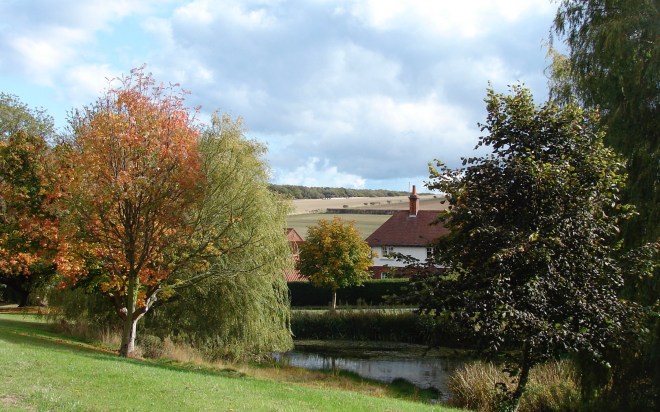
On 12th July 1826, (in one of the driest summers on record) Hessle banker Joseph Robinson Pease recorded in his diary there was no grass for the cattle, who had to be given linseed cake. Ponds and water tanks dry.  Around this time, too, the pond at Fridaythorpe dried up, and villagers went on a Sunday to nearby Fimber to take water from one of their 2 ponds, resulting in a pitched battle, referred to as ‘the Second Battle of Waterloo’. photo shows the remaining village pond at Fimber.

fimber pond.JPG

July 6th

On 6th July 1381, William Haldene of Beverley had his brains literally knocked out by John Erghom and others, with a pole-axe, 2 battle-axes, 6 swords, 2 forks and other weapons, before his body was thrown into the beck in Walker Lane.

On 6th July 1382, Sir Michael de la Pole leased to John de Hedersee and John of Dimlington land in Myton which included arable land, pasture and at least 30 acres of meadow, with houses, sheepfolds, 600 sheep and 160 lambs. Myton was clearly very rural then.

On 6th July 1537, the body of Sir Robert Constable of Flamborough was displayed on Beverley Gate, Hull, after he was hanged for his part in the Pilgrimage of Grace, despite having been pardoned the previous year.

On 6th July 1538, Hull agreed to give a place in the Charterhouse to the wife of a blind man named Ralph, as his carer during his lifetime, taking up a place normally reserved for a man.

On 6th July 1642, Robert & Christopher Hildyard of Winestead, Francis Cobbe of Ottringham, and 300 other Holderness people met King Charles I at Keyingham and handed him a petition against Sir John Hotham’s actions in flooding farmland and taking livestock into Hull. The King was visiting The Providence, which had landed arms from Holland. The King sympathised, but said he could do nothing except raise troops, as he had no power to control Hotham.

On 6th July 1644, the Hull Committee of Sequestrations formally adjudged alderman James Watkinson a delinquent, 2 years after he left Hull to join the Royalist army, and they ordered that his post as alderman be filled by election.

On 6th July 1901, G.E. Conrad Naewiger complained in a letter to the Hull Daily Mail of the lack of steps to Aldbrough beach, a popular destination for works outings from Hull. photo shows Aldbrough cliff.

On 6th July 1910, Arthur Geoffrey Dickens was born in Hull. Professor of History at the University of Hull, he was elected Fellow of the British Academy. Considered the leading historian of the Reformation of his time. Awarded the Order of Merit by the German Government. (died 31.7.2001)

On 6th July 1921, Tilworth Grange was opened to ‘Female mental defectives’ (people with learning disabilities), the first provision in Hull for people who previously were sent to institutions in Bristol, Chesterfield and Ormskirk. Winestead Hall was bought in 1931 for men.
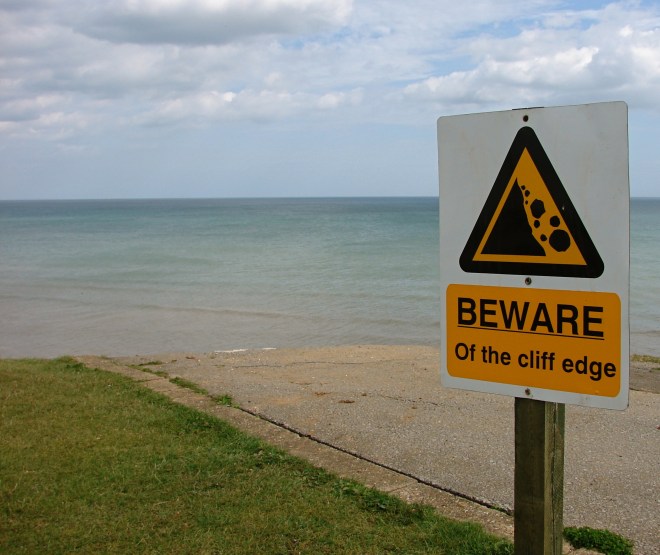
 

erosion aldboro.JPG

June 2nd

On 2nd June 1537, William Wood, prior of Bridlington, Sir Thomas Percy of Leconfield, George Lumley of Thwing and Sir Francis Bigod of Settrington were found guilty of treason and hanged at London’s Tyburn for their parts in the Pilgrimage of Grace.

On 2nd June 1838, Snowden Dunhill, 72 years, died in prison in Port Arthur, Tasmania. He was convicted of receiving stolen goods,   having been sentenced to 7 years transportation to Australia in 1823 for theft. He and his family had become notorious at home in Spaldington, near Howden, and after the publication of his life story in 1834 he became famous in England as a latter day Dick Turpin.


Pilgr Grace

May 25th

On 25th May 1537, Dr James Cockerell, Prior of Guisborough, was hanged, drawn and quartered for his part in the Pilgrimage of Grace; he was vicar of Hessle from 1509-1519.

On 25th May 1693, Robert Jackson, under-keeper of the lighthouse at Spurn, locked himself in the lighthouse and secured the door when told a party of armed employees of Lord Dunbar (Lord of Holderness) were on their way to claim ownership. They undermined the walls and took Jackson prisoner to York Castle.

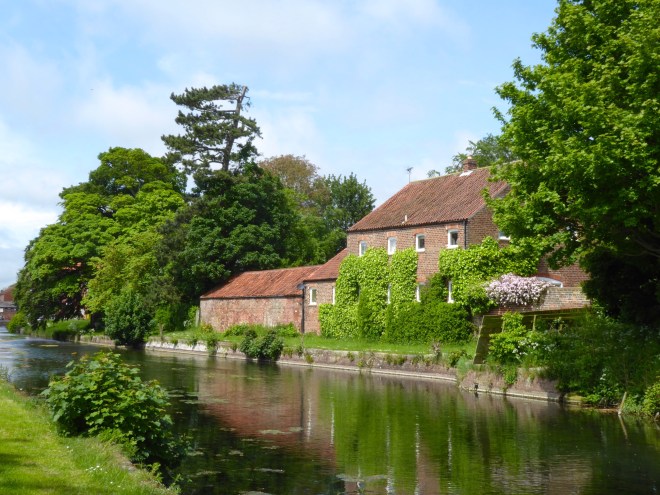
On 25th May 1770, the Driffield Canal Commissioners fully opened the new Driffield Canal, which gave the merchants of this then small hamlet access to the River Hull and the sea. Between 1784 and 1799, 6 warehouses were built at River Head, and new factories and cargo vessels used the canal. photo shows the canal today

On 25th May 1815, Parliament passed an Act to create the Pocklington Canal. Most of the subscribers were titled and/or landed gentry, but among those who bought shares at £100 were innkeepers, a blacksmith, saddler, grocer, and 4 single women (spinsters or widows).

On 25th May 1826, Mr Brown made a balloon ascent from Mr Thompson’s yard, Beverley, which was described as ‘splendid’. Winds took the balloon south west where it crash landed on the moors between Thorne and Crowle, Mr Brown sustaining an injury to his spine. He was able to travel to Sheffield for another balloon trip.

Driffield Canal