November 2nd

On 2nd November 1304, Lord Walter de Fauconberg, first Baron Fauconberg, of Rise, died aged about 80 at Rise (or Withernwick) and was buried at Nunkeeling. He had a long military career, and supported Simon de Montfort in his rebellion against King Henry III, for which he lost his lands for several years to Robert Bruce, but redeemed them in 1268.  Married Agnes de Brus.

On 2nd November 1595, John Thorgey left 5s per year for ever, to be distributed by Patrington church wardens to the poor. photo shows Patrington church

On 2nd November 1988, one of the worst industrial fires in Hull killed employee Jennifer Powley, 17, and left Janine Gilfillan with serious burns when a fire led to explosions and evacuation of nearby houses.

Pat church

October 31st

On 31st October 1640, the gentry of Cottingham, Swanland and other villages petitioned Sir John Conyers to remove his regiment to other quarters, as they were eating up all their cattle fodder and supplies, and many other ‘insupportable damages and dangers’. Many troops had already been removed from Hull into the surrounding villages for similar reasons. The petition was not successful, although the troops did look for other quarters.

On 31st October 1646, Sir Robert Hildyard of Patrington was fined £610 as a Royalist (delinquent) in order to recover his goods which had been sequestered by Parliament. He was a member of the King’s Privy Council.

On the same day, Michael Wharton of Beverley was fined £1,600 for the same reason. He had been a captain in the Royalist army.

On 31st October 1793, John Woodhead, mason, was killed at work on the building site of the Neptune Inn, Whitefriargate. Hull Trinity House gave his widow a gratuity of £5 5s.

On 31st October 1833, the Humber pilots’ work for that day included taking men from Trinity House to relay the Bull buoy.

On 31st October 1929, George Jackson Bentham died suddenly, while boarding a train home, in the company of a young lady not his wife. Hull city councillor, JP, and MP for Gainsborough, he was the son of the founder of Wm Jackson & Son, and the company’s managing director. He changed his name by deed poll to that of his Liberal hero, Jeremy Bentham.


Pilot Office

October 16th

john de sutton


On 16th October 1312, John de Sutton of Sutton-on-Hull was listed with other followers of the Earl of Lancaster as pardoned for his part in the death of Piers Gaveston, King Edward II’s favourite and Lord of Holderness. photo of Sutton church

On 16th Ocotber 1617, John Gildas confessed to the Patrington Manor Court that he had 3 times stolen barley and beans from Mr Hall’s (the rector) tithe barn.

On 16th October 1763, Ann Chameron was buried in Hutton with no ceremony, as she was a Catholic. Burial by a Catholic priest would have incurred a £20 fine.

On 16th October 1939, New Theatre (Hull) Limited, Kingston Square, opened with a production of “Me and my Girl’ by Noel Gay.


October 13th

Wm Bradley


On 13th October 1593, Oswold Ridinge, Robert Greene, William Giltencrosse, Steven Gedney, and William Deane were all before Patrington Manor Court for making affray, upon each other, and upon Thomas Blenckarne, and drawing blood of Oswold Ridinge; fined 3 shillings and 4 pence.

On 13th October 1743, William Wilberfoss Smith III died aged 75 Wrightstown, Bucks County, Province of Pennsylvania, USA. Emigrated from Weighton, Yorkshire in 1684 as an indentured servant to William Penn, and in 1686 built a cabin which is considered to be the oldest continuously occupied home in the United States.

On 13th October 1799, Rev George Lambert was called to pray with a Hull woman who had been in labour for several days, and treated by 4 surgeons who could not deliver the baby. She died.

On 13th October 1815, William Bradley, the Yorkshire Giant,  printed handbills inviting visitors to see him at 15 Queen Street, Hull during Hull Fair for a shilling.

On 13th October 1857, John Johnson, chimney sweep, was fined £5 or 7 days in prison at Beverley Magistrates Court, for employing a boy of 13 to go up a chimney in the house of Wilberforce Herdsman. Employing under 21s as sweeps was not finally outlawed nationally until 1875. Legislation in 1840 set the minimum age at 16, but was rarely enforced.

On 13th October 1859, the Theatre Royal, Humber Street, Hull, burnt down just 10 days after re-opening following a fire in September.

On 13th October 1926, in a 2-day visit to Hull, HRH Prince of Wales laid the foundation stone of the Ferens Art Gallery, visited HERIB and other factories and institutions, and took a trip on the Humber in SS Brocklesby. At Craven Park, 10,000 schoolchildren sang for him. Crowds were estimated at 200,000. this interesting clip begins with a reference to the West Riding, but stick with it, Hull is definitely there. https://www.youtube.com/watch?v=YQhZrcaMUuo

October 7th

On 7th October 1659, William Stallen of Patrington was fined for slander, accusing Jeames and Mary Adams of stealing John Reynard’s corn.

On 7th October 1846, the York & North Midland Railway opened the line from Hull to Beverley; on 1.5.1865 the line from York was extended south from Market Weighton.

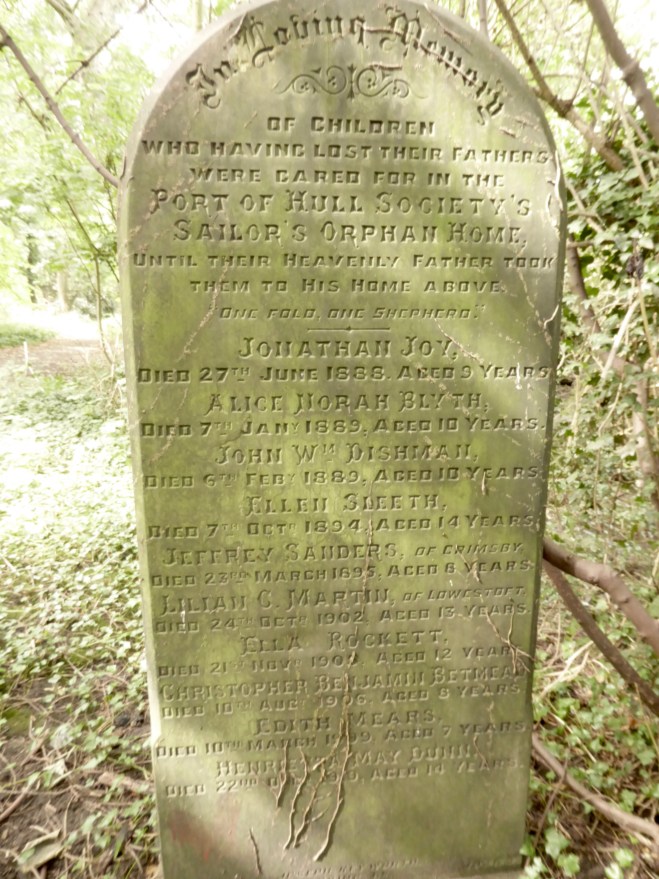
On 7th October 1894, Ellen Sleeth, aged 14, died in the care of the Port of Hull Society’s Sailor’s Orphan Home. There is a memorial in Western General Cemetery

On 7th October 1920, the sale of the Rolston Estate took place after the sudden death of Major Haworth-Booth, with 1577 acres sold, including 9 farms, Rolston Hall, cottages, waterworks and a rifle range.

Orphan deaths, Sailor's Orphan Home

October 6th

site of Haltemprice Priory

On 6th October 1515, the Sheriff of Hull, Mr Mattison and 200 citizens fought the monks of Haltemprice Priory and threatened to pull down the monastery, over a dispute concerning jurisdiction over Wolfreton and Willerby, and fresh water supplies. Peace was restored by the Mayor of Hull, George Mattison and the issue was eventually resolved in the Star Chamber. One of many incidents in Hull’s ‘water wars’. photo shows site of the monastery.

On 6th October 1613, an enquiry determined that a chantry dedicated to St Mary, and a chaplain to celebrate daily services there, had been paid for by 6 1/4 acres of land, 10 messuages and 3 tofts, given to the town of Hedon by John de Burton and Henry Maupas. Chantries were abolished by Edward VI, along with other signs of Catholicism.

On 6th October 1670, Ann Barone was fined in the Patrington manor court for not making bread according to the assize – i.e. not the regulation size, weight etc.

On 6th October 1748, Mary Jackson, tenant farmer of Everingham, lost 36 of her 45 cattle to rinderpest, the cattle plague then affecting much of the East Riding.

On 6th October 1850, Hedon solicitor James Iveson, died after a long career controlling the political life of Hedon, a Rotten Borough described as ‘Lawyer-ridden’. He was also Town clerk, Mayor, land agent, and steward on behalf of the Constables of the Holderness Seigniory. The Iveson dynasty was involved in land enclosures, surveying and other profitable work. James was renowned for rudeness. Part of an ultra conservative council which for years resisted public health improvements. Collector of architectural remains from demolished churches. Engaged for some 20 years of protracted negotiation with Trinity House over Spurn Point.  portrait in Hedon Town Hall

On 6th October 1890, Chas Collier, aged 17 years, former pupil of Hull Trinity House School, died of typhoid fever in the Barque Miltiades off the west coast of Africa.

James Iveson, Hedon Town Clerk

October 2nd

On 2nd October 1200, King John gave permission for an annual fair at Howden lasting a week; by the 19th Century it had become the biggest horse fair in England, but by 2007 Howden Fair had reduced to a 1-day event.

On 2nd October 1504, Thomas Henrison, husbandman of Skipsea, claimed sanctuary at the church of St John, Beverley, for debt.

On 2nd October 1518, Thomas Weston, a ‘singingman’, from Snaith, claimed sanctuary at the church of St John, Beverley, for debt.

On 2nd October 1541, the Privy Council of England sat in Hull.

On 2nd October 1658, Capt Robert Hildyard of Patrington left £10, half the interest of which was to be used to repair the bell frames, and the other half distributed to the poor for ever. photo shows his memorial in St Mary’s Lowgate, Hull.

On 2nd October 1738, Dick Turpin, alias John Palmer, was arrested for breach of the peace, shooting a gamecock in Brough and threatening to shoot a man. He was held in Beverley, where the JPs committed him to trial at York. It was believed that while living in East Yorkshire posing as a horse dealer, he took frequent trips to Lincolnshire to steal horses. He was hanged in York 7.4.1739. photo – Welton

On 2nd October 1883, Arthur Mallaby Illingworth, aged 7 months, died of scarlet fever. An epidemic had affected Hull since the previous year, killing over 600 people, mostly children under 5.  A brother born the following year, and named Arthur Mallaby Rawnsley Illingworth, died at 18 months, probably of the same cause.


August 21st

On 21st August 1821, Zachariah Charles Pearson was born in Hull.  Ship’s captain, later ship owner.  Sheriff of Hull 1858, Mayor 1859 – 1862. In 1860, he gave 27 acres to the town for a public park, now Pearson Park. During the American Civil War, he sold arms and equipment to the Confederates, it is said to ensure a supply of cotton to the Hull cotton mills.   He lost several ships to action by the US Federal Navy and was made bankrupt in 1863. He resigned all public posts, and was disgraced, never regaining his former position. Died 29.10.1891

On 21st August 1833, the flying buttresses at the northeast of the tower of St Patrick’s church, Patrington, were blown down and damaged the roof during a violent storm.

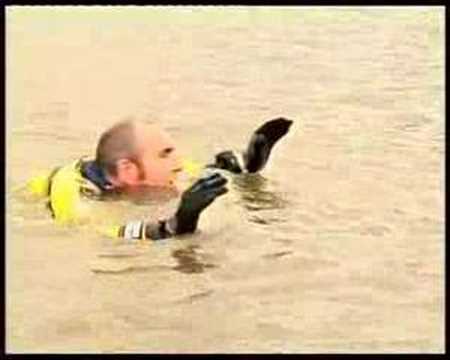
On 21st August 2005, Hull businessman Graham Boanas waded across the Humber, from Brough to Whitton, one of the most dangerous waterways in the UK, to raise money for charity.  The only recorded instance of this feat.

graham boanas

August 14th

On 14th August 1715, John Burdas, bricklayer, aged 26, placed a “ffaine” (possibly a weather vane?) on top of the newly-repaired top of the steeple of St Patrick’s church. This required him to stand for some hours with one foot on the top stone and the other foot on the top of a ladder ‘to everyone’s wonder and admiration’.

On 14th August 1831,  William Stephenson of Beverley had his will registered at York Assizes, the main beneficiary being Dr Alexander Turnbull of Hull. The doctor sued witnesses to the will who alleged it had been improperly drawn up. He lost his case, and left Hull soon afterwards.

On 14th June 1934, coxswain George Leng of Flamborough lifeboat Forester rescued 4 men from the cliffs at Thornwick Bay; they were in danger of drowning and unable to climb higher, in great danger as the tide had not reached its height. He threw them a line and got them into the lifeboat.

On 14th August 1937, Hull Baseball Club won the National Baseball Assn Open Challenge Cup 5-1 against Romford Wasps. Baseball was played at Craven Park until the outbreak of WW2.

On 14th August 1943, a company of 200 ‘British Pioneers’ was drafted to Hull for work on the docks, due to an increase in the number of ships carrying cargoes of war materials.


Pat church

July 2nd

On 2nd July 1642, the Royalist ship Providence, commissioned by Queen Henrietta Maria, evaded Parliamentary ships by entering Keyingham Creek, which was too narrow for the larger ships, and landed a consignment of arms from Holland for the Royalist army. With help from local people, they unloaded ammunition which was taken to the king at York.

On the same day, the Royalist army secured Hull Bridge, Tickton, on the Beverley side, to prevent attacks from Hull and stop provisions reaching Hull, and evicted constable William Cuthbert and his family at midnight.

On 2nd July 1644, Sir Thomas Metham of Metham near Howden,  died at the Battle of Marston Moor fighting on the Royalist side, captain of the Yorkshire gentlemen volunteers.

On 2nd July 1830, Hull whaler Progress was wrecked in a storm when iced in near the Davis Strait; 19 whalers were wrecked or lost that season, 4 of them from Hull.

On 2nd July 1837, Hull whaler Swan was sighted off Spurn Point as a memorial service was being held in Hull for the crew. They had been away for over a year and had been trapped in ice. 25 of the 48 crew had died.

On 2nd July 1954, Harold Macmillan, Minister of Housing and Local Government, approved the amended Hull Development Plan, regenerating the city after the bomb damage of the war. Hull Georgian Society lamented the loss of buildings such as many on High Street, the whole of Nile Street and houses in Lowgate. Not all of the proposals came about – there was to have been a ‘town park’ open area from Holy Trinity to Princes Dock.