December 26th

On 26th December 1220, William de Forz II, Count of Aumale and Lord of Holderness was with King Henry III at the Royal court at Oxford; the King made an appointment William hoped to get; disappointed, he left Oxford for Lincolnshire, and began a rebellion, known as the war of Bytham.

On 26th December 1489, George Gusterd, weaver of Bishop Burton, claimed sanctuary at Beverley for the murder of a servant of Edward Barnaby, a gentleman. He did not know the servant’s name.

On 26th December 1495, William Middleton was threatened with a pole-axe by John of Cottingham, John of Wawne, Thomas Warde, Robert Bate, and (- ) Mykill, and was so afraid for his life that he took sanctuary in Wawne church and stayed there for 10 hours, afterwards leaving the area. He applied to the Chancery Court for leave to prosecute his attackers, but the outcome is not recorded.

On 26th December 1645, Rev Nicholas Osgodby was reported to be using the forbidden Prayer Book in secret.

On 26th December 1750, the chapter house roof of Howden church collapsed, to join the rubble of the chancel which had collapsed in 1696.

On 26th December 1890, residents of Hornsea had a fair on the frozen surface of the Mere, and a sheep was roasted on the ice.

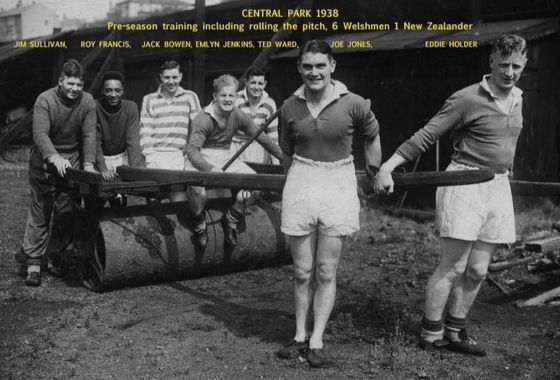
On 26th December 1955, Roy Francis played his last game after 6 years with Hull FC, and became UK’s first black professional sporting coach, and team manager 1971 to 1973.
roy-francis

December 22nd

On 22nd December 1530, Beverley draper William Leryfax wrote his will, and appointed as guardians for his son Robert the priors of Watton Abbey and Meaux Abbey. In 1539, both abbeys were dissolved, and the subprior of Watton had been hanged in chains in 1537 for his part in the Pilgrimage of Grace.

On 22nd December 1580, the Hull Mayor and aldermen set the price of ale at a penny for a quart and a pint outsales, and a penny a quart and a gill in the alehouse.

On 22nd December 1802, George Knowsley of Cottingham Grange held a meeting at the Duke of Cumberland, Cottingham, to propose the building of a canal from Cottingham to Hull; the aim was to reduce transport costs and establish a local grain market. The Napoleonic Wars caused the project to be shelved, and it was never revived.

December 13th

thwing meteorite

On 13th December 1760, John Courtney, gentleman, reported in his diary being awoken at midnight by the sound of bells ringing to announce that Hugh Bethell had declared himself a candidate for Parliament. The bells rang all day. A week later, Bethell changed his mind and withdrew his name.  He served as Beverley MP 1768-72.

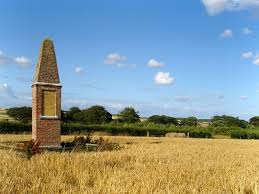
On 13th December 1795, at 3p.m., a meteorite weighing 56 pounds landed in a field near Wold Cottage, Thwing, home of Capt Edward Topham. It embedded itself 9 inches into the soil, weighing 56lbs, and 3 ft long. Capt Topham displayed the meteorite in London at a charge of 1shilling. He raised a brick obelisk on the landing site (see photo). The meteorite is now in the Natural History Museum, and is the origin of the name of Wold Top Brewery’s ‘Falling Stone bitter’.

On 13th December 1816, Frederick Brown, 60, was buried in Holy Trinity, Hull, after dying in the workhouse. Born in Guinea, he worked as a labourer in a number of jobs in Whitby and Hull. In 1794 he was acquitted of burglary by a Hull jury, apparently a case of being mistaken for another black man.

On 13th December 1830, Joseph Robinson Pease, JP, recorded in his diary an attempt to swear in special constables to deal with the ‘Swing Riots’ by agricultural labourers protesting about high rents, low wages, and the introduction of new machinery. However, they found it difficult to recruit in Cottingham.

On 13th December 1842, Moses Roper, student and escaped slave, gave a lecture at Beverley Guildhall on his personal experience of slavery in the USA, in which he exhibited instruments of torture used on slaves. He lectured extensively and published an autobiography.

On 13th December 1889, John Nicholson reported seeing the “Plough Lads’ (groups of men not hired on farms) going round Beverley, dancing and asking for money or drink. They dressed in ‘motley garb’, with one dressed as a woman with a broom, one (Blether Dick) with a bladder on a stick, one with a coat covered in strips of rag. “Often … at lonely houses they are rude and bold, demanding money or drink in such a way as to terrify the women who have been left at home”.  

December 2nd

On 2nd December 1614, a woman bone-setter from South Dalton set the leg of John the gardener at Londesborough House after he had broken it in a fall from a horse. The Earl of Cumberland paid the costs of his servants’ medical treatment.

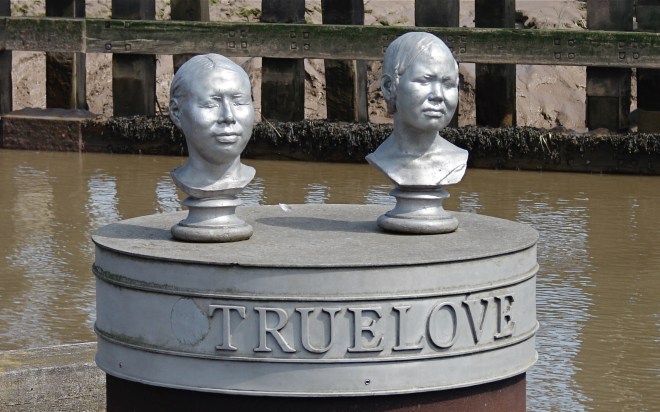
On 2nd December 1847, Memiadluk and Uckaluk, of Cumberland Sound, Greenland, gave the first of several exhibitions of their traditional clothing, kayak and hunting equipment on their British trip to raise money and awareness of the plight of their people. Greenlanders were being encouraged to use modern hunting equipment, but supplies were irregular with no permanent British settlement. Photo shows their statues at the side of the River Hull.

On 2nd December 1985, Philip Larkin, poet and librarian, died in hospital in Cottingham of oesophageal cancer at the age of 63. Librarian, University of Hull 1955-85. CBE, Companion of Honour., Queen’s Gold Medal for Poetry. (born 9.8.1922 Coventry)


truelove.JPG

November 26th

On 26th November 1319, Geoffrey Fitz Hugh and John de Wetewang conveyed property in Lyle Street (Mytongate), Hull,  to Hugh and Ellen Le Taverner.

On 26th November 1525, Richard Haton, gentleman, from Hayton, claimed sanctuary in St Mary’s Church, Hertford, and confessed to the coroner  that in October he had broken into a parish church in Essex and stolen a silver chalice; and in January he had burgled a house in Bucks and stolen jewellery and money. He abjured, i.e. renounced his country, and left through the port of Southampton.

On 26th November 1597, Sir Francis Barrington, Lord of the Manor of Cottingham (and uncle by marriage of Oliver Cromwell) wrote objecting to Hull Corporation’s drainage plan to move surplus water through his clough at Cottingham, which he said would risk flooding in the area.

On 26th November 1831, Joseph Robinson Pease, JP, spent his third consecutive day swearing in Special Constables to deal with anticipated riots; various sources say between 800 and 2,000 were sworn. James Acland had formed the Hull Political Union, and held meetings critical of the Hull Corporation, and said the aldermen were of out of touch and did not live in the town.

On 26th November 1847, Pocklington Canal Company agreed, at the Feathers Hotel, Pocklington, to sell the canal to the York & North Midland Railway, which also purchased the Market Weighton and Leven Canals. The canal had never been a financial success, and the railway company subsequently raised canal tolls so as to drive freight traffic onto the trains.

Pocklington canal
Melbourne lock

October 15th

On 15th October 1536, Hull besieged by troops of local men, from of Holderness, Cottingham, Beverley and Hullshire supporting the Pilgrimage of Grace.  William Stapleton reported he had trouble restraining the Beverley men under his command from setting fire to shipping in Hull haven. He sentenced 2 ‘unmanageable’ followers to death, but reprieved both after inflicting one with the punishment of being towed behind a boat by a rope attached to his waist.

Pilgr Grace

September 14th

On 14th September 1484, Anne de la Pole, great granddaughter of Geoffrey Chaucer, was betrothed aged 8 to the Duke of Rothesay, future King James IV of Scotland, as part of peace negotiations between the 2 countries. Her brother John, 1stEarl of Lincoln, was then Heir Presumptive to the English throne. Anne never became Queen, however, as on the death of her uncle Richard III, she was sent to a convent and became a nun at the Abbey of Syon.

On 14th September 1581, the Hull Mayor and aldermen agreed to pay 12d per week towards the keep in God’s House (i.e. the Charterhouse) of keelman Christofer Harrison, on account of his being blind and aged.

On 14th September 1643, Sir Thomas Fairfax, Hull governor, opened the sluice gates to flood all areas from Derringham Dyke to Dunswell, during the 2nd siege of Hull, to keep the royalist guns away from the town.

On 14th September 1828, Thomas Thompson MP died aged 72. A Methodist and member of the Clapham Sect, he provided land to poor families to keep them out of the workhouse. Wrote History of Church & Priory of Swine. Father of Thomas Perronet Thompson. (b 5.4.1754  Swine)

On 14th September 1853, Hugh Edward Strickland went to examine railway cuttings near Retford, and stepped out of the way of a goods train and was killed by a train coming from the opposite direction. Inventor of the power loom, ornithologist and geologist, Fellow of the Royal Society. (b2.3.1811 Reighton)

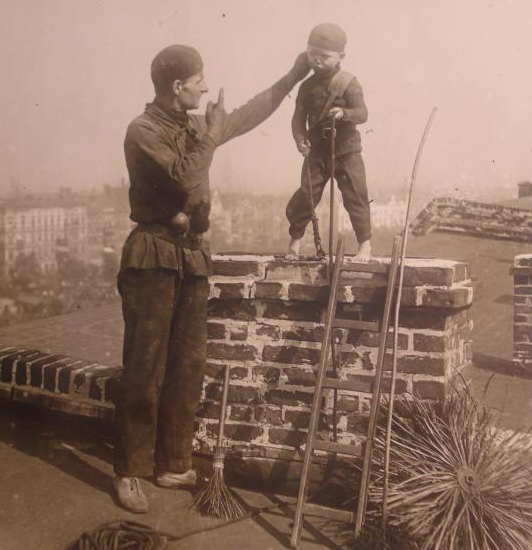
On 14th September 1861, John Kingston, chimney sweeper and soot dealer of 16 Worship St, Hull, gave his annual bill to Hull Charterhouse for £5 for sweeping chimneys, with a note that his prices would rise in the following year due to a new law forbidding sending children up chimneys to clean them.


childsweep2

September 4th

On 4th September 1303, Sir Ralph de Heengham and a jury of 12 men held an inquiry into ownership of land in Hull and Myton, west to Ferriby, and of a highway to and through Anlaby to Ferriby.

On 4th September 1650, Ann Hudson of Skipsea was tried as a witch at York Assizes, and evidence was given to the court by Dynah Hunmansby and Alice Stevenson that her victim, Susannah Keld, had been bewitched and very ill until she had scratched Ann Hudson and drawn blood, when she began to recover. The events had happened 12 years previously. The surviving records do not say whether Ann Hudson was convicted and sentenced.

On 4th September 1709, the congregation of Cottingham church gave 3s6d in a collection for the Market Rasen fire, Lincolnshire. A collection in the dissenters’ meeting place raised 4s 6d.

September 2nd

On 2nd September 1643, the Royalists under the Earl of Newcastle began the second siege of Hull. The Governor, Lord Ferdinand Fairfax, sold silver to the value of £400 4s to Hull Trinity House, in order to pay his soldiers. Trinity House sold the silver the following year at a slight profit.

On 2nd September 1861, the lease on Fishwicks’ Mill, butt Lane, Beverley, had expired, and the mill was demolished. The Council tried to repossess the land, but local people considered it to be common land, and 25-30 rioters destroyed the house and burnt it to the ground.

On 2nd September 1871, William (Billy) Ringrose was born in Ganton, where he became a carpenter, but was coached by a cricket professional employed by the Legard family at the Hall, and became a renowned professional cricketer, playing for 57 games for Yorkshire.

On 2nd September 1922, Hull Kingston Rovers played its first game at its new ground, Craven Park, losing 3-0 to Wakefield. The new grounds also had 14 tennis courts, and meeting rooms. The official opening did not take place until November. This was the club’s 4thground, the first 2 being in West Hull.

On 2nd September 1950, MV Dundalk Bay arrived in Hull from Mombasa, bringing 1,014 people displaced by WW2. After processing, they were dispersed to various camps throughout the UK. Many Poles, Latvians, Lithuanians and others unable to return to their homes came to find work and settle in England; some emigrated again to Canada.

On 2nd September 1967, the Flamborough lifeboat Friendly Forester rescued 6 people cut off by the tide.

Old Craven Park EAW207783

August 28th

On 28th August 1643, after the Parliamentarian army fell back to Hull, the Royalists looted and plundered Beverley and nearby villages, even the residents who were Royalist supporters. Another band of Royalists entered Cottingham, and many residents fled to Hull, including Robert Burton, the agent of Sir Thomas Barrington, who had land in Cottingham.

On 28th August 1860, Pearson Park, Hull’s first public park, was inaugurated with a 2-day event and a parade 2 miles long. 30,000 visitors came to Hull by train to take part in the event, which included tree planting, a formal dinner, and fireworks.

On 28th August 1900, Duggie Wakefield was born in Hull. Comedian, star of 13 films in the 1930s, and revue artiste. Also brother in law of Gracie Fields. Considered as popular in the North as Max Miller was in the South. Died 14.4.51

On 28th August 1915, Percy Cawkwell, aged 19, was on top of a tram in Beverley Road, Hull, when a teenage girl called him a ‘slacker’ for not being in uniform.  He immediately decided to sign up, despite being blind in one eye. He was accepted into the Royal Army Medical Corps and became a stretcher bearer.

On 28th August 1952, Mary Dawson Elwell died, aged 78, at Bar House, Beverley. Artist, her early works in the name MD Holmes. She married Fred Elwell RA in 1914, and later works signed are M D Elwell.  (b Liverpool 13.8.1874) photo shows ‘A garden in Beverley’


Mary Elwell A gdn in Bev