February 29th

On 29th February 1912, Frederick Richard Soulsby, Master of the steamship Bayardo, was examined as part of a Formal Investigation in Hull Law Courts into the stranding and loss of his ship, returning from Gothenburg to Hull. The Bayardo went aground on 21st January on the Middle Sand in the Humber and could not be refloated. Soulsby was found to be at fault, and was severely censured.

On 29th February 1920, Ronald William Huzzard was born in Hull. A Quaker, he refused to be recruited during WW2, and was an active peace campaigner; he was the first General Secretary of Labour Action for Peace, and was awarded the Frank Cousins Peace Award by the TGWU. (died 30.12.1988)

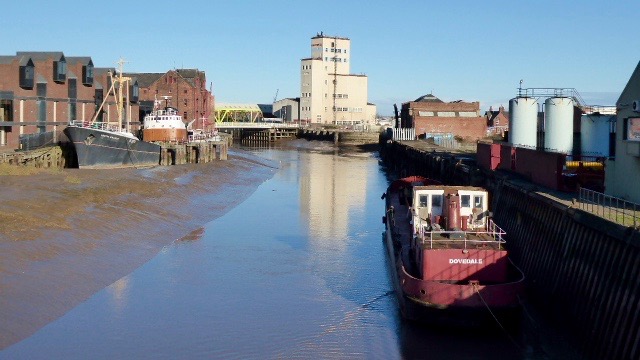
On 29th February 1960, Hull’s last sidewinder trawler was launched at Beverley. The Arctic Corsair was built by Cook, Welton & Gemmell for the Boyd Line. It is now a museum run by volunteers, moored in the River Hull.

Arctic Corsair

February 26th

On 26th February 1381, Archbishop of York Alexander Neville announced his intention to visit Beverley, provoking a mass walk-out of Beverley clergy, most going to Lincoln or London. Neville replaced them with vicars choral from York but failed in his power struggle.

On 26th February 1552, Sir Michael Stanhope was executed on Tower Hill, London, for instigating rebellion, and conspiring to murder John Dudley, Duke of Northumberland. Stanhope was a Nottinghamshire knight, twice Governor of Hull, where the townspeople complained to the Privy Council of his high-handedness. He also acquired a great deal of land after the Dissolution, including in Sutton-on-Hull.

On 26th February 1671, Robert Constable, Viscount Dunbar of Burton Constable, was indicted at Middlesex Sessions Court with the murder of Peter Varnall and confessed. Hi accomplices were Peter Savage and John Fennick. It seems that Varnall was the innocent victim of young aristos on a drunken spree.

On 26th February 1869, Christopher Sykes, MP for the East Riding of Yorkshire, moved the Bill which later in the year became the Sea Birds Preservation Act, supported by Rev HF Barnes-Lawrence of Bridlington. Up to 232,000 seabirds and eggs were killed, often shot for sport, each breeding season. This earned Sykes the nickname ‘The Gulls’ Friend’. See cartoon below.  Link is to film of ‘climmers’. https://www.youtube.com/watch?v=B5ynIfnmVK0

On 26th February 1903, Martin Samuelson, marine engineer, died at Hessle, aged 78. Owner of Martin Samuelson & Co, of Neptune Street, Hull, and later Sammy’s Point, who built hydraulic presses, steel boilers and early steel vessels, and the North Bridge. Hull councillor from 1853, Sheriff 1857, Mayor 1858, first colonel of Royal East Yorkshire Volunteer Artillery and JP. (born 2.1.1825 in Liverpool).

On 26th February 1914, the Coverdale family of Hollym played a football match against another family with 11 sons, the Charlesworths of Scunthorpe. The Coverdales won 3: 0.

On 26th February 1935, Thomas Edward Lawrence, known as T.E.Shaw, (‘Lawrence of Arabia’) left Bridlington when discharged from the RAF; he had been supervising armour-plating power launches for target practice. Whilst in Bridlington, he had lived at the Ozone Hotel, Bridlington (now Royal Yorkshire Yacht Club). There is a sundial dedicated to him in South Cliff Gardens.

On 26th February 1942, Pilot F/Sgt Reginald Francis Robb and 5 crew of Wellington bomber Z8536 took off from RAF Pocklington and crash landed at Yapham due to an engine fire. They jettisoned their bombs, but were caught in the blast and all the crew were lost. 4 are buried in Barmby Moor.
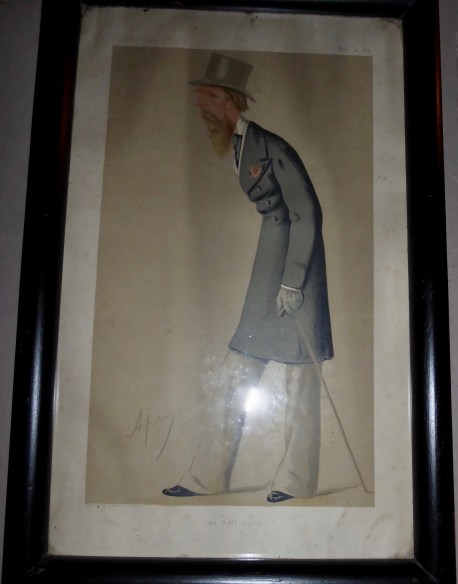
Christopher Sykes MP

February 19th

Pilgr Grace

On 19th February 1408, Henry Percy, 1stEarl of Northumberland, was killed in battle against King Henry IV, after supporting Edmund Mortimer’s claim to the throne. The Percies held lands across Yorkshire, the Lakes and Northumberland, but their main seat appeared to be Leconfield until the 16thC.

On 19th February 1499, William Fechet of Harpham claimed sanctuary at St Cuthbert’s church, Durham, for assaulting William Fox on 22ndOctober, striking him in several places with a sword; he assumed that Fox had died from his wounds, and fled.

On 19th February 1537, Sir Ralph Ellerker, the elder, chased Sir Francis Bigod and his men out of Beverley, and took 62 prisoners, who were taken to Hull. Bigod escaped. This appeared to be the end of the Pilgrimage of Grace in East Yorkshire.

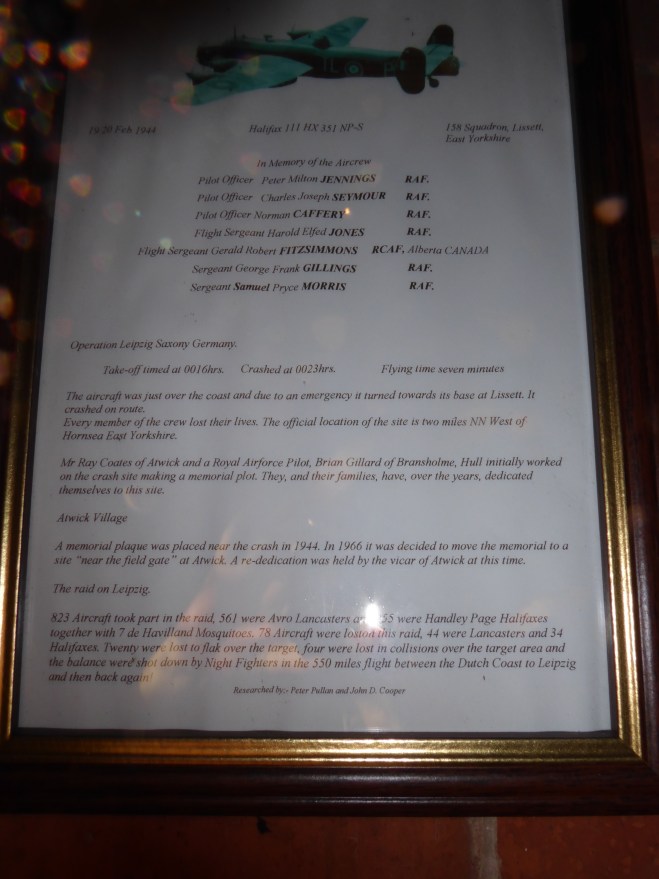
On 19th February 1944, a Halifax bomber crashed 2m NNW of Hornsea shortly after take-off, killing all 7 crew. Photo -notice in Atwick church. Sadly, I was unable to find the memorial.

Atwick Halifax crash

February 18th

Pilgr Grace

On 18th February 1537, Sir Francis Bigod entered Beverley with 3-400 men on the renewed Pilgrimage of Grace.

On 18th February 1620, The King’s Players performed 5 plays at Londesborough House over a 4-day period at Shrovetide, for the Earl and Countess of Cumberland. The Cliffords regularly had entertainment at the house, hosting 13 different companies of players, and many musicians. Shakespeare had been the company’s leading playwright (he died in 1613).

On 18th February 1657, Sir Henry Slingsby, a Royalist prisoner in the Hull blockhouse, attempted to bribe Captain John Overton and incite the soldiers to go over to the King. Ralph Waterhouse, commander of the South Blockhouse, was also approached by Slingsby, who said that King Charles had offered him a commission, and said 600 men were at Paull ready to march into Hull. Slingsby was executed in 1658.

On 18th February 1786,  Elizabeth Dearing, aged 20, died in Fitling, cause unknown. She was the 3rdgeneration of the Dearing family to be recorded in the Humbleton parish register as Papist. Later generations who died there are not so described.

On 18th February 1945, Thomas Sheppard died aged 68 in Hull. He was a self-taught geologist, archaeologist and prolific author. He devoted 40 years of his life to Hull’s museums, abolished admission charges in 1902 and increased visitors to 2,000 per week. (born 2.10.1876 in South Ferriby) see photo

Thomas Sheppard Monster Footprint

February 15th

On February 15th 1518, Richard Jakson of Hogett on the Wolds (presumably modern Huggate) claimed the sanctuary of St John’s church, Beverley, for debt.

On February 15th 1530, John Gillco, labourer of Painsthorpe, fled to his parish church in Kirby Underdale from York, where he had assaulted and killed John Notyngham at 4p.m. the previous day. A coroner’s inquest the same day reported that the killing took place within the liberty of the monastery of the Blessed Mary.

On February 15th 1793, a contemporary report said a horseman galloped into Hull with urgent news that men had landed near Patrington from a privateer. Nervous of the risk of French invasion, part of the Corps of Invalids stationed at the Citadel and several volunteer seamen were immediately dispatched to meet the enemy. A 2ndmessenger met them on the road near Hedon, and informed them that instead of French enemies, those who had landed were the crews of several colliers, who had left their ships to avoid the press gang. HM Sloop of War, The Queen, was lying at anchor in the Humber.

On February 15th 1898, James Ashton, 39, skipper, of Witty St, Hull, was lost with his crew when trawler European foundered in the North Sea.

press-gang

February 7th

On 7th February 1518, Hull weaver John Watson claimed the sanctuary of St John’s church, Beverley, for debt.

On 7th February 1519, John Gilson, a gentleman of Garton claimed the sanctuary of St John’s church, Beverley, for debt. It is not known whether this was Garton on the Wolds or Garton in Holderness.

On 7th February 1651, the Mayor of Hull wrote to the Sheriff Thomas Raikes concerning the partitioning of Holy Trinity church to allow soldiers to be billeted there, whilst services could continue in part of the church.

On 7th February 1799, Lutheran Pastor Triebner came to Hull to preach to the Germans employed in the two Sugar Houses in Drypool.

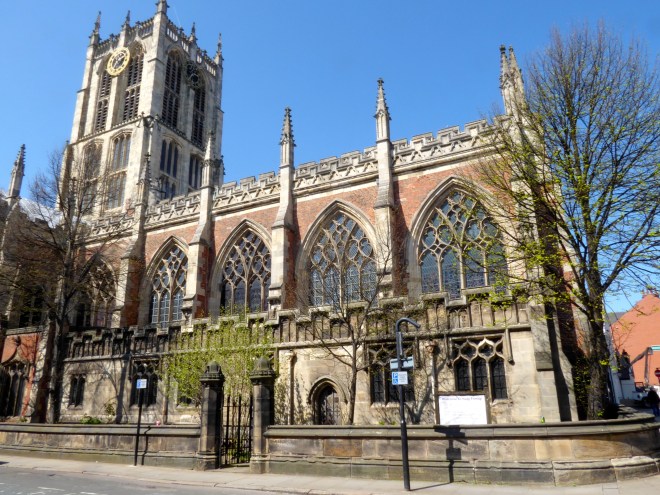
Holy Trinity

February 5th

On 5th February 1538, widow Mabel Brygge, 32, servant of Holmpton, was examined by an enquiry headed by Sir Ralph Ellerker the younger. She was alleged to have carried out a ‘black fast’ with the aim of injuring King Henry VIII and the Duke of Norfolk, in relation to the King’s divorce and the Reformation. She was executed at York, along with John Dobson, vicar of Muston, and John Ainsworth, priest, who had also spoken out against the royal supremacy and Act of Succession.

On 5th February 1856, Humphry Sandwith, junior, MD, aged 34, had a public breakfast given in his honour as a war hero at Royal Station Hotel Hull.  He gained the Orders of St Stanislaus, Nishan Iftahar and Mejidie, and French Legion of Honour in the Crimean War. He was head surgeon at Hull General Infirmary 1847-48. Author of a number of memoirs, as well as 3-volume novel “Minsterborough’ about his upbringing in Beverley.

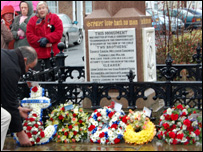
On 5th February 1909, George Gibbon, Melchoir Chadwick and Thomas Leng Major, fishermen, lost their lives attempting to rescue the crew of the coble Gleaner when it capsized. Their own boat also capsized, and all 6 lives were lost. A monument to this ‘Conspicuous Act of Bravery’ is in the village centre.


flambro

February 4th

On 4th February 1516, John Holme, labourer, of Ottringham, claimed sanctuary at the church of St John ‘for divers felonies’.

On 4th February 1634, William Kitching, 39, of Little Driffield, and 9 other men, were hanged at York for rioting at Hull about corn, for demolishing the dwellinghouse of Edward Cooper, and for stealing clothes. None of those convicted were from Hull.

On 4th February 1783, Hull Trinity House accepted the proposal of Mr Blaydes of Hull to build a yacht for £500; they used the yacht Humber for 23 years.

On 4th February 1809, Ebenezer Bettison and 2 others, of Hull, drowned during a storm when going in a boat to secure a lighter which appeared to be in danger.

On 4th February 1821, Thomas Wilkinson Wallis was born in Hull. The son of a cabinet maker, he became a wood carver. He was a pprenticed to Thos Ward in Waterworks St, Hull, and trained at the Mechanics Institute. His work can be found in the Victoria & Albert Museum, London. photo shows one of his carvings

On 4th February 1900, Sir Leo Schultz (Joseph Leopold Schultz) was born in Hull. He was  the Leader of Hull City Council from 1945-79. Was awarded the OBE in 1946 for war work, including as an air raid warden, and for his campaign to provide all households with a bomb shelter. He was knighted in 1966 for services to local government. Honorary Doctor of Law Hull University 1979. d 1991. photo above

On 4th February 1968, Hull trawler Ross Cleveland capsized and sank with all but 1 of the 20 crew. An enquiry concluded the ship was unable to cope with ice build-up. The wreckage was located in 2002.

St Andrews Dock memorial

January 30th

Mary Ward

On 30th January 1499, Robert Colstone of Hull and Marmaduke Pateson of  Flambrough claimed sanctuary at the church of St John, Beverley – Colstone for debt and Pateson for the murder at Flambrough of John Mottows.

On 30th January 1645, Mary Ward died aged 60. A cousin of the Wright brothers of Welwick, she spent 5 years living there with her grandmother and spent a further 6 years at Osgodby. She founded the Institute of the Blessed Virgin Mary and championed women’s education. She was declared Venerable in 2009. (b23.1.1585 Mulwith Yorks) see photo

On 30th January 1901, Beverley Mayor Elwell proclaimed the accession of King Edward VII to a large crowd at the Market Cross, despite bitterly cold weather and a snow storm.

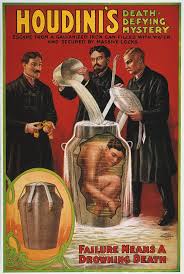
On 30th January 1913, Harry Houdini, escapologist, performed at the Palace Theatre, Hull. He escaped from a canvas sea bag and straps; the challenge was signed by seamen Dan Morris, Tom Carr and Robert Mason.

On 30th January 1983, Captain Derek Wharton of North Sea Ferry Norland spent the day sailing back and forth in Bridlington Bay, having arrived back from service in the Falklands War a little too early for the homecoming celebration planned for 1stFebruary.

Houdini copy


January 29th

On 29th January 1505, Richard Naperton, labourer, of Goodmanham, claimed sanctuary at the church of St John, Beverley, for debt.

On 29th January 1885, William Barlow, 15, cook, was lost overboard from Hull trawler Only Son in the North Sea.

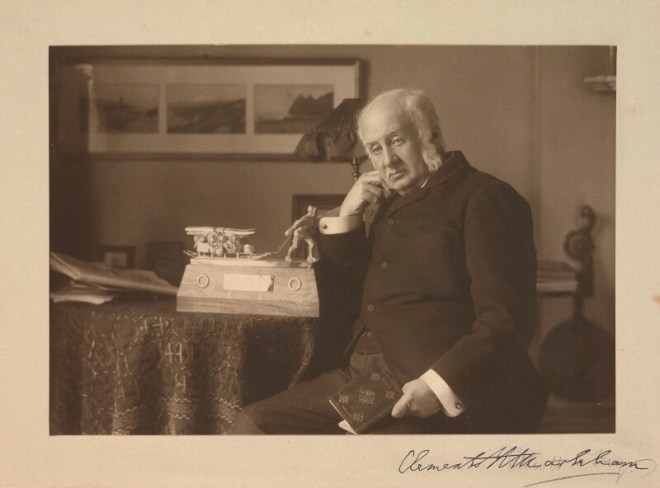
On 29th January 1916, Sir Clements Robert Markham KCB, FRS of Stillingfleet died aged 85. Born in Stillingfleet, he became a Navy officer, explorer and geographer, Secretary of the Royal Geographical Society, organiser of Scott’s 1901-4 National Antarctic Expedition, author, and organiser of the 1860 expedition to collect cinchona for quinine.

sir clemts markham