November 13th

On 13th November 1002, English King Ethelred ordered the massacre of all the Danish in England on St Brice’s Day. East Yorkshire being in the Danelaw, where Danish and English were well integrated, the order appears to have been ignored here.

On 13th November 1684, John Largeman of Patrington married for the 3rdtime; he married his second wife Elizabeth Dunn on 31stJuly, and she died in September; his first wife had died in April of the same year. It is not known what killed his 3 wives, although plague is recorded in parts of Yorkshire in that year.

On 13th November 1916, was a private in the Hull Sportsmen’s Pals Battalion, East Yorkshire Regiment, at the Battle of the Ancre, WW1. His heroism in seizing German positions alone was rewarded with a Victoria Cross (for valour). (b 28.6.1897 died 21.2.1941) photo shows members of the 13th Battalion (Hull Sportsmen)
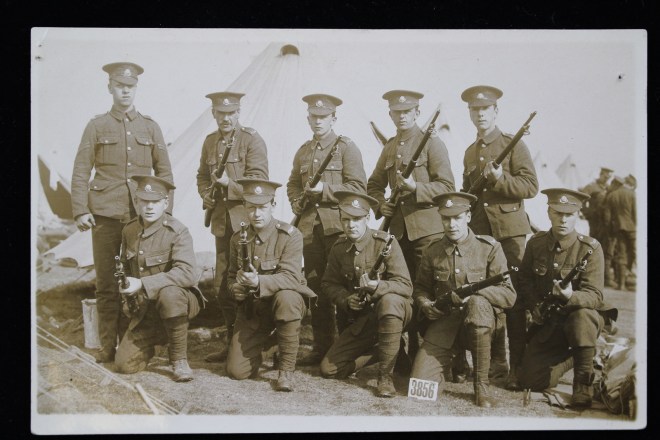
Hull PALS 13Btn sportsmen

November 11th

Lister's Hospital, S Church Side


On 11th November 1642, the building work at the new William Lister’s Hospital in South Church Side, Hull, was inspected. They were surprised to find Mr Gough, Reader at Holy Trinity church, living there, in rooms allocated to the Assistant Preacher, which post was vacant at the time. Eventually, agreement was reached with the Mayor and Aldermen whereby Gough was allowed to remain, and given the post on a temporary basis.  He appears to have still been in post 20 years later. A dispute arose in 1749 over the same rooms, and post, when the trustees decided that the Mayor and aldermen had no power to ‘intermeddle’ this time. photo shows the Hospital

On 11th November 1899, the Evan Fraser Hospital opened at West Carr, Sutton-on-Hull as an isolation hospital for smallpox patients, named after a surgeon and Hull alderman (d.8.4.1906). The hospital replaced the Garrison Hospital on Sammy’s Point. Police were posted outside to prevent access, and the city banned religious services and the loan of library books.

On 11th November 1920, Mr Arthur B. Reckitt unveiled memorial tablets at Reckitt’s Institute, Dansom Lane, Hull, to staff who had died in World War 1. 159 Reckitts employees died.

On 11th November 1942, Abdul Rahman, aged 22, seaman, was lost to enemy action whilst in Merchant Navy on board SS City of Ripon of Hull, in Atlantic convoy.


November 9th

On 9th November 1309, King Edward II visited his Royal park in Burstwick, his main residence in the north.  Piers Gaveston was Lord of Holderness.

On 9th November 1487, John de la Pole senior, Duke of Suffolk, was stripped of most of his property and estates as a result of his son’s rebellion (the Earl of Lincoln) in support of Lambert Simnel.

On 9th November 1488, John Fernell, yeoman, of Asselby, killed Thomas Rodley with a staff, and then made his way to Beverley, where on 17.11 he claimed the sanctuary of the church of St John, and admitted the homicide.

On 9th November 1906, Capt Stensen and 5 crew of a Norwegian schooner carrying timber stranded at Withernsea in a gale. There were no casualties.

On 9th November 1916, Private Herbert Neal, 24, former Reckitt’s employee in the lead mill was killed in action with the East Yorkshire Regiment and is buried in Bazentin-le-petit, Somme, France. 2 of his brothers also served in the war, and only 1 survived to return home to Church St, Hull.

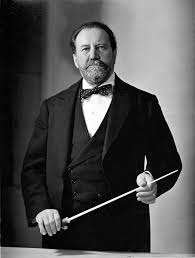
On 9th November 1923, Sir Henry Wood, originator of the Proms, made his first appearance as conductor of the Hull Philharmonic Orchestra, originally for one concert only. He stayed for 15 years, travelling from London to work with amateur musicians for a considerably reduced fee. An earlier contact with Hull was 1906 when Ethel Leginska performed for him in London.

Sir Henry Wood

November 7th

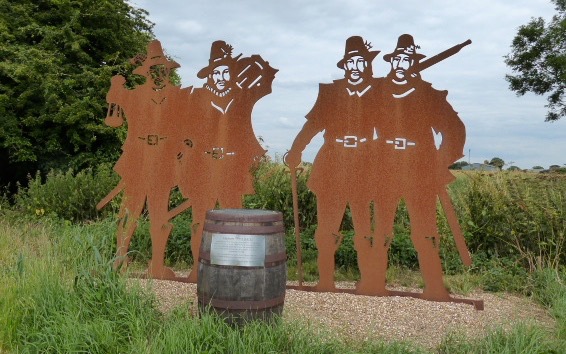
Gunpowder Plot memorial
Welwick

On 7th November 1605, Sir John Ferne, secretary to the Council in the North, sent confidential news to the Hull Mayor of the Gunpowder Plot, and orders to arrest Thomas Percy of Leconfield. An arrest warrant was issued the following day to the Bailiff, Chief Constable and constables of the county of Hull. However, Percy and the other conspirators were heading for Staffordshire.

On 7th November 1646, Sir Francis Cobbe of Ottringham was fined £72 as a Lieutenant-Colonel in the Royalist army (a delinquent) in order to recover his goods which had been sequestered by Parliament. He had been a member of King Charles’ Bodyguard.

On 7th November 1887, the crew of sailing ship Earl of Beaconsfield were rescued after the ship ran aground on sands off Aldbrough; the figurehead, representing Benjamin Disraeli, the Earl of Beaconsfield, can be seen in Hull Maritime Museum.

November 5th

On 5th November  1605, Sir Thomas Knyvet of Escrick, as Gentleman of the Bedchamber to King James I, he went to the House of Lords cellar to investigate a rumour and discovered Guy Fawkes and some gunpowder …

On 5th November 1740, Elizabeth Johnson’s charity distributed money to the 4 poorest families in Cherry Burton every year on this date.  Daughter of Dr Hodgson Johnson, she left £40 to be invested, adding to the 40s left by her father 16 years before.

On 5th November 1804, 7 of the 8 crew of the Cecilia Margaretha of the Duchy of Holstein died when the ship was driven ashore at Mappleton and wrecked on a trip from Liepaja, Russia, to Lisbon. photo shows Mappleton today

On 5th November 1854, James Elliott, private in the Coldstream Guards, died aged 22 at the Battle of Inkerman, Crimea; his memorial in Hedon church was ‘erected … to commemorate the event and to show that Hedon contributed its unit in defence of the liberties of Europe’.

mappleton.JPG

October 31st

On 31st October 1640, the gentry of Cottingham, Swanland and other villages petitioned Sir John Conyers to remove his regiment to other quarters, as they were eating up all their cattle fodder and supplies, and many other ‘insupportable damages and dangers’. Many troops had already been removed from Hull into the surrounding villages for similar reasons. The petition was not successful, although the troops did look for other quarters.

On 31st October 1646, Sir Robert Hildyard of Patrington was fined £610 as a Royalist (delinquent) in order to recover his goods which had been sequestered by Parliament. He was a member of the King’s Privy Council.

On the same day, Michael Wharton of Beverley was fined £1,600 for the same reason. He had been a captain in the Royalist army.

On 31st October 1793, John Woodhead, mason, was killed at work on the building site of the Neptune Inn, Whitefriargate. Hull Trinity House gave his widow a gratuity of £5 5s.

On 31st October 1833, the Humber pilots’ work for that day included taking men from Trinity House to relay the Bull buoy.

On 31st October 1929, George Jackson Bentham died suddenly, while boarding a train home, in the company of a young lady not his wife. Hull city councillor, JP, and MP for Gainsborough, he was the son of the founder of Wm Jackson & Son, and the company’s managing director. He changed his name by deed poll to that of his Liberal hero, Jeremy Bentham.


Pilot Office

October 25th

On 25th October 1037, Aelfric, Archbishop of York, placed the relics of the recently canonised St John of Beverley in a new shrine of gold and silver, ornamented with precious stones in the Collegiate Church of St John the Evangelist, Beverley.

On 25th October 1415, Michael de la Pole, 3rdEarl of Suffolk, died in battle, with 2 of his brothers. His brother William succeeded as Earl.

On 25th October 1841, Private Stephen Bennington, of Lockington, 20, batman to vet surgeon John Gloag, rode into the Russian guns at the Charge of the Light Brigade, Balaclava, and survived.  He was awarded the Crimea Medal with clasps. Also served at Inkerman and Sebastopol and was discharged from the service in 1859 with long service and good conduct medals. Gloag did not take part in the charge.

Light Brigade


October 17th

On 17th October 1285, Richard son of Walter le Pessoner, clerk, while sick and delirious in the hospital in Beverley, killed Brother Walter, his ‘dear master’; the jury declared death by misadventure, and imprisoned Richard indefinitely.

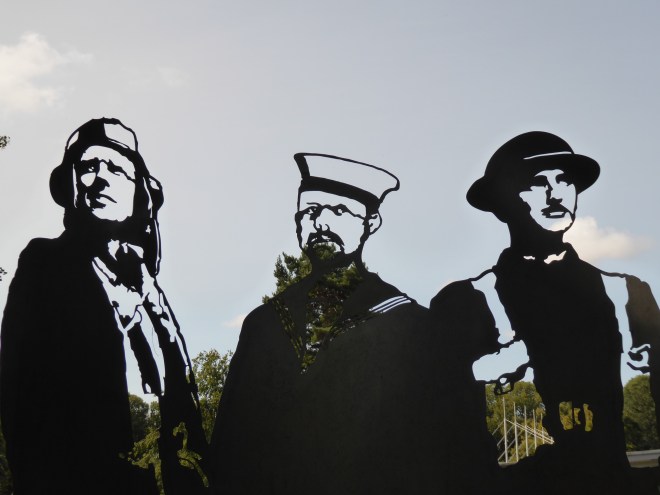
On 17th October 1917, former Reckitt’s employee Private Frederick Bartholomew Coupland, 29, was killed in service with the Royal Army Medical Corps, whilst bandaging a comrade’s wounds. Buried at Langemark, Belgium. photo shows Services Memorial, East Park.

Services memorial, E Pk

October 11th

ON 11th October 1536, Marmaduke Thomson, vicar of Preston, rang the church bell and called parishioners to meet at Nuthill, where he swore in local men to join the Pilgrimage of Grace. Around 300 Holderness men left to assemble at Sutton Ings. (& see 10.10)

On 11th October 1643, 1500 Parliamentary troops left the besieged town of Hull and after 2 attempts and many hours’ fighting, drove the Royalists out of all their positions around the town.

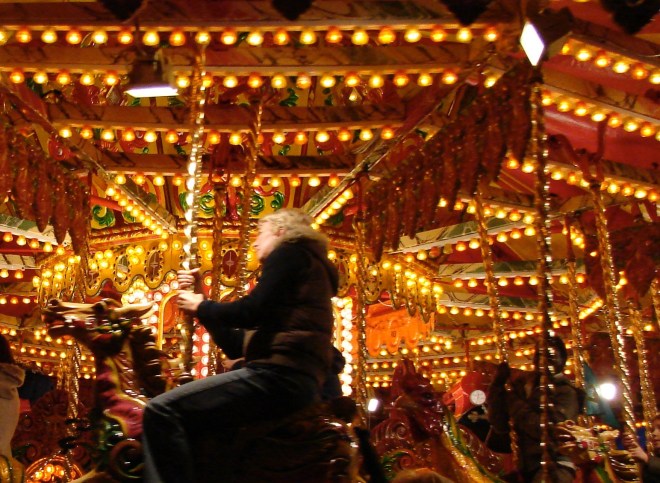
On 11th October 1782, Rev George Lambert described Hull Fair as ‘A season for the amusement of children and the gratification of gluttony’.

On 11th October 1929, Mrs Edith Robson officially opened Hedon Road Maternity Hospital, the successor to the free maternity home for poor mothers, which she gave as a gift, fully equipped, to Hull Corporation in 1915.


fair 07

October 10th

On 10th October 1536, a large crowd of armed men from Holderness supporting the Pilgrimage of Grace met on Beverley Westwood and Sutton Ings and chose captains.

On 10th October 1596, the Howden churchwardens gave 8d to Oswald Metcalfe, a poor man, licensed by My Lord Grace and the Council (i.e. given licence to beg while on his way to his home parish).

On 10th October 1918, former Reckitt’s employee gunner George Henry Saul, 26, died of wounds while serving with the Royal Garrison Artillery. Buried Etaples, France.

Pilgr Grace