January 27th

Pilgr Grace

On 27th January 1332, Sir John de Sutton was summoned to Parliament by writ and thereafter become Lord Sutton of Holderness.

On 27th January 1537, John Hallam and others captured during the attempt by the Pilgrimage of Grace to seize Hull were examined by local justices; Hallam and 2 others were condemned to death and the rest awaited the arrival of the Duke of Norfolk for a decision on their fate.

On 27th January 1599, the Earl of Pembroke’s Players arrived at Londesborough House for a week performing plays for the Shrovetide period, for payment of £15shillings.

On 27th January 1645,  14 Hull burgesses gave evidence that Thomas Swann was  not a Royalist, and should not have his property sequestered, but in fact was owed money by Parliament because his new house was demolished to build a defences for the town. His appeal failed.

On 27th January 1882, the Prince of Wales, the future King Edward VII, joined the Holderness Hunt at Brantinghamthorpe, which recorded 1,400 horsemen, 4,000 on foot and 1,000 in carriages.

On 27th January 1901, Joseph Smith of Hull, on board SS Friary, was the 7thand last Hull passenger to have died of pneumonic plague contracted in the Mediterranean. He is commemorated in the columbarium at Hedon Road Cemetery.

On 27th January 1924, Brian Norman Roger Rix, Lord Rix of Whitehall in the City of Westminster and Hornsea in Yorkshire,  was born in Cottingham. He was a comic actor, specialising in Whitehall farce; awarded CBE for his charity work; campaigner for people with learning disability. He was also awarded 8 honorary degrees, 5 fellowships and many other awards, and was the first Chancellor of the University of East London, and vice Lord Lieutenant of Greater London. d20.8.2016


January 19th


Pilgr Grace

On 19th January 1537, Sir Francis Bigod was attacked by Ellerker’s men in Beverley, and most of his men were captured. After failing to capture Scarborough, he had gathered more followers at Bainton, but heard that John Hallam had failed to capture Hull. Bigod escaped to the north, and was eventually captured in March. Both Bigod and Hallam were executed.

On 19th January 1684, Sir Robert Hilyard, knight & Baron of Patrington, gave his son Capt Robert Hilyard ‘2 whole pues or closets, which were positioned in the South Transept’.

On 19th January 1970, Alan Plater oversaw the first production at the new theatre in Spring Street of his own play ‘Don’t Build a Bridge, Drain the River’, with music by Mike Chapman and Mike Waterson. The Humberside Arts Centre later became Humberside Theatre, and then Hull Truck Theatre. see photo

On 19th January 1979, William Rodgers, Secretary of State for Transport, reported in the House of Commons that as the result of an industrial dispute in the road haulage industry, there was no movement of grain or animal feed out of Hull docks. The importance of Hull was stressed, as other parts of the country depended on it to deliver goods.

On 19th January 2014, the Environment Agency closed Sutton Lock on the River Derwent to navigation due to safety concerns. The lock had been reconstructed in 1972 to enable pleasure craft to travel up to Stamford Bridge and give access to the Pocklington Canal. There seemed to be uncertainty as to who owned the gates and equipment.

Spring St theatre

January 16th

On 16th January 1518, John Frost of Twing on the Wold (presumably modern Thwing) claimed sanctuary at the church of St John, Beverley, for debt.

On 16th January 1537, John Hallam and about 20 men entered Hull on market day, planning to seize the town and re-start the Pilgrimage of Grace. Hallam was betrayed by a man called Fowberry of Newbald, and arrested.

On 16th January 1642, William Cavendish, Earl of Newcastle, was appointed by King Charles I as the Governor of Hull, but the Parliament’s choice of Hotham prevailed with the support of the Mayor and aldermen.

Pilgr Grace

January 10th

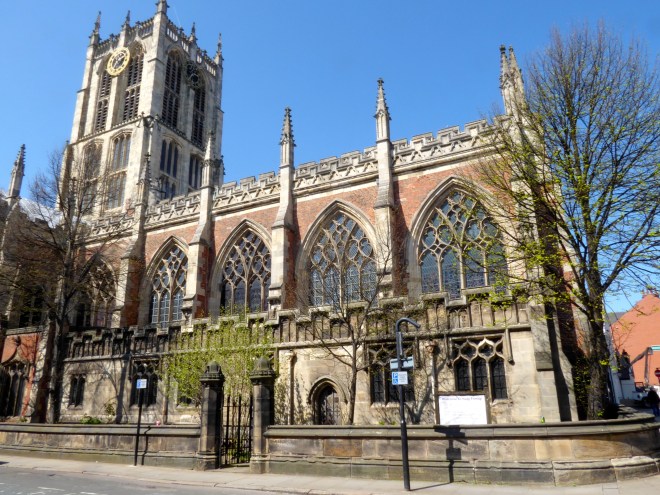
st mary's sculcoates.JPG

On 10th January 1308, Ivo de Etton of Temple Hirst, near Selby, and William de la Fenne from Faxfleet had been preceptors (heads) of local houses of the outlawed Knights Templar order, when they were arrested and imprisoned by Henry II on instructions of Pope Clement V. Also arrested were Richard de Ryston, chaplain, Thomas Tyeth, claviger (or warden), and Roger de Hugunde or Hogyndon, a brother in residence at Faxfleet, and Adam de Crake, claviger, at Temple Hirst.

On 10th January 1511, Richard Elynor of North Cave claimed sanctuary at the church of St John, Beverley, for a felony, but the register does not give any detail of his crime.

On 10th January 1537, Sir Francis Bigod, of Settrington, and John Hallam, of Cawkeld near Watton, met to discuss rekindling the Pilgrimage of Grace, which had ended in December with promises to restore the monasteries and hold a Parliament at York. They planned to seize Hull and Scarborough before they could be fortified.

On 10th January 1646, Stephen Thompson of Humbleton was fined £400 as the owner of Scarborough Castle and a Royalist (a ‘delinquent’) in order to recover his goods which had been sequestered by Parliament.

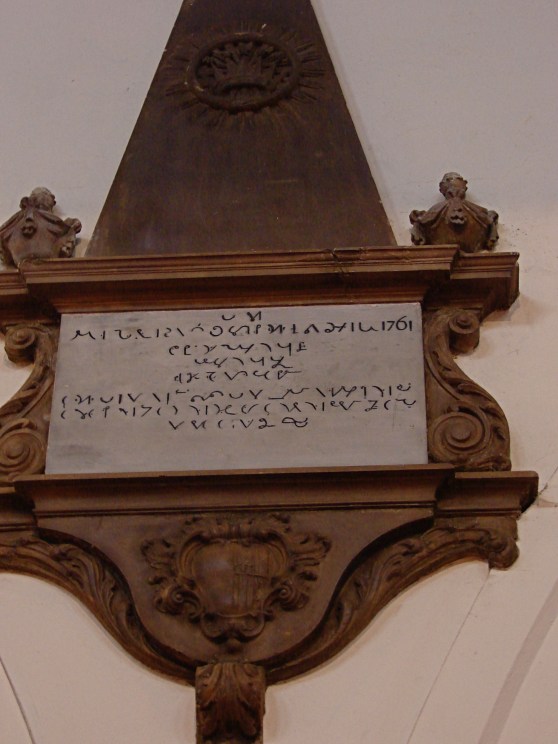
On 10th January 1761, Mrs Jane Delamoth died in Hull. Her memorial in St Mary’s Sculcoates may be the only memorial written in shorthand in the world. It says: ‘In the vault beneath this stone lies the body of Mrs Jane Delamoth, who departed this life 10thJanuary 1761. She was a poor sinner, but not wicked without holiness, departing from good works, and departed in the faith of the Catholic Church, in full assurance of eternal happiness, by the agony and bloody sweat, by the cross and passion, by the precious death and burial, by the glorious resurrection and ascension of Our Lord and Saviour Jesus Christ’. see photo

On 10th January 1783, Rear Admiral John Storr died in Hilston. He is buried in Westminster Abbey. (b 18.8.1709) He commanded the Revenge at the Battle of Quiberon Bay 20.11.1759. His father Joseph built Storr’s Tower at Hilston in 1750. It served as a hospital for troops camped on the coast in 1794–5 and later as a cottage, but was disused in 1990. His memorial is in Hilston church.

On 10th January 1849, Cottingham land agent Thomas Spenceley reported that he had measured the distance from the Spa Inn, Aldbrough to the sea in 1832 and again in 1848 and the loss of land due to coastal erosion was 28 yards in that period. On 6.8.1832 the distance was 160 yards; on 11.8.1848 it was 132 yards, an average loss of 5ft 3” per year.

On 10th January 1952, Madame Clapham (Mrs Emily Clapham) died aged 96, the former Court Dressmaker of Kingston Square, Hull. Her fashions for high society made Hull ‘the rage’ according to Sir Osbert Sitwell.

On 10th January 1968, Hull trawler St Romanus left port and made radio contact with the owners that evening. A Mayday call was heard, but not passed on. The official enquiry concluded ship probably lost on 11thJanuary, reason unknown.

On 10th January 1968, Hull trawler Kingston Peridot of Hull left port and was not contacted until after 26 January. The enquiry concluded she probably capsized on 26th  or 27th January, due to extreme weather.

January 7th

On 7th January 1651, John Shaw was confirmed in post as Master of Hull Charterhouse; a radical, he was already a very popular Lecturer (i.e. preacher) at Holy Trinity. The previous incumbent at the Charterhouse, Wm Styles, had said he would never quit the post voluntarily if Shaw were to replace him.

On 7th January 1884, the steamer European landed in Hull, bringing the Spurn lifeboat for repair from Holland, where it had been found on the Dutch island of Texel after breaking from its moorings in a gale on Christmas Day.

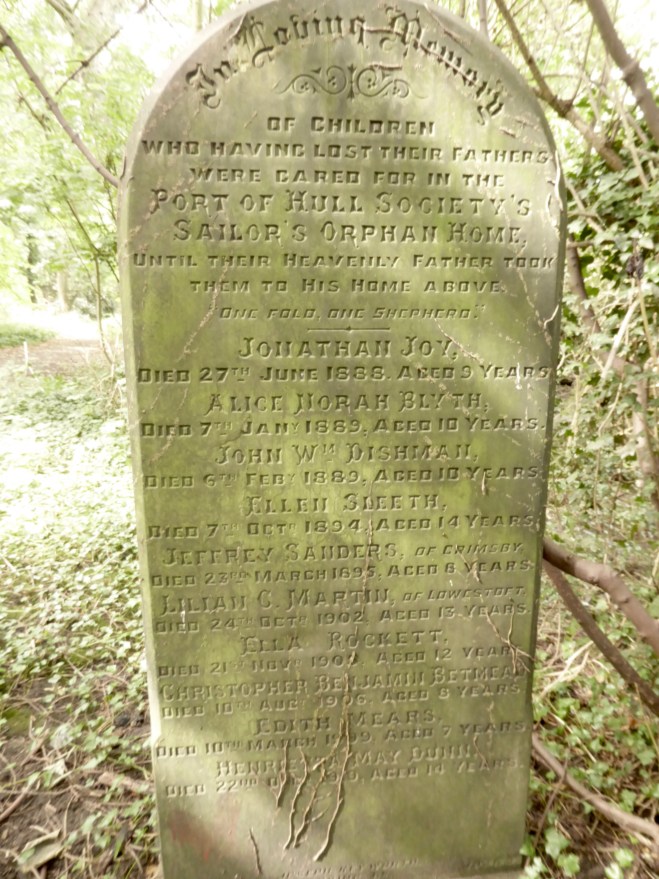
On 7th January 1889, Alice Norah Blyth, aged 10, died in the care of Port of Hull Society’s Sailor’s Orphan Home.

Orphan deaths, Sailor's Orphan Home
Western General Cemetery

December 26th

On 26th December 1220, William de Forz II, Count of Aumale and Lord of Holderness was with King Henry III at the Royal court at Oxford; the King made an appointment William hoped to get; disappointed, he left Oxford for Lincolnshire, and began a rebellion, known as the war of Bytham.

On 26th December 1489, George Gusterd, weaver of Bishop Burton, claimed sanctuary at Beverley for the murder of a servant of Edward Barnaby, a gentleman. He did not know the servant’s name.

On 26th December 1495, William Middleton was threatened with a pole-axe by John of Cottingham, John of Wawne, Thomas Warde, Robert Bate, and (- ) Mykill, and was so afraid for his life that he took sanctuary in Wawne church and stayed there for 10 hours, afterwards leaving the area. He applied to the Chancery Court for leave to prosecute his attackers, but the outcome is not recorded.

On 26th December 1645, Rev Nicholas Osgodby was reported to be using the forbidden Prayer Book in secret.

On 26th December 1750, the chapter house roof of Howden church collapsed, to join the rubble of the chancel which had collapsed in 1696.

On 26th December 1890, residents of Hornsea had a fair on the frozen surface of the Mere, and a sheep was roasted on the ice.

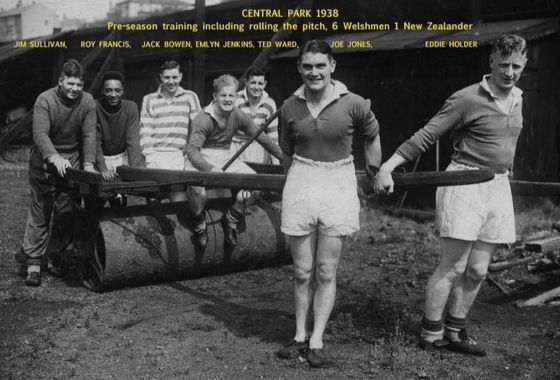
On 26th December 1955, Roy Francis played his last game after 6 years with Hull FC, and became UK’s first black professional sporting coach, and team manager 1971 to 1973.

roy-francis

December 22nd

On 22nd December 1530, Beverley draper William Leryfax wrote his will, and appointed as guardians for his son Robert the priors of Watton Abbey and Meaux Abbey. In 1539, both abbeys were dissolved, and the subprior of Watton had been hanged in chains in 1537 for his part in the Pilgrimage of Grace.

On 22nd December 1580, the Hull Mayor and aldermen set the price of ale at a penny for a quart and a pint outsales, and a penny a quart and a gill in the alehouse.

On 22nd December 1802, George Knowsley of Cottingham Grange held a meeting at the Duke of Cumberland, Cottingham, to propose the building of a canal from Cottingham to Hull; the aim was to reduce transport costs and establish a local grain market. The Napoleonic Wars caused the project to be shelved, and it was never revived.

December 20th

On 20th December 1584, Rev John Lothropp was born and baptised in Etton. He became a Congregationalist minister, was imprisoned and released on condition he did not preach or hold meetings. He took some of his congregation with him to America and is considered one of the first American spiritual leaders.

On 20th December 1661, an Act of Parliament was passed to separate the church and parish of Holy Trinity, Hull from Hessle, setting out the responsibility of the town for assessing and collecting a rate from which they should pay the vicar £100 a year.

On 20th December 1830, the Mayor of Hull started a collection for Greenland whalers and their families, after a disastrous season of ship losses and low catches.


Holy Trinity

December 12th

On 12th December 1303, Hull burgess John Schayl left 20shillings in his will towards the rebuilding of Holy Trinity Church.

On 12th December 1659, James Primrose MD, aged 63, of Whitefriargate, Hull, signed his will, and died sometime in the same month. Raised and educated in France, related to James I’s principal surgeon and Scottish nobility. Prominent writer on medical matters, and highly respected Hull physician. Andrew Marvell referred to him in a poem. A religious nonconformist who was fined for non-attendance at church at least twice.

On 12th December 1895, Robin Pockley, coxswain of th eFlamborough lifeboat, saved the 3 crew of the fishing boat Elizabeth, who had been washed into the sea several miles off Flamborough Head; as there was not enough time to call out the lifeboat, he put out to sea with 2 colleagues in an ordinary fishing boat. He was awarded the RNLI silver medal.

On 12th December 1946, Barrie Rutter was born in Hull. Actor, director and founder of the Northern Broadsides theatre company; awarded OBE for services to drama. photo shows him (middle) in 2017 production of ‘Richard III’.

-Barrie-Rutter-Mat-Fraser

December 11th

Meaux Abbey Farm


On 11th December 1538, Ellerton Gilbertine Priory was dissolved and the monks pensioned off. Sir John Aske of Aughton was granted the monastic lands, part of which became the parish church and graveyard. I have no record of the fate of the 13 poor elderly men whom the priory hospital was created to house.

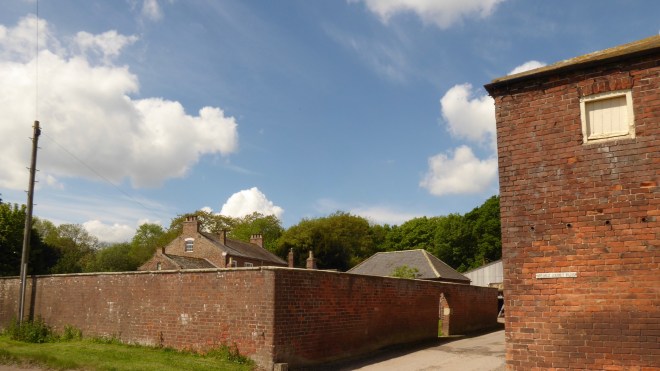
On 11th December 1539, the Abbot and monks of Meaux Abbey were pensioned off when the monastery was dissolved. The abbot retired to Skerne, and some of monks took up posts as curates in Welwick, Keyingham and Beeford. photo shows farm near the site

On 11th December 1647, priest John Saltmarsh, MA, died. Author, theologian, rector, deacon and Chaplain in the Parliamentary Army during the Civil War. Argued for religious toleration and liberty of conscience. Told Cromwell and Fairfax that God was angry with them for their treatment of the Levellers, and resigned his post with the Army. (b Saltmarsh date?)

On 11th December 1915, former Reckitt’s employee Private Edgar Winson was killed in action, serving with 10thBtn West Yorkshire Regiment. Born Spurn. No known grave.