August 29th

minster - frith stool.JPG


On 29th August 1524, John Rotherford, labourer, of Kirby upon Wold (K. Underdale or K. Grindalythe?) claimed sanctuary at the church of St John, Beverley, for murder and felony. A 2ndman entered the sanctuary that day – Nicholas Pryas, husbandman, of Reedness, claimed sanctuary for the death of  a man called Wademan of Cross House.

On 29th August 1584, Sir Francis Walsingham, Queen Elizabeth’s Principal Secretary, was  appointed Hull’s first High Steward, to act as mediator between the town and the Queen. Walsingham was Elizabeth’s ‘spymaster’. The post was much later given to Lord Mandelson.

On 29th August 1867, a Humber pilot was fined £32 to repair the damage he did to the Bull Lightship while handling a vessel in the river.
August 18th

On 18th August 1522, Thomas Webster, a weaver from Lowthorpe, claimed sanctuary in St John’s Church, Beverley, for the death of Thomas Ayke of Littlebeck. On the same day, a 2nd man entered the sanctuary – John Thorp, a husbandman of Eastrington, for a felony.

On 18th August 1552, Church commissioners seized items of value from St Giles Church, Marfleet, no longer needed in plainer protestant services, including a silver chalice, brass candlesticks, bells and a brass holy water vat. Witnesses from the parish were Marmaduke Loickwos, Herry Birkett, Richard Walker, and Thomas Almonde.

On 18th August 1782, Rev George Lambert reported seeing a meteor or fireball pass over the town in the morning, which alarmed many people.

On 18th August 1808, Margaret Kissling, nee Moxon, was born in Sculcoates.  She married a Lutheran missionary, worked in Sierra Leone and settled in New Zealand as teacher and nurse. (d 20.9.1891)

On 18th August 1832, Charles Winn, Tory candidate, issued a poster to refute allegations that he supported slavery, during his General Election campaign.

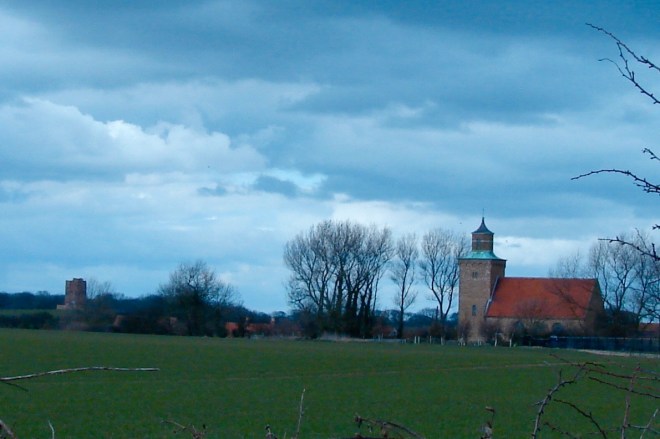
On 18th August 1941, an air raid destroyed St Margaret’s Church, Hilston, the 3rdchurch on this site, its predecessor having been replaced in 1862 by Sir Tatton Sykes. The only remnant of the first church is its Norman doorway. The current church was consecrated in 1957, built by local architect Francis Johnson, and was listed in 2017.


hilston church & tower.JPG


August 15th

On 15th August 1690, Robert Lumley, ship’s master, was fined 10s by Hull Trinity House for sailing out of the port without supplying the House with a list of men and their wages.

On 15th August 1764, Abraham Clayton, 35, of Howden, was hanged at York Castle for murdering his wife Elizabeth; his body was given to surgeons ‘to be anatomized’.

On 15th August 1808, Robert Pattinson,  grazier and agriculturist, died aged 82, and left 4 acres of land in Skeffling, the rent to be used to educate poor children in Easington.

On 15th August 1924, Harry Blanshard Wood, VC, died aged 42 in Devon, after a traffic accident. Born in Newton-on-Derwent, he was a corporal in the 2ndBattalion, Scots Guards when on 13.10.1918 in St Python, France, he took command when his platoon sergeant was killed, and showed gallant conduct and initiative, for which he was awarded the Victoria Cross.

On the same day, BBC radio station 6KH began broadcasting local items from bishop Lane, Hull, including sport, talks, children’s shows, and music featuring local musicians, e.g. Powolny’s Restaurant Bijou Orchestra. In 1928, the station closed, and there was no local station until Radio Humberside opened in 1971.

On 15th August 1940, 13 military personnel and 1 civilian died, and 16 injured in this daytime air raid on Driffield airfield and Southburn, including Aircraftwoman M. Hudson, the first WRAF fatality.

August 7th

On 7th August 1385, Joan of Kent (the Fair Maid of Kent), mother of King Richard II, died, it is said, of a broken heart.  She was unable to persuade her son King Richard to pardon another son, Sir John Holland, for the murder of Ralph, son of the Earl of Stafford. Holland was in sanctuary in Beverley Minster, and the murder took place nearby, when Richard’s troops were outside Beverley, on their way to the Scottish wars. Holland was pardoned within the year.

On 7th August 1427, Pope Martin V, in reply to a petition (from the parishioners of both Aughton and Bubwith churches and Peter de la Hay), granted permission that, when they were hindered in winter by floods, snow and hail from reaching their parish churches, they could use the chapel of St James in Spaldington for mass and other offices ‘while the hindrances last’.

On 7th August 1663, Robert Hardy of Hessle was enjoined by the Archbishop of York to do penance in Hessle church for his adultery. photo shows All Saints Church, Hessle

On 7th August 1840, a Serious rail accident took place in Howden, in which 4 passengers were killed, and 9 injured. The Hull and Selby Railway had only opened in full on 1st July. The accident was the subject of the first ever report by the Board of Trade into a railway accident.All Saints, Hessle

August 6th

On 6th August 1778, the question of who owned Spurn Point was resolved in favour of the William Constable of Burton Constable; the legal dispute began in 1609.

On 6th August 1785, John Beck of Lelley was hanged at York Castle for setting fire to a house and corn mill belonging to William Jackson of Danthorpe, with Robert Crosby and John Edwards, also of Lelley; Edwards and Crosby escaped.

On 6th August 1859, John Riley, 36, of Hull, was hanged at York Castle for the murder of his wife, Alice.

On 6th August 1888, former Trinity House School pupil George Smith, age 15, drowned after a collision between the Barque Cambrian and a French Barque during a great storm in Valparaiso harbour.

On the same day, a Bank Holiday Monday, a popular trip out from Hull Corporation Pier was to Paull by boat to watch the Army’s Submarine Miners in training and holding boat races and athletic competitions. Several boats left the Pier during the day.

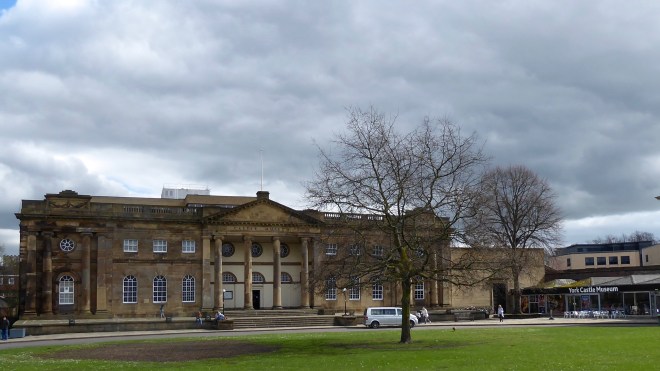
York Castle


August 4th

On 4th August 1511, John Hessey, husbandman of Belby, nr Howden, claimed sanctuary at the church of St John, Beverley, for the murder of William Smyth of Didyngham (anyone know where this is?)

On 4th August 1652, Keyingham manor court fined 18 villagers for allowing their geese and pigs into the fields outside the stipulated times.

On 4th August 1795, Hull residents rioted against inflationary food prices and shortages. Much corn was being taken by the army, (Napoleonic Wars) in a year of poor weather. A few windows broken.

On 4th August 1834, John Venn, was born in Drypool, son of the vicar. Left Hull at age 8. Fellow of the Royal Society, famous mathematician, who introduced the Venn diagram. Commemorated in Hull University by the Venn Building. (d 4.4.1923) and by Drypool Bridge.

On 4th August 1851, G. Hought of Hutton Cranswick was killed by lightning, as he sheltered under a tree during a thunderstorm. He left a wife and 2 children.

On 4th August 1884, all 11 Walgate brothers of Aldbrough formed one cricket team in a match held at Rise Hall; the Walgates won the match by 3 wickets.

On 4th August 1969, HM Queen Elizabeth opened Queen Elizabeth Dock, the last major dock to be opened in Hull, accompanied by HRH Duke of Edinburgh and Princess Anne.


Drypool Bridge

August 3rd

On 3rd August 1349, John de Preston was elected Prior of North Ferriby on the death of John de Beverley, himself elected Prior just 10 days earlier on 24thJuly, when he succeeded the previous Prior Walter de Hessell on his death. This outbreak of the Black Death killed 35 out of 95 parish priests in East Yorkshire, and presumably a similar proportion of the general population.

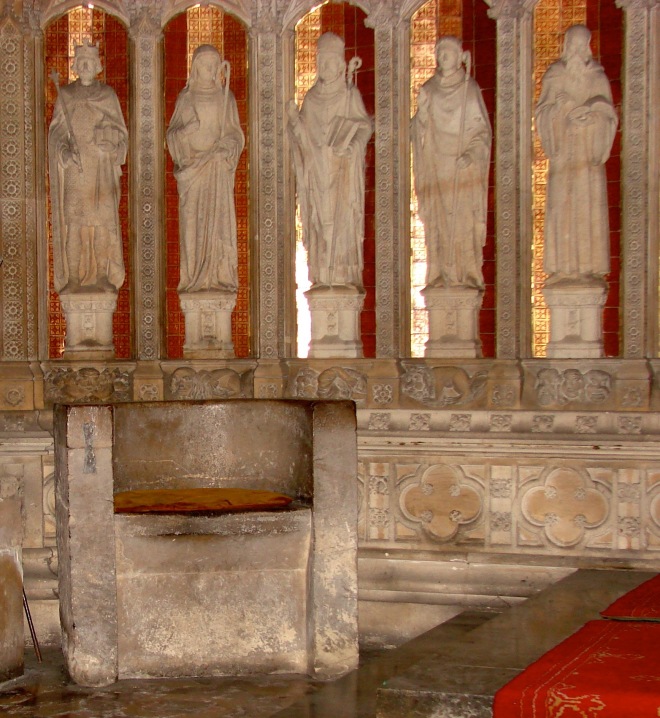
On 3rd August 1523, Thomas Senexer, yeoman, of Holme on Spalding Moor, claimed sanctuary at the church of St John, Beverley, for debt. photo shows the Frith Stool (sanctuary chair)

On 3rd August 1732, Robert Cook was killed when he fell from a wagon at one of the chalk pits in Hutton.

On 3rd August 1798, Press Gang seamen John Sykes and John Burnock or Burnick were killed when attempting to press the crew of the returning whaler Blenheim (& see 2.8). The fight was watched by crowds on the dockside. Capt Mitchinson was charged with murder (& see 31.3) The navy men were buried in Drypool Cemetery.

On 3rd August 1878, for 1d working people could attend a lecture on ‘The Yorkshire Wolds in Prehistory’ as part of Hull Literary and Philosophical Society’s new series of lectures to the working classes in the Exchange Building, aimed at keeping working people occupied during the new Saturday half holiday.

On 3rd August 1942, Mrs Frances Snowden, Lieut Stanley Lawrence and Charles Cross were killed when 4 bombs were dropped on Flemingate, Beverley, damaging Hodgson’s Tannery and destroying a house, a medical centre and a warden’s post. 15 people were injured, some of them machine-gunned by the German bomber.

minster - frith stool.JPG

July 30th

whalebone arch Pat.JPG

On 30th July  1526, Preston butcher John Erdy claimed sanctuary at the church of St John, Beverley, for felony and debt.

On 30th July 1643, the parish clerk of St Mary’s, Beverley, reported in the parish register that they buried 13 men killed on the King’s side in the Civil War.

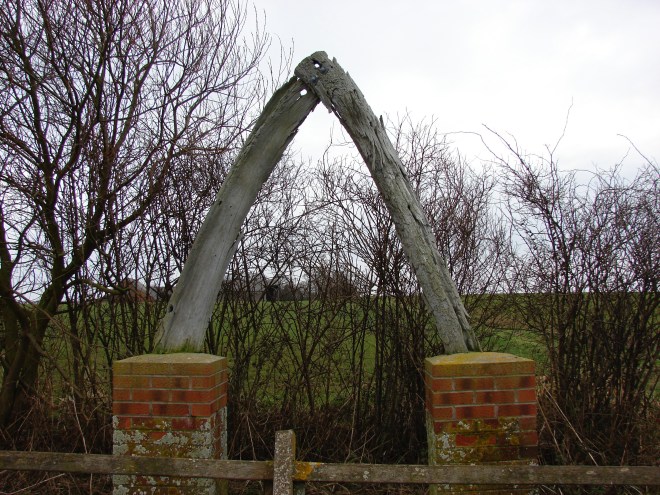
On 30th July 1782, the crew of Hull whaler Benjamin landed 135 butts of blubber and over 2 tons of whalebone, the product of 3 whales caught in the Davis Strait. (Rev George Lambert had shares in the ship). photo shows whalebone arch outside Patrington

On 30th July 1861, John Ellerthorpe, aged 55, rescued John Eaby, who had fallen into the Humber Dock Basin, Hull. This was Ellerthorpe’s 39thand last rescue. Named ‘The Hero of the Humber’, he was awarded with the Royal Humane Society’s Silver Medal.

On 30th July 1891, Mary Jane Langley, 18 years, of Westfield Farm, Long Lane (now Neat Marsh Road) Preston, was last seen alive when she walked to Marfleet and took the train to Hull to have her photo taken. Her body was found in a ditch near her home. Her throat had been cut. John Rennard was arrested and tried, but not convicted.


July 29th

On 29th July 1527, John Flower, labourer of Burstwick, claimed sanctuary at the church of St John, Beverley, for the death of Roland Stephenson.

On 29th July 1678, Andrew Marvell, MP for Hull, had what turned out to be his last meeting with Hull Corporation. He returned to London shortly after, and died suddenly, aged 58, on 16thAugust, some supposed of poison.

On 29th July 1828, Hull banker Joseph Robinson Pease visited his land in Winestead to discover ‘hundreds of acres nearly a foot under water’ in the wettest July on record, a disaster for crops of hay, corn and potatoes. He said most local landowners had reduced rents, farmers ‘having literally nothing to pay with’.


Andrew Marvell

July 26th

On 26th July 1826, the Aire & Calder Navigation Company officially opened the new canal at Goole, locks for ships and barges, dock, and canal basin linking Goole to the west. A new town was built around the small hamlet of Goole (population in 1822: 450).

On 26th July 1845, Capt Dannatt and crew of Hull whaler Prince of Wales came across Sir John Franklin and his expedition to find the North West Passage, in Lancaster Sound, in the Arctic, and invited him and his officers on board. This was the last known sighting of the expedition.

On 26th July 1850, Hull Advertiser printed a report of the deaths by drowning during a riot of 4 Irish navvies (Patrick Langthon, John Dowling, Barney M’Jay and Thomas Twomey) working on the embankment of Sunk Island.

On 26th July 1986, 8 rail passengers and 1 person travelling in a van died when the van was struck by the 9.33 Bridlington to Hull train at Lockington level crossing, and the train was derailed. 51 people were injured, 10 of them seriously. There is a memorial to those who died in Driffield Memorial Garden.


lockington crash memorial