Coming up this week

September 9th

On 9th September 1513, Marmaduke Constable, of Flamborough was knighted for his role in the Battleof Flodden Field, and a letter of thanks from Henry VIII is displayed in Wassand Hall. Ralph Ellerker, senior of Risby and his son Ralph were also both knighted. This causes some confusion in the historical record, as there were 2 Sir Ralph Ellerkers alive at the same time.

On 9th September 1643, Rev James Sibree reported that on Sunday he had preached twice, visited the cemetery 3 times, and interred 43 bodies of his fellow citizens. During the cholera outbreak, many church services were held outdoors in the Market Place, by ministers of different denominations, and attended by more than 3,000 people. photo shows Cholera Memorial in Western Geneeral Cemetery.

On 9th September 1878, George Carr, aged 45 and Joseph Carr, aged 26, accidentally drowned in Hornsea.

On 9th September 1956, Captain Erik Ohsman, and Chief Steward V. Stenros, of SS Lona, were rescued by firemen when they were found unconscious after fire was discoveredon their Swedish ship, loaded with over 3k tons of pit props. Both recovered. The fire, which started in the engine room, spread to the cargo, and after several hours the ship had to be scuttled in the dock to prevent greater damage. She was raised on 11 October and repaired. Cholera memorial

September 8th

On 8th September 1069, the Danish king Sweyn Estrithson and a fleet of 240 ships anchored in the Humber accompanied by Edgar of Wessex who claimed England’s throne. They marched on York.

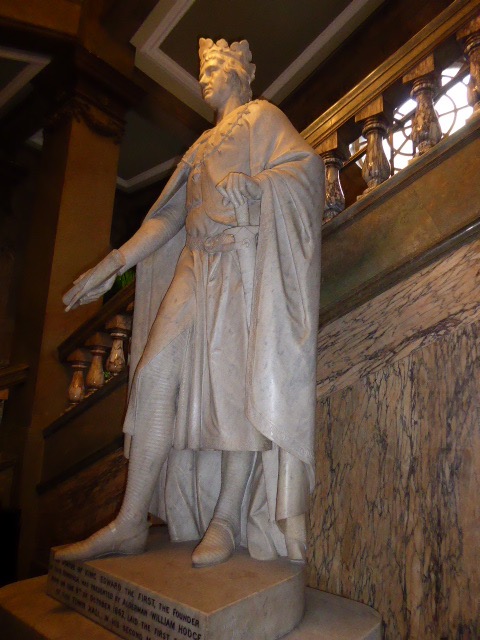
On 8th September 1292, King Edward I stayed in Beverley on his progress through East Yorkshire. photo shows his statue in Hull Guildhall

On 8th September 1402, William Asleby and other rioters from West Hull villages who had rioted as part of Hull’s ‘water wars’ had to do penance every year on the Friday nearest the Feast of the Nativity of Our Lady, by processing through Holy Trinity church naked, bare-headed and with bare feet, through the church during mass, carrying a 3lb burning candle. If they failed to comply, they would be fined £40 – though none of them had any goods of value.

On 8th September 1667, Richard Leeming, Mayor of Grantham, wrote to the Hull Mayor to notify him of the escape of a prisoner committed for murder supposed to be making for Hull.

On 8th September 1730, an accidental fire destroyed the house of John Mason and Richard Dagger, their goods, clothing and hay, making them destitute and entitled to poor relief from the parish.

Edward I
Guildhall


September 5th


delapolearmscharterhouse.JPG
Hull’s first blue plaque? On the wall of the Charterhouse.

On 5th September 1389, Sir Michael de la Pole died aged 59. 1stBaron de la Pole, later 1stEarl of Suffolk. Appointed English Lord Chancellor in 1383. He founded the Carthusian Monastery which became Hull Charterhouse. Disgraced, he fled to Paris in 1388.

On 5th September 1811, Benjamin Byron (or Byrom) MD died in Hull; as physician he had chambers at Mr Frith’s, plumber, Silver Street, where ‘consultations were free to the poor on Tuesdays and Fridays 10a.m. to 3p.m.’

September 7th

On 7th September 1316, King Edward II issued orders to Beverley to arm the whole male population between ages 16 and 60 against the Scottish threat.

On 7th September 1643, Sir John Hotham was taken from the Tower of London to Parliament to be formally ejected from his seat as MP for Yorkshire.

On 7th September 1646, Sir Michael Wharton of Beverley, considered a Royalist (delinquent) for attending a meeting at Heworth Moor addressed by the King, was fined £4,000 in order to recover his goods which had been sequestered by Parliament. His fine was reduced in 1652. photo shows Warton’s Hospital, Keldgate, Beverley.Warton's Hospital.JPG

On 7th September 1854, Robert Isaac Wilberforce, vicar of Burton Agnes and Archdeacon of the East Riding, resigned his Church of England posts and joined the Catholic Church.  Robert was the second son of William Wilberforce. Of William Wilberforce’s 4 sons, 3 converted to Catholicism and Samuel Wilberforce Bishop of Oxford, then Winchester, was an extreme Anglo-Catholic.

On 7th September 1866, Bull lightship in the Humber was struck by the Prussian barque Emma Johanna and damaged, holed below the water-line. It was taken to Victoria Dock, Hull for repairs by Hull Trinity House.

September 6th


greenlandmap

On 6th September 1611, Thomas Marmaduke, Master of the Hull ship Heartsease, and junior brother of Hull Trinity House, returned from the Arctic with a cargo of whale and walrus hides and blubber, the first cargo of the whaling trade on behalf of the Muscovy Company. He was credited with a number of discoveries, none of them substantiated, and a bay in Greenland was named for him Marmaduke’s Cove, which the Dutch called Dusko, and was later known as Disko.

On 6th September 1640, Sir Thomas Glemham was appointed Governor of Hull by King Charles I; the Mayor and Aldermen objected to Lord Strafford about the creation of this new post, in addition to the Mayor’s role, but was advised to go along with it, to prevent the King’s anger.

On 6th September 1650, John Ramsden was removed from his office as Hull alderman for refusing to take an oath recognising the authority of the government without King or House of Lords.  In 1659 he became MP for Hull.


September 4th

On 4th September 1303, Sir Ralph de Heengham and a jury of 12 men held an inquiry into ownership of land in Hull and Myton, west to Ferriby, and of a highway to and through Anlaby to Ferriby.

On 4th September 1650, Ann Hudson of Skipsea was tried as a witch at York Assizes, and evidence was given to the court by Dynah Hunmansby and Alice Stevenson that her victim, Susannah Keld, had been bewitched and very ill until she had scratched Ann Hudson and drawn blood, when she began to recover. The events had happened 12 years previously. The surviving records do not say whether Ann Hudson was convicted and sentenced.

On 4th September 1709, the congregation of Cottingham church gave 3s6d in a collection for the Market Rasen fire, Lincolnshire. A collection in the dissenters’ meeting place raised 4s 6d.

September 3rd

On 3rd September 1292, King Edward I stayed in his royal castle at Burstwick for 2 days, on his way back from Scotland. At some point he visited Wyke, and asked for a survey as part of plans to create a new town.

On 3rd September 1812, Abel Scurr, captain of Hull whaler Comet, left port for a whaling trip in the southern ocean, in the seas off the Galapagos. He was caught up in the Peruvian revolution, detained for a year, and then died before the ship began whaling, returning to port on 3.12.1815.

On 3rd September 1917, former Reckitt’s employee and driver G. Gill died of wounds received on active service with 37thDivision Ammunition Column and is buried in Bailleul Cemetery, France.

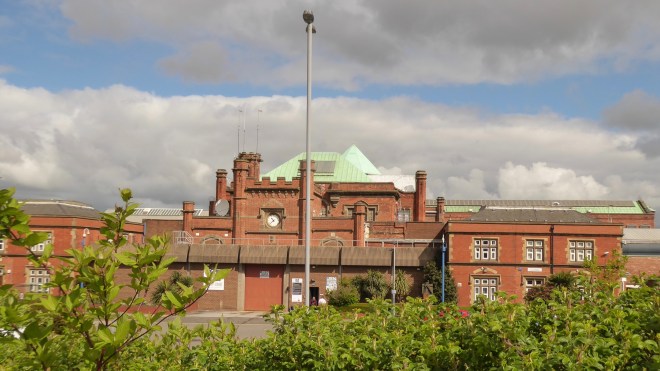
On 3rd September 1976, about 100 prisoners in Hull Prison, Hedon Road, took over 3 of the 4 wings, after a prisoner was beaten up by prison officers, citing grievances about conditions. Held a rooftop protest which lasted 67 hours. Huge amounts of damage were done to the prison, which was closed for a year.


Prison

September 2nd

On 2nd September 1643, the Royalists under the Earl of Newcastle began the second siege of Hull. The Governor, Lord Ferdinand Fairfax, sold silver to the value of £400 4s to Hull Trinity House, in order to pay his soldiers. Trinity House sold the silver the following year at a slight profit.

On 2nd September 1861, the lease on Fishwicks’ Mill, butt Lane, Beverley, had expired, and the mill was demolished. The Council tried to repossess the land, but local people considered it to be common land, and 25-30 rioters destroyed the house and burnt it to the ground.

On 2nd September 1871, William (Billy) Ringrose was born in Ganton, where he became a carpenter, but was coached by a cricket professional employed by the Legard family at the Hall, and became a renowned professional cricketer, playing for 57 games for Yorkshire.

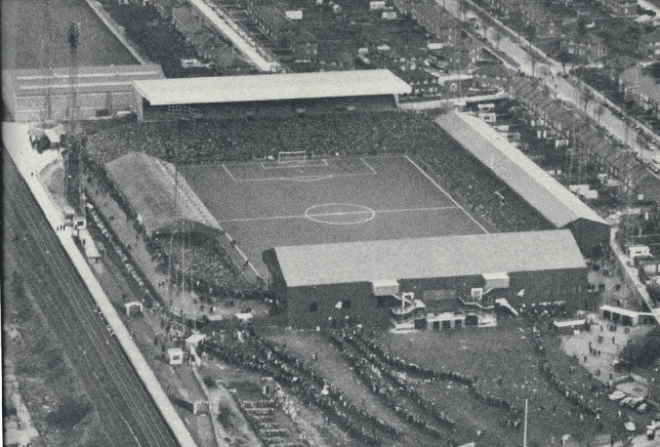
On 2nd September 1922, Hull Kingston Rovers played its first game at its new ground, Craven Park, losing 3-0 to Wakefield. The new grounds also had 14 tennis courts, and meeting rooms. The official opening did not take place until November. This was the club’s 4thground, the first 2 being in West Hull.

On 2nd September 1950, MV Dundalk Bay arrived in Hull from Mombasa, bringing 1,014 people displaced by WW2. After processing, they were dispersed to various camps throughout the UK. Many Poles, Latvians, Lithuanians and others unable to return to their homes came to find work and settle in England; some emigrated again to Canada.

On 2nd September 1967, the Flamborough lifeboat Friendly Forester rescued 6 people cut off by the tide.

Old Craven Park EAW207783

September 1st

On 1st September 1505, John and Thomas Mudd of Tunstall claimed sanctuary in the church of St Cuthbert  for homicide, stating that on 1.8.1505, in self-defence, they had struck Henry Raw also of Tunstall on the head with a pikestaff, giving him a blow from which he died on 30.8.1505. On 2.9.1505 Oliver Mudd and John Mudd jnr (son of John) also sought sanctuary as accessories to the homicide, having been present when the first 2 struck Henry.

On 1st September 1512, Ralph Thorneton, a smith, of Rise, claimed sanctuary at the church of St John, Beverley, for debt.

On 1st September 1784, Hull General Infirmary charity officially opened a hospital with 70 beds in Prospect Street, a site chosen for its fresh country air. The 3 physicians and 3 surgeons provided their services free. In its centenary year, Queen Victoria agreed to a change of name to Hull Royal Infirmary.

On 1st September 1800, John Batman lost his place at Hull Charterhouse  ‘on account of his immoral and disorderly conduct and of the great expences (sic) which the Town have sustained by the maintenance of his bastard children’.


Charterhouse 1780

August 31st

On 31st August 1292, King Edward I stayed at Kilham, on his return from Scotland, where he judged on the claims of Robert the Bruce and John Balliol for the crown, he also made several other stops in East Yorkshire.

On 31st August 1516,  Robert Chorkyls, husbandman, of Wyton, claimed sanctuary at the church of St John, Beverley, for the murder of John Rotheram.

On 31st August 1579, Howden records state that 158 people died in the previous 5 months, at least 110 above the average, due to plague. The city of York forbade anyone from Howden or Snaith from entering the city.

On 31st August 1941, Minnie Leveson, nurse, aged 20, was killed by an air-raid on her home in Willerby; she is buried in De la Pole Hospital cemetery.

On 31st August 1943, 15 Wellington bombers took off from RAF Leconfield and 2 of them collided over Goole, killing both crews and 2 residents of North Street.

On 31st August 1946, Hull Lord Mayor Herbert Harrison officially opened Hull City AFC’s new stadium, Boothferry Park. The crowd of 25,586 were entertained by the band of the 2ndBattalion East Yorkshire Regiment. The match was against Lincoln City, the result 0-0.

boothferrypk