Coming up this week

December 28th

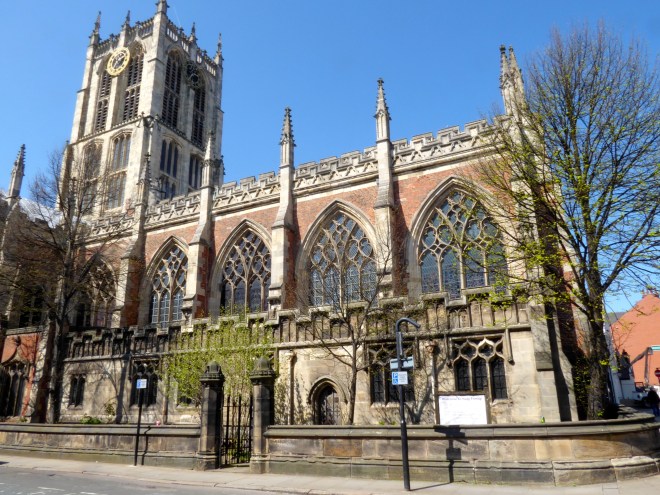
Beverley Minster


On 28th December 1703, an earthquake was felt in Beverley, and may have worsened the already poor condition of the fabric of the Minster.

On 28th December 1795, the Duke of Portland, Home Secretary,  wrote to the Hull Mayor and other town councils concerning methods to be adopted for reducing the consumption of wheat. There had been several years’ poor harvest, and supply was reduced by war with France. There were  food riots in Hull in August that year.


December 27th

On 27th December 1442, John Shale, mariner, and John Roper, chaplain, conveyed to William Riplyngham, merchant, a tenement and garden in Le Pavement, Hull.

On 27th December 1804, the crew of Danish ship Familian was rescued when their ship ran aground on Stoney Binks, off Spurn Point, on a journey from Longsound to Hull.

On 27th December 1822, Richard Walker of Beverley was robbed and murdered at Leconfield by William Johnson, 23. Johnson was convicted and hanged at York Castle 24.3.1823, and his body delivered to surgeons for dissection.

spurn lighthouse.JPG

December 26th

On 26th December 1220, William de Forz II, Count of Aumale and Lord of Holderness was with King Henry III at the Royal court at Oxford; the King made an appointment William hoped to get; disappointed, he left Oxford for Lincolnshire, and began a rebellion, known as the war of Bytham.

On 26th December 1489, George Gusterd, weaver of Bishop Burton, claimed sanctuary at Beverley for the murder of a servant of Edward Barnaby, a gentleman. He did not know the servant’s name.

On 26th December 1495, William Middleton was threatened with a pole-axe by John of Cottingham, John of Wawne, Thomas Warde, Robert Bate, and (- ) Mykill, and was so afraid for his life that he took sanctuary in Wawne church and stayed there for 10 hours, afterwards leaving the area. He applied to the Chancery Court for leave to prosecute his attackers, but the outcome is not recorded.

On 26th December 1645, Rev Nicholas Osgodby was reported to be using the forbidden Prayer Book in secret.

On 26th December 1750, the chapter house roof of Howden church collapsed, to join the rubble of the chancel which had collapsed in 1696.

On 26th December 1890, residents of Hornsea had a fair on the frozen surface of the Mere, and a sheep was roasted on the ice.

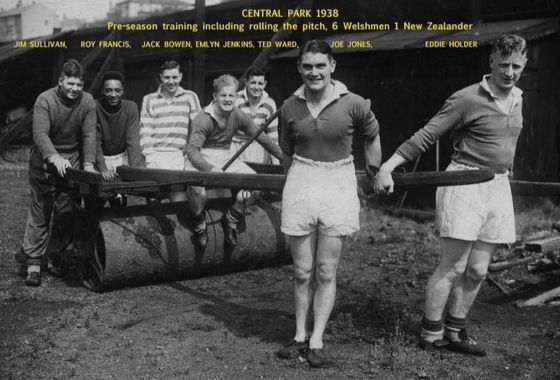
On 26th December 1955, Roy Francis played his last game after 6 years with Hull FC, and became UK’s first black professional sporting coach, and team manager 1971 to 1973.

roy-francis

December 25th

On 25th December 1703, Mrs Frances Maister of Penzance, born in Patrington, she left £10, the interest of which was to be given to the poor of Patrington every Christmas Day.

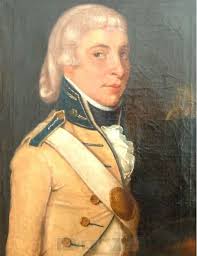
On 25th December 1794, fearing an invasion from France, the Beverley volunteers militia was uniformed and drilled for the first time in Saturday Market. The uniform was probably similar to the image below.

On 25th December 1876, during the rescue of the Grace Darling of Goole, sunk on Middle Bank, River Humber, Spurn lifeboatman Edward Weldrake had to jump into the sea and climb the rigging of the ship, and to prise the captain’s frozen fingers from the rigging. Awarded the RNLI silver medal for bravery.

EY Militia

December 24th

Coat_of_arms_of_the_baron_de_Ros_-_Premier_baron_of_England

On 24th December 1264, Robert de Ros of Roos and Helmsley was created Baron de Ros, probably the first English Barony created, and the title holder is styled the Premier Baron of England.

On 24th December 1510, Welwick labourer James Martynson claimed sanctuary at the church of St John for the murder of John Lewes of Welwickthorpe, labourer.

On 24th December 1592, the Council in the North ordered that no merchants carry goods or merchandise up the river or trade with other parts of the north except through the port of Hull.

On 24th December 1911, James Adamson, 34, deckhand, was lost overboard from Hull trawler Eldorado, 250 miles ENE of Spurn.


December 23rd

On 23rd December 1226, Robert ‘Furfan’ de Ros, of Roos, died, aged about 54. 1stLord of Helmsley, son-in-law of the Scottish king William the Lion, a Knight Templar and one of the barons enforcing the Magna Carta. His tomb is in the Temple church, London.

On 23rd December 1510, Peter Swake and Roland Dale of Catton claimed sanctuary at the church of St Cuthbert, Durham, as accessories to homicide. About 25.11.1510, they were present when Richard Horsley of Catton was taken from his mother’s house in Catton to a field, where he received several wounds, from which he died about a month later. They feared being  indicted as accessories. On 5.7.1511, another Catton man, William Ratcliff, entered the sanctuary with the same story, although he had taken sanctuary in Beverley for the homicide the previous year.

On 23rd December 1535, Austin Tennant of Hull claimed sanctuary at the church of St John, Beverley, for homicide and felony (details not recorded).  On the same day, the sanctuary received another 4 fugitives, from Leeds, Wakefield, and Thornton and Tealby in Lincs, 3 for felony and 1 for debt.

On 23rd December 1640, Sir John Lister died in Hull, aged 53. He left land at Thorngumbald to provide income for the poor, and money to set up the almshouses known as Lister’s Hospital. Twice Mayor of Hull, and MP, he built the house now known as Wilberforce House. He is commemorated in Holy Trinity church, where he also left money for repairs.

On 23rd December 1689, Johannes Frederick Bellow, a Danish trooper, was executed in Beverley Market Place for killing fellow soldier Daniel Straker, in a duel. Both are buried in St Mary’s churchyard.

On 23rd December 1732, a hurricane removed the roof and steeple of Hornsea church, destroyed 24 houses and overturned a windmill, and interrupted the parish clerk in the act of concealing smuggled goods in the crypt of the church.
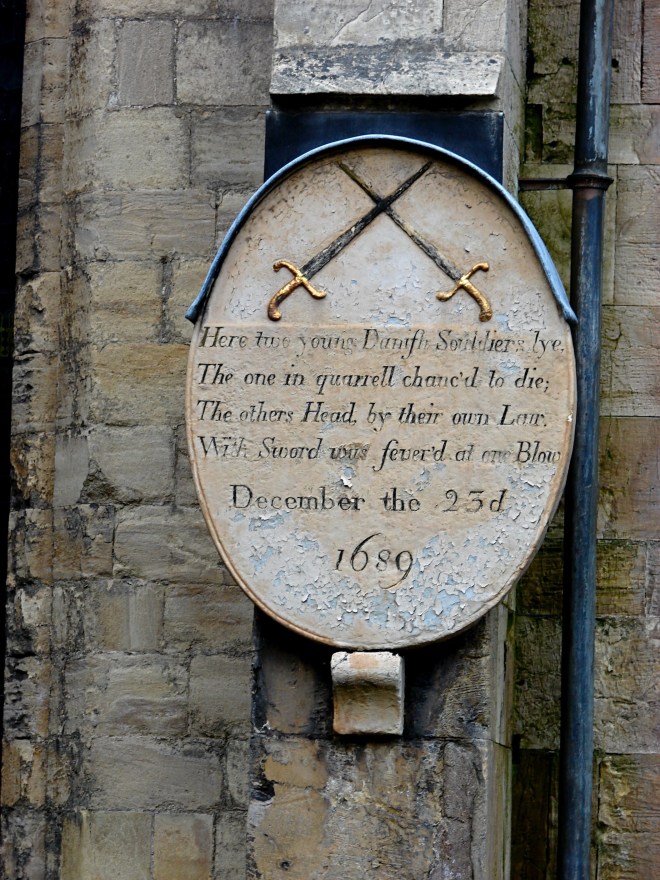
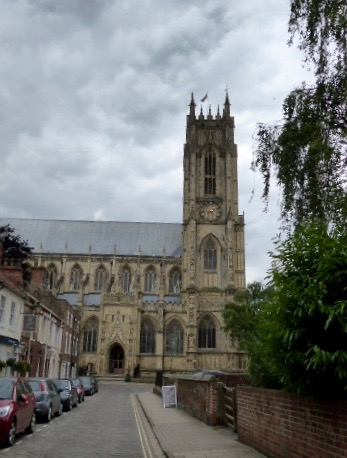
danish soldiers st mary's.JPG

December 22nd

On 22nd December 1530, Beverley draper William Leryfax wrote his will, and appointed as guardians for his son Robert the priors of Watton Abbey and Meaux Abbey. In 1539, both abbeys were dissolved, and the subprior of Watton had been hanged in chains in 1537 for his part in the Pilgrimage of Grace.

On 22nd December 1580, the Hull Mayor and aldermen set the price of ale at a penny for a quart and a pint outsales, and a penny a quart and a gill in the alehouse.

On 22nd December 1802, George Knowsley of Cottingham Grange held a meeting at the Duke of Cumberland, Cottingham, to propose the building of a canal from Cottingham to Hull; the aim was to reduce transport costs and establish a local grain market. The Napoleonic Wars caused the project to be shelved, and it was never revived.

December 21st

wm constable

On 21st December 1633, the Duke of Cumberland’s staff bought supplies of oysters (600 at 6d per 100) for Christmas at Londesborough House on his behalf when he was in York on business.

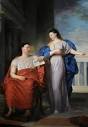
On 21st December 1721, William Constable was born at Burton Constable. He inherited the Constable estate, and is chiefly remembered for restoration work on the Hall, and as an amateur scientist and collector of art and artefacts; his Cabinet of Curiosities may be the most complete in any stately home. He became grossly overweight, suffering from gout, probable hypochondria and addiction to medication containing opiates. (d 18.5.1791) see photo with his sister Winifred

On 21st December 1824, Richard Arthur Worsop of Howden Hall recorded in his diary that he supported a charity which had been continued by the owners of the Hall since the 17th Century; he gave 6d each to 40 poor people of the parish, and a bushel each of wheat and coals to a further 10. He recorded several other charitable gifts in his diary, including a sheep to the workhouse.

On 21st December 1838, Hull banker Joseph Robinson Pease established, and was elected President of, Hull Labourers’ Friendly Society, having established a society in Hessle which had built a cottage there.  There were already dozens of friendly societies in Hull by this time, and this new group may have been more of a building society than a self help group. Pease was certainly no democrat (he described democracy as a ‘pestilent curse’).

On 21st December 1857, Henry Smith Bright, manager, Hull Cotton and Flax Mills, was found guilty at York Assizes of forging deeds of transfers of shares, and sentenced to 6 months’ penal servitude. His actions appear to have precipitated the closure of the Hull Flax and Cotton Mills and the bankruptcy of the partners in the Harrison Watson & Co bank on 24.9.1857.

On 21st December 1957, Edward Benn, 43, bosun, of Hull Rd, Hedon, died as result of accident aboard Hull trawler Cape Palliser off Iceland.

December 20th

On 20th December 1584, Rev John Lothropp was born and baptised in Etton. He became a Congregationalist minister, was imprisoned and released on condition he did not preach or hold meetings. He took some of his congregation with him to America and is considered one of the first American spiritual leaders.

On 20th December 1661, an Act of Parliament was passed to separate the church and parish of Holy Trinity, Hull from Hessle, setting out the responsibility of the town for assessing and collecting a rate from which they should pay the vicar £100 a year.

On 20th December 1830, the Mayor of Hull started a collection for Greenland whalers and their families, after a disastrous season of ship losses and low catches.


Holy Trinity

December 19th

Dame Ann Percy (Percehay)

On 19th December 1511, Ann Percy died in Hessle, the wife of Sir Henry Percy (or Percehay) and mother of 17 children. Although she is not of the Northumberland Percies, the Duke of Northumberland in 1862 arranged for a transcription of the original brass in Hessle Church, presumably under the assumption that she was of his line.

On 19th December 1656, the second of 2 boy twins of Philip Ellerker died at Ellerker, 2 days after the death of the first, at the age of 3 days.

On 19th December 1939, it was reported that of the 1,774 children evacuated from Hull  in September and October, 900 had returned home, during the ‘phoney war’.