October 19th

On 19th October 1469, John Fisher was born in Beverley, the eldest son of Robert and Agnes Fisher. Chancellor of Cambridge University, Bishop of Rochester, and chaplain to royalty.  He was executed for treason 22.6.1535 on Tower Hill, for speaking out against Henry VIII’s divorce, and refusing to acknowledge the heirs of Henry and Ann Boleyn as legitimate successors to the throne. A Catholic martyr, he was canonized as St John Fisher.

On 19th October 1781, Rev George Lambert reported in his diary on a very high tide which inundated many houses in Hull.

On 19th October 1826, a Huggate parish jury of 12 men, 2 affearers (assessors of fines) and the pinder, set penalties for anyone allowing cattle into public lanes at night at 2s6d per head, for the first offence, and 5s per head for every offence afterwards; for allowing pigs in the streets without a ring between May Day and Michaelmas 3d per head; for allowing geese in the streets between Old Mayday and Old Lammas, 1s; for allowing anyone to stay who does not have a certificate allowing them to settle, £1 19s 11d.

On 19th October 1890, John Connell, boatman, of Waxholme, in the Coastguard Service, took part in the rescue of crew from the Grimsby vessel Genesta when it ran aground. All were rescued, except the captain, who died of exposure. Connell went on to the vessel as it was breaking up to rescue a man too weak to help himself. Connell was awarded the Humane Society Silver Medal. The unmanned vessel broke free the following day and travelled to Withernsea.

On 19th October 1964, rail passengers took their last trips on the Hull to Withernsea and Hull to Hornsea rail lines, which closed as a result of the Beeching Report. Goods services to Withernsea continued to 30.4.1965, to Hedon 3.5.1965, and to Marfleet to 1972. photo shows part of Hornsea Rail Trail today.
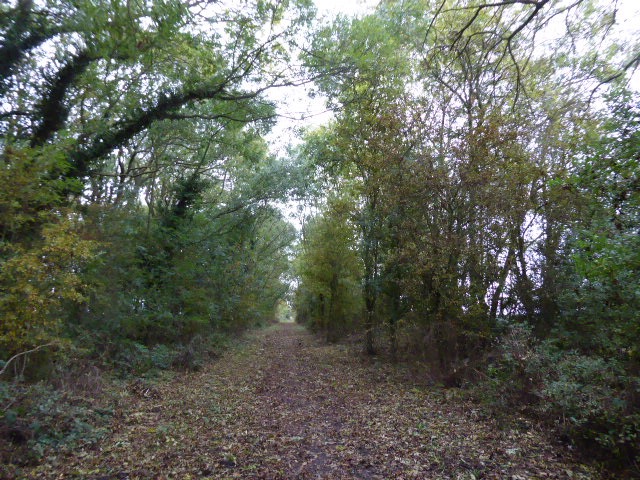
Hornsea Rail Trail


October 18th

On 18th October it was the tradition, on St Luke’s Day, to appoint an official dog-whipper to keep dogs out of church, and to whip any dogs found in the streets; the tradition is said to have begun when a dog ate a consecrated wafer in York Minster.

On 18th October 1654, The Petition of the Three Colonels or The Humble Petition of Several Colonels of the Army was published, authored by Alured, John Okey and Thos Saunders. Colonel Matthew Alured, brother of Hedon MP John Alured, lost his commission, and was imprisoned for a year for stirring up dissatisfaction with Parliament among English troops in Ireland.

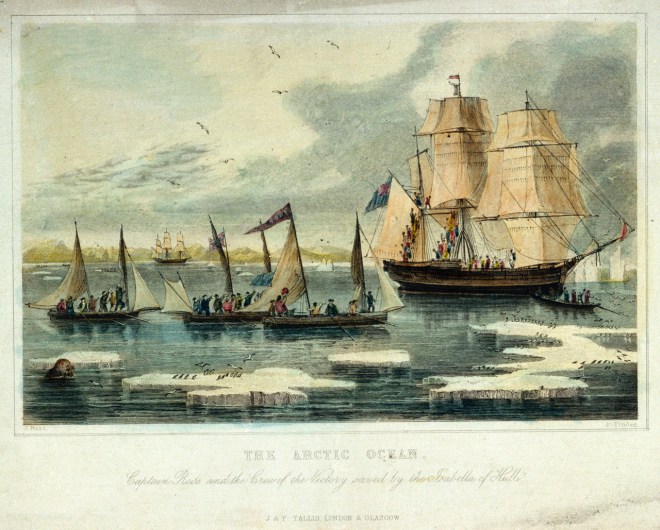
On 18th October 1833, Capt John Ross was granted the Freedom of the Town of Hull. Having returned to Hull on expedition to find the lost Isabella, was then himself thought lost.  (He was also granted the freedoms of London, Liverpool, Bristol and Wicklow)

On 18th October 1850, the Hull Advertiser reported that the ring leaders of a riot which resulted in the deaths of 4 Irish labourers on Sunk Island in July were found guilty of riot and sentenced to 4 months each with hard labour.They were: Robert Smith, John Londsbro, George Bellamy, John Dent, George Bielby and Fewson Towse.


John_Ross_rescued_by_Isabella,_1833

October 17th

On 17th October 1285, Richard son of Walter le Pessoner, clerk, while sick and delirious in the hospital in Beverley, killed Brother Walter, his ‘dear master’; the jury declared death by misadventure, and imprisoned Richard indefinitely.

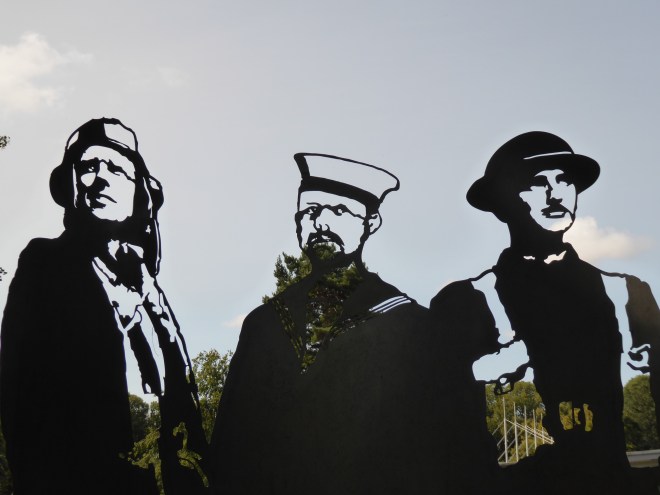
On 17th October 1917, former Reckitt’s employee Private Frederick Bartholomew Coupland, 29, was killed in service with the Royal Army Medical Corps, whilst bandaging a comrade’s wounds. Buried at Langemark, Belgium. photo shows Services Memorial, East Park.

Services memorial, E Pk

October 16th

john de sutton


On 16th October 1312, John de Sutton of Sutton-on-Hull was listed with other followers of the Earl of Lancaster as pardoned for his part in the death of Piers Gaveston, King Edward II’s favourite and Lord of Holderness. photo of Sutton church

On 16th Ocotber 1617, John Gildas confessed to the Patrington Manor Court that he had 3 times stolen barley and beans from Mr Hall’s (the rector) tithe barn.

On 16th October 1763, Ann Chameron was buried in Hutton with no ceremony, as she was a Catholic. Burial by a Catholic priest would have incurred a £20 fine.

On 16th October 1939, New Theatre (Hull) Limited, Kingston Square, opened with a production of “Me and my Girl’ by Noel Gay.


October 15th

On 15th October 1536, Hull besieged by troops of local men, from of Holderness, Cottingham, Beverley and Hullshire supporting the Pilgrimage of Grace.  William Stapleton reported he had trouble restraining the Beverley men under his command from setting fire to shipping in Hull haven. He sentenced 2 ‘unmanageable’ followers to death, but reprieved both after inflicting one with the punishment of being towed behind a boat by a rope attached to his waist.

Pilgr Grace

October 14th

On 14th October 1498, Richard Symonde of Beverley claimed sanctuary at the church of St John, Beverley, for debt, to avoid or delay his creditors pursuing him.

On 14th October 1523, Henry Draper, a draper from Snaith, claimed sanctuary at the church of St John for debt.

On 14th October 1654, Elizabeth Roberts of Beverley was charged with witchcraft at York Castle, for attacking John Greencliffe in the forms of a cat and a bee. She seems to have avoided the gallows.

On 14th October 1854, Queen Victoria visited Hull, to huge celebrations; she knighted the Mayor, Sir Henry Cooper, at the pier. In the group of worthies welcoming her were Lord Hotham and Robert Raikes, descendants of the Hull Governor and Mayor who shut the gates against King Charles I.  Joseph Robinson Pease in his diary said ‘Hull has now wiped off the disgrace of 200 years’.

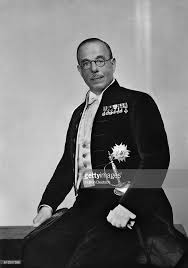
On 14th October 1869, Joseph Duveen was born in English Street, Hull. He became the greatest art dealer of his time, possibly of all time. He was knighted, eventually becoming Lord Duveen, and was made a freeman of Hull in 1929. He sold European Old Masters to the US. Donated works to the Ferens Gallery, British Museum, National Gallery and Tate Gallery. Died 1939.


lord duveen

October 13th

Wm Bradley


On 13th October 1593, Oswold Ridinge, Robert Greene, William Giltencrosse, Steven Gedney, and William Deane were all before Patrington Manor Court for making affray, upon each other, and upon Thomas Blenckarne, and drawing blood of Oswold Ridinge; fined 3 shillings and 4 pence.

On 13th October 1743, William Wilberfoss Smith III died aged 75 Wrightstown, Bucks County, Province of Pennsylvania, USA. Emigrated from Weighton, Yorkshire in 1684 as an indentured servant to William Penn, and in 1686 built a cabin which is considered to be the oldest continuously occupied home in the United States.

On 13th October 1799, Rev George Lambert was called to pray with a Hull woman who had been in labour for several days, and treated by 4 surgeons who could not deliver the baby. She died.

On 13th October 1815, William Bradley, the Yorkshire Giant,  printed handbills inviting visitors to see him at 15 Queen Street, Hull during Hull Fair for a shilling.

On 13th October 1857, John Johnson, chimney sweep, was fined £5 or 7 days in prison at Beverley Magistrates Court, for employing a boy of 13 to go up a chimney in the house of Wilberforce Herdsman. Employing under 21s as sweeps was not finally outlawed nationally until 1875. Legislation in 1840 set the minimum age at 16, but was rarely enforced.

On 13th October 1859, the Theatre Royal, Humber Street, Hull, burnt down just 10 days after re-opening following a fire in September.

On 13th October 1926, in a 2-day visit to Hull, HRH Prince of Wales laid the foundation stone of the Ferens Art Gallery, visited HERIB and other factories and institutions, and took a trip on the Humber in SS Brocklesby. At Craven Park, 10,000 schoolchildren sang for him. Crowds were estimated at 200,000. this interesting clip begins with a reference to the West Riding, but stick with it, Hull is definitely there. https://www.youtube.com/watch?v=YQhZrcaMUuo

October 12th

On 12th October 1536, 9,000 armed men from across East Yorkshire mustered on Market Weighton Hill as part of the Pilgrimage of Grace. Robert Aske led one group to York via Pocklington, and William Stapleton led a march on Hull, besieged it and captured it for the rebels. Holderness gentry Sir John Constable, Sir Wm Constable and Sir Ralph Ellerker had taken refuge in the town from the revolt.

On 12th October 1643, the Earl of Newcastle abandoned the 2ndsiege of Hull after 5 weeks and withdrew Royalist forces to York. To prevent pursuit, the Royalists destroyed bridges and roads and cut the banks of waterways as they retreated. The date was observed as a day of public thanksgiving in Hull until the Restoration.

On 12th October 1697, Robert Pattinson, Humber pilot, was fined 30shillings for damaging the ‘dolphin’ at the entrance to the River Hull while handling a vessel entering the Haven.

On 12th October 1767, Beverley gentleman John Courtney reported in his diary seeing a firework display for the first time, in the Market Place, paid for by subscription.

On 12th October 1896, at Hull Fair, one of the attrractions was the first showing in Hull of moving pictures, only 8 months after Louis Lumiere’s first performance, included scenes of Whitefriargate, the W’force Monument, the Corporation Pier, the Humber Ferry.

On 12th October 1933, Louis Armstrong performed at Beverley Road Baths, Hull, during his European Tour.


louis armstrong

October 11th

ON 11th October 1536, Marmaduke Thomson, vicar of Preston, rang the church bell and called parishioners to meet at Nuthill, where he swore in local men to join the Pilgrimage of Grace. Around 300 Holderness men left to assemble at Sutton Ings. (& see 10.10)

On 11th October 1643, 1500 Parliamentary troops left the besieged town of Hull and after 2 attempts and many hours’ fighting, drove the Royalists out of all their positions around the town.

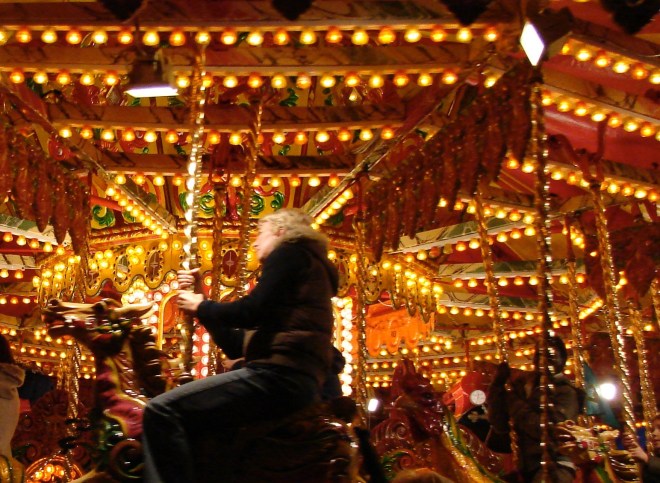
On 11th October 1782, Rev George Lambert described Hull Fair as ‘A season for the amusement of children and the gratification of gluttony’.

On 11th October 1929, Mrs Edith Robson officially opened Hedon Road Maternity Hospital, the successor to the free maternity home for poor mothers, which she gave as a gift, fully equipped, to Hull Corporation in 1915.


fair 07

October 10th

On 10th October 1536, a large crowd of armed men from Holderness supporting the Pilgrimage of Grace met on Beverley Westwood and Sutton Ings and chose captains.

On 10th October 1596, the Howden churchwardens gave 8d to Oswald Metcalfe, a poor man, licensed by My Lord Grace and the Council (i.e. given licence to beg while on his way to his home parish).

On 10th October 1918, former Reckitt’s employee gunner George Henry Saul, 26, died of wounds while serving with the Royal Garrison Artillery. Buried Etaples, France.

Pilgr Grace