August 1st

On 1st August 1506, William Ryplay, labourer, of Leconfield, claimed sanctuary at the church of St John, Beverley, for debt.

On 1st August 1639, Robert Skelton, 32, of Hull, was hanged at York Castle for forging a will belonging to Thomas Bell of Hull.

On 1st August 1648, Hull Recorder Francis Thorpe wrote to the Mayor concerning the shipment of pistols to the town, and about the case of Bacchus, a delinquent (i.e. a supporter of the Royalist cause in the Civil War).

On 1st August 1670, Mrs Mary Barnard of Barmston had been ordered to do work to the drain called Gallow Clow (on Myton Carr, near the road to Anlaby) on land which she owned, and had failed to carry it out; a jury under the Commissioner of Sewers gave notice of their intention to view the drain or creek.

On 1st August 1834, Richard Bethell MP laid the foundation stone for William Wilberforce’s statue on Monument Bridge, Hull, on the same day as the Slavery Abolition Act came into force.

On 1st August 1873, the Fisk Jubilee Singers arrived in Hull and visited the Wilberforce monument on the anniversary of the Abolition of Slavery Act. They performed several times, and were so popular they returned to Hull twice more before returning to the US August 1874. They were on a European tour, including singing for Queen Victoria, to raise money for the Fisk University for freed slaves. Several of the singers were born slaves.


Wilberforce memorial plinth


July 20th

On 20th July 700 AD, St Osanne (or Osana or Osmanna) died aged 30 (at least, this is her saint’s day). Sister of Osred I, King of Northumbria (or daughter of Aldfrith), she was a nun at Jouarre, France. Her miracles are recorded: when a concubine of the Howden rector was so impious as to sit upon Osana’s tomb, Osana stuck her to it so that she could not be removed.

On 20th July 1332, Edward Balliol gathered a fleet of 88 ships in the Humber, and joined by a number of other Scottish nobles, set off for Fife to claim the Scottish throne from the Bruce family.

On 20th July 1413, Pope John XXI wrote to residents of West Hull villages, solemnly reminding them of the judgements to come if they did not maintain the water courses providing fresh water to Hull.

On 20th July 1495, John Halyday, carrier, of Watton, claimed sanctuary at the church of St John, Beverley, for the murder at Watton of Agnes Lathe.

On 20th July 1631, Henry Lord Clifford made the first payment to Dutch painter Hendrick de Keyser the younger, following a fashion for painting set by Charles I; de Keyser was employed for 7 years, unusual for a great house in the North. No work attributed to de Keyser has survived.

On 20th July 1662, Rev Nicholas Osgodby was reinstated as vicar of St Mary’s after being removed from his post during the Commonwealth.

On 20th July 1798, press gang officer Lieutenant Loten was attacked in the street in Hull by a sailor with a Greenland knife, and escaped to his house. A riot began which took the militia 3 hours to quell.

On 20th July 1934, the crew of Hull tug Autocrat were rescued when she was pulled over and sank near Whitton, in the Humber, while helping the Goole tug Salvage to refloat the SS Ouse. The tug was raised and returned to service.

St Mary's Beverley


July 12th

On 12th July 1537, Robert Aske of Aughton was hanged in chains outside Cliffords Tower, York, after being convicted of treason in Westminster, as the leader of the Pilgrimage of Grace.

On 12th July 1641, Sir Thomas Glemham resigned his post as Governor of Hull, having only been appointed the previous year.

On 12th July 1714, Elizabeth Hodgson, a single woman of Hedon, was sentenced at Hedon Quarter Sessions to be stripped to the waist and whipped with birch or willows from the Town Hall to Harrison Lane and from there to the jail and to remain in jail at hard labour until ‘sufficient security’ was found for her good behaviour. Her crime was to give birth to her 4thillegitimate child. There is no record of any punishment for the father. An Act of 1792 forbade whipping females for any reason whatsoever.

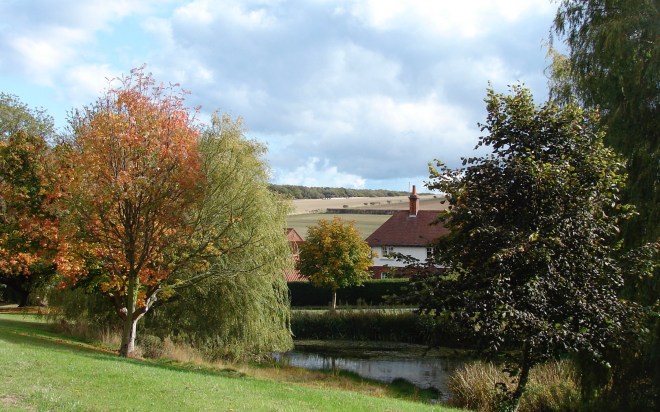
On 12th July 1826, (in one of the driest summers on record) Hessle banker Joseph Robinson Pease recorded in his diary there was no grass for the cattle, who had to be given linseed cake. Ponds and water tanks dry.  Around this time, too, the pond at Fridaythorpe dried up, and villagers went on a Sunday to nearby Fimber to take water from one of their 2 ponds, resulting in a pitched battle, referred to as ‘the Second Battle of Waterloo’. photo shows the remaining village pond at Fimber.

fimber pond.JPG

July 5th

On 5th July 1532, Henry VIII’s charter was read out in Hull Market Place, and prohibited anyone but Hull burgesses from conducting business in the port; the corporation paid £31 19s4d to obtain the charter, part of which was paid in the form of a sturgeon for Thomas Cromwell.

On 5th July 1657, a major fire in Hedon starting at 1 a.m. resulted in the loss of 42 houses, and others damaged. In August, the Mayor petitioned Parliament for permission to hold a collection to raise money; £4,000 was raised.

On 5th July 1776, John Wesley paid a visit to Howden and preached to a large congregation during a thunderstorm near Station Road, Howden. Wesley’s picture below

On 5th July 1811, Bridlington Collector of Customs Benjamin Milne discovered a tidal spring near the quay, now commemorated by a stone inscription.

On 5th July 1899, Hull Alderman Larard took the controls of the city’s first municipal electric tram (Siemens Bros & Co provided the electrical equipment). A spectator hoping for a good view, climbed on the roof of the public lavatories and fell through.

On 5th July 1930, the annual King’s Cup Air Race took place on this date, and planes had to follow a route of around 800 miles. Hull Aerodrome was a main control station on the route. Tickets were sold for 1s and 2s6d. The winner was Miss Winifred Brown in an Avro Avian III. (N.B. Hull Aerodrome is actually in Preston South.)


john wesley

July 4th

On 4th July 1399, Henry Bolingbroke (later Henry IV) landed at Ravenspurn from France with 60 men, and was joined by the Earls of Northumberland (Percy) and Westmoreland (Neville), to claim the throne from Richard II. Photo shows memorial in Easington church.

On 4th July 1524, William Richerdson, husbandman, of North Newbald claimed sanctuary at the church of St John, Beverley, for the ‘murderation’ of Anthony Godsale, husbandman of Newbald.

On 4th July 1597, William Anlaby or Andleby, a Catholic convert born in Etton, returned to UK as a priest after training in France.   He ministered to Catholic prisoners in Hull. Executed at York as a Catholic missionary priest. Beatified by the Catholic church in 1929.

On 4th July 1642, Sir John Hotham, aware that the Royalists surrounded Hull and had tried to cut off the fresh water supply, gave orders to open the sluices and cut the Humber banks in Drypool and Myton, outside the walls. He told farmers to bring their cattle and goods into the town. Hull was virtually unassailable.

On 4th July 1643, after defeat by the Royalists at Adwalton Moor, Sir Thomas Fairfax retreated to the only Parliamentary stronghold left in Yorkshire, Hull, just a few days after Hotham’s arrest.bolingbroke memorial Easington. jpg