December 13th

thwing meteorite

On 13th December 1760, John Courtney, gentleman, reported in his diary being awoken at midnight by the sound of bells ringing to announce that Hugh Bethell had declared himself a candidate for Parliament. The bells rang all day. A week later, Bethell changed his mind and withdrew his name.  He served as Beverley MP 1768-72.

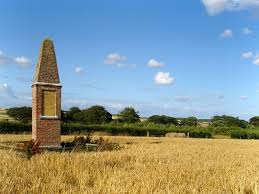
On 13th December 1795, at 3p.m., a meteorite weighing 56 pounds landed in a field near Wold Cottage, Thwing, home of Capt Edward Topham. It embedded itself 9 inches into the soil, weighing 56lbs, and 3 ft long. Capt Topham displayed the meteorite in London at a charge of 1shilling. He raised a brick obelisk on the landing site (see photo). The meteorite is now in the Natural History Museum, and is the origin of the name of Wold Top Brewery’s ‘Falling Stone bitter’.

On 13th December 1816, Frederick Brown, 60, was buried in Holy Trinity, Hull, after dying in the workhouse. Born in Guinea, he worked as a labourer in a number of jobs in Whitby and Hull. In 1794 he was acquitted of burglary by a Hull jury, apparently a case of being mistaken for another black man.

On 13th December 1830, Joseph Robinson Pease, JP, recorded in his diary an attempt to swear in special constables to deal with the ‘Swing Riots’ by agricultural labourers protesting about high rents, low wages, and the introduction of new machinery. However, they found it difficult to recruit in Cottingham.

On 13th December 1842, Moses Roper, student and escaped slave, gave a lecture at Beverley Guildhall on his personal experience of slavery in the USA, in which he exhibited instruments of torture used on slaves. He lectured extensively and published an autobiography.

On 13th December 1889, John Nicholson reported seeing the “Plough Lads’ (groups of men not hired on farms) going round Beverley, dancing and asking for money or drink. They dressed in ‘motley garb’, with one dressed as a woman with a broom, one (Blether Dick) with a bladder on a stick, one with a coat covered in strips of rag. “Often … at lonely houses they are rude and bold, demanding money or drink in such a way as to terrify the women who have been left at home”.  
November 23rd

On 23rd November 1599, the Council in the North made an order that John Gregory should serve as Hull Sheriff, although he had held the office 32 years before in 1567, and had asked to be released. He appears to have been successful in spite of the order.

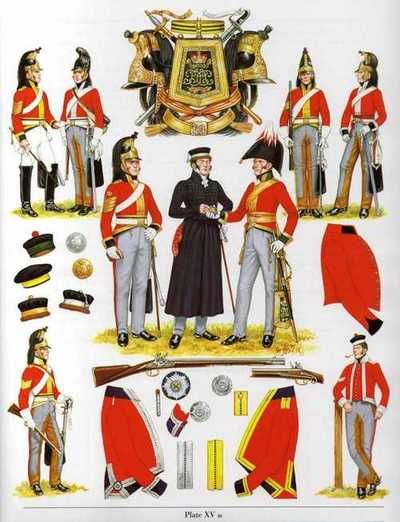
On 23rd November 1796, John Taylor jnr, member of the Hull Troop of Gentlemen and Yeomanry Cavalry, was unanimously expelled and voted to Coventry for improper conduct. The record does not state what he did. photo shows cavalry of the time.

On 23rd November 1863, at the Howden Martinmas hiring fair, 700 men and 800 women attended, the largest number of any ER town; fairs were also held in Beverley, Bridlington, Driffield, Hedon, Patrington, where farmers and people seeking employment gathered. The church was concerned about the moral issues involved when single women had to parade themselves in public. Traditionally, farmworkers had a week’s holiday, annual wages paid, and there were pleasure fairs.

cavalry1796

October 6th

site of Haltemprice Priory

On 6th October 1515, the Sheriff of Hull, Mr Mattison and 200 citizens fought the monks of Haltemprice Priory and threatened to pull down the monastery, over a dispute concerning jurisdiction over Wolfreton and Willerby, and fresh water supplies. Peace was restored by the Mayor of Hull, George Mattison and the issue was eventually resolved in the Star Chamber. One of many incidents in Hull’s ‘water wars’. photo shows site of the monastery.

On 6th October 1613, an enquiry determined that a chantry dedicated to St Mary, and a chaplain to celebrate daily services there, had been paid for by 6 1/4 acres of land, 10 messuages and 3 tofts, given to the town of Hedon by John de Burton and Henry Maupas. Chantries were abolished by Edward VI, along with other signs of Catholicism.

On 6th October 1670, Ann Barone was fined in the Patrington manor court for not making bread according to the assize – i.e. not the regulation size, weight etc.

On 6th October 1748, Mary Jackson, tenant farmer of Everingham, lost 36 of her 45 cattle to rinderpest, the cattle plague then affecting much of the East Riding.

On 6th October 1850, Hedon solicitor James Iveson, died after a long career controlling the political life of Hedon, a Rotten Borough described as ‘Lawyer-ridden’. He was also Town clerk, Mayor, land agent, and steward on behalf of the Constables of the Holderness Seigniory. The Iveson dynasty was involved in land enclosures, surveying and other profitable work. James was renowned for rudeness. Part of an ultra conservative council which for years resisted public health improvements. Collector of architectural remains from demolished churches. Engaged for some 20 years of protracted negotiation with Trinity House over Spurn Point.  portrait in Hedon Town Hall

On 6th October 1890, Chas Collier, aged 17 years, former pupil of Hull Trinity House School, died of typhoid fever in the Barque Miltiades off the west coast of Africa.

James Iveson, Hedon Town Clerk

September 15th

On 15th September 1415, Henry V issued a General Pardon to the Mayor and town of Hull.  It is not clear for what they were being pardoned, though it may have been a general relaxation of taxes in gratitude for providing soldiers – or ships – after his success at Agincourt.

On 15th September 1561, William Calverde rented from Hull Corporation land called Hurne Close in Myton, with the right to pasture 20 sheep in the Common Carr of Myton.

On 15th September 1636, Hull Corporation was warned to prevent seamen arriving from ports infected with plague from coming ashore. Hull was in the midst of a serious 3-year outbreak which began in 1635.

On 15th September 1636, James II turned out of office 11 of the 13 elected Hull aldermen, the Mayor, High Steward, Recorder and Town Clerk, and replaced them with his own choice. This put Marmaduke Lord Langdale, in the powerful position of Governor of the garrison and Recorder, backed by 1199 soldiers, billeted on the residents. In December that year, Langdale was himself ejected.

Marmaduke_Langdale2

On 15th September 1864, Crown Prince Umberto of Italy stayed overnight at the Beverley Arms, after attending the St Leger at Doncaster, and left to visit James Hall’s stud at Scorborough.

On 15th September 1948, Mr J.H. Wilson, 33, labourer-driver, employed by East Riding  Agricultural Committee, was badly injured when he drove a lorry across a temporary rail crossing at Garton on the Wolds. The lorry was wrecked by a train, killing 3 Polish and Hungarian workers, and injuring another 4. The workers were people displaced by WW2, who were travelling to a Garton farm to help with the harvest. An enquiry recommended steps to improve the crossing.

August 23rd

On 23rd August 1326, Richard Furnewes, barber to the Archbishop of York, was appointed to keep the park at Bishop Burton and the deer, at a salary of 2d per day.

On 23rd August 1601, Lord Burley, Queen’s Lieutenant and President of the Council of the North, visited Hull. His visit was marked with a firework display in the Market Place. Tragically, the cannon misfired, and at least 4 died, and several others were injured.

On 23rd August 1619, a woman bonesetter from South Dalton attended Londesborough House to treat Earl Francis’s shoulder, dislocated in a fall while out hawking. She was paid £1 5s for the treatment, which included 2 visits. (A physician might charge £2 a visit).

On 23rd August 1653, Robert Acklam was fined £5 by Hull Trinity House for taking the ship Blessing from Hull to London and from there crossing to Holland without the correct licence.

On 23rd August 1830, 60 farm workers rioted in Burton Pidsea, armed with clubs, scythes and stones, and visited every farmhouse where there were known to be Irish labourers, aiming to drive them out of the neighbourhood. 6 of them attacked Irish men working in a field belonging to Mr Baxter. The Hull Packet reported on 10.9. 1830 that the 6 ringleaders had been arrested and would be tried at the next Quarter Sessions in Beverley.

On 23rd August 1886, former Hull Trinity House pupil John Lester, aged 20, was killed by a fall from aloft on the Schooner Welsh Belle travelling from Hull to Newfoundland.

On 23rd August 1934, the Yorkshire Post reported on a cliff collapse along a 100-yard stretch at Aldbrough, which resulted in thousands of tons of material falling onto the beach, destroying the boat slipway. No-one was hurt. photo shows more recent erosion at Ulrome.


erosion Ulrome

August 15th

On 15th August 1690, Robert Lumley, ship’s master, was fined 10s by Hull Trinity House for sailing out of the port without supplying the House with a list of men and their wages.

On 15th August 1764, Abraham Clayton, 35, of Howden, was hanged at York Castle for murdering his wife Elizabeth; his body was given to surgeons ‘to be anatomized’.

On 15th August 1808, Robert Pattinson,  grazier and agriculturist, died aged 82, and left 4 acres of land in Skeffling, the rent to be used to educate poor children in Easington.

On 15th August 1924, Harry Blanshard Wood, VC, died aged 42 in Devon, after a traffic accident. Born in Newton-on-Derwent, he was a corporal in the 2ndBattalion, Scots Guards when on 13.10.1918 in St Python, France, he took command when his platoon sergeant was killed, and showed gallant conduct and initiative, for which he was awarded the Victoria Cross.

On the same day, BBC radio station 6KH began broadcasting local items from bishop Lane, Hull, including sport, talks, children’s shows, and music featuring local musicians, e.g. Powolny’s Restaurant Bijou Orchestra. In 1928, the station closed, and there was no local station until Radio Humberside opened in 1971.

On 15th August 1940, 13 military personnel and 1 civilian died, and 16 injured in this daytime air raid on Driffield airfield and Southburn, including Aircraftwoman M. Hudson, the first WRAF fatality.

July 29th

On 29th July 1527, John Flower, labourer of Burstwick, claimed sanctuary at the church of St John, Beverley, for the death of Roland Stephenson.

On 29th July 1678, Andrew Marvell, MP for Hull, had what turned out to be his last meeting with Hull Corporation. He returned to London shortly after, and died suddenly, aged 58, on 16thAugust, some supposed of poison.

On 29th July 1828, Hull banker Joseph Robinson Pease visited his land in Winestead to discover ‘hundreds of acres nearly a foot under water’ in the wettest July on record, a disaster for crops of hay, corn and potatoes. He said most local landowners had reduced rents, farmers ‘having literally nothing to pay with’.


Andrew Marvell

July 14th

On 14th July 1746, William Pulteney, MP for Hedon, Baron Hedon and the Earl of Bath, stepped down when after “48 hours, three quarters, seven minutes, and eleven seconds” he failed to form a government, and is now reckoned to be England’s shortest-serving Prime Minister. photo shows his portrait in Hedon Town Hall.

On 14th July 1873, Hull hosted the Royal Agricultural Show at Newington, on the site of the former race course; the event has been held at Stoneleigh since 1963.

On 14th July 1943, Ernest Wilson of Hutt Street, Air Raid Warden, and Charles Henry Burgess rescued Mr Cherry from his home in Leonard Street, Hull, during an air raid. Wilson was later awarded the British Empire Medal.

On 14th July 2007, (Florence) Eva Crackles, MA, MBE,  died aged 89. Botanist and teacher; Honorary Doctor of Science, Univ of Hull 1991; Fellow of the Linnean Socy; and Honorary Life member Botanical Societyy of Britain & Ireland. Some of her work can be seen on the external wall of the Wilberforce Health Centre, and she is commemorated by a cream plaque. (born 23.1.1918)

Wm Pulteney, Hedon MP

June 20th

Hull Corpn silver


On 20th June 1533, the Hull Mayor and town council sold to Sir Edmund Perkins the ornaments of the churches in the town, for £15. They also gave to Sir Frauncis Jobson, Treasurer of His Majesty’s jewellers, ’24oz of silver plate whereof 7oz were double gilt and the rest part gilt and plain white, handed over for His Majesty’s use’. photo shows some of today’s corporate treasures.

On 20th June 1579, Edward, son of Nicholas Symson of Thorpe, because of the outbreak of plague at Howden, had to be baptised at Eastrington rather than in the parish church.

On 20th June 1583, Hull agreed to 10s compensation to Richard Frere for the loss of hay and his cote during the time when plague was in the town.

On 20th June 1642, Maurice Corney, vicar of St Mary’s Hull and Capt William Thornton, comptroller of customs were discussed by Sir William Strickland, Mr Alured, Mr Peregrine Pelham and Mr John Hotham, as a danger to Parliament’s cause. Sir John Hotham ejected Corney from the town, and he left for York, despite being considered a hero for his work during the recent plague. Thornton was also turned out, and joined the King’s service.

On 20th June 1645, John Blenkarne, master of the Hull ship Anne Dorothy, was moored in Marstrand, Sweden. He accused crewmen Peacock and Dynnis of inciting mutiny when they came aboard drunk, threatened him, and after a night in custody refused to come aboard until threatened with imprisonment. When they returned to home port, the court of Trinity House fined them and jailed them for 24 hours.

On 20th June 1761, Beverley widow Elizabeth Courtney, of Walkergate, paid the bellman to go round the town announcing a reward of 3 guineas to anyone with information about bricks thrown through her windows the previous night.

On 20th June 1810, Hull Trinity House reported raising £300 in 9 weeks towards establishing a lifeboat at Spurn.

On 20th June 1895, an auction was held in 2 fields in Bransholme Lane, Sutton, of ‘The Sweep of the Scythe’ of 25 acres of ‘rich meadow’, and also the ‘Eatage of the Fog’ up to the end of the year. This appears to have been dialect for the sale of hay cut for fodder for cattle.


June 19th

On 19th June 1256, the Meaux Abbey chronicler reported losing men and oxen at Orwithfleet, south of Patrington. A major flood of the Humber reached as far north as Cottingham, with many lives lost, livestock and fisheries devastated, and land washed into the river.

On 19th June 1607, Thomas Wincop, Master of Hull Charterhouse, bought, with Hull Mayor George Almond and other trustees, land in Haltemprice Wood abutting on the common fields of Willerby, to support the running costs; the Charterhouse already owned substantial property in and around Hull. photo shows Wincop’s memorial in Hull Minster.

On 19th June 1837, Hull Steam Packet Company launched the paddle steamer Victoria at Medley’s shipyard, Hull; she was considered state of the art. A boiler explosion in 1838 killed 5 crew; there was a second explosion the same year; she ran onto rocks in 1852 and was wrecked, with 8 people killed.

On the same day, Rev Joseph Coltman died in Beverley at the age of 60. He was known for his support of local charities, of the emancipation of Catholics, and of the abolition of slavery. Born in Hull, Coltman Street was named for him, as was Beverley’s Coltman Avenue. At 37 stone 8lbs, he was reputed to be the heaviest man in England, and his death may have been caused by his weight. He employed a manservant to turn him in bed, but he fell asleep and Coltman suffocated in his sleep.

On 19th June 1887, to celebrate Queen Victoria’s Jubilee, a state service was held in Holy Trinity church, Hull, the new Market Hall was opened, as was East Park, and there were festivities in all the city’s wards.

On 19th June 1920, Harry Wilkinson of  Lower Union Street, Hull, was seriously injured by 3 gunshots.  He was part of a mob of white people who attacked and damaged several boarding houses where black seamen lived. Tom Toby, a West African fireman, was charged with wounding, but no white people were arrested. Toby’s plea of self defence was accepted, and he was found not guilty. During the same rioting, Murrell Piggott, faced with a 200-strong crowd, had also fired, but his plea of self defence was not accepted, and he was sentenced to 9 months’ hard labour for unlawful wounding.

On 19th June 1940, the East Hull, docks, suburbs, and River Hull corridor experienced the first night-time raid of World War 2.


Thomas Whincopp memorial