December 21st

wm constable

On 21st December 1633, the Duke of Cumberland’s staff bought supplies of oysters (600 at 6d per 100) for Christmas at Londesborough House on his behalf when he was in York on business.

On 21st December 1721, William Constable was born at Burton Constable. He inherited the Constable estate, and is chiefly remembered for restoration work on the Hall, and as an amateur scientist and collector of art and artefacts; his Cabinet of Curiosities may be the most complete in any stately home. He became grossly overweight, suffering from gout, probable hypochondria and addiction to medication containing opiates. (d 18.5.1791) see photo with his sister Winifred

On 21st December 1824, Richard Arthur Worsop of Howden Hall recorded in his diary that he supported a charity which had been continued by the owners of the Hall since the 17th Century; he gave 6d each to 40 poor people of the parish, and a bushel each of wheat and coals to a further 10. He recorded several other charitable gifts in his diary, including a sheep to the workhouse.

On 21st December 1838, Hull banker Joseph Robinson Pease established, and was elected President of, Hull Labourers’ Friendly Society, having established a society in Hessle which had built a cottage there.  There were already dozens of friendly societies in Hull by this time, and this new group may have been more of a building society than a self help group. Pease was certainly no democrat (he described democracy as a ‘pestilent curse’).

On 21st December 1857, Henry Smith Bright, manager, Hull Cotton and Flax Mills, was found guilty at York Assizes of forging deeds of transfers of shares, and sentenced to 6 months’ penal servitude. His actions appear to have precipitated the closure of the Hull Flax and Cotton Mills and the bankruptcy of the partners in the Harrison Watson & Co bank on 24.9.1857.

On 21st December 1957, Edward Benn, 43, bosun, of Hull Rd, Hedon, died as result of accident aboard Hull trawler Cape Palliser off Iceland.

December 6th

On 6th December, it was the tradition in many villages for a Boy Bishop to be elected, to serve to Christmas Eve.

On 6th December 1567, after being admitted to the Council in the North by the Archbishop of York, Sir John Constable of Halsham and Burton Constable was dismissed after opposition from protestant Sir Henry Gates.

On 6th December 1852, Henry ‘Box’ Brown, escaped US slave and actor, performed a panorama of African and American Slavery at The Music Hall, Hull.

Henry Box Brown


November 17th

On 17th November 1407, Sir John Constable died at Halsham, and indicated in his will a wish to make amends to anyone he had swindled, and to return to their families goods and chattels belonging to his villeins, which he had kept after their death, ‘for the convenience of their sons’.

On 17th November 1868, novelist Anthony Trollope stood as a Liberal candidate and came 4thout of 4 candidates in the election; he referred to Beverley (where ‘political cleanliness was odious to the citizens’) as Percycross in his 1871 novel ‘Ralph the Heir’.

On 17th November 1907, Bokane, Kuarke, Mongonga, Mafutiminga, Matuka and Amuriape, pygmies from the Ituri Forest, Congo River Basin, sailed home from Hull after 30 months in England. 3,000 people paid to see them at Olympia and halls around the country. They also visited the House of Commons. They stayed with Colonel James Harrison at Brandesburton Hall and hunted in the parkland. Human rights activists had campaigned to stop the visit.

Brandesburton pygmies

November 10th

On 10th November 1274, Aveline de Forz, aged 10, was married to Edmund Crouchback, 2nd son of Henry III.  Countess of Aumale and Lord of Holderness in her own right, and Countess of Lancaster by marriage.  She died childless at age 15 and is buried in Westminster Abbey. The Lordship of Holderness passed to the Crown. Born Burstwick 20.1.1259

On 10th November 1293, Countess Isabella de Forz, widow of William de Forz III died, having outlived her husband and all her children, including Aveline above. A legend relates that she came across a poor man carrying a basket containing what he said were puppies, but which turned out to be seven of his children that he was going to drown because he could not afford to keep them. After severely upbraiding him for his lack of morality, Isabella adopted the children and ensured that they were looked after and well educated until their adulthood when she found employment for all of them.

On 10th November 1518, Sir Marmaduke Constable of Flamborough (known as Little Sir Marmaduke). Died after swallowing a frog (some say toad) while drinking a glass of water. Knighted for military service including Flodden a letter of thanks from Henry VIII is displayed, in Wassand Hall. photo shows his tomb in Flambrough church. & see 9.9

On 10th November 1609, Sir George Wharton, who was raised at Londesborough, died in a duel in Islington with his good friend Sir James Stuart, the King’s godson, who also died. The event was commemorated by Sir Walter Scott in his ‘Minstrelsy of the Scottish borders’. (b1583)

On 10th November 1678, Capt Towes (or Towers or Towle) of the Hull ship Shield landed settlers at Burlington, New Jersey. Many were Quakers, who settled at Burlington, Salem and other places. One of the passengers was Mr Barnes, a merchant from Hull.

Little Sir Maramaduke Constable's tomb

October 20th

On 20th October 1536, Sir Robert Constable of Flamborough took command of Hull after a siege lasting 5 days, by the East Riding rebels of the Pilgrimage of Grace. The only condition the inhabitants made was that no-one would be forced to take the pilgrims’ oath.

On 20th October 1580, Rowlande Burton was called before the Hull mayor and aldermen to answer a charge of dealing in hops without paying a customs charge. They agreed that he would pay the charges due.

On 20th October 1586, Luke Fox (or Foxe) was born in Hull. He explored much of the Hudson Bay in search of the Northwest Passage. Later became a brother of Hull Trinity House and in 1635 published ‘North-west Fox, or Fox from the Northwest Passage’. Died approx 15.7.1635.

On 20th October 1749, a ’sudden and dreadful’ fire broke out at night when the Stamford Bridge Mills machinery overheated.

On 20th October 1890, Withernsea pier was damaged for a third time since its opening 12 years before, when an unmanned Grimsby fishing smack, the Genesta, smashed into it, and destroyed half of the remaining pier (see 19.10). Another boat, the Henry Parr, smashed into it in 1893, leaving only 50 feet, which remnant was removed in 1903 during work on the sea wall.

On 20th October 1958, the Malton to Driffield Railway closed to freight traffic, passenger traffic having ceased in 1950.


W'sea pier

October 12th

On 12th October 1536, 9,000 armed men from across East Yorkshire mustered on Market Weighton Hill as part of the Pilgrimage of Grace. Robert Aske led one group to York via Pocklington, and William Stapleton led a march on Hull, besieged it and captured it for the rebels. Holderness gentry Sir John Constable, Sir Wm Constable and Sir Ralph Ellerker had taken refuge in the town from the revolt.

On 12th October 1643, the Earl of Newcastle abandoned the 2ndsiege of Hull after 5 weeks and withdrew Royalist forces to York. To prevent pursuit, the Royalists destroyed bridges and roads and cut the banks of waterways as they retreated. The date was observed as a day of public thanksgiving in Hull until the Restoration.

On 12th October 1697, Robert Pattinson, Humber pilot, was fined 30shillings for damaging the ‘dolphin’ at the entrance to the River Hull while handling a vessel entering the Haven.

On 12th October 1767, Beverley gentleman John Courtney reported in his diary seeing a firework display for the first time, in the Market Place, paid for by subscription.

On 12th October 1896, at Hull Fair, one of the attrractions was the first showing in Hull of moving pictures, only 8 months after Louis Lumiere’s first performance, included scenes of Whitefriargate, the W’force Monument, the Corporation Pier, the Humber Ferry.

On 12th October 1933, Louis Armstrong performed at Beverley Road Baths, Hull, during his European Tour.


louis armstrong

October 6th

site of Haltemprice Priory

On 6th October 1515, the Sheriff of Hull, Mr Mattison and 200 citizens fought the monks of Haltemprice Priory and threatened to pull down the monastery, over a dispute concerning jurisdiction over Wolfreton and Willerby, and fresh water supplies. Peace was restored by the Mayor of Hull, George Mattison and the issue was eventually resolved in the Star Chamber. One of many incidents in Hull’s ‘water wars’. photo shows site of the monastery.

On 6th October 1613, an enquiry determined that a chantry dedicated to St Mary, and a chaplain to celebrate daily services there, had been paid for by 6 1/4 acres of land, 10 messuages and 3 tofts, given to the town of Hedon by John de Burton and Henry Maupas. Chantries were abolished by Edward VI, along with other signs of Catholicism.

On 6th October 1670, Ann Barone was fined in the Patrington manor court for not making bread according to the assize – i.e. not the regulation size, weight etc.

On 6th October 1748, Mary Jackson, tenant farmer of Everingham, lost 36 of her 45 cattle to rinderpest, the cattle plague then affecting much of the East Riding.

On 6th October 1850, Hedon solicitor James Iveson, died after a long career controlling the political life of Hedon, a Rotten Borough described as ‘Lawyer-ridden’. He was also Town clerk, Mayor, land agent, and steward on behalf of the Constables of the Holderness Seigniory. The Iveson dynasty was involved in land enclosures, surveying and other profitable work. James was renowned for rudeness. Part of an ultra conservative council which for years resisted public health improvements. Collector of architectural remains from demolished churches. Engaged for some 20 years of protracted negotiation with Trinity House over Spurn Point.  portrait in Hedon Town Hall

On 6th October 1890, Chas Collier, aged 17 years, former pupil of Hull Trinity House School, died of typhoid fever in the Barque Miltiades off the west coast of Africa.

James Iveson, Hedon Town Clerk

September 9th

On 9th September 1513, Marmaduke Constable, of Flamborough was knighted for his role in the Battleof Flodden Field, and a letter of thanks from Henry VIII is displayed in Wassand Hall. Ralph Ellerker, senior of Risby and his son Ralph were also both knighted. This causes some confusion in the historical record, as there were 2 Sir Ralph Ellerkers alive at the same time.

On 9th September 1643, Rev James Sibree reported that on Sunday he had preached twice, visited the cemetery 3 times, and interred 43 bodies of his fellow citizens. During the cholera outbreak, many church services were held outdoors in the Market Place, by ministers of different denominations, and attended by more than 3,000 people. photo shows Cholera Memorial in Western Geneeral Cemetery.

On 9th September 1878, George Carr, aged 45 and Joseph Carr, aged 26, accidentally drowned in Hornsea.

On 9th September 1956, Captain Erik Ohsman, and Chief Steward V. Stenros, of SS Lona, were rescued by firemen when they were found unconscious after fire was discoveredon their Swedish ship, loaded with over 3k tons of pit props. Both recovered. The fire, which started in the engine room, spread to the cargo, and after several hours the ship had to be scuttled in the dock to prevent greater damage. She was raised on 11 October and repaired. Cholera memorial

August 6th

On 6th August 1778, the question of who owned Spurn Point was resolved in favour of the William Constable of Burton Constable; the legal dispute began in 1609.

On 6th August 1785, John Beck of Lelley was hanged at York Castle for setting fire to a house and corn mill belonging to William Jackson of Danthorpe, with Robert Crosby and John Edwards, also of Lelley; Edwards and Crosby escaped.

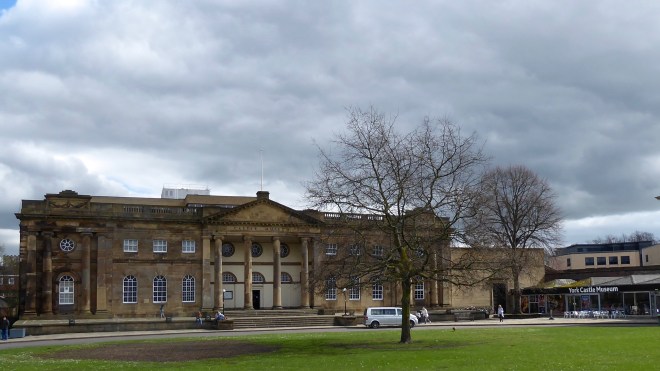
On 6th August 1859, John Riley, 36, of Hull, was hanged at York Castle for the murder of his wife, Alice.

On 6th August 1888, former Trinity House School pupil George Smith, age 15, drowned after a collision between the Barque Cambrian and a French Barque during a great storm in Valparaiso harbour.

On the same day, a Bank Holiday Monday, a popular trip out from Hull Corporation Pier was to Paull by boat to watch the Army’s Submarine Miners in training and holding boat races and athletic competitions. Several boats left the Pier during the day.

York Castle


July 6th

On 6th July 1381, William Haldene of Beverley had his brains literally knocked out by John Erghom and others, with a pole-axe, 2 battle-axes, 6 swords, 2 forks and other weapons, before his body was thrown into the beck in Walker Lane.

On 6th July 1382, Sir Michael de la Pole leased to John de Hedersee and John of Dimlington land in Myton which included arable land, pasture and at least 30 acres of meadow, with houses, sheepfolds, 600 sheep and 160 lambs. Myton was clearly very rural then.

On 6th July 1537, the body of Sir Robert Constable of Flamborough was displayed on Beverley Gate, Hull, after he was hanged for his part in the Pilgrimage of Grace, despite having been pardoned the previous year.

On 6th July 1538, Hull agreed to give a place in the Charterhouse to the wife of a blind man named Ralph, as his carer during his lifetime, taking up a place normally reserved for a man.

On 6th July 1642, Robert & Christopher Hildyard of Winestead, Francis Cobbe of Ottringham, and 300 other Holderness people met King Charles I at Keyingham and handed him a petition against Sir John Hotham’s actions in flooding farmland and taking livestock into Hull. The King was visiting The Providence, which had landed arms from Holland. The King sympathised, but said he could do nothing except raise troops, as he had no power to control Hotham.

On 6th July 1644, the Hull Committee of Sequestrations formally adjudged alderman James Watkinson a delinquent, 2 years after he left Hull to join the Royalist army, and they ordered that his post as alderman be filled by election.

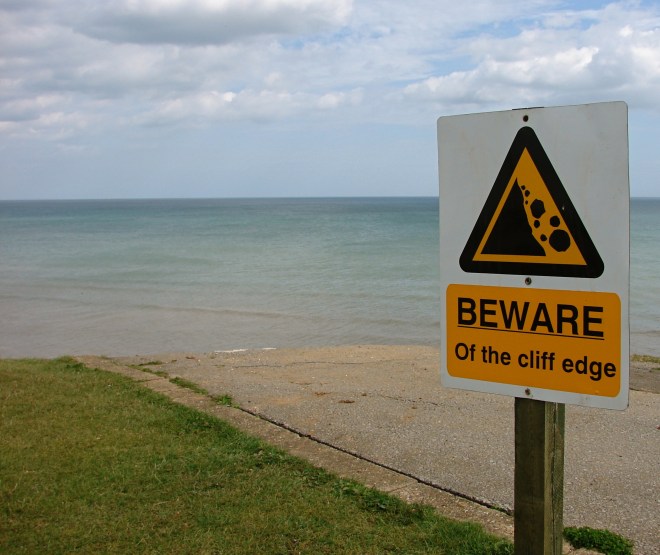
On 6th July 1901, G.E. Conrad Naewiger complained in a letter to the Hull Daily Mail of the lack of steps to Aldbrough beach, a popular destination for works outings from Hull. photo shows Aldbrough cliff.

On 6th July 1910, Arthur Geoffrey Dickens was born in Hull. Professor of History at the University of Hull, he was elected Fellow of the British Academy. Considered the leading historian of the Reformation of his time. Awarded the Order of Merit by the German Government. (died 31.7.2001)

On 6th July 1921, Tilworth Grange was opened to ‘Female mental defectives’ (people with learning disabilities), the first provision in Hull for people who previously were sent to institutions in Bristol, Chesterfield and Ormskirk. Winestead Hall was bought in 1931 for men.


erosion aldboro.JPG