March 25th

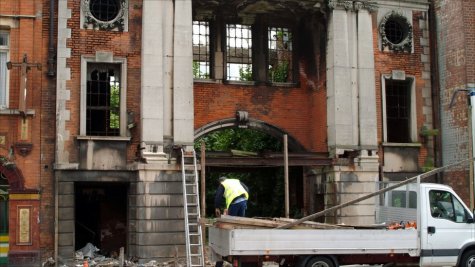
Warton's Hospital.JPG


On 25th March 1725, Sir John Warton died at 77 in Beverley. He was reputed to be the richest man in England, even though his father’s estates had been depleted by fines to Parliament for Royalism. He was elected MP for Hull, and twice MP for Beverley, but took little active interest in Parliament.  In his will, he left £4,000 for the repair of Beverley Minster, £1,000 to Warton’s Hospital, £500 to the charity school, £100 to the poor and £100 to each parish in Beverley. photo shows Warton’s Hospital

On 25th March 1780, Peter Horsfield, a negro servant to Mr Knowsley, curate of Boynton, married Elizabeth Lawson, daughter of the vicar of Weaverthorpe. It was fashionable at the time for rich families to employ black servants.

On 25th March 1868, Rev John Healey Bromby died at 97 at Hull Charterhouse; he was up to then the oldest working minister of the Church of England.

On 25th March 1904, a ‘Smoking Café and Lounge’ was opened in the basement of the Prudential Building, Victoria Square, a landmark Hull building. In 1941, the whole building was demolished by a German bomb.

On 25th March 1927, the Ministry of Agriculture closed the Crown Colony at Sunk Island, a failed experimental farm settlement for ex-servicemen set up during WW1. This is referred to in Winifred Holtby’s ‘South Riding’ as Cold Harbour colony.
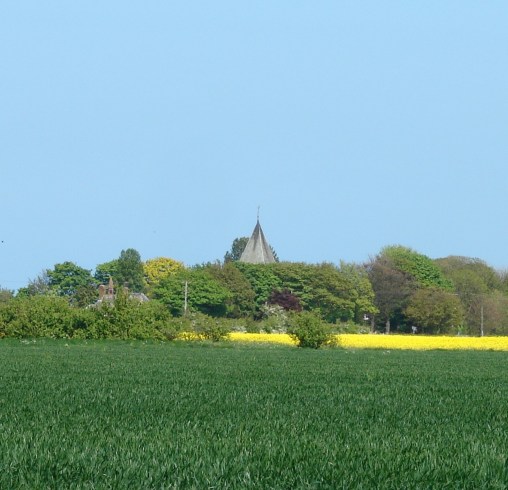
Sunk

March 19th

Rose Ellen Carr

On 19th March 1293, only 5 days after his valuation of Myton, King Edward I had new records of tenants drawn up, and ordered the improvement of roads to his new town of Kingston on Hull. The roads to Hessle, Beverley and York already existed.

On 19th March 1913, Rose Ellen Carr died at Hornsea aged 70. Although illiterate, and facially disfigured, probably as the result of a kick from a horse when she was a child, she was ran a success business as a carrier and taxi owner, and was reputed to be able to carry a 16-stone sack of grain under each arm. She was also a passionate Primitive Methodist preacher.

On 19th March 1941, 92 Hull residents died in an air raid; 70 people were seriously injured.  This was the 12thraid since the beginning of the year. The National Picture Theatre on Beverley Road was hit; they were screening Charlie Chaplin’s ‘The Great Dictator’ at the time. photo below shows ruin of the cinema

On the same day, Mr & Mrs Severs and their 2 children were killed by a land mine at Highfield Farm, Hutton Cranswick. Other damage nearby probably intended for Hull included 70 high explosive bombs and incendiaries at Watton Abbey Farm, mostly in the fields, the destruction of Mrs Arnell’s grocer’s shop, and a fire in Hutton church.  Arthur Swift of Wawne Common Farm recorded a land mine, incendiaries and high explosives, which blew out all the windows and tiles off every building in the farm. The ghost of a Watton Abbey monk was said to have been seen that night.

nationalpicturetheatre

March 17th

Kiplingcotes

On 17th March 1646, Henry Hildyard of Winestead was fined £4,660 as a Royalist (a ‘delinquent’) in order to recover his goods which had been sequestered by Parliament. (He had been a  Colonel of the trained bands which formed King Charles’ bodyguard for about 2 weeks in 1642, then retired to Surrey for the rest of the war). The fine was later reduced by half in payment for Hull Manor House which had belonged to him and which Parliament had given to the town of Hull.

On 17th March 1930, Judith Patricia (Pat) Albeck was born in Hull to Polish migrant parents. She was an award-winning designer of textiles and ceramics, known for her work for the National Trust. She is commemorated in Hull with a cream plaque. (d 2.9.2017)

On 17th March 1945, a cinema queue outside the Savoy Cinema, Holderness Road, Hull (the site is now Boyes store) was bombed and strafed; 12 people were killed, 22 wounded.

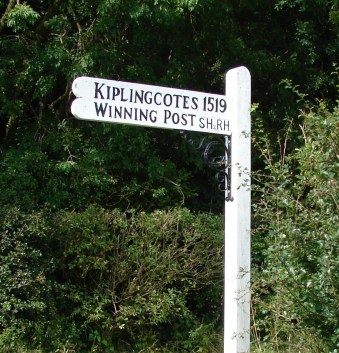
On 17th March 1966, Barbara Foster fFailed to win the Kiplingcotes Derby when her horse collapsed and died.

Pat Albeck


March 13th

On 13th March 1640, on instructions from the Duke of Northumberland, Sir Edward Osborne, for the Council in the North, arranged for 2,000 horse and men to be quartered in and around Hull, together with arms for them.

On 13th March 1801, Hull Trinity House sent a further 6 North Sea Pilots to Yarmouth to support the naval attack on Copenhagen.

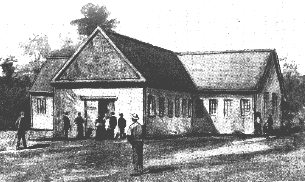
On 13th March 1827, Revd Richard Johnson died, aged about 71. Known as Australia’s First Preacher, he and his wife Mary joined the first Fleet, and he became chaplain to the prison colony of New South Wales in 1786. They created a school and both taught up to 200 children. He returned to Hull in 1800 and was curate to Rev Thomas Dykes at St John’s church for a time. (B Welton c1756) picture shows Australia’s first church, built by Richard Johnson in 1793

On 13th March 1942, Alexander Gallacher, 37, donkeyman, of Hull, died by enemy action, whilst a merchant seaman on board SS Destro, of Hull, off Tobruk.

first-church-Aus1793

March 12th

On 12th March 1511, Elizabeth Nelson, spinster of Pollington, claimed sanctuary at the church of St John, Beverley, for felony and murder of an infant (possibly her own child) at Hull.

On 12th March 1553, on the surrender to King Edward VI of the castle and fortifications at Hull, the King granted to Ralph Constable former monastery lands in Swine, Newton Grange, and all the extensive lands formerly belonging to the dissolved Hospital of St Sepulchre, Hedon. He was also the tenant of the site of Hull Charterhouse.

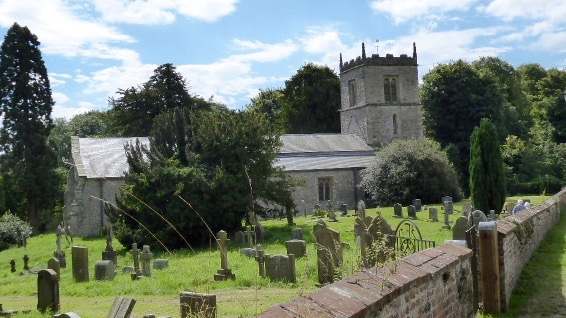
On 12th March 1622, Josias Lambert, schoolmaster, left the employment of Francis Clifford, Earl of Cumberland, after 9 months teaching ‘scholars’, which may have included some of the Londesborough House household staff and/or their children. The Earl also supported the village school at (Market) Weighton. photo shows Londesborough church

On 12th March 1647, Sir Matthew Boynton died at Bainton aged 56. Sheriff of Yorkshire twice, MP twice (once for Hedon and once for Scarborough), 1stBaronet, of Barmston. He helped capture Sir John Hotham when he intended to surrender Hull to the Royalists. His son Colonel Matthew Boynton was killed fighting for the Royalists in the Battle of Wigan Lane in 1651. (bapt 26.1.1591)

On 12th March 1697, the Brethren of Hull Trinity House charged almost £21 for the launch of the 60-gun Royal Navy ship HMS Kingston from Hessle. Work included laying buoys from the launching site to Hull.

Londesborough

March 9th

Trinity House

On 9th March 1767, Beverley Coroner’s Court jury found  (James?) Brown, aged 30, guilty of poisoning his wife, aged 45 and of independent means. Brown appears to have escaped to London, but was arrested and found guilty, his sentence commuted to 7 years’ transportation.

On 9th March 1801, at the request of the Admiralty, Hull Trinity House sent 12 Hull men as North Sea pilots to support the naval force at Yarmouth preparing to attack Copenhagen.

On 9th March 1858, servant Sarah West was overtaken by a severe snowstorm at Newbald Wold whilst returning from a visit to her parents in Market Weighton; she was under a snowdrift for 2 days, but was discovered by a shepherd and nursed back to health.

On 9th March 1984, Christopher Laverack, aged 9, of Anlaby, disappeared from his sister’s home, and his body was found in Beverley Beck 2 days later. It was not until 2012 that the murder enquiry was closed, when police identified his uncle, Melvyn Read, as the killer. Read had died in 2008.

March 6th

On 6th March 1851, two days of severe storms, coupled with high tides, caused several breaches in Spurn Point, and made the Low Light insecure. The lifeboat was damaged, and several of the crew’s cottages were flooded. The extraction of gravel was halted, but did not finally end for many years.

On 6th March 1862, Joseph Wildridge, aged 14, apprentice, was attacked by another apprentice, probably named William Webb, on board Hull fishing smack Fairy. He was  so severely injured that he had to be returned home by another vessel, and died on 9thApril. He was unable to report on the events leading up to his attack, and a court case failed to prove a case against his assailant, as the crew would not testify.

On 6th March 1883, a great storm affecting the whole of the East coast resulted in huge losses in the Hull fishing fleet. Accounts vary: up to 230 Hull fishermen and 32 fishing smacks are recorded as lost.

On 6th March 1916, Zeppelin L14, after attacking Hull, dropped bombs on Burstwick and Owstwick, with no further casualties, before passing out to sea.

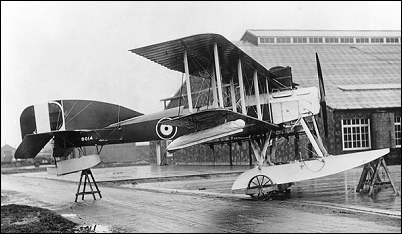
On 6th March 1919, the RAF Squadron 248 at Hornsea Mere seaplane station disbanded. From August 1918, it flew coastal patrols with Short 184 and Fairey Hamble Baby floatplanes off the Yorkshire coast. photo shows a short 184


short-184

March 5th

On 5th March 1514, John Taillour of Beverley claimed sanctuary at the church of St John, Beverley, for ‘the security of his body’, but the register does not state who was threatening him, or why.

On 5th March 1642, Queen Henrietta Maria stopped one night at the Manor House, Burton Fleming. She was still on her way to York to join her husband, Charles I, with arms from Holland. She is then said to have stayed 2 weeks at Boynton with the Stricklands. Luckily, Sir William, Parliamentary MP for Hedon, was away in London.

On 5th March 1646, Hull merchant Leonard Scott was fined £74 10s as a member of the Royalist army (a ‘delinquent’) in order to recover his goods which had been sequestered by Parliament.

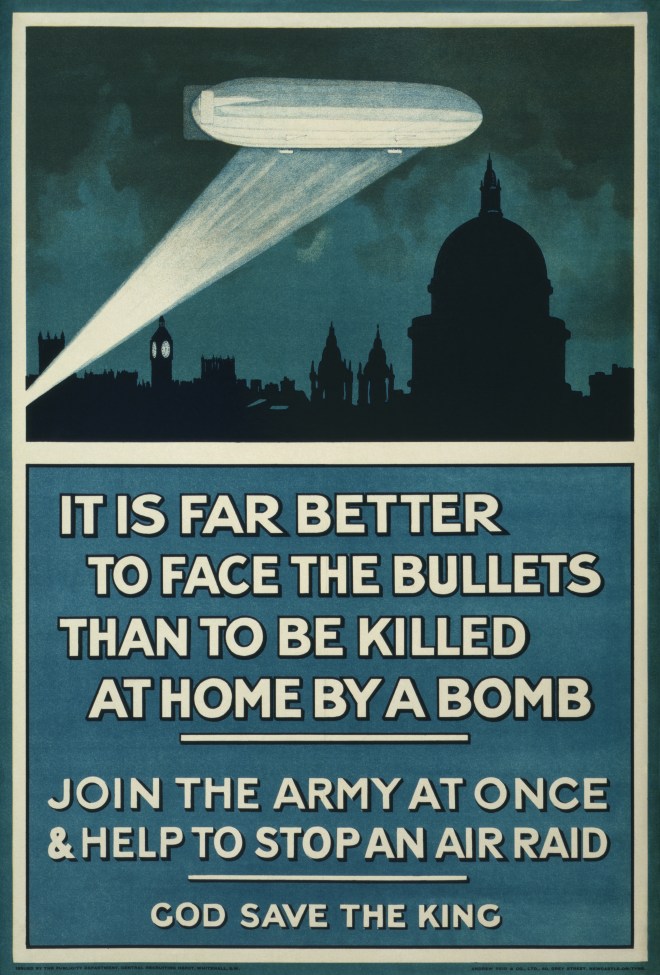
On 5th March 1916, Martha, Ethel and Mira Ingamells of Linnaeus St, Hull, were among the 18 people who died in the 2ndZeppelin raid on Hull; 60 people were injured. Queen Street was hit, as were Linnaeus St., Porter St., Church St and Selby St, and Earle’s shipyard. A mob afterwards smashed up a vehicle belonging to the Royal Flying Corps, presumably in anger at their failure to defend the town, resulting in hasty installation of 7 guns, and the general strengthening of defences around the Humber. Bombs were also dropped on Gembling and Woodmansey.

WWI Zeppelin

March 3rd

On 3rd March 742AD, Yolfrida, daughter of Earl Puch, Lord of the Manor of South Burton (now Bishop Burton), died and was buried at Beverley. She was a nun at Bishop Burton monastery.

On 3rd March 1195, Hugh de Puiset died, aged about 70, at the Bishop’s Palace, Howden.  He was Bishop of Durham for over 40 years. He had in 1190 been imprisoned in his palace at Howden for overstepping his authority. He supported the chronicler Roger of Howden.

On 3rd March 1642, James Watkinson, jnr, Hull Alderman, attended his last council meeting; considered a Royalist, he was ‘invited’ to leave town in April, his High St house was commandeered and he moved to York.

On 3rd March 1932, Albert Digby Willoughby committed suicide by gas inhalation in a hotel in Helensburgh. Chair of the Hull Housing and Town Planning Committee, he was due to be the chief witness in the Thorpe Enquiry into corruption on Hull Council, to give evidence into the purchase of land for housing estates in Hull. He also faced trial for demanding money with menaces. He had charged commission to owners of land which he knew the council wished to buy.

On March 1984, Harry Hudson Rodmell died in Hull aged 97. He studied at Hull School of Art, and was a marine artist and commercial artist. A series of his marine posters is available for sale by Hull Museums. (b 28.5.1896)

Harry Hudson Rodmell_

March 1st

On 1st March 1384, Michael de la Pole, Earl of Suffolk, left in his will instructions to found the Charterhouse Hospital which his father had begun, and endowed it with land, nominating Sir Richard de Killing as the first Master, and left money to support 13 poor men and 13 poor women, feeble and old.

On 1st March 1838, the steam packet ferry services from Hull to Selby, Goole and Gainsbrough were restored, after severe frosts disrupted them from the 2ndweek in January.

On 1st March 1916,  a new Royal Flying Corps Squadron, the No 47 Home Defence Squadron, was formed at Beverley, on the racecourse site.

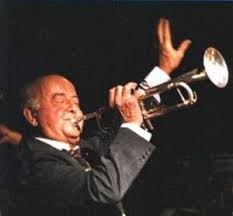
On 1st March 1921, Kenny Baker was born  in Withernsea. Musician and composer, considered the best British trumpeter, 3 times winner of best jazz trumpet player award, he played for Frank Sinatra, Sammy Davis, the Beatles, and on TV and film soundtracks, including James Bond scores, The Muppet show, and ‘The Beiderbecke Trilogy’. (died 7.12.1999) see photo

On 1st March 1990, Sister Agnes Walsh was recognised by Yad Vashem as one of 27 British people known as Righteous Among the Nations for her part in protecting Jews during the Holocaust. Trapped in France when the country was occupied by the Nazis, she gave refuge to a local Jewish family in spite of being in grave danger herself as a foreigner. She was born Clare Walsh in Hull in 1896 (died 1993).

Kenny Baker