Coming up this week

July 31st

Hull-trawler-memories-1900 steam trawlerOn 31st July 1332, King Edward III sailed from Ravenspurn to battle in Scotland. He also visited Hull, and was reported to be pleased with the progress of the fortifications there.

On 31st July 1899, Hull steam trawler Opal collided with trawler Toronto and was wrecked 160 miles NE of Spurn. photo shows a typical steam trawler of the period.


July 30th

whalebone arch Pat.JPG

On 30th July  1526, Preston butcher John Erdy claimed sanctuary at the church of St John, Beverley, for felony and debt.

On 30th July 1643, the parish clerk of St Mary’s, Beverley, reported in the parish register that they buried 13 men killed on the King’s side in the Civil War.

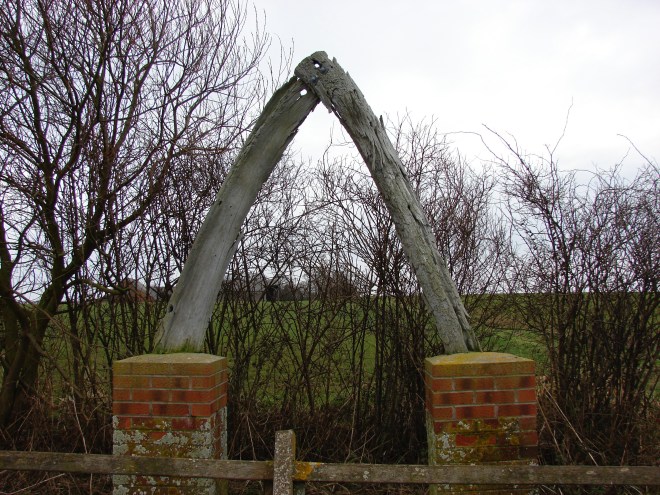
On 30th July 1782, the crew of Hull whaler Benjamin landed 135 butts of blubber and over 2 tons of whalebone, the product of 3 whales caught in the Davis Strait. (Rev George Lambert had shares in the ship). photo shows whalebone arch outside Patrington

On 30th July 1861, John Ellerthorpe, aged 55, rescued John Eaby, who had fallen into the Humber Dock Basin, Hull. This was Ellerthorpe’s 39thand last rescue. Named ‘The Hero of the Humber’, he was awarded with the Royal Humane Society’s Silver Medal.

On 30th July 1891, Mary Jane Langley, 18 years, of Westfield Farm, Long Lane (now Neat Marsh Road) Preston, was last seen alive when she walked to Marfleet and took the train to Hull to have her photo taken. Her body was found in a ditch near her home. Her throat had been cut. John Rennard was arrested and tried, but not convicted.


July 29th

On 29th July 1527, John Flower, labourer of Burstwick, claimed sanctuary at the church of St John, Beverley, for the death of Roland Stephenson.

On 29th July 1678, Andrew Marvell, MP for Hull, had what turned out to be his last meeting with Hull Corporation. He returned to London shortly after, and died suddenly, aged 58, on 16thAugust, some supposed of poison.

On 29th July 1828, Hull banker Joseph Robinson Pease visited his land in Winestead to discover ‘hundreds of acres nearly a foot under water’ in the wettest July on record, a disaster for crops of hay, corn and potatoes. He said most local landowners had reduced rents, farmers ‘having literally nothing to pay with’.


Andrew Marvell

July 27th

On 27th July 1643, Hull widow Ann Stevenson, whose husband died at Beverley in Parliament’s service as a cannoneer, petitioned the town of Hull to pay her the 35 shillings wages due to him; the committee agreed, in view of her poverty, to let her have 20s.

On 27th July 1782, Rev George Lambert of Fish Street, Hull reported in his diary on a violent thunderstorm in the evening, and lightning killed a cow very near their house, and scorched the hedges.

On 27th July 1796, jockey George Heron was thrown by his horse at Hull racecourse, Newington, and killed.

On 27th July 1855, James McLoughlin, aged 13, asked Hull Magistrates Court for the protection of the court on account of his mother having beaten him severely with a stick and a fire poker because he would not go out stealing for her.

On 27th July 1996, HMS Rose visited Hull’s Albert Dock; this was an exact replica of a frigate built in Hull by the Blaydes yard in 1757 and sunk in Savannah, Georgia in 1779. The only difference from the original ship was that the sails were made from recycled plastic bottles.

HMS Rose replica

July 26th

On 26th July 1826, the Aire & Calder Navigation Company officially opened the new canal at Goole, locks for ships and barges, dock, and canal basin linking Goole to the west. A new town was built around the small hamlet of Goole (population in 1822: 450).

On 26th July 1845, Capt Dannatt and crew of Hull whaler Prince of Wales came across Sir John Franklin and his expedition to find the North West Passage, in Lancaster Sound, in the Arctic, and invited him and his officers on board. This was the last known sighting of the expedition.

On 26th July 1850, Hull Advertiser printed a report of the deaths by drowning during a riot of 4 Irish navvies (Patrick Langthon, John Dowling, Barney M’Jay and Thomas Twomey) working on the embankment of Sunk Island.

On 26th July 1986, 8 rail passengers and 1 person travelling in a van died when the van was struck by the 9.33 Bridlington to Hull train at Lockington level crossing, and the train was derailed. 51 people were injured, 10 of them seriously. There is a memorial to those who died in Driffield Memorial Garden.


lockington crash memorial

July 25th

On 25th July each year a traditional football match was held on St James Day, between Sutton and Wawne, starting at Foredyke bridge, boundary between the 2 villages, each village trying to get the ball home. Not known dates played or when abandoned.

On 25th July 1328, King Edward III is said to have closed down the Warter annual fair on St James Feast Day because of the number of murders that had been committed at the fair. There is a record that in 1300 certain manslaughters had been committed in the village by the canons’ men from Warter Priory. In 1328, King Edward III issued an order that it was an offence to go armed into any fair or market. Probably not aimed specifically at Warter.

On 25th July 1768, Joseph Hall was hanged at York Castle for coining at Hull. photo shows  medieval coins being made.

On 25th July 1873, William Dunwell, former Hull Trinity House School pupil, lost his life at sea by jumping overboard to save the life of a shipmate.

On 25th July 1911, Father Ottway, superintendant at the Yorkshire Catholic Reformatory at Market Weighton (actually in Holme on Spalding Moor) reported on rebellion from the boys, including threats to knife masters, which resulted in the attendance of 3 police officers and the thrashing of 6 or 7 boys.

coiner, Hanse Day


July 24th

On 24th July 1614, Ralph Hansby founded almshouses for 3 poor persons at Bishop Burton.

On 24th July 1622, Lawrence Taylor, rector of Londesborough,  died intestate, and the York Consistory (Ecclesiastical) Court gave custody of his 6 children, and a 7thchild born in October, to his brother William, to be supported until age 21. No information on the fate of his widow.

On 24th July 1894, John William Russell was shot dead on Albert Dock, Hull, by Arthur Kendall. Russell was trying to defend Crossland from Kendall. Kendall was convicted at York Assizes, his sentence commuted to penal servitude.

On 24th July 1912, a heavy cloudburst over Westwood brought flooding to Beverley town centre. Water was a foot deep on Walkergate.

On 24th July 1942, bus inspector Ernest Goddard, aged 50, and 14 others, including 5 children, were killed in an air raid on Withernsea; as well as 2 bombs, in Queen Street and the bowling green, the German Dornier bomber had used small arms fire on local people.

On 24th July 2011, 5 thieves stole the 300kg statue from Nelson Street, Hull; called Voyage, the statue was created by Steinunn Thorarinsdottir, as a symbol of the relationship between Hull and Iceland.  A replacement statue was unveiled 11.5.2012.
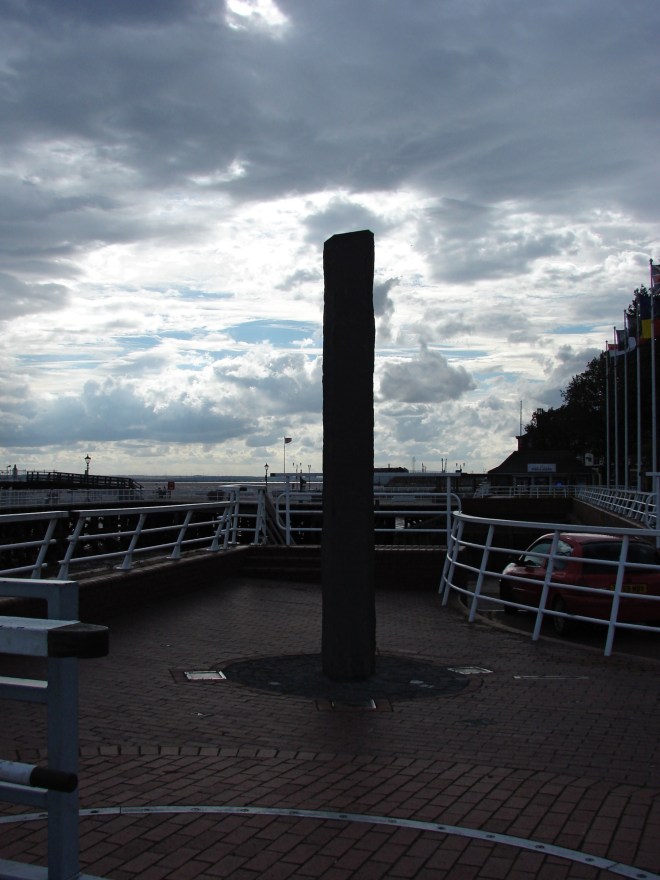
iceland statue plinth.JPGphoto shows the empty plinth.

July 23rd

On 23rd July 1525, carpenter John Algood of Wheldrake claimed sanctuary at the church of St John, Beverley, for debt.

On 23rd July 1856, Capt Bryan Stapleton became the first governor of the Yorkshire Catholic Reformatory School for Boys, at Holme on Spalding Moor.  The reformatory movement campaigned to keep children out of prisons, but the first Yorkshire school was Church of England only.

On 23rd July 1941, an air raid on Alexandra Dock, Hull, sank 3 lighters, killing 2 people and injuring 5, and damaged No 11 quay, 2 steamers and a diving boat.

On 23rd July 2012, the Royal Engineers carried out 15 controlled explosions on the beach at Mappleton, after a landslide (on Sat 21.7) revealed at least 1,000 rockets, grenades and bombs from WW2.

mappleton bomb

July 22nd

On 22nd July  1612 ( or possibly on 12.7) Hull-born navigator and explorer James Hall was employed by the Danish government to survey for minerals, and came upon a group of Greenland Inuit who recognised him from a previous voyage. He had been involved in kidnapping 4 people, who had never returned home. Hall was attacked and died that day of a spear wound in the side. William Baffin was master of the sister ship Patience on the same expedition. Hall was succeeded as master of the Heartsease by Andrew Barker, also of Hull.

On 22nd July 1643, Lord Ferdinando Fairfax was invited by the people of Hull to take up the post of Governor.

On 22nd July 1869, Albert Edward, Prince of Wales, later Edward VII, officially opened the new Albert Dock, Hull.

On 22nd July 1909, Sydney Buxton, Postmaster General, officially opened the new Post Office building in Lowgate, Hull. Despite precautions against action by suffragettes, Charlotte Marsh got close enough to speak to him, and was arrested. She was Yorkshire organiser for the Women’s Social & Political Union and had earlier been arrested at Riverside Quay.

On 22nd July 2004, Florence ‘Flo’ Bilton died aged 82. Goalkeeper, set up a women’s football team at Reckitt’s in 1963, and from  was influential in setting up the Women’s Football Association in 1969. Set up, trained and supported new women’s teams. Acted as membership secretary and chaperone for the national women’s team. Flo Bilton Trophy is contested by girls’ football teams in ER. (b c1921) photo shows 2017 cream plaque presentation in Hull Guildhall by (left) Karen Walker, 86 England caps.

flo bilton