Coming up this week

August20th

wm le grosOn 20th August 1179, William le Gros, Count of Aumale, Lord of Holderness, died aged 64 after 50 years as Count. As Earl of York, the most powerful man in the north of England during the Anarchy, a soldier, and founder of religious houses, including Meaux Abbey, and Newton Grange leper hospital.

On 20th August 1526, John Dove, a labourer from Burstwick, and William Bayne, a tallow chandler from Withernwick, separately arrived and claimed sanctuary at the church of St John, Beverley, for debt. On a busy day at the sanctuary, a 3rddebtor arrived from Wakefield.

On 20th August 1535, Richard Browne, vicar of North Cave, confessed to heresy by preaching Lutheranism; he was absolved, after suspension for 2 months.

 

August 18th

On 18th August 1522, Thomas Webster, a weaver from Lowthorpe, claimed sanctuary in St John’s Church, Beverley, for the death of Thomas Ayke of Littlebeck. On the same day, a 2nd man entered the sanctuary – John Thorp, a husbandman of Eastrington, for a felony.

On 18th August 1552, Church commissioners seized items of value from St Giles Church, Marfleet, no longer needed in plainer protestant services, including a silver chalice, brass candlesticks, bells and a brass holy water vat. Witnesses from the parish were Marmaduke Loickwos, Herry Birkett, Richard Walker, and Thomas Almonde.

On 18th August 1782, Rev George Lambert reported seeing a meteor or fireball pass over the town in the morning, which alarmed many people.

On 18th August 1808, Margaret Kissling, nee Moxon, was born in Sculcoates.  She married a Lutheran missionary, worked in Sierra Leone and settled in New Zealand as teacher and nurse. (d 20.9.1891)

On 18th August 1832, Charles Winn, Tory candidate, issued a poster to refute allegations that he supported slavery, during his General Election campaign.

On 18th August 1941, an air raid destroyed St Margaret’s Church, Hilston, the 3rdchurch on this site, its predecessor having been replaced in 1862 by Sir Tatton Sykes. The only remnant of the first church is its Norman doorway. The current church was consecrated in 1957, built by local architect Francis Johnson, and was listed in 2017.


hilston church & tower.JPG


August 17th

On 17th August 1377, King Richard II issued a charter allowing the town of Hull to ensure the town walls and moats were kept in good repair, and to compel every householder to contribute to the cost of repair.

On 17th August 1427, Thomas Brygman, vicar of Foston, asked the Pope to relax the penances paid by those who did not visit church on holy days or give alms, because the church buildings were ruinous, and lacking a bell tower to call parishioners to prayer, and because the parishioners were too poor to repair the church. Their poverty was caused by ‘divers burdens’ imposed by King Henry to fight wars, and also because of the high mortality level in the area.

On 17th August 1863, Dr T.T. Pierson of Bridlington Quay apologised for signing a certificate at The Retreat asylum, Kilham, to declare a woman insane (whom he had known since they were at school) at the request of her husband; she turned out to be suffering only from the effects of alcohol.

On 17th August 1905, Hull merchant Frederick Harker was fined £2 plus costs for speeding at Harpham – travelling at 28 miles per hour in a 20mph zone. It was reported that the method used, of 3 police officers timing him over a measured distance, had not been used before.

On 17th August 1920, Sir Luke White, MP, died at Driffield, aged 75. Liberal MP for Buckrose since 1900, he died a pauper and under investigation for bankruptcy, having covered his political expenses by using money entrusted to him by the clients of his business as a solicitor.

On 17th August 1954, workers at King George Dock, Hull, began a strike against unsafe working conditions called the ‘Filling Strike’; within hours, 4,000 dockers were on strike and 60 ships lay idle. The strike ended after 11 days.


1954 dock strike

August 16th

Ebenezer Cobb Morley


On 16th August 1831, Ebenezer Cobb Morley was born in Princess Street, Hull, became a solicitor, an oarsman (he founded the Barnes and Mortlake Regatta), a footballer (he played in the first ever Football Association match), proposed the meeting which led to the creation of the FA, and drafted the first FA Laws of the Game in 1863. (d 20.11.1924)

On 16th August 1853, after 57 days, the Government Commission of Enquiry into Electoral Corruption held at the Mansion House, Hull, ended, and concluded that immense amounts of political corruption had been practised, but that other boroughs were equally corrupt. As a result, a Bribery Act was passed in 1854. In 1857, James Clay and Viscount Goderich (later Lord Ashley), the cause of the original complaint, were both re-elected with increased majorities. (and see 23.5)

On 16th August 1931, Charles Hudson, 53,  of Hessle was lost at sea during the Fastnet Ocean Yacht Race. (b 20.1.1878)

August 15th

On 15th August 1690, Robert Lumley, ship’s master, was fined 10s by Hull Trinity House for sailing out of the port without supplying the House with a list of men and their wages.

On 15th August 1764, Abraham Clayton, 35, of Howden, was hanged at York Castle for murdering his wife Elizabeth; his body was given to surgeons ‘to be anatomized’.

On 15th August 1808, Robert Pattinson,  grazier and agriculturist, died aged 82, and left 4 acres of land in Skeffling, the rent to be used to educate poor children in Easington.

On 15th August 1924, Harry Blanshard Wood, VC, died aged 42 in Devon, after a traffic accident. Born in Newton-on-Derwent, he was a corporal in the 2ndBattalion, Scots Guards when on 13.10.1918 in St Python, France, he took command when his platoon sergeant was killed, and showed gallant conduct and initiative, for which he was awarded the Victoria Cross.

On the same day, BBC radio station 6KH began broadcasting local items from bishop Lane, Hull, including sport, talks, children’s shows, and music featuring local musicians, e.g. Powolny’s Restaurant Bijou Orchestra. In 1928, the station closed, and there was no local station until Radio Humberside opened in 1971.

On 15th August 1940, 13 military personnel and 1 civilian died, and 16 injured in this daytime air raid on Driffield airfield and Southburn, including Aircraftwoman M. Hudson, the first WRAF fatality.

August 14th

On 14th August 1715, John Burdas, bricklayer, aged 26, placed a “ffaine” (possibly a weather vane?) on top of the newly-repaired top of the steeple of St Patrick’s church. This required him to stand for some hours with one foot on the top stone and the other foot on the top of a ladder ‘to everyone’s wonder and admiration’.

On 14th August 1831,  William Stephenson of Beverley had his will registered at York Assizes, the main beneficiary being Dr Alexander Turnbull of Hull. The doctor sued witnesses to the will who alleged it had been improperly drawn up. He lost his case, and left Hull soon afterwards.

On 14th June 1934, coxswain George Leng of Flamborough lifeboat Forester rescued 4 men from the cliffs at Thornwick Bay; they were in danger of drowning and unable to climb higher, in great danger as the tide had not reached its height. He threw them a line and got them into the lifeboat.

On 14th August 1937, Hull Baseball Club won the National Baseball Assn Open Challenge Cup 5-1 against Romford Wasps. Baseball was played at Craven Park until the outbreak of WW2.

On 14th August 1943, a company of 200 ‘British Pioneers’ was drafted to Hull for work on the docks, due to an increase in the number of ships carrying cargoes of war materials.


Pat church

August 13th

On 13th August 1778, the first recorded cricket match in East Yorkshire took place in Wallingfen, near North Cave, on a Thursday, between a Beverley team and Howden. Howden won (74-138?) The prize was 50 guineas.

On 13th August 1782, James Norrington was killed in a chalk pit at Hutton. He worked for Miles Smith of the Sunderlandwick Estate, who owned the chalk pit in Balk Lane.

On 13th August 1881, Ye White Hart Companie, while renovating and altering the old building, made a number of finds: human bones and Elizabethan period tobacco pipes under the floor, and old swords and a ship’s chart under the roof. They were put in the possession of antiquarian Alderman Symons. The company also seems to be responsible for creating the myth that the Plotting Parlour was the place where it was agreed to exclude King Charles.

Old White Harte

August 12th

On 12th August 1349, the Meaux Abbot and 5 monks died of the Black Death; more were to die – only 10 of the 50 in the community survived. Afterwards, their serfs at Wawne went on strike, and the monks imprisoned them.

On 12th August 1536, North Ferriby Priory was dissolved (Prior and 8 monks, and 34 servants homeless and jobless); the first wave of Henry VIII closures followed an enquiry which found that the prior together with 2 of his canons had allegedly been guilty of fornication and 4 canons of abusing themselves.

On 12th August 1646, Robert Leedes of Molescroft swore an oath in support of Parliament. Having been a supporter of King Charles I, he was considered ‘delinquent’. As well as the oath, he was fined for lands and money worth £90.

On 12th August 1895,  Isaac Leggott, water bailiff, died instantly when a shell exploded at Alexandra Dock, Hull. It was thought to be an unexploded artillery shell, and Leggott had removed the fuse, prior to throwing it in the water. Henry Cook, dock gate man, was also seriously injured.

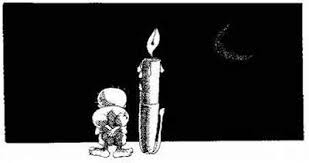
On 12th August 1987, Ismail Sowan, Hull College researcher, was arrested when police searched his flat in Westbourne Avenue in connection with the death of Palestinian cartoonist Naji al-Ali.  They found assault rifles, bomb-making equipment, explosive and grenades. Sowan, a Mossad agent, was arrested, imprisoned and deported.


naji al-ali

August 11th

On 11th August 1916, former Reckitt’s employee Private James Blain, 41, died of his wounds while serving with the East Yorkshire Regiment (3rdHull Pals) at the Somme; he had also served in Egypt. Buried at St Vaast Post Military Cemetery, France.

On 11th August 1930, Amy Johnson landed Jason at Hedon Aerodrome to a civic reception, then went to Hull in a motorcade for a reception and banquet at the City Hall. http://www.yorkshirefilmarchive.com/film/amy-johnson-hedon

On 11th August 2012, Hull’s Luke Campbell, 24, boxer, won Olympic gold bantamweight boxing medal.