November 19th

On 19th November 1484, Thomas Squirry, husbandman of Leven, claimed sanctuary at the church of St John, Beverley, for killing John Hewlyn.

On 19th November 1855, Henry Holmes and John Combes, crew members of the Spurn lifeboat, drowned in stormy weather attempting to rescue the schooner Zabina on the Binks, River Humber.

spurn boats.JPG

November 15th

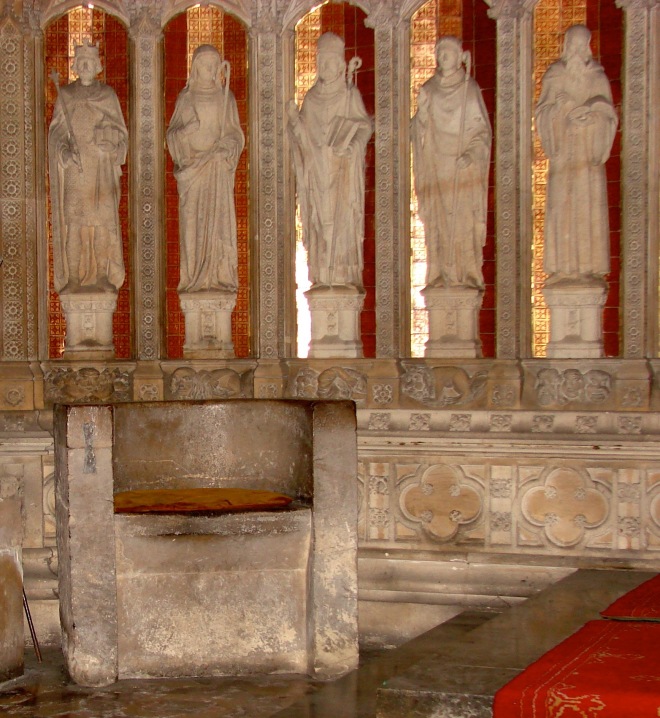
minster - frith stool.JPG


On 15th November 1482, William Weton, yeoman of North Ferriby, claimed sanctuary in the church of St John, Beverley, for killing John Atkynson of North Ferriby on 19th September. photo shows the sanctuary chair, or Frith Stool

On 15th November 1810, Robert Richardson, master of the Spurn lifeboat, and crew, performed the first rescue by the new lifeboat, to assist the John and Charlotte off Trinity Sand, River Humber, where she had been driven in a gale.

On 15th November 1915, Walter Beech, 47 of 25 Scarboro St, Hull, chief engineer/ Christopher Hall, 2ndengineer of Allison Tce, Hull, were lost with all other 8 crew of the steam trawler Edward B. Cargill when it struck a mine off Spurn Head.


October 29th

On 29th October 1810, Hull Trinity House delivered the first Spurn lifeboat, arriving at the Point from South Shields towed by the brig Thomas. (and see 15.11)

On 29th October 1889, Daniel Patten, aged 25, died of enteric fever at the Colonial Hospital, Gibraltar; the former pupil of Hull Trinity House School was 2nd officer of the SS Marengo.

On 29th October 1829, Rawcliffe merchant and eccentric Jemmy Hirst, died aged 91.  He travelled in a wicker carriage, driven by sails or by his pet bull, Jupiter. Created a flying machine and other contraptions. Wore a waistcoat of drakes’ feathers, a lambskin hat 3 yards in circumference, harlequin breeches and a red coat with blue sleeves to the races. Went hunting riding his pet bull and used pigs as pointers.

Jemmy Hirst

October 27th

On 27th October 1720, Ann Watson, nee Headon, of White House, Stoneferry, left her estate at Stoneferry for a hospital for widows or daughters of clergymen, old maids, and for a school. In Sutton she left 26s p.a. to distribute bread to the poor who attended divine service that day.  She left several other bequests in different parishes; Ann Watson Street is later named for her; she is buried in Hedon, and has memorials there and in St James Church, Sutton.

On 27th October 1849, Hull Trinity House purchased chalkstone to protect the Spurn lifeboat cottages from the sea, as high tides and gravel extraction had greatly damaged the Point.

On 27th October 1907, Charles Henry Wilson died aged 74 at Warter Priory. Son of the founder of the Wilson Line, he was MP for Hull, then Hull West, a JP, and High Sheriff of Hull. He paid for the Seaman’s Mission in Posterngate (now the Mission pub). Deputy Lieutenant of the East Riding, he became the 1stLord Nunburnholme in 1906. photo shows part of his memorial in Warter church.

Chas Wilson Nunburnholme

October 6th

site of Haltemprice Priory

On 6th October 1515, the Sheriff of Hull, Mr Mattison and 200 citizens fought the monks of Haltemprice Priory and threatened to pull down the monastery, over a dispute concerning jurisdiction over Wolfreton and Willerby, and fresh water supplies. Peace was restored by the Mayor of Hull, George Mattison and the issue was eventually resolved in the Star Chamber. One of many incidents in Hull’s ‘water wars’. photo shows site of the monastery.

On 6th October 1613, an enquiry determined that a chantry dedicated to St Mary, and a chaplain to celebrate daily services there, had been paid for by 6 1/4 acres of land, 10 messuages and 3 tofts, given to the town of Hedon by John de Burton and Henry Maupas. Chantries were abolished by Edward VI, along with other signs of Catholicism.

On 6th October 1670, Ann Barone was fined in the Patrington manor court for not making bread according to the assize – i.e. not the regulation size, weight etc.

On 6th October 1748, Mary Jackson, tenant farmer of Everingham, lost 36 of her 45 cattle to rinderpest, the cattle plague then affecting much of the East Riding.

On 6th October 1850, Hedon solicitor James Iveson, died after a long career controlling the political life of Hedon, a Rotten Borough described as ‘Lawyer-ridden’. He was also Town clerk, Mayor, land agent, and steward on behalf of the Constables of the Holderness Seigniory. The Iveson dynasty was involved in land enclosures, surveying and other profitable work. James was renowned for rudeness. Part of an ultra conservative council which for years resisted public health improvements. Collector of architectural remains from demolished churches. Engaged for some 20 years of protracted negotiation with Trinity House over Spurn Point.  portrait in Hedon Town Hall

On 6th October 1890, Chas Collier, aged 17 years, former pupil of Hull Trinity House School, died of typhoid fever in the Barque Miltiades off the west coast of Africa.

James Iveson, Hedon Town Clerk

August 6th

On 6th August 1778, the question of who owned Spurn Point was resolved in favour of the William Constable of Burton Constable; the legal dispute began in 1609.

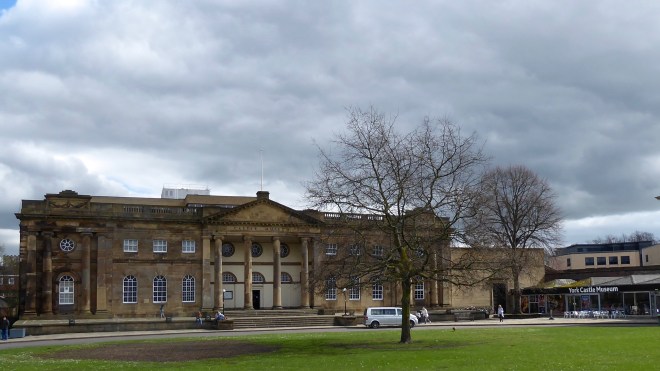
On 6th August 1785, John Beck of Lelley was hanged at York Castle for setting fire to a house and corn mill belonging to William Jackson of Danthorpe, with Robert Crosby and John Edwards, also of Lelley; Edwards and Crosby escaped.

On 6th August 1859, John Riley, 36, of Hull, was hanged at York Castle for the murder of his wife, Alice.

On 6th August 1888, former Trinity House School pupil George Smith, age 15, drowned after a collision between the Barque Cambrian and a French Barque during a great storm in Valparaiso harbour.

On the same day, a Bank Holiday Monday, a popular trip out from Hull Corporation Pier was to Paull by boat to watch the Army’s Submarine Miners in training and holding boat races and athletic competitions. Several boats left the Pier during the day.

York Castle


July 31st

Hull-trawler-memories-1900 steam trawlerOn 31st July 1332, King Edward III sailed from Ravenspurn to battle in Scotland. He also visited Hull, and was reported to be pleased with the progress of the fortifications there.

On 31st July 1899, Hull steam trawler Opal collided with trawler Toronto and was wrecked 160 miles NE of Spurn. photo shows a typical steam trawler of the period.


July 4th

On 4th July 1399, Henry Bolingbroke (later Henry IV) landed at Ravenspurn from France with 60 men, and was joined by the Earls of Northumberland (Percy) and Westmoreland (Neville), to claim the throne from Richard II. Photo shows memorial in Easington church.

On 4th July 1524, William Richerdson, husbandman, of North Newbald claimed sanctuary at the church of St John, Beverley, for the ‘murderation’ of Anthony Godsale, husbandman of Newbald.

On 4th July 1597, William Anlaby or Andleby, a Catholic convert born in Etton, returned to UK as a priest after training in France.   He ministered to Catholic prisoners in Hull. Executed at York as a Catholic missionary priest. Beatified by the Catholic church in 1929.

On 4th July 1642, Sir John Hotham, aware that the Royalists surrounded Hull and had tried to cut off the fresh water supply, gave orders to open the sluices and cut the Humber banks in Drypool and Myton, outside the walls. He told farmers to bring their cattle and goods into the town. Hull was virtually unassailable.

On 4th July 1643, after defeat by the Royalists at Adwalton Moor, Sir Thomas Fairfax retreated to the only Parliamentary stronghold left in Yorkshire, Hull, just a few days after Hotham’s arrest.bolingbroke memorial Easington. jpg

July 2nd

On 2nd July 1642, the Royalist ship Providence, commissioned by Queen Henrietta Maria, evaded Parliamentary ships by entering Keyingham Creek, which was too narrow for the larger ships, and landed a consignment of arms from Holland for the Royalist army. With help from local people, they unloaded ammunition which was taken to the king at York.

On the same day, the Royalist army secured Hull Bridge, Tickton, on the Beverley side, to prevent attacks from Hull and stop provisions reaching Hull, and evicted constable William Cuthbert and his family at midnight.

On 2nd July 1644, Sir Thomas Metham of Metham near Howden,  died at the Battle of Marston Moor fighting on the Royalist side, captain of the Yorkshire gentlemen volunteers.

On 2nd July 1830, Hull whaler Progress was wrecked in a storm when iced in near the Davis Strait; 19 whalers were wrecked or lost that season, 4 of them from Hull.

On 2nd July 1837, Hull whaler Swan was sighted off Spurn Point as a memorial service was being held in Hull for the crew. They had been away for over a year and had been trapped in ice. 25 of the 48 crew had died.

On 2nd July 1954, Harold Macmillan, Minister of Housing and Local Government, approved the amended Hull Development Plan, regenerating the city after the bomb damage of the war. Hull Georgian Society lamented the loss of buildings such as many on High Street, the whole of Nile Street and houses in Lowgate. Not all of the proposals came about – there was to have been a ‘town park’ open area from Holy Trinity to Princes Dock.


June 20th

Hull Corpn silver


On 20th June 1533, the Hull Mayor and town council sold to Sir Edmund Perkins the ornaments of the churches in the town, for £15. They also gave to Sir Frauncis Jobson, Treasurer of His Majesty’s jewellers, ’24oz of silver plate whereof 7oz were double gilt and the rest part gilt and plain white, handed over for His Majesty’s use’. photo shows some of today’s corporate treasures.

On 20th June 1579, Edward, son of Nicholas Symson of Thorpe, because of the outbreak of plague at Howden, had to be baptised at Eastrington rather than in the parish church.

On 20th June 1583, Hull agreed to 10s compensation to Richard Frere for the loss of hay and his cote during the time when plague was in the town.

On 20th June 1642, Maurice Corney, vicar of St Mary’s Hull and Capt William Thornton, comptroller of customs were discussed by Sir William Strickland, Mr Alured, Mr Peregrine Pelham and Mr John Hotham, as a danger to Parliament’s cause. Sir John Hotham ejected Corney from the town, and he left for York, despite being considered a hero for his work during the recent plague. Thornton was also turned out, and joined the King’s service.

On 20th June 1645, John Blenkarne, master of the Hull ship Anne Dorothy, was moored in Marstrand, Sweden. He accused crewmen Peacock and Dynnis of inciting mutiny when they came aboard drunk, threatened him, and after a night in custody refused to come aboard until threatened with imprisonment. When they returned to home port, the court of Trinity House fined them and jailed them for 24 hours.

On 20th June 1761, Beverley widow Elizabeth Courtney, of Walkergate, paid the bellman to go round the town announcing a reward of 3 guineas to anyone with information about bricks thrown through her windows the previous night.

On 20th June 1810, Hull Trinity House reported raising £300 in 9 weeks towards establishing a lifeboat at Spurn.

On 20th June 1895, an auction was held in 2 fields in Bransholme Lane, Sutton, of ‘The Sweep of the Scythe’ of 25 acres of ‘rich meadow’, and also the ‘Eatage of the Fog’ up to the end of the year. This appears to have been dialect for the sale of hay cut for fodder for cattle.