June 25th

On 25th June 1488, brewers Cornelius Jonson and William Rowyll, both of Hull, claimed sanctuary at the church of St John, Beverley, for a murder they both admitted; unfortunately, the register does not record who they killed, or why.

On 25th June 2007, Michael Barnett died of hypothermia in Hessle during catastrophic flooding when he became trapped trying to unblock a drain; 10,500 homes were evacuated in Hull and East Riding; many people were unable to return home for several months. photo shows Wold Road area of Hull.

On 25th June 2010, Alan Plater, playwright and prolific TV dramatist, died on this day. Lived in Hull from age 3, and a life-long Hull City supporter. In 1970, co-founded the Humberside Arts Centre, in Spring Street (later Humberside, then Spring St Theatre). Wrote ‘Don’t build a bridge, drain the river’ about Hull, and ‘Sweet Sorrow’ for Hull Truck about Philip Larkin. Awarded several BAFTAs and a Lifetime Achievement Award from the Writers’ Guild of Great Britain. (b 15.4.1935 Jarrow)

Hull Floods 2007

June 14th

On 14th June 1505, Thomas Wryght, husbandman of Hull, claimed sanctuary at the church of St John, Beverley; the register does not state for what offence he was being pursued.

On 14th June 1702, the congregation of Cottingham church raised 8s 1/4d in a collection for the repair of St Germain’s church at Selby.

On 14th June 1772, John Robinson, yeoman and Susannah Evans, spinster, both of Skipsea, left Susannah’s 3-year-old illegitimate daughter on a dungheap in Gransmoor to die. Robinson was fined, to remain in gaol until the fine was paid; Evans’ sentence appears to have been 2 weeks on bread and water in prison, the crime described in the court record as a ‘misdemeanour’. (Presumably, the child was severely ill, injured and/or disabled if she remained where she was put).

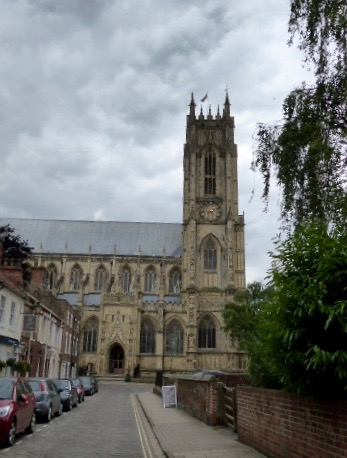
Beverley Minster

June 1st

On 1st June 1787, William Wilberforce asked the King to make a Royal Proclamation for the Encouragement of Piety and Virtue. Concerned at the large number of death sentences being carried out, he reasoned that those punished for small crimes, such as swearing, would be less likely to commit serious crimes, such as murder. The Society for the Reformation of Manners was established in Hull as a result.

On 1st June 1798, William Wickham, Superintendent of Aliens, wrote advising on the tightening of the Aliens Act, with particular relation to Italian pedlars landing at Hull.

On 1st June 1820, Rev Arthur Strickland and 6 other gentlemen adopted the rules of the Bridlington Cricket Club; cricket was clearly a game for the gentry, as subscriptions were 10s6d. Visitors and occasional residents could be invited to play for the summer. the pitch was in the field between Bessingby and the mill.

On 1st June 1829, Hull’s Junction Dock opened, completing the line of docks connecting the Hull and the Humber, along the line of the old wall . Later renamed Princes Dock after HRH the Prince Consort.

On 1st June 1853, Malton & Driffield Junction Railway opened its 19 miles of track to public traffic.

On 1st June 1875, Alice Elizabeth Rawson was the first person to be baptised in the newly created parish of Newington, in Newington parish Mission Room, Edinburgh St, before the church was built in 1878.

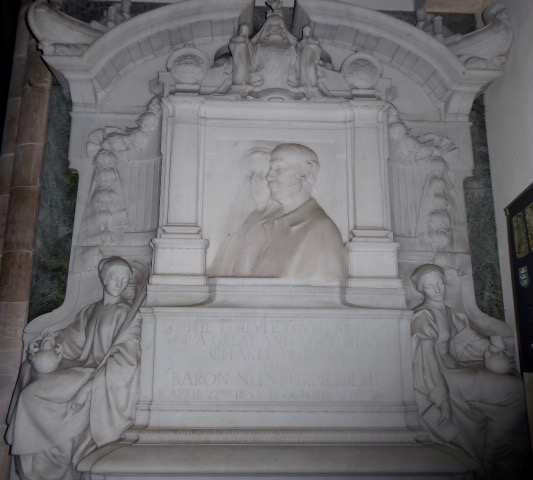
On 1st June 1891, the Royal Baccarat Scandal trial was the first time the heir to the throne was called as a witness in court. It began at a house party at Tranby Croft, Anlaby, (now Hull Collegiate School) home of Charles Wilson,  when Sir William Gordon-Cumming was accused of cheating at cards. Gordon-Cumming lost the slander case, and was dismissed from his army post the day after the trial ended. photo shows Charles Wilson’s memorial in Warter church.

Chas Wilson Nunburnholme

May 26th

On 26th May 1492, William Gypson, labourer, of Holme on Spalding Moor, claimed sanctuary at the church of St John, Beverley, to avoid (or delay) being pursued for debt.

On 26th May 1711, Leven carpenter Thomas Newton claimed the right to raise funds from his neighbours when his shop was destroyed by a fire which started in Matthew Borman’s blacksmith shop next door.

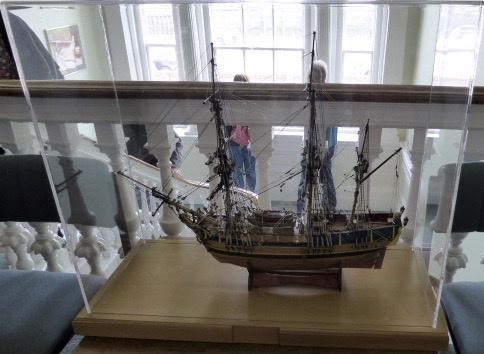
On 26th May 1787, the Royal Navy purchased the collier Bethia, built 3 years earlier at the Blaydes shipyard in High Street, Hull. Renamed the Bounty, it was refitted and equipped for a trip to Tahiti under Captain William Bligh. photo shows a model of the ship in Blaydes House.

On 26th May 1872, David Walker, aged 19,  burgled the house of Henry Robinson in Carnaby and was sentenced to 5 years penal servitude, i.e. imprisonment with hard labour.

On 26th May 1929, Lilian Bilocca was born in Hull. She campaigned for safety improvements to trawlers after the Triple Trawler Disaster. (died 1988)

On 26th May 1946, Mick Ronson was born in Hull. Musician, songwriter, arranger, producer, member of Bowie’s Spiders from Mars. (died 29.4.1993)


Bounty


May 23rd

On 23rd May 1260, William de Forz III, count of Aumale and Lord of Holderness, died, aged about 45. He gave away his claim to the earldom of Chester in return for 2 small manors, including Driffield. Acted as ambassador for Henry III to Scotland and France, and was a member of the Council of Fifteen, advising the King on government matters. Gave land to Meaux Abbey on ‘the island called Ravenser Odd in the Humber’. His heir, Thomas, was 6 and he and the count’s lands were put into the King’s care.

On 23rd May 1510, Howden tiler Robert Colstayne claimed sanctuary at the church of St John, Beverley, for ‘the security of his body’; the register gives no detail of who was pursuing him, or why.

On 23rd May 1596, Howden churchwardens gave 6d to 2 poor men (presumably travelling through on their way to their home parish).

On 23rd May 1642, Hull Governor Sir John Hotham called a meeting of ‘knights and gentlemen’ to give a ‘learned speech’ explaining why he refused to allow King Charles into the town. This was part of the ‘paper war’ between the King and Parliament.

On 23rd May 1822, Hull merchant Joseph R. Pease attended a public meeting for the Relief of the Suffering Irish, due to famine in the West. He reported it thinly attended.

On 23rd May 1853, a Government enquiry into electoral corruption was opened at the Mansion House, Hull.  This followed a petition from the Conservative Party objecting to the election of James Clay and Viscount Goderich as MPs for Hull in the previous year. Hull was unrepresented in Parliament for almost 2 years; the Commission sat for 57 days and produced a report weighing over 11 tons and costing £5,000. (and see 16.8)

On 23rd May 1904, on Whit Monday, the Holderness Polo club held a polo match which attracted 6,000 spectators. This was held at the Polo Ground, Westbourne Avenue, Hull (modern Westbourne Ave West to Perth St West)The last matches were played in 1907.

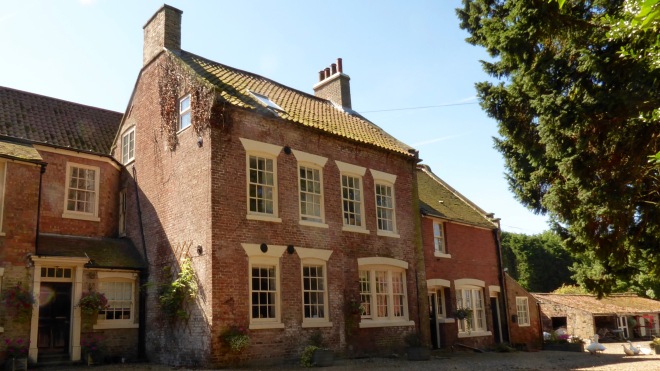
On 23rd May 1907, the Mayoress of Hull opened a new military rifle range at Rolston, for use by Militia, Volunteers and Yeomanry. The land was leased from Rolston Hall.  below – Rolston Hall.

On 23rd May 1911, a fire began in the kitchen chimney of Sledmere House, which 24 hours later had destroyed the whole house. Fire engines from Driffield and Malton attended. There were no injuries.


Rolston Hall.jpg


May 18th

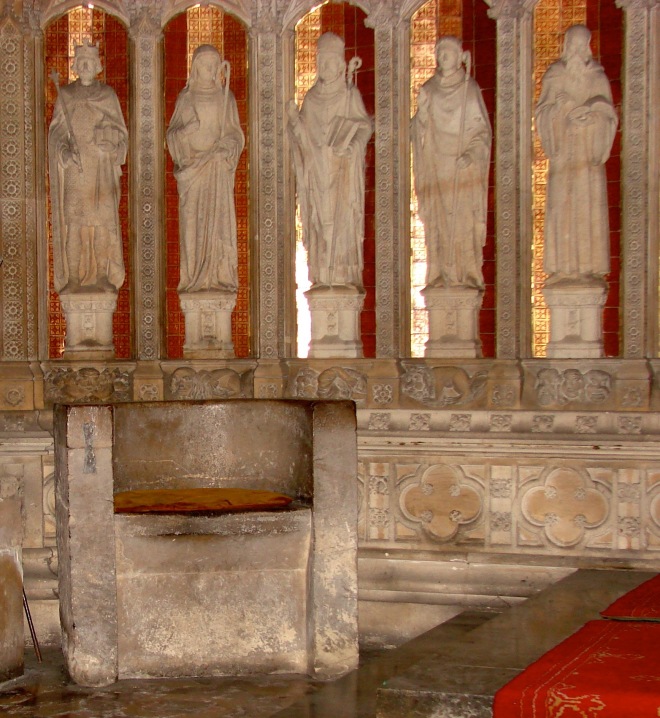
On 18th May 1516, Robert Bradlay of Halifax claimed the sanctuary of St John ‘s church Beverley for debt. Fugitives from justice often travelled long distances to get to a registered sanctuary, in order to be safe for a time from their pursuers. photo shows the Frith Stool in the Minster, the innermost sanctuary.

On 18th May 1957, Queen Elizabeth II visited Hull for the day and while here visited one of the new houses on Longhill Estate. She also visited Paragon Station, Paragon Square, St Andrews Dock, St Andrews Dock Surgery, Hull University, the Sailors’ Children’s Society, Hull Royal Infirmary, the Guildhall, King George dock, East Park, Wilton House, and Corporation Pier. She had 184 people presented to her, from the Archbishop of York to Mrs Annie Nock, fish house worker.


minster - frith stool.JPG

May 16th

On 16th May 1478, Robert Bilton, husbandman, from Hutton Cranswick, sought sanctuary in the Collegiate Church of St John (now the Minster) for the homicide of Thomas Mathyn at Cranswick.

On 16th May 1678, Christopher Richardson, Hull surgeon, apothecary and alderman, was refused permission to stand down as alderman, even after agreeing to pay a fine of £75. Aged 65, he continued to attend Corporation meetings until his death in 1702. Had previously been Sheriff of Hull (1665) and Mayor twice (1660 and 1678).

On 16th May 1917, former Reckitt’s employeed Private Thomas Samuel Taylor was killed in action, serving with 2nd Battalion South Wales Borderers. No known grave.

On 16th May 1941, one of the worst nights of bombing saw 57 dead in East Hull, including 50 in the Ellis Terrace air raid shelter, which took a direct hit. 20 others were injured in Holderness Road, Hedon Road and Alexandra Dock.

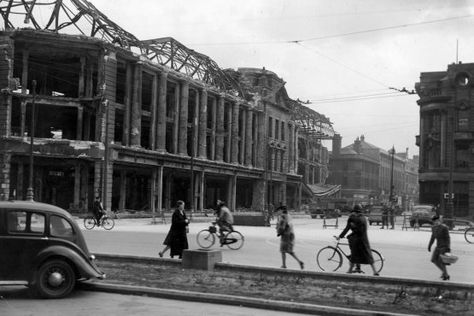
On 16th May 1952, Hammond’s new Ferensway store opened to replace the building bombed during WW2. In the ’Celebration offers’, oak dining tables were on sale for £7 10s. photo shows the old building during the war.hammonds blitz


May 15th

FlambroughOn 15th May 1498, Robert Barker of Wistow, near Selby claimed sanctuary at Beverley’s  church of St John, for the murder of John Towree at Wistow on 9th May.

On 15th May 1591, priest Robert Thorpe, and Thomas Watkinson were executed at York – Thorpe being hanged, drawn and quartered for treason, and Watkinson hanged as a felon for harbouring priests. Both were arrested at Menthorpe on Palm Sunday, when neighbours saw palms being taken into Watkinson’s house, by the local magistrate John Gates.

On 15th May 1613, Lady Grissell Clifford, Countess of Cumberland, died, aged 54 at Londesborough. She appears to have been generous to the local poor, and almost the entire female populations of Londesborough and Shipton attended her funeral. Memorial in Londesbrough church.

On 15th May 1618, Phillip Constable of Wassand Hall was killed in a duel at White Cross, Leven, by Edmund (or Edward) Percy. Constable buried in Goxhill. Difficult to verify any details, except that Philip Constable died in 1618, and that duels were considered a foreign introduction at the time.

On 15th May 1896, a temporary dam created during building work for the Fish Dock extension, Hull, burst, and the sudden rush of water smashed and sank the fishing smack Young Greg.

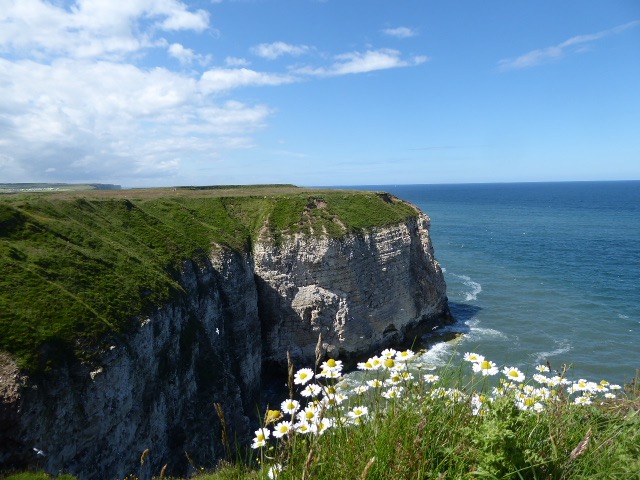
On 15th May 1951, motor mechanic Edward Slaughter, of the Flambrough lifeboat crew, was awarded an RNLI bronze medal and Mrs Porter’s Award (given annually for the bravest deed of the year by a lifeboat man). A boy was badly injured falling 150 feet from the Flambrough cliffs, and E.S. swam to him, got him on to a stretcher and guided the stretcher to the cliff top.