August 16th

Ebenezer Cobb Morley


On 16th August 1831, Ebenezer Cobb Morley was born in Princess Street, Hull, became a solicitor, an oarsman (he founded the Barnes and Mortlake Regatta), a footballer (he played in the first ever Football Association match), proposed the meeting which led to the creation of the FA, and drafted the first FA Laws of the Game in 1863. (d 20.11.1924)

On 16th August 1853, after 57 days, the Government Commission of Enquiry into Electoral Corruption held at the Mansion House, Hull, ended, and concluded that immense amounts of political corruption had been practised, but that other boroughs were equally corrupt. As a result, a Bribery Act was passed in 1854. In 1857, James Clay and Viscount Goderich (later Lord Ashley), the cause of the original complaint, were both re-elected with increased majorities. (and see 23.5)

On 16th August 1931, Charles Hudson, 53,  of Hessle was lost at sea during the Fastnet Ocean Yacht Race. (b 20.1.1878)

August 7th

On 7th August 1385, Joan of Kent (the Fair Maid of Kent), mother of King Richard II, died, it is said, of a broken heart.  She was unable to persuade her son King Richard to pardon another son, Sir John Holland, for the murder of Ralph, son of the Earl of Stafford. Holland was in sanctuary in Beverley Minster, and the murder took place nearby, when Richard’s troops were outside Beverley, on their way to the Scottish wars. Holland was pardoned within the year.

On 7th August 1427, Pope Martin V, in reply to a petition (from the parishioners of both Aughton and Bubwith churches and Peter de la Hay), granted permission that, when they were hindered in winter by floods, snow and hail from reaching their parish churches, they could use the chapel of St James in Spaldington for mass and other offices ‘while the hindrances last’.

On 7th August 1663, Robert Hardy of Hessle was enjoined by the Archbishop of York to do penance in Hessle church for his adultery. photo shows All Saints Church, Hessle

On 7th August 1840, a Serious rail accident took place in Howden, in which 4 passengers were killed, and 9 injured. The Hull and Selby Railway had only opened in full on 1st July. The accident was the subject of the first ever report by the Board of Trade into a railway accident.All Saints, Hessle

July 18th

On 18th July 1509, Lockington labourer Christopher Wylton claimed sanctuary at the church of St John, Beverley, for theft.

On 18th July 1511, Tailor Thomas Mateson, of Stamford Bridge, claimed sanctuary at Beverley for the homicide of John Pott, also of Stamford Bridge, labourer.

On 18th July 1642, the first Hull siege ended after 17 days; as the Royalists withdrew to Beverley, they destroyed the sluice at Hull Bank, causing flooding in Newland, and probably set fire to St Andrew’s Church at Paull.

On 18th July 1833, the work of the Humber Pilots involved more than directing ships into harbour; the day’s work included: relaying 14 buoys; taking carpenters to Bull Float and relaying Transport buoy (at the entrance of the River Hull).

On 18th July 1878, Anthony Bannister JP died at Hessle aged 61; twice Sheriff and twice Mayor of Hull, Vice commodore of the Royal Yorkshire Yacht Club. Promoted the Hull to Withernsea rail line; he is commemorated by a street in Withernsea, by a statue in Hull, and an effigy in Hessle.

On 18th July 1929, Boothferry Bridge opened to traffic across the River Ouse, replacing the ferry which had operated there since the 14thcentury.

On 18th July 1941, Ernest Dean Hodgson of Deepdale Grove, Hull, member of the Rescue Service, was commended for the rescue of Mrs Pounder and her 3 children from a damaged air raid shelter in rustenburg St. For their actions on the same night, John Joseph McHugh of Lilly Grove, and Arthur George Dixon were both awarded the British Empire Medal.  The same raid caused major damage to Reckitt’s Dansom Lane HQ, about 75% of the buildings being destroyed.

On 18th July 1969, Barry Francis, 22, decky learner, was lost overboard from Hull trawler Arctic Vandal off the North Cape.

July 12th

On 12th July 1537, Robert Aske of Aughton was hanged in chains outside Cliffords Tower, York, after being convicted of treason in Westminster, as the leader of the Pilgrimage of Grace.

On 12th July 1641, Sir Thomas Glemham resigned his post as Governor of Hull, having only been appointed the previous year.

On 12th July 1714, Elizabeth Hodgson, a single woman of Hedon, was sentenced at Hedon Quarter Sessions to be stripped to the waist and whipped with birch or willows from the Town Hall to Harrison Lane and from there to the jail and to remain in jail at hard labour until ‘sufficient security’ was found for her good behaviour. Her crime was to give birth to her 4thillegitimate child. There is no record of any punishment for the father. An Act of 1792 forbade whipping females for any reason whatsoever.

On 12th July 1826, (in one of the driest summers on record) Hessle banker Joseph Robinson Pease recorded in his diary there was no grass for the cattle, who had to be given linseed cake. Ponds and water tanks dry.  Around this time, too, the pond at Fridaythorpe dried up, and villagers went on a Sunday to nearby Fimber to take water from one of their 2 ponds, resulting in a pitched battle, referred to as ‘the Second Battle of Waterloo’. photo shows the remaining village pond at Fimber.

fimber pond.JPG

June 25th

On 25th June 1488, brewers Cornelius Jonson and William Rowyll, both of Hull, claimed sanctuary at the church of St John, Beverley, for a murder they both admitted; unfortunately, the register does not record who they killed, or why.

On 25th June 2007, Michael Barnett died of hypothermia in Hessle during catastrophic flooding when he became trapped trying to unblock a drain; 10,500 homes were evacuated in Hull and East Riding; many people were unable to return home for several months. photo shows Wold Road area of Hull.

On 25th June 2010, Alan Plater, playwright and prolific TV dramatist, died on this day. Lived in Hull from age 3, and a life-long Hull City supporter. In 1970, co-founded the Humberside Arts Centre, in Spring Street (later Humberside, then Spring St Theatre). Wrote ‘Don’t build a bridge, drain the river’ about Hull, and ‘Sweet Sorrow’ for Hull Truck about Philip Larkin. Awarded several BAFTAs and a Lifetime Achievement Award from the Writers’ Guild of Great Britain. (b 15.4.1935 Jarrow)

Hull Floods 2007

June 24th

On 24th June 1381, King Edward III issued a writ ordering rebel supporters of the Peasants’ Revolt to be arrested and punished.

On 24th June 1392, lightning struck Keyingham church and caught fire, and residents took ladders to douse the fire on the roof; a ladder holding 13 men broke, but no-one was injured, which was put down to a miracle of St Philip Ingleberd.

On 24th June 1643, Capt John Hotham,  having escaped from arrest, fled to Lincoln, planning to seize it for the King, and wrote to Parliament to say he could answer all charges against him. From Lincoln, he returned to his father in Hull.

On 24th June 1867, Charles Edward Smith, ship’s surgeon, aged 30, was presented with an illuminated testimonial, and a case of surgical instruments, in recognition of his gallant conduct on the whaler Diana of Hull, which had been trapped for months in ice and whose crew had suffered privations leading to scurvy.

On 24th June 1943, Mr T.R. Gale, of Estcourt Street, Hull, performed an act of gallantry during an air raid, for which he was later awarded the British Empire Medal. On the same night, Civil Defence volunteer Albert Henry Prissick of 15 Mersey Street, lost his wife and baby son, but carried on with the rescue of his neighbours. Hull Municipal Museum, Albion Street, was destroyed by fire.

On 24th June 1981, the Humber Bridge was opened to traffic; for 17 years it was the world’s longest single-span suspension bridge. On the same day, the Humber ferry service ended.

On 24th June 2011, marine artist Colin Verity died aged 87 in Market Weighton. Educated at Malet Lambert School, Hull and School of Architecture, Hull University. Flew Spitfires during WW2. Became principal architect, Hull City Council. Member RIBA, Royal Socy of Marine Artists, President Hornsea Art Society.  (b Darwen Lancs 7.3.1924)


Humber Bridge


May 28th

On 28th May 1554, Beverley priest Robert Thwenge was brought before judges at York for the 4th time on the charge that he had been an ordained priest and had afterwards married. He had married after the Reformation, but before Queen Mary repealed the Act. He said that he would rather continue with his wife, and did not wish to be restored as a minister. The record does not show what happened to him after this. Most priests agreed to separate from their wives and retain their livings after doing penance for their sin.

On 28th May 1721, Ann Watson, widow, of Stoneferry, was buried in St Augustine’s Church, Hedon. She bequeathed her whole estate at Stoneferry to charitable uses. Memorial in the church to the Watson family, including her son Hedon Watson.

On 28th May 1787, Edmund Foster, carver and gilder start a sale of his stock in trade at the Golden Boy, Lowgate, Hull. The sale was expected to last 28 days (not including Sundays). The stock included chimney pieces, gilded looking glasses and ornaments. An early ‘everything must go/closing down’ sale?

On 28th May 1857, Charles Francis Annesley Voysey was born, son of Rev Charles Voysey. Designer in the Arts and Crafts style and architect, winner of RIBA Gold Medal 1940. (d 12.2.1941)


Ann Watson memorial

May 25th

On 25th May 1537, Dr James Cockerell, Prior of Guisborough, was hanged, drawn and quartered for his part in the Pilgrimage of Grace; he was vicar of Hessle from 1509-1519.

On 25th May 1693, Robert Jackson, under-keeper of the lighthouse at Spurn, locked himself in the lighthouse and secured the door when told a party of armed employees of Lord Dunbar (Lord of Holderness) were on their way to claim ownership. They undermined the walls and took Jackson prisoner to York Castle.

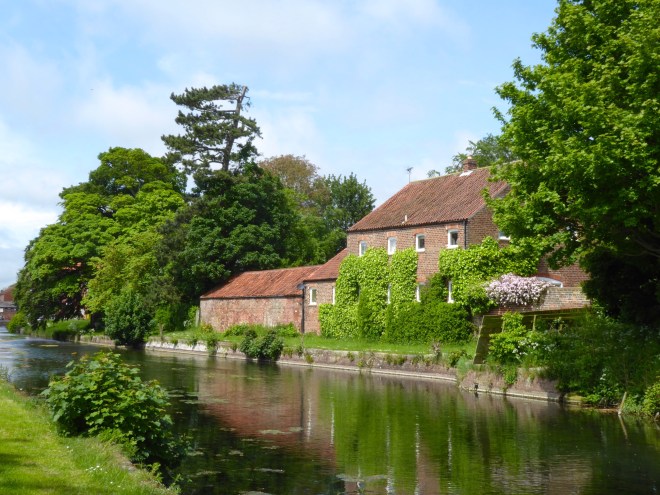
On 25th May 1770, the Driffield Canal Commissioners fully opened the new Driffield Canal, which gave the merchants of this then small hamlet access to the River Hull and the sea. Between 1784 and 1799, 6 warehouses were built at River Head, and new factories and cargo vessels used the canal. photo shows the canal today

On 25th May 1815, Parliament passed an Act to create the Pocklington Canal. Most of the subscribers were titled and/or landed gentry, but among those who bought shares at £100 were innkeepers, a blacksmith, saddler, grocer, and 4 single women (spinsters or widows).

On 25th May 1826, Mr Brown made a balloon ascent from Mr Thompson’s yard, Beverley, which was described as ‘splendid’. Winds took the balloon south west where it crash landed on the moors between Thorne and Crowle, Mr Brown sustaining an injury to his spine. He was able to travel to Sheffield for another balloon trip.

Driffield Canal

May 24th

Edward I

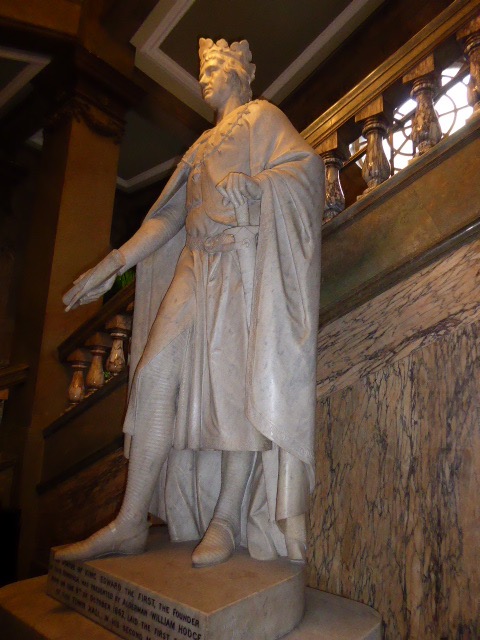
Edward I statue, Hull Guildhall


On 24th May 1300, King Edward I landed in Hessle  from the Barton ferry, his retinue taking up 11 vessels and taking 2 days to make the crossings. Galfrid de Selby was paid 13shillings for the crossing. The King went to Hull and then on to Beverley.

On 24th May 1772, Parliament passed an Act to create the Market Weighton Canal, not just to transport goods, but also to prevent regular flooding of 20,000 acres of land.

On 24th May 1930, Amy Johnson landed in Darwin after flying 11,000 miles; the first woman to fly from the UK to Australia; she received the CBE and great public acclaim.

On 24th May 1943, the crew of Lancaster bomber W4303 crashed at Humbleton on a training flight, killing the 8 crew, aged from 21 to 30. The Australian pilot Bryde and flight engineer Nelson are buried in Brandesburton.

On 24th May 1962, Tom Knight and Saif Messin, engineers, and Bryan Webb, deck boy, 15, were trapped and died when the tug Tollman capsized in Hull’s Alexandra Dock while towing the Finnish ship Inio. The skipper and mate were saved. United Towing made changes to towing systems as a result.