February 19th

Pilgr Grace

On 19th February 1408, Henry Percy, 1stEarl of Northumberland, was killed in battle against King Henry IV, after supporting Edmund Mortimer’s claim to the throne. The Percies held lands across Yorkshire, the Lakes and Northumberland, but their main seat appeared to be Leconfield until the 16thC.

On 19th February 1499, William Fechet of Harpham claimed sanctuary at St Cuthbert’s church, Durham, for assaulting William Fox on 22ndOctober, striking him in several places with a sword; he assumed that Fox had died from his wounds, and fled.

On 19th February 1537, Sir Ralph Ellerker, the elder, chased Sir Francis Bigod and his men out of Beverley, and took 62 prisoners, who were taken to Hull. Bigod escaped. This appeared to be the end of the Pilgrimage of Grace in East Yorkshire.

On 19th February 1944, a Halifax bomber crashed 2m NNW of Hornsea shortly after take-off, killing all 7 crew. Photo -notice in Atwick church. Sadly, I was unable to find the memorial.
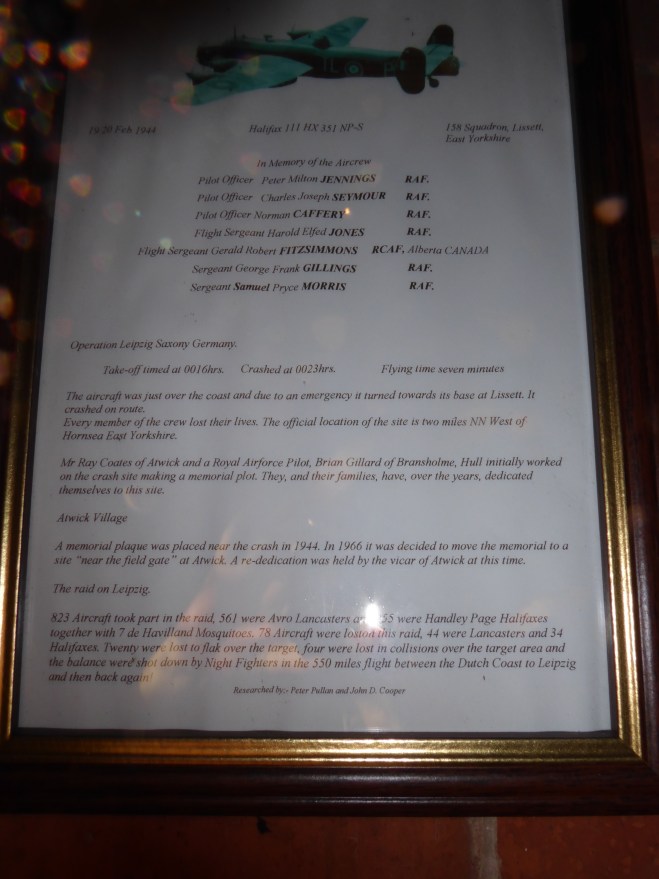
Atwick Halifax crash

February 18th

Pilgr Grace

On 18th February 1537, Sir Francis Bigod entered Beverley with 3-400 men on the renewed Pilgrimage of Grace.

On 18th February 1620, The King’s Players performed 5 plays at Londesborough House over a 4-day period at Shrovetide, for the Earl and Countess of Cumberland. The Cliffords regularly had entertainment at the house, hosting 13 different companies of players, and many musicians. Shakespeare had been the company’s leading playwright (he died in 1613).

On 18th February 1657, Sir Henry Slingsby, a Royalist prisoner in the Hull blockhouse, attempted to bribe Captain John Overton and incite the soldiers to go over to the King. Ralph Waterhouse, commander of the South Blockhouse, was also approached by Slingsby, who said that King Charles had offered him a commission, and said 600 men were at Paull ready to march into Hull. Slingsby was executed in 1658.

On 18th February 1786,  Elizabeth Dearing, aged 20, died in Fitling, cause unknown. She was the 3rdgeneration of the Dearing family to be recorded in the Humbleton parish register as Papist. Later generations who died there are not so described.

On 18th February 1945, Thomas Sheppard died aged 68 in Hull. He was a self-taught geologist, archaeologist and prolific author. He devoted 40 years of his life to Hull’s museums, abolished admission charges in 1902 and increased visitors to 2,000 per week. (born 2.10.1876 in South Ferriby) see photo

Thomas Sheppard Monster Footprint

February 17th

On 17th February 1646, Christopher Hildyard of Winestead was fined £109 as a former Lieut – Col in the Royalist army (a ‘delinquent’) in order to recover his goods which had been sequestered by Parliament.

On 17th February 1803, Burnett’s Daily Shipping List recorded that no ships arrived or departed in Hull on that day (apart from the ferry to Barton).

On 17th February 1821, Robert Sharp junior, an unemployed bricklayer’s labourer from Hull, gave evidence in the hearing of a petition in the House of Commons. Colonel John Baillie, MP for Hedon, was accused of bribery and corruption in the 1820 election. Sharp claimed to have spent the 2 weeks prior to election day at the Charles Saunders Inn (now the Shakespeare), eating and drinking at the expense of the candidate and finally, on election day, receiving 2 guineas from James Iveson, Baillie’s agent, for making himself ‘generally useful’.  William Mason also gave evidence of being offered 12 guineas by James Iveson, political agent for Col John Baillie, if he would vote for him. Baillie’s election was confirmed.

On 17th February 1961, Angela Eagle, MP and Maria Eagle MP were born in Bridlington. The Labour MPs are the first set of twins to sit in the House of Commons.

Eagle MPs copy


February 16th

On 16th February 1803, Burnett’s Shipping List reported the arrival of 4 ships (3 from (King’s) Lynn and 1 from London). The Pearl sailed, destination not given.

On 16th February 1821, Vincent Knowles Walker, 48, battered, stabbed and kicked to death Lydia Wills White, on her doorstep at 37 Nile Street, Hull. She was sheltering her friend Mrs Walker, who had separated from her drunkard, violent husband. Walker was hanged in Hull Hedon Road Gaol.Prison

February 15th

On February 15th 1518, Richard Jakson of Hogett on the Wolds (presumably modern Huggate) claimed the sanctuary of St John’s church, Beverley, for debt.

On February 15th 1530, John Gillco, labourer of Painsthorpe, fled to his parish church in Kirby Underdale from York, where he had assaulted and killed John Notyngham at 4p.m. the previous day. A coroner’s inquest the same day reported that the killing took place within the liberty of the monastery of the Blessed Mary.

On February 15th 1793, a contemporary report said a horseman galloped into Hull with urgent news that men had landed near Patrington from a privateer. Nervous of the risk of French invasion, part of the Corps of Invalids stationed at the Citadel and several volunteer seamen were immediately dispatched to meet the enemy. A 2ndmessenger met them on the road near Hedon, and informed them that instead of French enemies, those who had landed were the crews of several colliers, who had left their ships to avoid the press gang. HM Sloop of War, The Queen, was lying at anchor in the Humber.

On February 15th 1898, James Ashton, 39, skipper, of Witty St, Hull, was lost with his crew when trawler European foundered in the North Sea.

press-gang

February 14th

On 14th February 1763, Mr Newmarch, lighthouse keeper at Spurn Point, reported to his employer that the low light had ‘washed down wholly all together’.

On 14th February 1792, Thomas Wilson, son of a lighterman, was baptised at Dagger Lane Independent Chapel, Hull, He became a clerk, then salesman, set up a business  importing iron, and eventually became owner of Thomas Wilson, Sons & Co, the beginning of the Wilson Line, a multi-national business; his son Charles became Lord Nunburnholme.

On 14th February 1803, Burnett’s Shipping List reported the departure of the first whaler leaving for the fishing grounds that season: the Adventure, captain’s name Gibson, headed for the Davis Strait, got into the roads, but it was a week before it got under way. 5 other whalers left in February, followed by 33 in March. 2 other Hull whalers, the Thomas and the Lynx, appear not to have sailed that season.

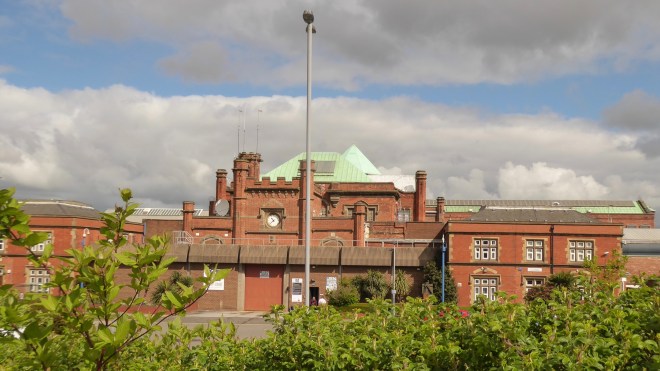
On 14th February 1927, 12 Rail passengers died in a head-on rail collision near Hull Paragon Station; 40 others were injured. The outgoing Hull to Scarborough train was put on the same track as the train arriving from Withernsea.

TrainCrash1927

February 12th

On 12th February 1519, tailor William Bowman of Sewerby claimed anctuary in Flambrough parish church after assaulting William Johnson. At a coroner’s inquest at Bridlington 2 days later, the jurors reported that Bowman assaulted and killed Johnson with a staff on the king’s road between Sewerby and Bridlington, then fled to ‘Flaynburgh’. The King’s Bench declared Bowman an outlaw on 27.12.1519.

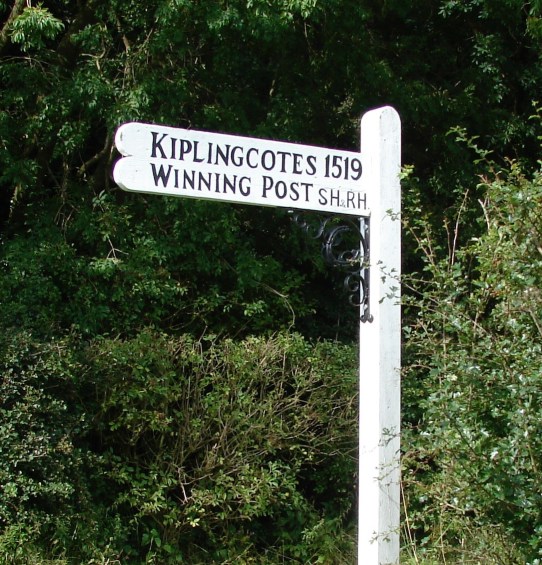
On 12th February 1556, in evidence given in court at York, Thomas Carter of Helperthorpe, 40, herdsman, made the first recorded reference to England’s oldest horse race, Kiplingcotes Derby.

On 12th February 1644, Sir William Constable of Flamborough led Parliamentary troops to capture the Royalist garrison at Bridlington, and took 159 prisoners. On their way back to Hull, they won a skirmish against the Royalists at Driffield.

On 12th February 1687, John Johnson, Rector of Cherry Burton recorded in his diary an earthquake at 3.45 on a Sunday afternoon.

Kiplingcotes

February 11th

On 11th February 1346, William de la Pole agreed to resume lending money to King Edward III, in return for the return of all his goods that were in the hands of the sheriff. Relations between the king and his banker were precarious, but he remained in favour for the time being…

On 11th February 1657, Thomas Cowlam, labourer, and Jane Millington were married in a private alehouse at Spaldington by Robert Browne, vicar of Eastrington.

On 11th February 1941 at 5.30p.m., an anti-aircraft shell fell in Jalland Street, Hull, with no casualties. The blitz on Hull reached its peak in May that year.

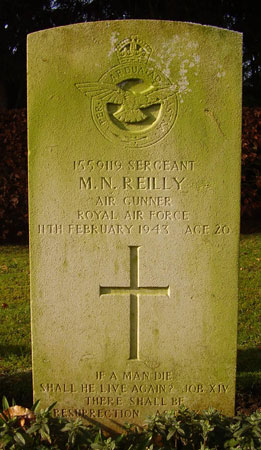
On 11th February 1943, Flt Sgt 785073 Harold E.R. Saunders died with 6 other crew (1 survived) when mechanical problems caused his Halifax bomber to crash near North Dalton, shortly after taking off from Pocklington. 6 of them are buried in Barmby Moor churchyard.

Halifax crash Feb 43


February 9th

On 9th February 1803, Burnett’s Shipping List reported the arrival in Hull of the Minerva, captain’s name McBride, from New York. 4 ships left, 2 for Shields, 1 for Rochester and 1 for Berwick.

On 9th February 1826, Joseph Robinson Pease, banker of Pease & Liddell, reported in his diary on rumours of local banks about to close, and alleged that the rumour mongers intended to drive down the value of the businesses in order to buy them up cheaply. The panic of 1825 eventually resulted in the closure of 6 London banks and 60 banks elsewhere in the country.

On 9th February 1828, Richard Arthur Worsnop of Howden Hall, Howden, recorded in his diary the celebrations for the first street lighting in the town. Church bells rang, and a band paraded round the streets. The lamps and stands were acquired second-hand from Doncaster, which had just installed gas lighting.

On 9th February 1896, 34 degrees of frost were recorded in Cottingham. (=-19deg C)

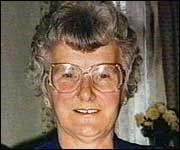
On 9th February 1995, Margaret Wilson, 66, housewife, was walking near her home at Burton Fleming when a car stopped, a man got out, and assaulted her. Her throat was cut and she died shortly after.  Derek Christian, 32, of Bridlington, was charged with her murder, found guilty and is currently serving a life sentence. Doubts have been cast on the validity of the verdict.

Margaret Wilson