March 6th

On 6th March 1851, two days of severe storms, coupled with high tides, caused several breaches in Spurn Point, and made the Low Light insecure. The lifeboat was damaged, and several of the crew’s cottages were flooded. The extraction of gravel was halted, but did not finally end for many years.

On 6th March 1862, Joseph Wildridge, aged 14, apprentice, was attacked by another apprentice, probably named William Webb, on board Hull fishing smack Fairy. He was  so severely injured that he had to be returned home by another vessel, and died on 9thApril. He was unable to report on the events leading up to his attack, and a court case failed to prove a case against his assailant, as the crew would not testify.

On 6th March 1883, a great storm affecting the whole of the East coast resulted in huge losses in the Hull fishing fleet. Accounts vary: up to 230 Hull fishermen and 32 fishing smacks are recorded as lost.

On 6th March 1916, Zeppelin L14, after attacking Hull, dropped bombs on Burstwick and Owstwick, with no further casualties, before passing out to sea.

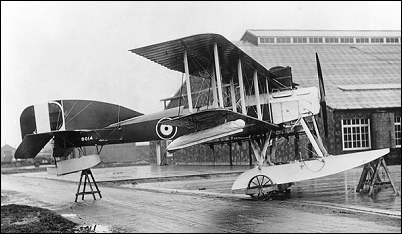
On 6th March 1919, the RAF Squadron 248 at Hornsea Mere seaplane station disbanded. From August 1918, it flew coastal patrols with Short 184 and Fairey Hamble Baby floatplanes off the Yorkshire coast. photo shows a short 184


short-184

February 26th

On 26th February 1381, Archbishop of York Alexander Neville announced his intention to visit Beverley, provoking a mass walk-out of Beverley clergy, most going to Lincoln or London. Neville replaced them with vicars choral from York but failed in his power struggle.

On 26th February 1552, Sir Michael Stanhope was executed on Tower Hill, London, for instigating rebellion, and conspiring to murder John Dudley, Duke of Northumberland. Stanhope was a Nottinghamshire knight, twice Governor of Hull, where the townspeople complained to the Privy Council of his high-handedness. He also acquired a great deal of land after the Dissolution, including in Sutton-on-Hull.

On 26th February 1671, Robert Constable, Viscount Dunbar of Burton Constable, was indicted at Middlesex Sessions Court with the murder of Peter Varnall and confessed. Hi accomplices were Peter Savage and John Fennick. It seems that Varnall was the innocent victim of young aristos on a drunken spree.

On 26th February 1869, Christopher Sykes, MP for the East Riding of Yorkshire, moved the Bill which later in the year became the Sea Birds Preservation Act, supported by Rev HF Barnes-Lawrence of Bridlington. Up to 232,000 seabirds and eggs were killed, often shot for sport, each breeding season. This earned Sykes the nickname ‘The Gulls’ Friend’. See cartoon below.  Link is to film of ‘climmers’. https://www.youtube.com/watch?v=B5ynIfnmVK0

On 26th February 1903, Martin Samuelson, marine engineer, died at Hessle, aged 78. Owner of Martin Samuelson & Co, of Neptune Street, Hull, and later Sammy’s Point, who built hydraulic presses, steel boilers and early steel vessels, and the North Bridge. Hull councillor from 1853, Sheriff 1857, Mayor 1858, first colonel of Royal East Yorkshire Volunteer Artillery and JP. (born 2.1.1825 in Liverpool).

On 26th February 1914, the Coverdale family of Hollym played a football match against another family with 11 sons, the Charlesworths of Scunthorpe. The Coverdales won 3: 0.

On 26th February 1935, Thomas Edward Lawrence, known as T.E.Shaw, (‘Lawrence of Arabia’) left Bridlington when discharged from the RAF; he had been supervising armour-plating power launches for target practice. Whilst in Bridlington, he had lived at the Ozone Hotel, Bridlington (now Royal Yorkshire Yacht Club). There is a sundial dedicated to him in South Cliff Gardens.

On 26th February 1942, Pilot F/Sgt Reginald Francis Robb and 5 crew of Wellington bomber Z8536 took off from RAF Pocklington and crash landed at Yapham due to an engine fire. They jettisoned their bombs, but were caught in the blast and all the crew were lost. 4 are buried in Barmby Moor.
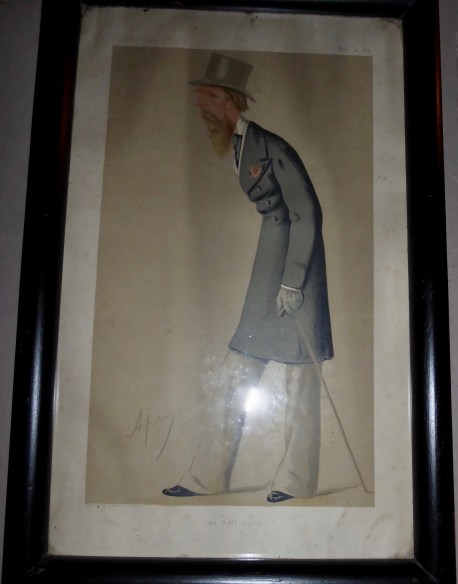
Christopher Sykes MP

February 24th

On 24th February 1814, John Taylor, aged 62, of Soffham Farm, Sutton-on-Hull, was in Chamberlain Road, on his way home from Hull, when he was shot by a man who leapt out from the hedge, robbed him of £30 and ran off. Taylor died a week later, but had identified his assailant as James Forbes, an Irishman. Forbes was tried at York but acquitted despite being identified, for lack of corroborating evidence.

On 24th February 1942, Charles James Kent of Bristol Road, Hull, a foreman in the Rescue Party Service, was awarded the George Medal for gallantry in the rescue of Mrs Crawford (deceased) and Miss Crawford. They were trapped when their house in Eva’s Terrace, De la Pole Avenue, was demolished, and Kent managed to crawl to them and create space for jacks to be used.

On 24th February 1943, Thomas Cooper Kinchin, aged 27, 2ndofficer, of North Ferriby, was lost by enemy action aboard SS Stockport of Grimsby, an Atlantic convoy rescue ship.

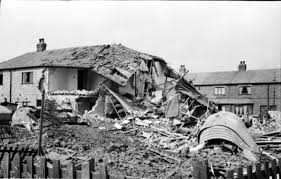
Blitz

February 19th

Pilgr Grace

On 19th February 1408, Henry Percy, 1stEarl of Northumberland, was killed in battle against King Henry IV, after supporting Edmund Mortimer’s claim to the throne. The Percies held lands across Yorkshire, the Lakes and Northumberland, but their main seat appeared to be Leconfield until the 16thC.

On 19th February 1499, William Fechet of Harpham claimed sanctuary at St Cuthbert’s church, Durham, for assaulting William Fox on 22ndOctober, striking him in several places with a sword; he assumed that Fox had died from his wounds, and fled.

On 19th February 1537, Sir Ralph Ellerker, the elder, chased Sir Francis Bigod and his men out of Beverley, and took 62 prisoners, who were taken to Hull. Bigod escaped. This appeared to be the end of the Pilgrimage of Grace in East Yorkshire.

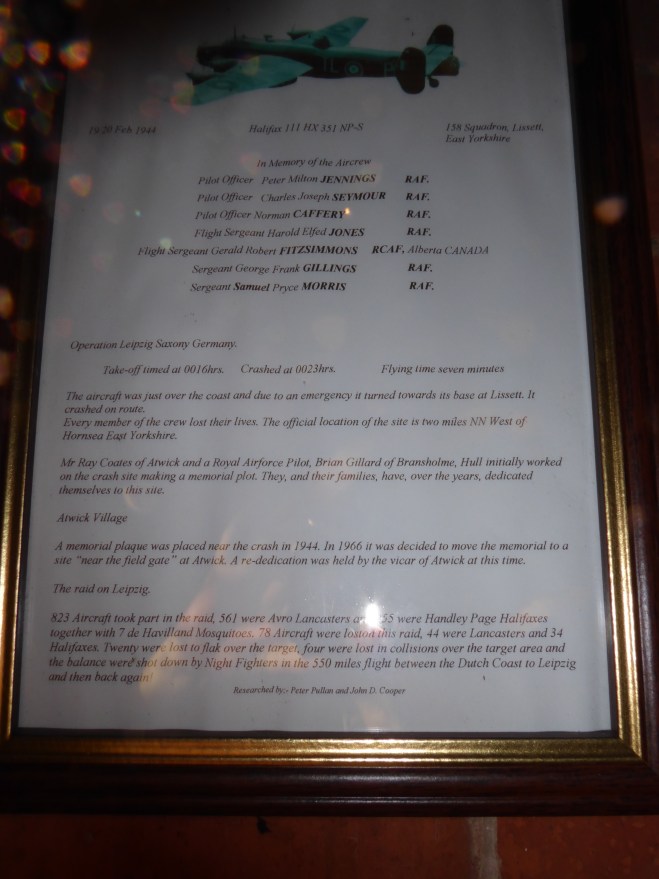
On 19th February 1944, a Halifax bomber crashed 2m NNW of Hornsea shortly after take-off, killing all 7 crew. Photo -notice in Atwick church. Sadly, I was unable to find the memorial.

Atwick Halifax crash

February 16th

On 16th February 1803, Burnett’s Shipping List reported the arrival of 4 ships (3 from (King’s) Lynn and 1 from London). The Pearl sailed, destination not given.

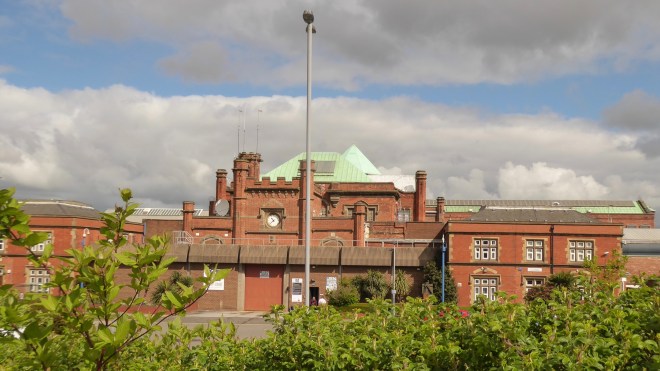
On 16th February 1821, Vincent Knowles Walker, 48, battered, stabbed and kicked to death Lydia Wills White, on her doorstep at 37 Nile Street, Hull. She was sheltering her friend Mrs Walker, who had separated from her drunkard, violent husband. Walker was hanged in Hull Hedon Road Gaol.Prison

February 15th

On February 15th 1518, Richard Jakson of Hogett on the Wolds (presumably modern Huggate) claimed the sanctuary of St John’s church, Beverley, for debt.

On February 15th 1530, John Gillco, labourer of Painsthorpe, fled to his parish church in Kirby Underdale from York, where he had assaulted and killed John Notyngham at 4p.m. the previous day. A coroner’s inquest the same day reported that the killing took place within the liberty of the monastery of the Blessed Mary.

On February 15th 1793, a contemporary report said a horseman galloped into Hull with urgent news that men had landed near Patrington from a privateer. Nervous of the risk of French invasion, part of the Corps of Invalids stationed at the Citadel and several volunteer seamen were immediately dispatched to meet the enemy. A 2ndmessenger met them on the road near Hedon, and informed them that instead of French enemies, those who had landed were the crews of several colliers, who had left their ships to avoid the press gang. HM Sloop of War, The Queen, was lying at anchor in the Humber.

On February 15th 1898, James Ashton, 39, skipper, of Witty St, Hull, was lost with his crew when trawler European foundered in the North Sea.

press-gang

February 12th

On 12th February 1519, tailor William Bowman of Sewerby claimed anctuary in Flambrough parish church after assaulting William Johnson. At a coroner’s inquest at Bridlington 2 days later, the jurors reported that Bowman assaulted and killed Johnson with a staff on the king’s road between Sewerby and Bridlington, then fled to ‘Flaynburgh’. The King’s Bench declared Bowman an outlaw on 27.12.1519.

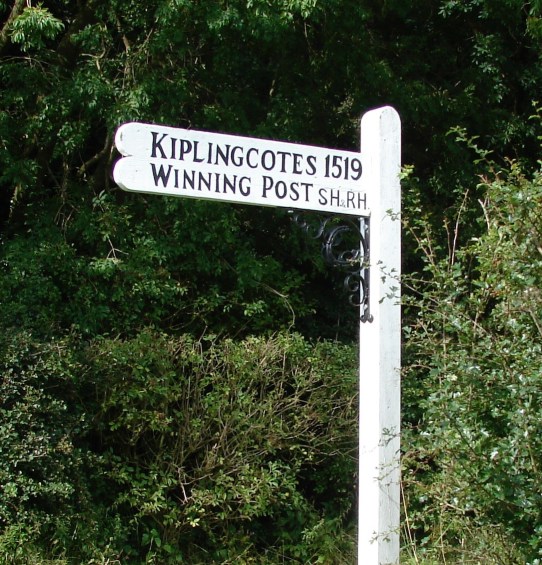
On 12th February 1556, in evidence given in court at York, Thomas Carter of Helperthorpe, 40, herdsman, made the first recorded reference to England’s oldest horse race, Kiplingcotes Derby.

On 12th February 1644, Sir William Constable of Flamborough led Parliamentary troops to capture the Royalist garrison at Bridlington, and took 159 prisoners. On their way back to Hull, they won a skirmish against the Royalists at Driffield.

On 12th February 1687, John Johnson, Rector of Cherry Burton recorded in his diary an earthquake at 3.45 on a Sunday afternoon.

Kiplingcotes

February 9th

On 9th February 1803, Burnett’s Shipping List reported the arrival in Hull of the Minerva, captain’s name McBride, from New York. 4 ships left, 2 for Shields, 1 for Rochester and 1 for Berwick.

On 9th February 1826, Joseph Robinson Pease, banker of Pease & Liddell, reported in his diary on rumours of local banks about to close, and alleged that the rumour mongers intended to drive down the value of the businesses in order to buy them up cheaply. The panic of 1825 eventually resulted in the closure of 6 London banks and 60 banks elsewhere in the country.

On 9th February 1828, Richard Arthur Worsnop of Howden Hall, Howden, recorded in his diary the celebrations for the first street lighting in the town. Church bells rang, and a band paraded round the streets. The lamps and stands were acquired second-hand from Doncaster, which had just installed gas lighting.

On 9th February 1896, 34 degrees of frost were recorded in Cottingham. (=-19deg C)

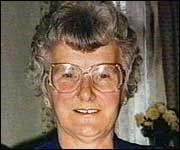
On 9th February 1995, Margaret Wilson, 66, housewife, was walking near her home at Burton Fleming when a car stopped, a man got out, and assaulted her. Her throat was cut and she died shortly after.  Derek Christian, 32, of Bridlington, was charged with her murder, found guilty and is currently serving a life sentence. Doubts have been cast on the validity of the verdict.

Margaret Wilson

January 30th

Mary Ward

On 30th January 1499, Robert Colstone of Hull and Marmaduke Pateson of  Flambrough claimed sanctuary at the church of St John, Beverley – Colstone for debt and Pateson for the murder at Flambrough of John Mottows.

On 30th January 1645, Mary Ward died aged 60. A cousin of the Wright brothers of Welwick, she spent 5 years living there with her grandmother and spent a further 6 years at Osgodby. She founded the Institute of the Blessed Virgin Mary and championed women’s education. She was declared Venerable in 2009. (b23.1.1585 Mulwith Yorks) see photo

On 30th January 1901, Beverley Mayor Elwell proclaimed the accession of King Edward VII to a large crowd at the Market Cross, despite bitterly cold weather and a snow storm.

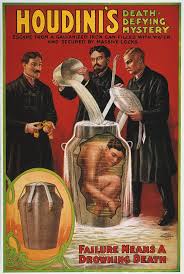
On 30th January 1913, Harry Houdini, escapologist, performed at the Palace Theatre, Hull. He escaped from a canvas sea bag and straps; the challenge was signed by seamen Dan Morris, Tom Carr and Robert Mason.

On 30th January 1983, Captain Derek Wharton of North Sea Ferry Norland spent the day sailing back and forth in Bridlington Bay, having arrived back from service in the Falklands War a little too early for the homecoming celebration planned for 1stFebruary.

Houdini copy


January 28th

On 28th January 1450, William de la Pole, Duke of Suffolk, was arrested and imprisoned for treason. King Henry VI saved him from execution and banished him for 5 years. On his way to Calais, he was captured and reportedly had his head cut off with a rusty sword.

On 28th January 1515, William Jakson of Belby, near Howden, claimed sanctuary at the church of St John, Beverley, for the murder of John (rest of name blank in the register).

On 28th January 1525, Robert Smyth, husbandman of Anlaby, claimed sanctuary at the church of St John, Beverley, for the murder of Robert Ekopp alias Hikkopp.

On 28th January 1700, Abraham de la Pryme, curate of Holy Trinity, Hull, reported of Swine that: ‘the town has formerly been very large and handsome, … though it is very mean and inconsiderable, nobody inhabiting the same but a few country clowns’.

On 28th January 1829, William Hurr of Roos was admitted to the Sculcoates Refuge for Pauper Lunatics; on 21 July that year his funeral is recorded.

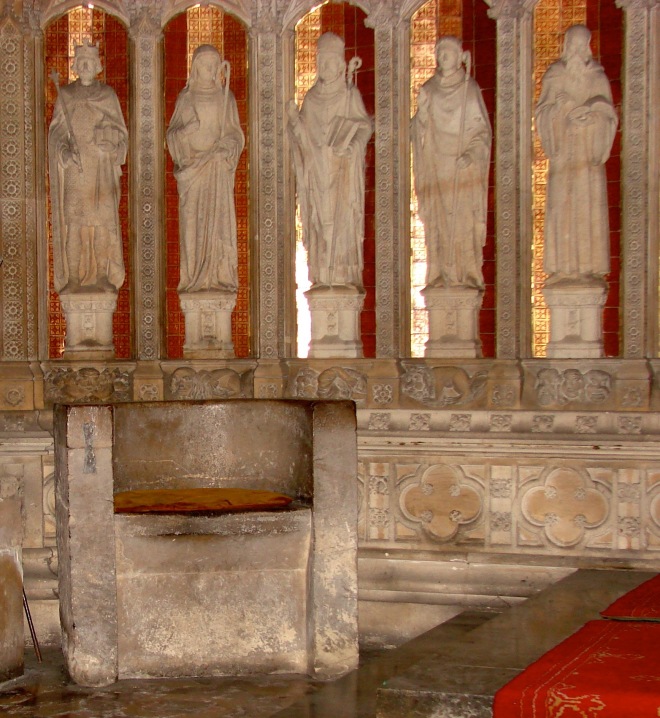
minster - frith stool.JPG