January 2nd

On 2nd January 1645, Sir John Hotham was executed for treason. He was buried, with his son John, in the Church of All Hallows, Barking. His lands passed to his grandson, aged about 10.

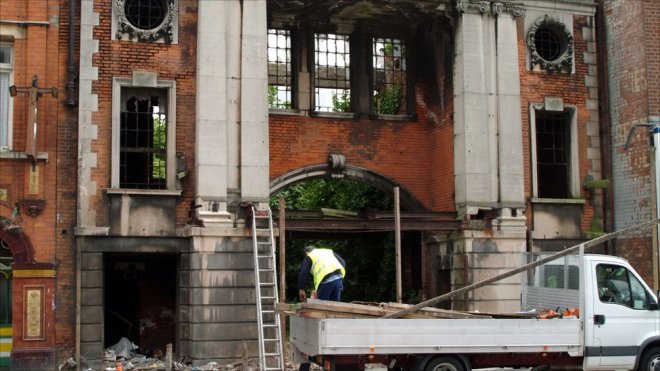
On 2nd January 2007, Historic England listed the former National Picture Theatre on Beverley Road, Hull, Grade II for its special architectural or historic interest. It is believed to be the only civilian WW2 bombed–out building, other than churches, remaining on its site.

nationalpicturetheatre


December 29th

On 29th December 1594, Sir Francis and Lady Clifford began a tradition in their new house  (Londesborough Hall) of Christmas and New Year feasts, entertaining 93 staff and local people, tenants from different villages on the estate on different days, to meals until 6thJanuary.

On 29th January 1611, they paid for entertainment from visiting puppeteers, 2 men and a woman, who called at the great house.

On 29th December 1817, Mary Woodall married John Lewis Friday, private in the 33rd (WR) Regiment of Foot, a  Waterloo veteran, who was probably born in Mozambique.

On 29th December 1829, Hedon MP Col John Baillie informed the Mayor of Hedon that the Post Office would have a daily post from Hedon instead of 4 days a week.

On 29th December 1881,  William Papper, 15, was murdered aboard fishing smack Rising Sun, in the North Sea, by Osmond Otto Brand, skipper of the boat, after prolonged mistreatment amounting to torture. Brand was found guilty of murder at Leeds Assizes and sentenced to death. Richard Rycroft was sentenced to 3 months’ hard labour for assault.

On 29th December 1898, Elsa (formerly Elfie) Gidlow was born in Hull. Lesbian poet known for On A Grey Thread 1923. Her family emigrated to Canada when she was 6 (d 8.6.1986)


December 26th

On 26th December 1220, William de Forz II, Count of Aumale and Lord of Holderness was with King Henry III at the Royal court at Oxford; the King made an appointment William hoped to get; disappointed, he left Oxford for Lincolnshire, and began a rebellion, known as the war of Bytham.

On 26th December 1489, George Gusterd, weaver of Bishop Burton, claimed sanctuary at Beverley for the murder of a servant of Edward Barnaby, a gentleman. He did not know the servant’s name.

On 26th December 1495, William Middleton was threatened with a pole-axe by John of Cottingham, John of Wawne, Thomas Warde, Robert Bate, and (- ) Mykill, and was so afraid for his life that he took sanctuary in Wawne church and stayed there for 10 hours, afterwards leaving the area. He applied to the Chancery Court for leave to prosecute his attackers, but the outcome is not recorded.

On 26th December 1645, Rev Nicholas Osgodby was reported to be using the forbidden Prayer Book in secret.

On 26th December 1750, the chapter house roof of Howden church collapsed, to join the rubble of the chancel which had collapsed in 1696.

On 26th December 1890, residents of Hornsea had a fair on the frozen surface of the Mere, and a sheep was roasted on the ice.

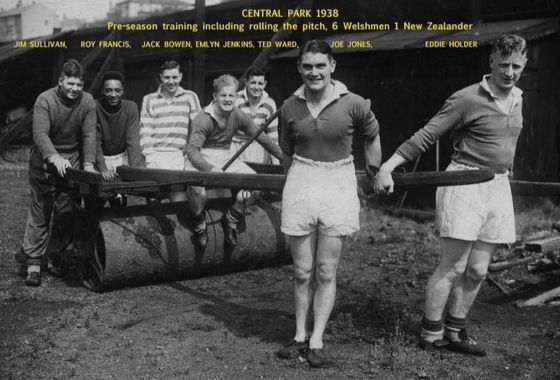
On 26th December 1955, Roy Francis played his last game after 6 years with Hull FC, and became UK’s first black professional sporting coach, and team manager 1971 to 1973.

roy-francis

December 24th

Coat_of_arms_of_the_baron_de_Ros_-_Premier_baron_of_England

On 24th December 1264, Robert de Ros of Roos and Helmsley was created Baron de Ros, probably the first English Barony created, and the title holder is styled the Premier Baron of England.

On 24th December 1510, Welwick labourer James Martynson claimed sanctuary at the church of St John for the murder of John Lewes of Welwickthorpe, labourer.

On 24th December 1592, the Council in the North ordered that no merchants carry goods or merchandise up the river or trade with other parts of the north except through the port of Hull.

On 24th December 1911, James Adamson, 34, deckhand, was lost overboard from Hull trawler Eldorado, 250 miles ENE of Spurn.


December 23rd

On 23rd December 1226, Robert ‘Furfan’ de Ros, of Roos, died, aged about 54. 1stLord of Helmsley, son-in-law of the Scottish king William the Lion, a Knight Templar and one of the barons enforcing the Magna Carta. His tomb is in the Temple church, London.

On 23rd December 1510, Peter Swake and Roland Dale of Catton claimed sanctuary at the church of St Cuthbert, Durham, as accessories to homicide. About 25.11.1510, they were present when Richard Horsley of Catton was taken from his mother’s house in Catton to a field, where he received several wounds, from which he died about a month later. They feared being  indicted as accessories. On 5.7.1511, another Catton man, William Ratcliff, entered the sanctuary with the same story, although he had taken sanctuary in Beverley for the homicide the previous year.

On 23rd December 1535, Austin Tennant of Hull claimed sanctuary at the church of St John, Beverley, for homicide and felony (details not recorded).  On the same day, the sanctuary received another 4 fugitives, from Leeds, Wakefield, and Thornton and Tealby in Lincs, 3 for felony and 1 for debt.

On 23rd December 1640, Sir John Lister died in Hull, aged 53. He left land at Thorngumbald to provide income for the poor, and money to set up the almshouses known as Lister’s Hospital. Twice Mayor of Hull, and MP, he built the house now known as Wilberforce House. He is commemorated in Holy Trinity church, where he also left money for repairs.

On 23rd December 1689, Johannes Frederick Bellow, a Danish trooper, was executed in Beverley Market Place for killing fellow soldier Daniel Straker, in a duel. Both are buried in St Mary’s churchyard.

On 23rd December 1732, a hurricane removed the roof and steeple of Hornsea church, destroyed 24 houses and overturned a windmill, and interrupted the parish clerk in the act of concealing smuggled goods in the crypt of the church.
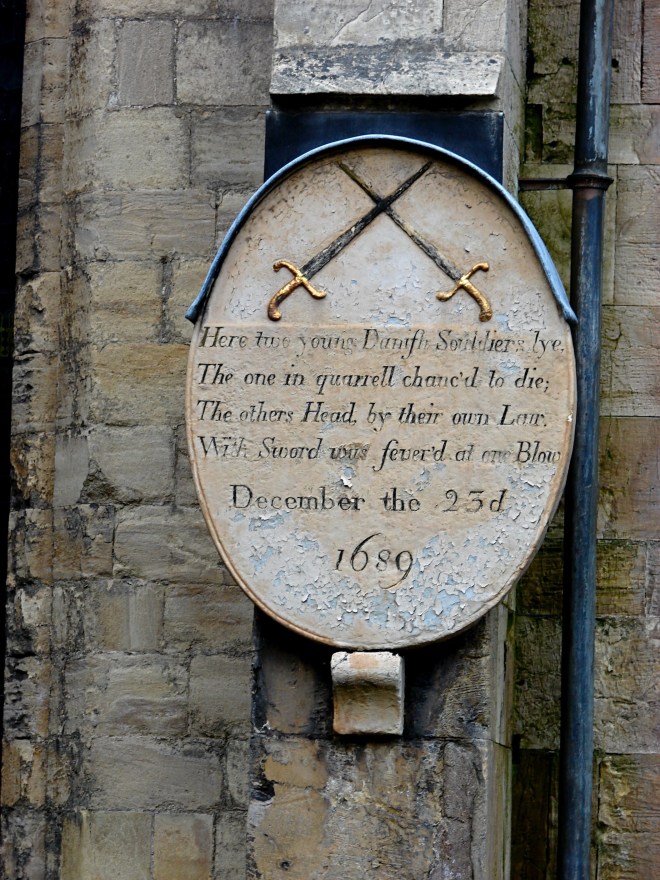
danish soldiers st mary's.JPG

December 21st

wm constable

On 21st December 1633, the Duke of Cumberland’s staff bought supplies of oysters (600 at 6d per 100) for Christmas at Londesborough House on his behalf when he was in York on business.

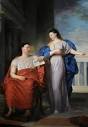
On 21st December 1721, William Constable was born at Burton Constable. He inherited the Constable estate, and is chiefly remembered for restoration work on the Hall, and as an amateur scientist and collector of art and artefacts; his Cabinet of Curiosities may be the most complete in any stately home. He became grossly overweight, suffering from gout, probable hypochondria and addiction to medication containing opiates. (d 18.5.1791) see photo with his sister Winifred

On 21st December 1824, Richard Arthur Worsop of Howden Hall recorded in his diary that he supported a charity which had been continued by the owners of the Hall since the 17th Century; he gave 6d each to 40 poor people of the parish, and a bushel each of wheat and coals to a further 10. He recorded several other charitable gifts in his diary, including a sheep to the workhouse.

On 21st December 1838, Hull banker Joseph Robinson Pease established, and was elected President of, Hull Labourers’ Friendly Society, having established a society in Hessle which had built a cottage there.  There were already dozens of friendly societies in Hull by this time, and this new group may have been more of a building society than a self help group. Pease was certainly no democrat (he described democracy as a ‘pestilent curse’).

On 21st December 1857, Henry Smith Bright, manager, Hull Cotton and Flax Mills, was found guilty at York Assizes of forging deeds of transfers of shares, and sentenced to 6 months’ penal servitude. His actions appear to have precipitated the closure of the Hull Flax and Cotton Mills and the bankruptcy of the partners in the Harrison Watson & Co bank on 24.9.1857.

On 21st December 1957, Edward Benn, 43, bosun, of Hull Rd, Hedon, died as result of accident aboard Hull trawler Cape Palliser off Iceland.

December 19th

Dame Ann Percy (Percehay)

On 19th December 1511, Ann Percy died in Hessle, the wife of Sir Henry Percy (or Percehay) and mother of 17 children. Although she is not of the Northumberland Percies, the Duke of Northumberland in 1862 arranged for a transcription of the original brass in Hessle Church, presumably under the assumption that she was of his line.

On 19th December 1656, the second of 2 boy twins of Philip Ellerker died at Ellerker, 2 days after the death of the first, at the age of 3 days.

On 19th December 1939, it was reported that of the 1,774 children evacuated from Hull  in September and October, 900 had returned home, during the ‘phoney war’.


December 18th

On 18th December 1594, Katherine Johns, chambermaid to the Clifford family, on behalf of Lady Grissell, paid 2s to the Beverley waits, presumably for performing at Londesborough House.

On 18th December 1612, Sir Francis Clifford bought 30 young elm trees to enhance the woodland of the house; it took 3 men with a cart and 5 horses to transport them.

On 18th December 1745, Thomas Owst of Halsham, a ‘popish recusant’, was given licence to travel to Drax to see his wife, who was ill. Catholics were forbidden to travel more than 5 miles from home without permission.

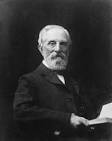
On 18th December 1824, Sir John Hall was born in Hull. Emigrated aged 27 to New Zealand, where he became the 12thPrime Minister, and moved the Parliamentary Bill that gave women the vote in 1893. (d 25.6.1907, Christchurch NZ) see photo

On 18th December 1919, the Clerk to the Hull Local Profiteering Committee, wrote to the Board of Trade, suggesting that an inquiry be held into possible profiteering by Hammonds Ltd. They had sold to Mr E.R. Kidby of Plane Street, 4 knitting needles for 1s 01/2d, on which Hammonds said they made 1 1/2d profit. The complaint was not upheld, as the needles were bought before the Profiteering Act 1919 came into force, but the BoT suggested making another purchase, and they could then investigate.

Sir John Hall


December 17th

On 17th December 1216, William de Forz was given as a hostage with his mother Aveline to the new King Henry III when his father, William de Forz II, count of Aumale and Lord of Holderness, supported the barons. Presumably this was to assure the king of his loyalty, as he had been a supporter of King John.

On 17th December 1965, North Sea Ferries began operating a ferry service from Hull to Rotterdam, for freight vehicles and private cars. MV Norwave’s maiden voyage saw a force 10 gale, which caused some trailers to break free of their shackles, but damage was minimal. The sister ship Norwind joined the service in March 1966.

Norwave

December 15th

On 15th December 1604, the Hull Recorder, Sir William Gee, petitioned the Council in the North on behalf of the Hull Corporation for a financial contribution towards the relief of people infected by plague; 788 people had received financial support of some sort, and other costs (wages of watchmen, repairs to pesthouse) totalled over £97. photo shows the Gee memorial in York Minster

sir Wm Gee