November 25th

On 25th November 1641, Nicholas Pearson, parish clerk at St Mary’s Beverley, wrote this rhyme in the parish register, as a reminder of the dates when the Catholic church traditions forbade the celebration of marriage: ‘When Advent comes do thou refrain till Hillary set ye free again. Next Septuagissima saith ye nay But when Low Sunday comes thou may. Yet at Rogation thou must tarry Till Trinity shall bid ye marry.’ However, Pearson was a Puritan, showing perhaps that many traditions continued in the Church of England.

On 25th November 1818, Hull Trinity House started a fund to build cottages for the Spurn lifeboat crew, to help the lifeboat get under way more quickly after a call. £800 was raised.

On 25th November 1857 (or 1851) died when the steam packet Empress collided with the Ouse ferry in the dark at Whitgift. 3 passengers from Sheffield also died.  Verdict of accidental drowning by the carelessness of the ferrymen. photo –  Whitgift

Whitgift

November 24th

On 24th November 1299, King Edward I visited the Collegiate Society of St John, Beverley, and was entertained for 3 days.

On 24th November 1835, Mrs Jane Legard created the Etton Lying-In Charity by her will, providing maternity articles and food for new mothers – so long as they had been married at least 9 months.

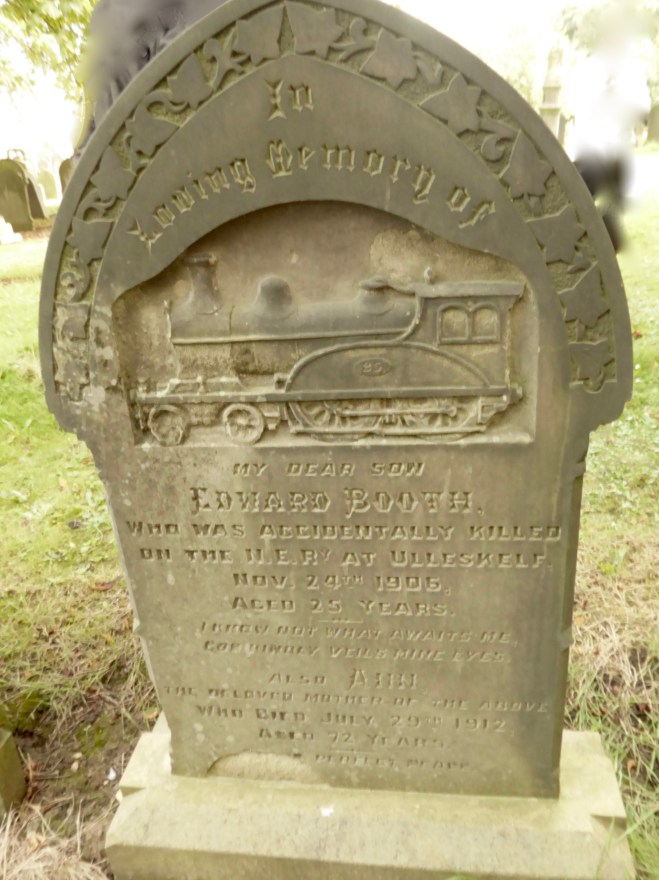
On 24th November 1906, John Dunham, 53, train driver and Edward Booth, 25, fireman, of Hull, died in a rail accident at Ulleskelf , which led to railway safety improvements. photo – Western General Cemetery, Hull

Edwd Booth memorial

November 13th

On 13th November 1002, English King Ethelred ordered the massacre of all the Danish in England on St Brice’s Day. East Yorkshire being in the Danelaw, where Danish and English were well integrated, the order appears to have been ignored here.

On 13th November 1684, John Largeman of Patrington married for the 3rdtime; he married his second wife Elizabeth Dunn on 31stJuly, and she died in September; his first wife had died in April of the same year. It is not known what killed his 3 wives, although plague is recorded in parts of Yorkshire in that year.

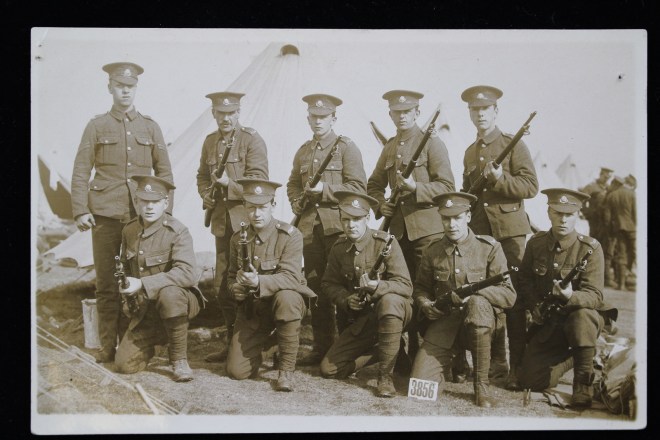
On 13th November 1916, was a private in the Hull Sportsmen’s Pals Battalion, East Yorkshire Regiment, at the Battle of the Ancre, WW1. His heroism in seizing German positions alone was rewarded with a Victoria Cross (for valour). (b 28.6.1897 died 21.2.1941) photo shows members of the 13th Battalion (Hull Sportsmen)

Hull PALS 13Btn sportsmen

November 10th

On 10th November 1274, Aveline de Forz, aged 10, was married to Edmund Crouchback, 2nd son of Henry III.  Countess of Aumale and Lord of Holderness in her own right, and Countess of Lancaster by marriage.  She died childless at age 15 and is buried in Westminster Abbey. The Lordship of Holderness passed to the Crown. Born Burstwick 20.1.1259

On 10th November 1293, Countess Isabella de Forz, widow of William de Forz III died, having outlived her husband and all her children, including Aveline above. A legend relates that she came across a poor man carrying a basket containing what he said were puppies, but which turned out to be seven of his children that he was going to drown because he could not afford to keep them. After severely upbraiding him for his lack of morality, Isabella adopted the children and ensured that they were looked after and well educated until their adulthood when she found employment for all of them.

On 10th November 1518, Sir Marmaduke Constable of Flamborough (known as Little Sir Marmaduke). Died after swallowing a frog (some say toad) while drinking a glass of water. Knighted for military service including Flodden a letter of thanks from Henry VIII is displayed, in Wassand Hall. photo shows his tomb in Flambrough church. & see 9.9

On 10th November 1609, Sir George Wharton, who was raised at Londesborough, died in a duel in Islington with his good friend Sir James Stuart, the King’s godson, who also died. The event was commemorated by Sir Walter Scott in his ‘Minstrelsy of the Scottish borders’. (b1583)

On 10th November 1678, Capt Towes (or Towers or Towle) of the Hull ship Shield landed settlers at Burlington, New Jersey. Many were Quakers, who settled at Burlington, Salem and other places. One of the passengers was Mr Barnes, a merchant from Hull.

Little Sir Maramaduke Constable's tomb

October 31st

On 31st October 1640, the gentry of Cottingham, Swanland and other villages petitioned Sir John Conyers to remove his regiment to other quarters, as they were eating up all their cattle fodder and supplies, and many other ‘insupportable damages and dangers’. Many troops had already been removed from Hull into the surrounding villages for similar reasons. The petition was not successful, although the troops did look for other quarters.

On 31st October 1646, Sir Robert Hildyard of Patrington was fined £610 as a Royalist (delinquent) in order to recover his goods which had been sequestered by Parliament. He was a member of the King’s Privy Council.

On the same day, Michael Wharton of Beverley was fined £1,600 for the same reason. He had been a captain in the Royalist army.

On 31st October 1793, John Woodhead, mason, was killed at work on the building site of the Neptune Inn, Whitefriargate. Hull Trinity House gave his widow a gratuity of £5 5s.

On 31st October 1833, the Humber pilots’ work for that day included taking men from Trinity House to relay the Bull buoy.

On 31st October 1929, George Jackson Bentham died suddenly, while boarding a train home, in the company of a young lady not his wife. Hull city councillor, JP, and MP for Gainsborough, he was the son of the founder of Wm Jackson & Son, and the company’s managing director. He changed his name by deed poll to that of his Liberal hero, Jeremy Bentham.


Pilot Office

October 25th

On 25th October 1037, Aelfric, Archbishop of York, placed the relics of the recently canonised St John of Beverley in a new shrine of gold and silver, ornamented with precious stones in the Collegiate Church of St John the Evangelist, Beverley.

On 25th October 1415, Michael de la Pole, 3rdEarl of Suffolk, died in battle, with 2 of his brothers. His brother William succeeded as Earl.

On 25th October 1841, Private Stephen Bennington, of Lockington, 20, batman to vet surgeon John Gloag, rode into the Russian guns at the Charge of the Light Brigade, Balaclava, and survived.  He was awarded the Crimea Medal with clasps. Also served at Inkerman and Sebastopol and was discharged from the service in 1859 with long service and good conduct medals. Gloag did not take part in the charge.

Light Brigade


October 23rd

On 23rd October 1667, Richard Sterne, Archbishop of York, excommunicated a number of people, both male and female, at Beverley, and required them to make public penances, for crimes including adultery, fornication, and incest.

On 23rd October 1908, Wm Jackson & Son Ltd, Hull grocers & bakers, bought the company’s first motor vehicle (having previously used only horse-drawn transport and hand carts); by 1933 they had a fleet of 30 motor vehicles.

On 23rd October 1909, Rev Canon Joseph Malet Lambert, Hull philanthropist  and his wife Rose were charged at Dollgellau Magistrates Court, while at their holiday home in Barmouth, with cruelty against Mary Rose Inman, 11 years, whom they had adopted to save her from the workhouse and to train for domestic service. The girl had been starved (weighed 48lb) and beaten, and hidden from visitors. It appears that Mrs Lambert was convicted and sentenced. photo shows the school named after the Canon.

Malet_lambert


October 21st

On 21st October 1823, Mr Gleadow, commander of the customs cutter Bee, seized 31,324 barrels of contraband, including 250 lbs of tea, 720 lbs of tobacco, and 976 gallons of spirits, mostly gin, from the Lunatic asylum, Brandesburton Moor.

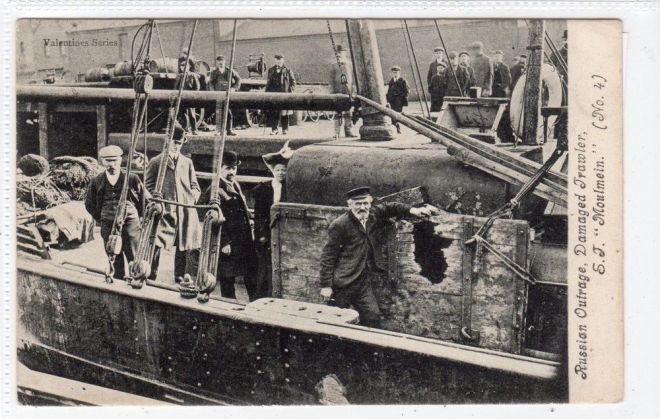
On 21st October 1904, the Gamecock trawler fleet from Hull was fired on by the Russian Baltic fleet, claiming they mistook them for the Japanese Navy. The trawler Crane was sunk and her captain and second mate killed; 30 others were injured. There is a memorial statue to the ‘Russian Outrage’ at the corner of Boulevard/Hessle Road.

On 21st October 1905, Ellen Borrill, of William’s Terrace, Hull, was murdered at Danthorpe by Peter Williams, her partner. He cut her throat in a field, walked to Burton Pidsea, and then gave himself up to the police at Roos. He claimed she had tried to kill herself, and asked him to finish her off. On 2nd December, Williams was sentenced to death, but was reprieved.

On 21st October 1921, Jim Graham and Cam Connor, out of work shipwrights from South Shields, bought a 14-seater Model T. Ford and set up Easington’s first bus service, just 2 years after East Yorkshire’s first bus service was set up in Elloughton by E.J. Lee, also using a 14-seater Model T.

Russian Outrage


September 14th

On 14th September 1484, Anne de la Pole, great granddaughter of Geoffrey Chaucer, was betrothed aged 8 to the Duke of Rothesay, future King James IV of Scotland, as part of peace negotiations between the 2 countries. Her brother John, 1stEarl of Lincoln, was then Heir Presumptive to the English throne. Anne never became Queen, however, as on the death of her uncle Richard III, she was sent to a convent and became a nun at the Abbey of Syon.

On 14th September 1581, the Hull Mayor and aldermen agreed to pay 12d per week towards the keep in God’s House (i.e. the Charterhouse) of keelman Christofer Harrison, on account of his being blind and aged.

On 14th September 1643, Sir Thomas Fairfax, Hull governor, opened the sluice gates to flood all areas from Derringham Dyke to Dunswell, during the 2nd siege of Hull, to keep the royalist guns away from the town.

On 14th September 1828, Thomas Thompson MP died aged 72. A Methodist and member of the Clapham Sect, he provided land to poor families to keep them out of the workhouse. Wrote History of Church & Priory of Swine. Father of Thomas Perronet Thompson. (b 5.4.1754  Swine)

On 14th September 1853, Hugh Edward Strickland went to examine railway cuttings near Retford, and stepped out of the way of a goods train and was killed by a train coming from the opposite direction. Inventor of the power loom, ornithologist and geologist, Fellow of the Royal Society. (b2.3.1811 Reighton)

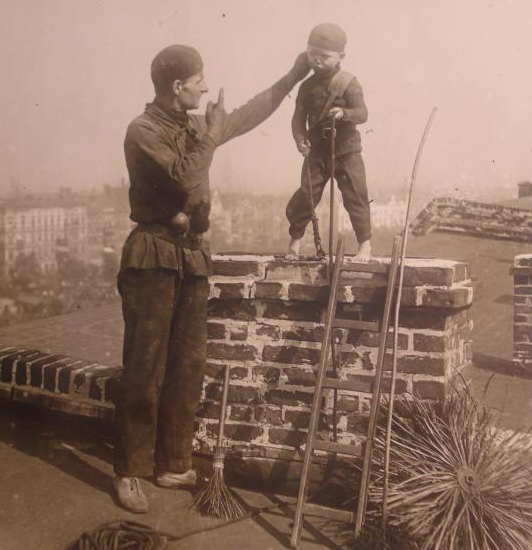
On 14th September 1861, John Kingston, chimney sweeper and soot dealer of 16 Worship St, Hull, gave his annual bill to Hull Charterhouse for £5 for sweeping chimneys, with a note that his prices would rise in the following year due to a new law forbidding sending children up chimneys to clean them.


childsweep2

September 5th


delapolearmscharterhouse.JPG
Hull’s first blue plaque? On the wall of the Charterhouse.

On 5th September 1389, Sir Michael de la Pole died aged 59. 1stBaron de la Pole, later 1stEarl of Suffolk. Appointed English Lord Chancellor in 1383. He founded the Carthusian Monastery which became Hull Charterhouse. Disgraced, he fled to Paris in 1388.

On 5th September 1811, Benjamin Byron (or Byrom) MD died in Hull; as physician he had chambers at Mr Frith’s, plumber, Silver Street, where ‘consultations were free to the poor on Tuesdays and Fridays 10a.m. to 3p.m.’