Coming up this week

February 6th

On 6th February 1611, Stephen Taylor, steward of the household and receiver-general at Londesborough House, home of the Earl of Cumberland, bought a barrel of white herrings from Hull merchant Mr Foddle. He also bought sea fish landed at Scarborough and Carlisle, but had bought eels from Thomas Williamson of Hull the previous December.

On 6th February 1889, John William Dishman, aged 10,  Died in the care of Port of Hull Society’s Sailor’s Orphan Home – photo: memorial in Hull Western General Cemetery

On 6th February 1901, William Bernard Traynor, a sergeant in the 2ndBattalion, West Yorkshire Regiment, went to the aid of a wounded man under heavy fire at Bothwell Camp, South Africa, and was severely injured; he was awarded the Victoria Cross ‘for valour’. Traynor was born in Moxon Street, Hull. (31.12.1870)

Orphan deaths, Sailor's Orphan Home
Western General Cemetery


February 5th

On 5th February 1538, widow Mabel Brygge, 32, servant of Holmpton, was examined by an enquiry headed by Sir Ralph Ellerker the younger. She was alleged to have carried out a ‘black fast’ with the aim of injuring King Henry VIII and the Duke of Norfolk, in relation to the King’s divorce and the Reformation. She was executed at York, along with John Dobson, vicar of Muston, and John Ainsworth, priest, who had also spoken out against the royal supremacy and Act of Succession.

On 5th February 1856, Humphry Sandwith, junior, MD, aged 34, had a public breakfast given in his honour as a war hero at Royal Station Hotel Hull.  He gained the Orders of St Stanislaus, Nishan Iftahar and Mejidie, and French Legion of Honour in the Crimean War. He was head surgeon at Hull General Infirmary 1847-48. Author of a number of memoirs, as well as 3-volume novel “Minsterborough’ about his upbringing in Beverley.

On 5th February 1909, George Gibbon, Melchoir Chadwick and Thomas Leng Major, fishermen, lost their lives attempting to rescue the crew of the coble Gleaner when it capsized. Their own boat also capsized, and all 6 lives were lost. A monument to this ‘Conspicuous Act of Bravery’ is in the village centre.


flambro

February 4th

On 4th February 1516, John Holme, labourer, of Ottringham, claimed sanctuary at the church of St John ‘for divers felonies’.

On 4th February 1634, William Kitching, 39, of Little Driffield, and 9 other men, were hanged at York for rioting at Hull about corn, for demolishing the dwellinghouse of Edward Cooper, and for stealing clothes. None of those convicted were from Hull.

On 4th February 1783, Hull Trinity House accepted the proposal of Mr Blaydes of Hull to build a yacht for £500; they used the yacht Humber for 23 years.

On 4th February 1809, Ebenezer Bettison and 2 others, of Hull, drowned during a storm when going in a boat to secure a lighter which appeared to be in danger.

On 4th February 1821, Thomas Wilkinson Wallis was born in Hull. The son of a cabinet maker, he became a wood carver. He was a pprenticed to Thos Ward in Waterworks St, Hull, and trained at the Mechanics Institute. His work can be found in the Victoria & Albert Museum, London. photo shows one of his carvings

On 4th February 1900, Sir Leo Schultz (Joseph Leopold Schultz) was born in Hull. He was  the Leader of Hull City Council from 1945-79. Was awarded the OBE in 1946 for war work, including as an air raid warden, and for his campaign to provide all households with a bomb shelter. He was knighted in 1966 for services to local government. Honorary Doctor of Law Hull University 1979. d 1991. photo above

On 4th February 1968, Hull trawler Ross Cleveland capsized and sank with all but 1 of the 20 crew. An enquiry concluded the ship was unable to cope with ice build-up. The wreckage was located in 2002.

St Andrews Dock memorial

February 3rd

On 3rd February 1727, John Marshall of Preston left in his will the income from land rents, to be used to buy 6 white loaves, given to the poor in Preston every Sunday. Marshall Avenue in the village is named for him.

On 3rd February 1832, James Acland was escorted by a crowd of many thousands of supporters (he said 20,000) on returning to Hull after being prosecuted for libel by Hull Corporation (he had accused them of corruption). The town won the case, but were awarded damages of a farthing. Acland, however, was unable to pay his legal costs.

On 3rd February 1854, Robert Bowser, treasurer Hull Zoological Gardens, and ship’s surgeon William Gedney introduced to Queen Victoria 3 Inuit people; they had come to Hull the previous year with Capt Bowlby. Tookoolito had learned English from whalers, and was later to have a long career as an interpreter. She, her husband Ipirvik and a boy Akulukjuk, returned to the Arctic after 2 years.

Tookoolito

February 2nd

On 2nd February 1141, during the Anarchy, William of Aumale, Lord of Holderness and Earl of York led part of the cavalry protecting King Stephen, but were overrun by the Welsh and fled. The King was captured, and Matilda took the throne for a time. William remained loyal to Stephen.

On 2nd February 1786, Revd T.O. Rogers Hull opened the new Trinity House School with 36 pupils.

On 2nd February 1799, Capt Henry Gunter RN was in charge of HMS Nautilus when she was wrecked in a storm Off Flamborough Head; all the crew survived. She was leading a convoy of 22 merchantmen returning from the Baltic; one of the other ships was also wrecked.

On 2nd February 1801, Hull Trinity House paid relief of £1 1s to 4 seamen who had escaped from captivity in Russia.

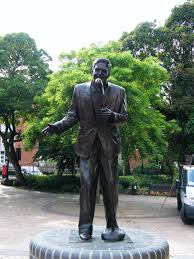
On 2nd February 1925, David Whitfield was born in Hull. A popular singer, he was the first UK male vocalist to earn a gold disc, and the first British artiste to reach No 1 simultaneously in the US and the UK. Commemorated by a statue outside the New Theatre. d 16.1.1980

David Whitfield


February 1st

On 1st February 1639, King Charles I issued an order to enclose Hull and improve its fortifications.

On 1st February 1714, a great wind caused damage in several places, and blew down Richard Stevenson’s house in Kilpin, then the fire in the hearth destroyed the remains.

On 1st February 1884, at the Hull Sanitary Congress, Hull City Hall, Rev Joseph Malet Lambert called for bold action to save hundreds of lives, and improve thousands more, by dealing with dreadful housing conditions, some of them a stone’s throw from the City Hall. The slums were cleared 20 years later.

On 1st February 1893, Hedon Gymnastic Society put on an ‘Assault-at-Arms’, with an appearance by a clown, and followed by a dance in the Board School room, Roos.

On 1st February 1922, Robert Anderson, 26 of 7 Emily Terrace, Gillett St was lost with 9 shipmates when Hull trawler Magneta was wrecked off Murmansk, under Russian arrest.

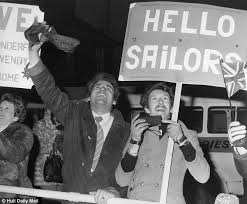
On 1st February 1983, 800 dignitaries, service representatives and families of the Norland crew gathered at the King George Dock Terminal Building, Hull. They were there to greet the return of North Sea Ferries Norland after over 9 months in the Falklands War supporting the troops. Unfortunately, 90 mph winds did not allow the ship to dock, and it rode out the storm in the Humber for several hours , by which time the banquet was over.  Hundreds of people were still there to greet them at the quayside in the evening. The Norland was refurbished and returned to the Rotterdam run on 20thApril.

Norland return

January 31st

Thos Ferres memorial

On 31st January 1631, Thomas Ferres died, aged 63. Mayor of Hull, Sheriff, and alderman, warden of Hull Trinity House. He left the Whitefriargate estate to Hull Trinity House, the rents to be used for the poor of the House. He also left bequests of over £1,000 to the poor. His memorial by local sculptor Earle is in Hull Minster.

On 31st January 1918, former Reckitt’s employee George William Trowell, 27, private with the East Yorkshire Regiment, win action on 23.4.17. No known grave. Was posted as missing, believed killed.  He was wounded in September 1916, discharged from hospital and returned to France.  He died in action on 23.4.17. He has no known grave.


January 30th

Mary Ward

On 30th January 1499, Robert Colstone of Hull and Marmaduke Pateson of  Flambrough claimed sanctuary at the church of St John, Beverley – Colstone for debt and Pateson for the murder at Flambrough of John Mottows.

On 30th January 1645, Mary Ward died aged 60. A cousin of the Wright brothers of Welwick, she spent 5 years living there with her grandmother and spent a further 6 years at Osgodby. She founded the Institute of the Blessed Virgin Mary and championed women’s education. She was declared Venerable in 2009. (b23.1.1585 Mulwith Yorks) see photo

On 30th January 1901, Beverley Mayor Elwell proclaimed the accession of King Edward VII to a large crowd at the Market Cross, despite bitterly cold weather and a snow storm.

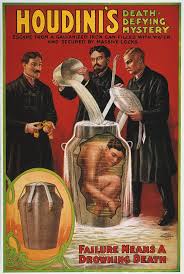
On 30th January 1913, Harry Houdini, escapologist, performed at the Palace Theatre, Hull. He escaped from a canvas sea bag and straps; the challenge was signed by seamen Dan Morris, Tom Carr and Robert Mason.

On 30th January 1983, Captain Derek Wharton of North Sea Ferry Norland spent the day sailing back and forth in Bridlington Bay, having arrived back from service in the Falklands War a little too early for the homecoming celebration planned for 1stFebruary.

Houdini copy


January 29th

On 29th January 1505, Richard Naperton, labourer, of Goodmanham, claimed sanctuary at the church of St John, Beverley, for debt.

On 29th January 1885, William Barlow, 15, cook, was lost overboard from Hull trawler Only Son in the North Sea.

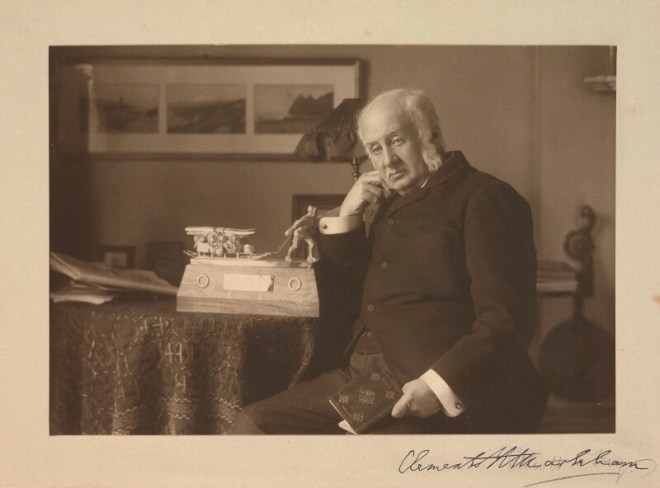
On 29th January 1916, Sir Clements Robert Markham KCB, FRS of Stillingfleet died aged 85. Born in Stillingfleet, he became a Navy officer, explorer and geographer, Secretary of the Royal Geographical Society, organiser of Scott’s 1901-4 National Antarctic Expedition, author, and organiser of the 1860 expedition to collect cinchona for quinine.

sir clemts markham

January 28th

On 28th January 1450, William de la Pole, Duke of Suffolk, was arrested and imprisoned for treason. King Henry VI saved him from execution and banished him for 5 years. On his way to Calais, he was captured and reportedly had his head cut off with a rusty sword.

On 28th January 1515, William Jakson of Belby, near Howden, claimed sanctuary at the church of St John, Beverley, for the murder of John (rest of name blank in the register).

On 28th January 1525, Robert Smyth, husbandman of Anlaby, claimed sanctuary at the church of St John, Beverley, for the murder of Robert Ekopp alias Hikkopp.

On 28th January 1700, Abraham de la Pryme, curate of Holy Trinity, Hull, reported of Swine that: ‘the town has formerly been very large and handsome, … though it is very mean and inconsiderable, nobody inhabiting the same but a few country clowns’.

On 28th January 1829, William Hurr of Roos was admitted to the Sculcoates Refuge for Pauper Lunatics; on 21 July that year his funeral is recorded.

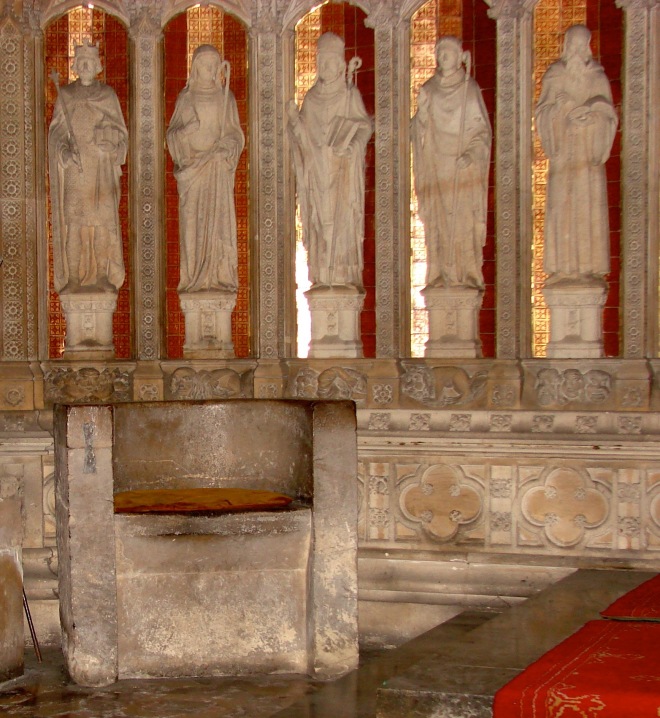
minster - frith stool.JPG