March 4th

On 4th March 1666, Edward Grey, Mayor of Beverley, and Robert Hildyard were in correspondence with the Mayor of Hull about plague in North Frodingham and the precautions taken in Beverley against infection; a week later, they sent a certificate that North Frodingham was clear of infection.

On 4th March 1752, Elizabeth Plaxton paid for 4 brass chandeliers to be installed in the choir of Holy Trinity, Hull, at a cost of £100.

On 4th March 1791, Sarah Metcalfe, originally of Hull, died in Humbleton aged 45. No cause of death is given; she was the mother of 13 children, 4 of which died in their infancy.

On 4th March 1903, Dorothy Mackaill was born in Newstead Street, Hull. She became a stage actor in London and Paris before moving to Broadway and, in 1920, making her first film. In 1932 she starred with Humphrey Bogart in “Love Affair’, and retired 5 years later, though she did return to acting on TV. She died aged 87 (12.8.1990)

On 4th March 1908, Cornelius O’Kelly, PC 249, later Olympic gold medallist, was one of 4 police fire officers injured when a 20ft wall collapsed during a fire at Frank Soulsby’s saw mill, Thomas Street, Hull. Unable to work for 27 days, he received £5 15s8d from his employer’s liability assurance. (and see 3.11)

dorothy-mackaill


February 26th

On 26th February 1381, Archbishop of York Alexander Neville announced his intention to visit Beverley, provoking a mass walk-out of Beverley clergy, most going to Lincoln or London. Neville replaced them with vicars choral from York but failed in his power struggle.

On 26th February 1552, Sir Michael Stanhope was executed on Tower Hill, London, for instigating rebellion, and conspiring to murder John Dudley, Duke of Northumberland. Stanhope was a Nottinghamshire knight, twice Governor of Hull, where the townspeople complained to the Privy Council of his high-handedness. He also acquired a great deal of land after the Dissolution, including in Sutton-on-Hull.

On 26th February 1671, Robert Constable, Viscount Dunbar of Burton Constable, was indicted at Middlesex Sessions Court with the murder of Peter Varnall and confessed. Hi accomplices were Peter Savage and John Fennick. It seems that Varnall was the innocent victim of young aristos on a drunken spree.

On 26th February 1869, Christopher Sykes, MP for the East Riding of Yorkshire, moved the Bill which later in the year became the Sea Birds Preservation Act, supported by Rev HF Barnes-Lawrence of Bridlington. Up to 232,000 seabirds and eggs were killed, often shot for sport, each breeding season. This earned Sykes the nickname ‘The Gulls’ Friend’. See cartoon below.  Link is to film of ‘climmers’. https://www.youtube.com/watch?v=B5ynIfnmVK0

On 26th February 1903, Martin Samuelson, marine engineer, died at Hessle, aged 78. Owner of Martin Samuelson & Co, of Neptune Street, Hull, and later Sammy’s Point, who built hydraulic presses, steel boilers and early steel vessels, and the North Bridge. Hull councillor from 1853, Sheriff 1857, Mayor 1858, first colonel of Royal East Yorkshire Volunteer Artillery and JP. (born 2.1.1825 in Liverpool).

On 26th February 1914, the Coverdale family of Hollym played a football match against another family with 11 sons, the Charlesworths of Scunthorpe. The Coverdales won 3: 0.

On 26th February 1935, Thomas Edward Lawrence, known as T.E.Shaw, (‘Lawrence of Arabia’) left Bridlington when discharged from the RAF; he had been supervising armour-plating power launches for target practice. Whilst in Bridlington, he had lived at the Ozone Hotel, Bridlington (now Royal Yorkshire Yacht Club). There is a sundial dedicated to him in South Cliff Gardens.

On 26th February 1942, Pilot F/Sgt Reginald Francis Robb and 5 crew of Wellington bomber Z8536 took off from RAF Pocklington and crash landed at Yapham due to an engine fire. They jettisoned their bombs, but were caught in the blast and all the crew were lost. 4 are buried in Barmby Moor.
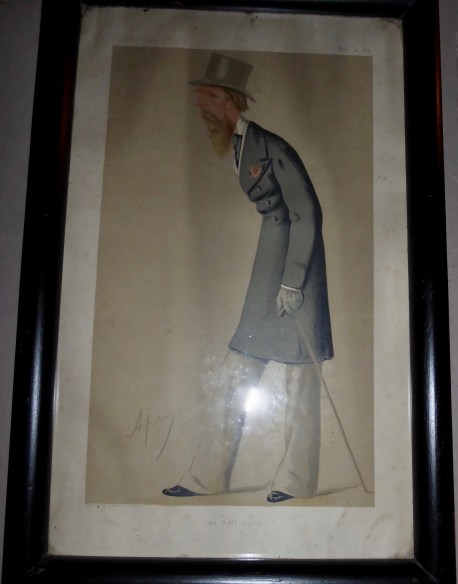
Christopher Sykes MP

January 27th

Pilgr Grace

On 27th January 1332, Sir John de Sutton was summoned to Parliament by writ and thereafter become Lord Sutton of Holderness.

On 27th January 1537, John Hallam and others captured during the attempt by the Pilgrimage of Grace to seize Hull were examined by local justices; Hallam and 2 others were condemned to death and the rest awaited the arrival of the Duke of Norfolk for a decision on their fate.

On 27th January 1599, the Earl of Pembroke’s Players arrived at Londesborough House for a week performing plays for the Shrovetide period, for payment of £15shillings.

On 27th January 1645,  14 Hull burgesses gave evidence that Thomas Swann was  not a Royalist, and should not have his property sequestered, but in fact was owed money by Parliament because his new house was demolished to build a defences for the town. His appeal failed.

On 27th January 1882, the Prince of Wales, the future King Edward VII, joined the Holderness Hunt at Brantinghamthorpe, which recorded 1,400 horsemen, 4,000 on foot and 1,000 in carriages.

On 27th January 1901, Joseph Smith of Hull, on board SS Friary, was the 7thand last Hull passenger to have died of pneumonic plague contracted in the Mediterranean. He is commemorated in the columbarium at Hedon Road Cemetery.

On 27th January 1924, Brian Norman Roger Rix, Lord Rix of Whitehall in the City of Westminster and Hornsea in Yorkshire,  was born in Cottingham. He was a comic actor, specialising in Whitehall farce; awarded CBE for his charity work; campaigner for people with learning disability. He was also awarded 8 honorary degrees, 5 fellowships and many other awards, and was the first Chancellor of the University of East London, and vice Lord Lieutenant of Greater London. d20.8.2016


January 25th

On 25th January 1201, King John and Queen Isabella visited Cottingham and Beverley on their way to Driffield, where they stayed on 27th.

On 25th January 1582, Christofer Danbroke, Hull merchant, and John Whelpdaile, draper, were fined 10shillings and 6s8d respectively for buying herrings from a Scottish ship, against the port regulations.

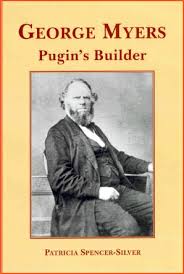
On 25th January 1875, George Myers died aged 72 in London. A Hull-born builder with a national reputation, particularly for his work with Pugin; he was involved in restoring Holy Trinity, in erecting the Wilberforce column, and in building the Royal Pavilion at Aldershot for Prince Albert.  His blue plaque is at 131 St George’s Road, London SE1. (b1803)

On 25th January 1886, Hull Philharmonic Society adopted a rule that evening dress be compulsory at concerts in the body of the hall.

On 25th January 1898, Mr Good and 19 other Hornsea gentlemen met at Fairfield’ Cliff Road, Hornsea, to form Hornsea Golf Club, and invited Capt F.C.S. Constable of Wassand Hall to become its President. The first ground was at Old Hall Fields.

George Myers

January 20th

On 20th January 1577, John de Tradescant of Cottingham broke into the York house of John Paschal with 2 associates; they were convicted, hanged and their bodies given to the surgeons of the city to be dissected and anatomized.

On 20th January 1595, Robert Cripling and William Lucas, servants to Sir Francis Clifford, bet another Londesborough servant, George Ingmire, that they could beat him in a race on foot from Londesborough to Market Weighton; they won.

On 20th January 1652, John Rogers, Mayor, and Hull aldermen Edward Wingate, Durand Hotham, and Lance Roper, asked the Court of Chancery for help in compelling Mr Stiles and other former Masters and Brethren of Hull Charterhouse, to appear before them and produce documents to account for corruption in the management of the Charterhouse Hospital. (Things appear to have changed after this: a report in 1668 showed an increase in the number of poor cared for from 12 to 40.)

On 20th January 1782, Dr Robert Levett, or Levet, of Westella,  was buried in Bridewell church yard, London. He had died, aged 79, apparently of a heart attack. He had lived in Dr Samuel Johnson’s household for 20 years. Earned a living as a servant, waiter and physician to the poor. Johnson wrote a poem ‘On the Death of Dr Robert Levet’. Tablet in Kirkella church. B 1703 Westella.

On 20th January 1968, Ross Cleveland of Hull set out from Hull for the last time for the North-West coast of Iceland.

St Andrews Dock memorial
Zebedee’s Yard

December 26th

On 26th December 1220, William de Forz II, Count of Aumale and Lord of Holderness was with King Henry III at the Royal court at Oxford; the King made an appointment William hoped to get; disappointed, he left Oxford for Lincolnshire, and began a rebellion, known as the war of Bytham.

On 26th December 1489, George Gusterd, weaver of Bishop Burton, claimed sanctuary at Beverley for the murder of a servant of Edward Barnaby, a gentleman. He did not know the servant’s name.

On 26th December 1495, William Middleton was threatened with a pole-axe by John of Cottingham, John of Wawne, Thomas Warde, Robert Bate, and (- ) Mykill, and was so afraid for his life that he took sanctuary in Wawne church and stayed there for 10 hours, afterwards leaving the area. He applied to the Chancery Court for leave to prosecute his attackers, but the outcome is not recorded.

On 26th December 1645, Rev Nicholas Osgodby was reported to be using the forbidden Prayer Book in secret.

On 26th December 1750, the chapter house roof of Howden church collapsed, to join the rubble of the chancel which had collapsed in 1696.

On 26th December 1890, residents of Hornsea had a fair on the frozen surface of the Mere, and a sheep was roasted on the ice.

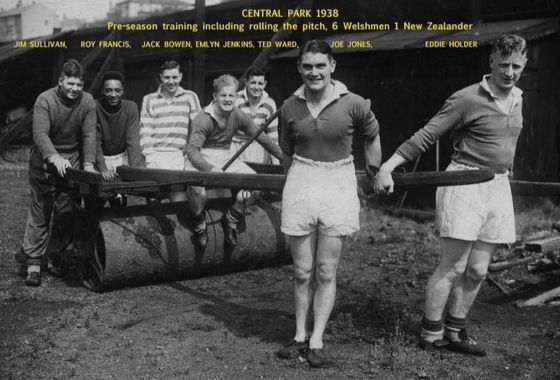
On 26th December 1955, Roy Francis played his last game after 6 years with Hull FC, and became UK’s first black professional sporting coach, and team manager 1971 to 1973.

roy-francis

November 18th

On 18th November 1620, the son of Thomas Peirson of Shipton (now Shiptonthorpe) hoped for a post in the kitchen at Londesborough House, the seat of Francis Clifford, Earl of Cumberland. Either he was not suitable, or there was no post available. He was given 12d costs as compensation. Posts were usually filled by personal recommendation, often from families who had worked in the house in the past.

On 18th November 1910, Benjamin Bolton, aged 48, of 5 Suffolk Terrace, Hornsea, died after falling from a moving train near Brough.  A prominent Hornsea citizen, member of the Conservative Party and member of Hornsea Music Union, he played cricket for Hull, Hornsea & Yorkshire and bowled out W G Grace. The inquest returned a verdict of accidental death. (b23.9.1862 Cottingham)

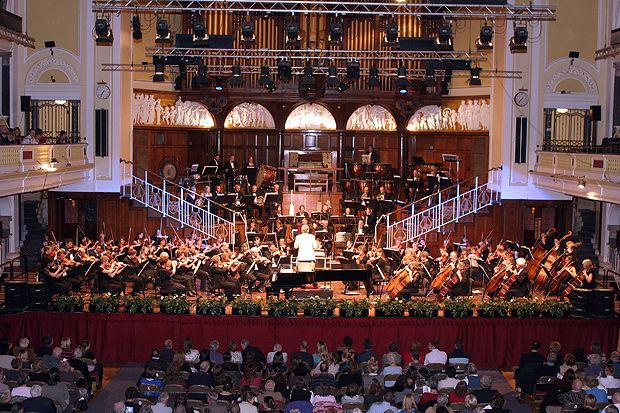
On 18th November 1938, Sir Henry Joseph Wood, founder of the Proms, resigned as conductor of the Hull Philharmonic Society after 15 years. The committee considered Sir Malcolm Sargent as his replacement, but he was not available. Basil Cameron was engaged. photo shows the orchestra in Hull City Hall

hull-philharmonic-orchestra-lst198215

November 3rd

On 3rd November 1451, Richard Anson was enrolled in post as Hull Collector of Customs, joining existing staff Richard Bille (Collector) and Richard Alanson (Controller).

On 3rd November 1947, George Cornelius (Con) O’Kelly died aged 61. He achieved gold for Great Britain in the 1908 Olympics in men’s freestyle wrestling. 12,000 people turned out to meet him when he returned to Hull.  His son, Con jnr, competed in the 1924 Olympic heavyweight boxing.

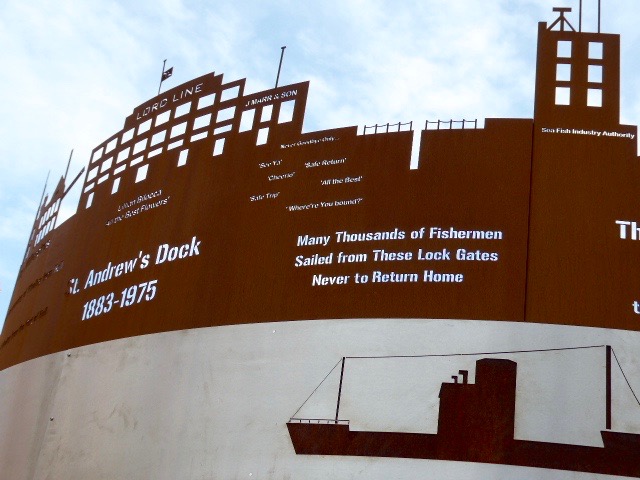
On 3rd November 1975, trawler owners ceased to use St Andrew’s Dock, Hull, which was closed to shipping after the collapse of Hull’s fishing industry.

St Andrews Dock memorial
Zebedee’s Yard

November 1st

On 1st November 1151, Adam, a monk from Fountains Abbey, is reported to have led a colony from the older abbey to found the new house of Meaux Abbey.

On 1st November 1831, the Scholfield and Clough Bank was the first bank in Howden declared bankrupt after 14 years. Partner Barnard Clarkson had to sell estates in Kirkham Abbey, Holme on Spalding Moor and Foggathorpe.

On 1st November 1834, Beverley youths lit a bonfire early, rolled lit tar barrels and threw fireballs into shops in Beverley marketplace.

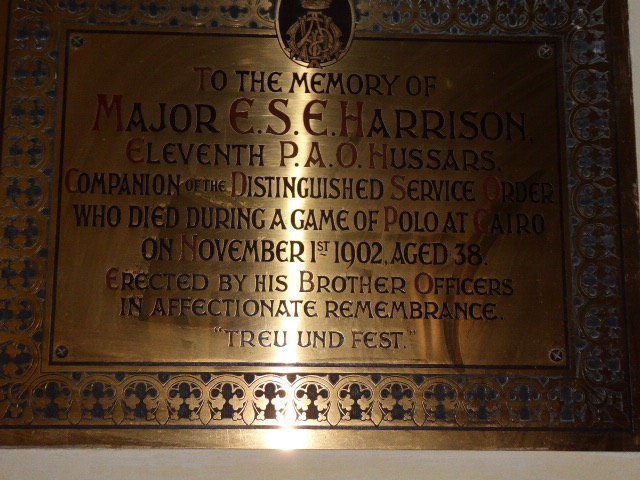
On 1st November 1902, Major E.S.E. Harrison, aged 38, Adjutant, 11thHussars (of the Broadley Harrison family of Welton House) died from a fall during a polo match at Ghezireh, Egypt. He served with distinction in the Boer War (DSO) and bequeathed to the Regiment the Bhurtpoor Sword, now in the Royal Hussars Museum, Winchester.

Major ESE Harrison

October 30th

de Ros arms

On 30th October 1472, an inquisition post mortem was called to verify the date of birth of Eleanor de Roos, of Breighton, daughter of Sir Robert Roos, in relation to inherited lands. George Layburn confirmed that she was born 55 years earlier, on 30thSeptember, a date he remembered because on the day of her birth one John Forder, fisherman, at Bryghton, in the water of Derwent, netted a big fish, of great length, with a head like a dog’s. 

On 30th October 1833, John Brown, 35, died in a field near Withernwick, during a prize fight against William Hackney, oyster vendor of Hull.  Brown, 18 lbs lighter than Hackney and 11 years older, fell after 1 hour and 36 minutes, in the 65thround, before 4p.m., and died at 10p.m. Hackney, his second Thomas Wilkinson, and Brown’s second, William Thompson, were found guilty at the inquest of wilful murder. A court had earlier found Thompson not guilty, and Hackney and Wilkinson guilty of manslaughter, and both were sentenced to 4 month’s hard labour at Beverley House of Correction.

On 30th October 2017, the Trustees of the Nafferton Feoffees Charities Trust submitted their annual report on a charity which originated with a bequest to the local poor from Thomas Robinson in 1698, and continued since that time, with additional bequests as recent as 1950.