March 19th

Rose Ellen Carr

On 19th March 1293, only 5 days after his valuation of Myton, King Edward I had new records of tenants drawn up, and ordered the improvement of roads to his new town of Kingston on Hull. The roads to Hessle, Beverley and York already existed.

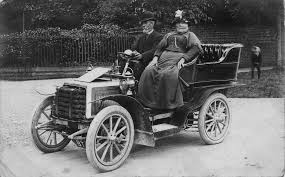
On 19th March 1913, Rose Ellen Carr died at Hornsea aged 70. Although illiterate, and facially disfigured, probably as the result of a kick from a horse when she was a child, she was ran a success business as a carrier and taxi owner, and was reputed to be able to carry a 16-stone sack of grain under each arm. She was also a passionate Primitive Methodist preacher.

On 19th March 1941, 92 Hull residents died in an air raid; 70 people were seriously injured.  This was the 12thraid since the beginning of the year. The National Picture Theatre on Beverley Road was hit; they were screening Charlie Chaplin’s ‘The Great Dictator’ at the time. photo below shows ruin of the cinema

On the same day, Mr & Mrs Severs and their 2 children were killed by a land mine at Highfield Farm, Hutton Cranswick. Other damage nearby probably intended for Hull included 70 high explosive bombs and incendiaries at Watton Abbey Farm, mostly in the fields, the destruction of Mrs Arnell’s grocer’s shop, and a fire in Hutton church.  Arthur Swift of Wawne Common Farm recorded a land mine, incendiaries and high explosives, which blew out all the windows and tiles off every building in the farm. The ghost of a Watton Abbey monk was said to have been seen that night.
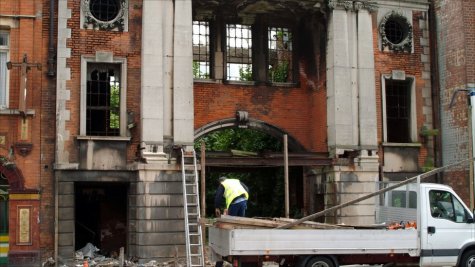
nationalpicturetheatre

March 16th

Kiplingcotes

On 16th March 1589, Robert Dalby (or Drury), priest, was executed for treason as a Catholic priest. Born in Hemingbrough, he was a Protestant minister, then ordained as a Catholic priest at Chalons in 1588, and was arrested on landing at Scarborough.

On 16th March 1660, the ship of Richard Williamson of Scarborough rammed the dolphin at the entrance to the River Hull, and was sunk. Trinity House was entitled to charge for repairs, but were lenient and only fined him £3.

On 16th March 1695, John Roxby & John Field (Ferriby) and Henry Watson and Benjamin Galland (Swanland) were chosen by the parish as Overseers for the Highways for the following year, Ferriby and Swanland being in the same parish, but choosing separate officers.

On 16th March 1879, Colonel Sir Tatton Benvenuto Mark Sykes, (usually known as Sir Mark) was born in Sledmere. He was a traveller, author, MP for Hull Central, advisor to the Government on Middle East affairs, and co-author of the Sykes-Picot Agreement, which partitioned the Ottoman Empire. (died of flu 16.2.1919)

On 16th March 1939, Jean Farrow of Hull was the first ever female winner of the Kiplingcotes Derby, on Masterful.

Sykes-Picotagmt1916


March 13th

On 13th March 1640, on instructions from the Duke of Northumberland, Sir Edward Osborne, for the Council in the North, arranged for 2,000 horse and men to be quartered in and around Hull, together with arms for them.

On 13th March 1801, Hull Trinity House sent a further 6 North Sea Pilots to Yarmouth to support the naval attack on Copenhagen.

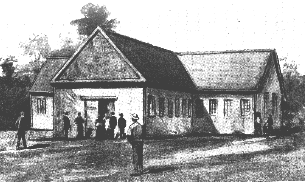
On 13th March 1827, Revd Richard Johnson died, aged about 71. Known as Australia’s First Preacher, he and his wife Mary joined the first Fleet, and he became chaplain to the prison colony of New South Wales in 1786. They created a school and both taught up to 200 children. He returned to Hull in 1800 and was curate to Rev Thomas Dykes at St John’s church for a time. (B Welton c1756) picture shows Australia’s first church, built by Richard Johnson in 1793

On 13th March 1942, Alexander Gallacher, 37, donkeyman, of Hull, died by enemy action, whilst a merchant seaman on board SS Destro, of Hull, off Tobruk.

first-church-Aus1793

March 11th

bearward

On 11th March 1214, Hawise, Countess of Aumale and heir of the Seigniory of Holderness, died single, having been widowed 3 times.  In 1212, she refused to marry for a 4thtime, for which she had to pay a fine to King John of 5,000 marks (about £1700) (some sources say she died before 8.3.1214)

On 11th March 1296, John Romanus (John le Romaine) Archbishop of York, died aged about 66 in the Archbishop’s Palace, Bishop Burton; he was buried in York Minster. He protected poor villagers in 1286 by ordering his parish priests in Holderness not to demand tithes from those earning 5shillings a year or less.

On 11th March 1522, Beverley bearward John Grene was tried for slander, by calling Percevall Robson, draper, a ‘Scottish bird’. Grene apologised for speaking in anger, and was rebuked and forgiven by Robson.

On 11th March 1616, Father Thomas Atkinson was hanged, drawn and quartered at York Castle at the age of 70. Born in the East Riding and trained in Douai as a Catholic priest, Atkinson spent 30 years as an itinerant priest in the Howden area, ministering to local Catholics, and hiding in their homes. He was captured in the Vavasour house in Willitoft. He was beatified 1987. A young man at the execution bought the priest’s stockings from the hangman, as a holy relic. Identified as a Catholic, he was imprisoned.

On 11th March 1858, Brother John of the Yorkshire Catholic Reformatory took some boys, for a treat, to slide on the ice-covered Market Weighton Canal; 5 boys fell through and, attempting to save them, he also fell through the ice. They all had to be rescued by passing bargemen.

On 11th March 1859 at 6a.m., ostler John Sissons was found hanged in one of the stables of the George & Dragon Inn, Aldbrough. He was described as an aged man of respectable family. The inquest verdict was of suicide due to temporary insanity.

March 3rd

On 3rd March 742AD, Yolfrida, daughter of Earl Puch, Lord of the Manor of South Burton (now Bishop Burton), died and was buried at Beverley. She was a nun at Bishop Burton monastery.

On 3rd March 1195, Hugh de Puiset died, aged about 70, at the Bishop’s Palace, Howden.  He was Bishop of Durham for over 40 years. He had in 1190 been imprisoned in his palace at Howden for overstepping his authority. He supported the chronicler Roger of Howden.

On 3rd March 1642, James Watkinson, jnr, Hull Alderman, attended his last council meeting; considered a Royalist, he was ‘invited’ to leave town in April, his High St house was commandeered and he moved to York.

On 3rd March 1932, Albert Digby Willoughby committed suicide by gas inhalation in a hotel in Helensburgh. Chair of the Hull Housing and Town Planning Committee, he was due to be the chief witness in the Thorpe Enquiry into corruption on Hull Council, to give evidence into the purchase of land for housing estates in Hull. He also faced trial for demanding money with menaces. He had charged commission to owners of land which he knew the council wished to buy.

On March 1984, Harry Hudson Rodmell died in Hull aged 97. He studied at Hull School of Art, and was a marine artist and commercial artist. A series of his marine posters is available for sale by Hull Museums. (b 28.5.1896)

Harry Hudson Rodmell_

March 2nd


Flambro 'Danish tower'

On 2nd March 1406, James, Duke of Rothesay, son of Robert III of Scotland, was on his way to sanctuary in France, when he was captured by pirates, held in the Danish Tower in Flamborough for a time, then handed over to English King Henry IV. photo shows the Danish Tower

On 2nd March 1829, Rev John Scott, vicar of St Mary’s Lowgate, with many others, spoke at a public meeting in Hull Market Place to consider petitioning Parliament against Catholic Emancipation. Daniel Sykes, Whig MP for Hull, did not believe these vocal agitators were representative of the majority in Hull.

On 2nd March 1905, Cuthbert Brodrick died in Jersey aged 83. Nationally renowned architect of Leeds Town Hall, Scarborough’s Grand Hotel, Hull Town Hall (demolished 1912) and Hull’ s Royal Institution. (b Hull 1.12.1821)


March 1st

On 1st March 1384, Michael de la Pole, Earl of Suffolk, left in his will instructions to found the Charterhouse Hospital which his father had begun, and endowed it with land, nominating Sir Richard de Killing as the first Master, and left money to support 13 poor men and 13 poor women, feeble and old.

On 1st March 1838, the steam packet ferry services from Hull to Selby, Goole and Gainsbrough were restored, after severe frosts disrupted them from the 2ndweek in January.

On 1st March 1916,  a new Royal Flying Corps Squadron, the No 47 Home Defence Squadron, was formed at Beverley, on the racecourse site.

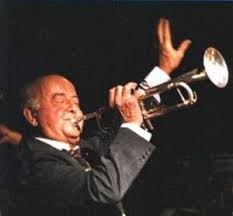
On 1st March 1921, Kenny Baker was born  in Withernsea. Musician and composer, considered the best British trumpeter, 3 times winner of best jazz trumpet player award, he played for Frank Sinatra, Sammy Davis, the Beatles, and on TV and film soundtracks, including James Bond scores, The Muppet show, and ‘The Beiderbecke Trilogy’. (died 7.12.1999) see photo

On 1st March 1990, Sister Agnes Walsh was recognised by Yad Vashem as one of 27 British people known as Righteous Among the Nations for her part in protecting Jews during the Holocaust. Trapped in France when the country was occupied by the Nazis, she gave refuge to a local Jewish family in spite of being in grave danger herself as a foreigner. She was born Clare Walsh in Hull in 1896 (died 1993).

Kenny Baker


February 29th

On 29th February 1912, Frederick Richard Soulsby, Master of the steamship Bayardo, was examined as part of a Formal Investigation in Hull Law Courts into the stranding and loss of his ship, returning from Gothenburg to Hull. The Bayardo went aground on 21st January on the Middle Sand in the Humber and could not be refloated. Soulsby was found to be at fault, and was severely censured.

On 29th February 1920, Ronald William Huzzard was born in Hull. A Quaker, he refused to be recruited during WW2, and was an active peace campaigner; he was the first General Secretary of Labour Action for Peace, and was awarded the Frank Cousins Peace Award by the TGWU. (died 30.12.1988)

On 29th February 1960, Hull’s last sidewinder trawler was launched at Beverley. The Arctic Corsair was built by Cook, Welton & Gemmell for the Boyd Line. It is now a museum run by volunteers, moored in the River Hull.

Arctic Corsair

February 26th

On 26th February 1381, Archbishop of York Alexander Neville announced his intention to visit Beverley, provoking a mass walk-out of Beverley clergy, most going to Lincoln or London. Neville replaced them with vicars choral from York but failed in his power struggle.

On 26th February 1552, Sir Michael Stanhope was executed on Tower Hill, London, for instigating rebellion, and conspiring to murder John Dudley, Duke of Northumberland. Stanhope was a Nottinghamshire knight, twice Governor of Hull, where the townspeople complained to the Privy Council of his high-handedness. He also acquired a great deal of land after the Dissolution, including in Sutton-on-Hull.

On 26th February 1671, Robert Constable, Viscount Dunbar of Burton Constable, was indicted at Middlesex Sessions Court with the murder of Peter Varnall and confessed. Hi accomplices were Peter Savage and John Fennick. It seems that Varnall was the innocent victim of young aristos on a drunken spree.

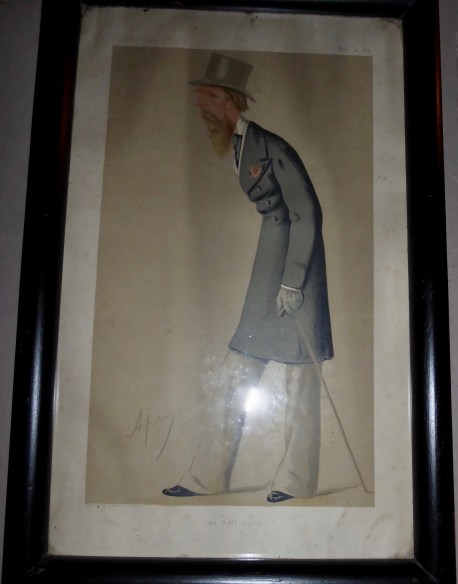
On 26th February 1869, Christopher Sykes, MP for the East Riding of Yorkshire, moved the Bill which later in the year became the Sea Birds Preservation Act, supported by Rev HF Barnes-Lawrence of Bridlington. Up to 232,000 seabirds and eggs were killed, often shot for sport, each breeding season. This earned Sykes the nickname ‘The Gulls’ Friend’. See cartoon below.  Link is to film of ‘climmers’. https://www.youtube.com/watch?v=B5ynIfnmVK0

On 26th February 1903, Martin Samuelson, marine engineer, died at Hessle, aged 78. Owner of Martin Samuelson & Co, of Neptune Street, Hull, and later Sammy’s Point, who built hydraulic presses, steel boilers and early steel vessels, and the North Bridge. Hull councillor from 1853, Sheriff 1857, Mayor 1858, first colonel of Royal East Yorkshire Volunteer Artillery and JP. (born 2.1.1825 in Liverpool).

On 26th February 1914, the Coverdale family of Hollym played a football match against another family with 11 sons, the Charlesworths of Scunthorpe. The Coverdales won 3: 0.

On 26th February 1935, Thomas Edward Lawrence, known as T.E.Shaw, (‘Lawrence of Arabia’) left Bridlington when discharged from the RAF; he had been supervising armour-plating power launches for target practice. Whilst in Bridlington, he had lived at the Ozone Hotel, Bridlington (now Royal Yorkshire Yacht Club). There is a sundial dedicated to him in South Cliff Gardens.

On 26th February 1942, Pilot F/Sgt Reginald Francis Robb and 5 crew of Wellington bomber Z8536 took off from RAF Pocklington and crash landed at Yapham due to an engine fire. They jettisoned their bombs, but were caught in the blast and all the crew were lost. 4 are buried in Barmby Moor.

Christopher Sykes MP

February 21st

On 21st February 1651, George Holroyd, vicar of Foston, was tried at York Castle and imprisoned for uttering a seditious sermon; he had preached against bloodshed on a day of thanksgiving for military and naval successes.

On 21st February 1803, Burnett’s Daily Shipping List reported that more than 100 small vessels got out of Hull harbour that morning and the night before.

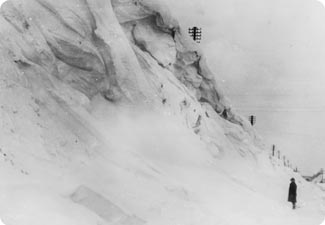
On 21st February 1947, 9 Jackson’s bread delivery lorries were trapped in a snowdrift overnight  on Arras Hill, Market Weighton. They were dug out by colleagues, who had to walk miles to reach them. The East Riding Council reported spending £3,000 a day to the Army to keep the roads open and get supplies to villages cut off by snow. photo shows Little Weighton railway cutting during that period

little weighton cutting 1947