January 20th

On 20th January 1577, John de Tradescant of Cottingham broke into the York house of John Paschal with 2 associates; they were convicted, hanged and their bodies given to the surgeons of the city to be dissected and anatomized.

On 20th January 1595, Robert Cripling and William Lucas, servants to Sir Francis Clifford, bet another Londesborough servant, George Ingmire, that they could beat him in a race on foot from Londesborough to Market Weighton; they won.

On 20th January 1652, John Rogers, Mayor, and Hull aldermen Edward Wingate, Durand Hotham, and Lance Roper, asked the Court of Chancery for help in compelling Mr Stiles and other former Masters and Brethren of Hull Charterhouse, to appear before them and produce documents to account for corruption in the management of the Charterhouse Hospital. (Things appear to have changed after this: a report in 1668 showed an increase in the number of poor cared for from 12 to 40.)

On 20th January 1782, Dr Robert Levett, or Levet, of Westella,  was buried in Bridewell church yard, London. He had died, aged 79, apparently of a heart attack. He had lived in Dr Samuel Johnson’s household for 20 years. Earned a living as a servant, waiter and physician to the poor. Johnson wrote a poem ‘On the Death of Dr Robert Levet’. Tablet in Kirkella church. B 1703 Westella.

On 20th January 1968, Ross Cleveland of Hull set out from Hull for the last time for the North-West coast of Iceland.
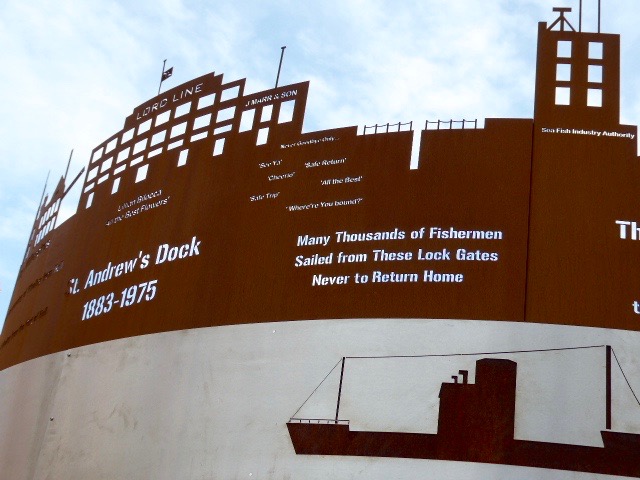
St Andrews Dock memorial
Zebedee’s Yard

January 16th

On 16th January 1518, John Frost of Twing on the Wold (presumably modern Thwing) claimed sanctuary at the church of St John, Beverley, for debt.

On 16th January 1537, John Hallam and about 20 men entered Hull on market day, planning to seize the town and re-start the Pilgrimage of Grace. Hallam was betrayed by a man called Fowberry of Newbald, and arrested.

On 16th January 1642, William Cavendish, Earl of Newcastle, was appointed by King Charles I as the Governor of Hull, but the Parliament’s choice of Hotham prevailed with the support of the Mayor and aldermen.

Pilgr Grace

January 13th

On 13th January 1096, King William Rufus found Count Odo, Lord of Holderness, guilty of a plot to kill the King and place his son Stephen (William I’s nephew) on the throne; Odo got off lightly with loss of his lands, and Stephen went on crusade. Holderness was granted to Arnulf, son of Earl Roger of Salisbury.

On 13th January 1621, Stephen Doughton left his job as servant of the Francis Clifford, Earl of Cumberland, and received 2 years’ arrears of wages, a total of £5 6s8d. The family was short of cash, and servants were often not paid until they left the Earl’s employ.

On 13th January 1954, the crew of Flamborough lifeboat Friendly Forester saved the 3 crew of the fishing coble Silver Line.

On 13th January 1968, a liferaft belonging to the St Romanus of Hull was found.

St Andrews Dock memorial
Zebedee’s Yard


January 3rd

On 3rd January 1293, a jury set up by order of King Edward I found that the Abbot of Meaux owned most of the town of Wyke on Hull, with Lords Furnivall and Vescy owning smaller parts. They found 74 tenants, and that the Abbot held court there, and that there was space used for fairs and a market.

On 3rd January 1319, King Edward II issued orders at Beverley for defence against the Scots.

On 3rd January 1629, Francis Clifford, Earl of Cumberland, during a typical festive period for the Londesborough household, 84 staff were feasted, with 315 extra dinners and 251 extra suppers being served to tenants and guests during Christmas Week. The York Waits provided musical entertainment, in addition to the house musicians. photo shows the site of the house

On 3rd January 1933, Harry Anderson, age 19, deckie learner, of Edith Grove, Brighton St, Hull, died with 9 other crew of the trawler Endon (H161), after vessel found abandoned after a collision. Trawler Stronsay picked up his body, but superstition about having a corpse on board led them to return his body to the sea.

Londesborough Park

December 29th

On 29th December 1594, Sir Francis and Lady Clifford began a tradition in their new house  (Londesborough Hall) of Christmas and New Year feasts, entertaining 93 staff and local people, tenants from different villages on the estate on different days, to meals until 6thJanuary.

On 29th January 1611, they paid for entertainment from visiting puppeteers, 2 men and a woman, who called at the great house.

On 29th December 1817, Mary Woodall married John Lewis Friday, private in the 33rd (WR) Regiment of Foot, a  Waterloo veteran, who was probably born in Mozambique.

On 29th December 1829, Hedon MP Col John Baillie informed the Mayor of Hedon that the Post Office would have a daily post from Hedon instead of 4 days a week.

On 29th December 1881,  William Papper, 15, was murdered aboard fishing smack Rising Sun, in the North Sea, by Osmond Otto Brand, skipper of the boat, after prolonged mistreatment amounting to torture. Brand was found guilty of murder at Leeds Assizes and sentenced to death. Richard Rycroft was sentenced to 3 months’ hard labour for assault.

On 29th December 1898, Elsa (formerly Elfie) Gidlow was born in Hull. Lesbian poet known for On A Grey Thread 1923. Her family emigrated to Canada when she was 6 (d 8.6.1986)


December 21st

wm constable

On 21st December 1633, the Duke of Cumberland’s staff bought supplies of oysters (600 at 6d per 100) for Christmas at Londesborough House on his behalf when he was in York on business.

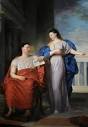
On 21st December 1721, William Constable was born at Burton Constable. He inherited the Constable estate, and is chiefly remembered for restoration work on the Hall, and as an amateur scientist and collector of art and artefacts; his Cabinet of Curiosities may be the most complete in any stately home. He became grossly overweight, suffering from gout, probable hypochondria and addiction to medication containing opiates. (d 18.5.1791) see photo with his sister Winifred

On 21st December 1824, Richard Arthur Worsop of Howden Hall recorded in his diary that he supported a charity which had been continued by the owners of the Hall since the 17th Century; he gave 6d each to 40 poor people of the parish, and a bushel each of wheat and coals to a further 10. He recorded several other charitable gifts in his diary, including a sheep to the workhouse.

On 21st December 1838, Hull banker Joseph Robinson Pease established, and was elected President of, Hull Labourers’ Friendly Society, having established a society in Hessle which had built a cottage there.  There were already dozens of friendly societies in Hull by this time, and this new group may have been more of a building society than a self help group. Pease was certainly no democrat (he described democracy as a ‘pestilent curse’).

On 21st December 1857, Henry Smith Bright, manager, Hull Cotton and Flax Mills, was found guilty at York Assizes of forging deeds of transfers of shares, and sentenced to 6 months’ penal servitude. His actions appear to have precipitated the closure of the Hull Flax and Cotton Mills and the bankruptcy of the partners in the Harrison Watson & Co bank on 24.9.1857.

On 21st December 1957, Edward Benn, 43, bosun, of Hull Rd, Hedon, died as result of accident aboard Hull trawler Cape Palliser off Iceland.

December 18th

On 18th December 1594, Katherine Johns, chambermaid to the Clifford family, on behalf of Lady Grissell, paid 2s to the Beverley waits, presumably for performing at Londesborough House.

On 18th December 1612, Sir Francis Clifford bought 30 young elm trees to enhance the woodland of the house; it took 3 men with a cart and 5 horses to transport them.

On 18th December 1745, Thomas Owst of Halsham, a ‘popish recusant’, was given licence to travel to Drax to see his wife, who was ill. Catholics were forbidden to travel more than 5 miles from home without permission.

On 18th December 1824, Sir John Hall was born in Hull. Emigrated aged 27 to New Zealand, where he became the 12thPrime Minister, and moved the Parliamentary Bill that gave women the vote in 1893. (d 25.6.1907, Christchurch NZ) see photo

On 18th December 1919, the Clerk to the Hull Local Profiteering Committee, wrote to the Board of Trade, suggesting that an inquiry be held into possible profiteering by Hammonds Ltd. They had sold to Mr E.R. Kidby of Plane Street, 4 knitting needles for 1s 01/2d, on which Hammonds said they made 1 1/2d profit. The complaint was not upheld, as the needles were bought before the Profiteering Act 1919 came into force, but the BoT suggested making another purchase, and they could then investigate.

Sir John Hall


December 14th

Ebberston Yorks Aelfrids Memorial


On 14th December 704, the Anglo Saxon Chronicle records, King Aldfrith of Northumbria died in battle at Ebberston and was buried at Little Driffield. A man of great learning, educated for a career in the church, but he succeeded to the throne when his brother died. A memorial to him, called King Alfred’s Stone, is at Ebberston, North Yorks. Driffield may have been a royal seat of the Saxon kings. (sources vary as to his exact dates)

On 14th December 1610, an anonymous tinker was invited in to Londesborough House, home of the Earl of Cumberland, to mend broken pans and was paid 3s4d by the clerk of the kitchen.

On 14th December 1660, surgeon Joseph Thornnton was granted a licence to practice in Hull, after being invited to move from Great Horton, West Riding, to deal with a typhus outbreak. 18 people signed a testimonial to his effectiveness.

On 14th December 1775, Hull Corporation delegated its responsibility to provide a town dump to the official Town Scavenger; the condition of the Spring Ditch soon gave cause for concern, and in 1777 a bank was built to stop dung and rubbish entering the water.

December 10th

On 10th December 1621, Thurley Cammiskish, servant at Londesborough House, was given £10 p.a. for life when he left the employ of the Earl of Cumberland; this may have been more than he earned, but he would no longer receive board, lodgings, clothing and perks of the job.

On 10th December 1889, James Reckitt public library (which bears the name of its founder and donor), opened – Hull’s first free library.  Reckitt donated over 8,000 books, and gave the library to Hull Corporation in 1892. The building was designed by Sir Alfred Gelder.

On 10th December 1920, Gerald Thomas was born in Hull. Film director, mainly known for directing 31 Carry On films. (d 9.11.1993)

Carry On


December 2nd

On 2nd December 1614, a woman bone-setter from South Dalton set the leg of John the gardener at Londesborough House after he had broken it in a fall from a horse. The Earl of Cumberland paid the costs of his servants’ medical treatment.

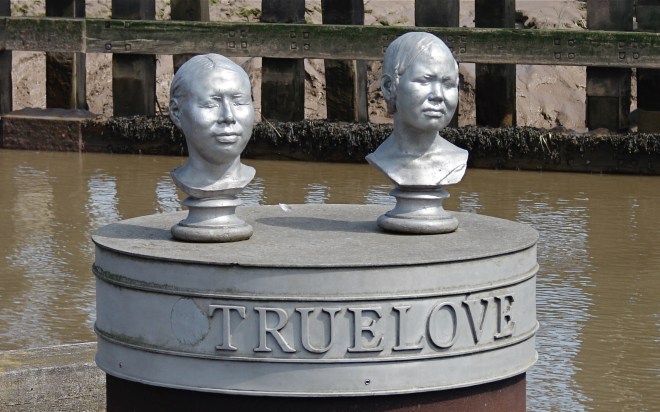
On 2nd December 1847, Memiadluk and Uckaluk, of Cumberland Sound, Greenland, gave the first of several exhibitions of their traditional clothing, kayak and hunting equipment on their British trip to raise money and awareness of the plight of their people. Greenlanders were being encouraged to use modern hunting equipment, but supplies were irregular with no permanent British settlement. Photo shows their statues at the side of the River Hull.

On 2nd December 1985, Philip Larkin, poet and librarian, died in hospital in Cottingham of oesophageal cancer at the age of 63. Librarian, University of Hull 1955-85. CBE, Companion of Honour., Queen’s Gold Medal for Poetry. (born 9.8.1922 Coventry)


truelove.JPG