February 16th

On 16th February 1803, Burnett’s Shipping List reported the arrival of 4 ships (3 from (King’s) Lynn and 1 from London). The Pearl sailed, destination not given.

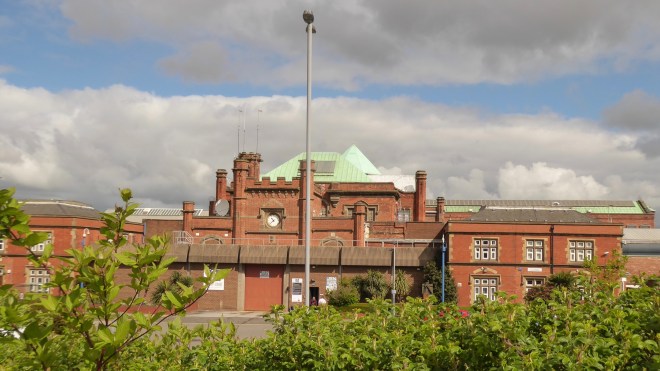
On 16th February 1821, Vincent Knowles Walker, 48, battered, stabbed and kicked to death Lydia Wills White, on her doorstep at 37 Nile Street, Hull. She was sheltering her friend Mrs Walker, who had separated from her drunkard, violent husband. Walker was hanged in Hull Hedon Road Gaol.Prison

February 15th

On February 15th 1518, Richard Jakson of Hogett on the Wolds (presumably modern Huggate) claimed the sanctuary of St John’s church, Beverley, for debt.

On February 15th 1530, John Gillco, labourer of Painsthorpe, fled to his parish church in Kirby Underdale from York, where he had assaulted and killed John Notyngham at 4p.m. the previous day. A coroner’s inquest the same day reported that the killing took place within the liberty of the monastery of the Blessed Mary.

On February 15th 1793, a contemporary report said a horseman galloped into Hull with urgent news that men had landed near Patrington from a privateer. Nervous of the risk of French invasion, part of the Corps of Invalids stationed at the Citadel and several volunteer seamen were immediately dispatched to meet the enemy. A 2ndmessenger met them on the road near Hedon, and informed them that instead of French enemies, those who had landed were the crews of several colliers, who had left their ships to avoid the press gang. HM Sloop of War, The Queen, was lying at anchor in the Humber.

On February 15th 1898, James Ashton, 39, skipper, of Witty St, Hull, was lost with his crew when trawler European foundered in the North Sea.

press-gang

February 12th

On 12th February 1519, tailor William Bowman of Sewerby claimed anctuary in Flambrough parish church after assaulting William Johnson. At a coroner’s inquest at Bridlington 2 days later, the jurors reported that Bowman assaulted and killed Johnson with a staff on the king’s road between Sewerby and Bridlington, then fled to ‘Flaynburgh’. The King’s Bench declared Bowman an outlaw on 27.12.1519.

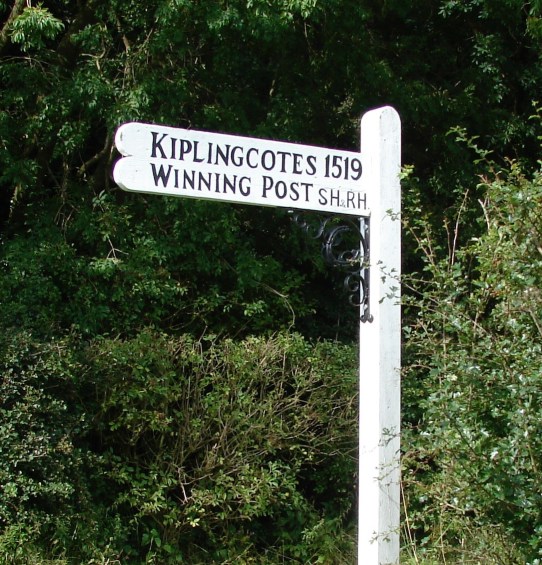
On 12th February 1556, in evidence given in court at York, Thomas Carter of Helperthorpe, 40, herdsman, made the first recorded reference to England’s oldest horse race, Kiplingcotes Derby.

On 12th February 1644, Sir William Constable of Flamborough led Parliamentary troops to capture the Royalist garrison at Bridlington, and took 159 prisoners. On their way back to Hull, they won a skirmish against the Royalists at Driffield.

On 12th February 1687, John Johnson, Rector of Cherry Burton recorded in his diary an earthquake at 3.45 on a Sunday afternoon.

Kiplingcotes

February 9th

On 9th February 1803, Burnett’s Shipping List reported the arrival in Hull of the Minerva, captain’s name McBride, from New York. 4 ships left, 2 for Shields, 1 for Rochester and 1 for Berwick.

On 9th February 1826, Joseph Robinson Pease, banker of Pease & Liddell, reported in his diary on rumours of local banks about to close, and alleged that the rumour mongers intended to drive down the value of the businesses in order to buy them up cheaply. The panic of 1825 eventually resulted in the closure of 6 London banks and 60 banks elsewhere in the country.

On 9th February 1828, Richard Arthur Worsnop of Howden Hall, Howden, recorded in his diary the celebrations for the first street lighting in the town. Church bells rang, and a band paraded round the streets. The lamps and stands were acquired second-hand from Doncaster, which had just installed gas lighting.

On 9th February 1896, 34 degrees of frost were recorded in Cottingham. (=-19deg C)

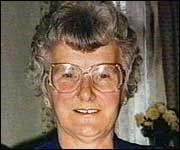
On 9th February 1995, Margaret Wilson, 66, housewife, was walking near her home at Burton Fleming when a car stopped, a man got out, and assaulted her. Her throat was cut and she died shortly after.  Derek Christian, 32, of Bridlington, was charged with her murder, found guilty and is currently serving a life sentence. Doubts have been cast on the validity of the verdict.

Margaret Wilson

February 5th

On 5th February 1538, widow Mabel Brygge, 32, servant of Holmpton, was examined by an enquiry headed by Sir Ralph Ellerker the younger. She was alleged to have carried out a ‘black fast’ with the aim of injuring King Henry VIII and the Duke of Norfolk, in relation to the King’s divorce and the Reformation. She was executed at York, along with John Dobson, vicar of Muston, and John Ainsworth, priest, who had also spoken out against the royal supremacy and Act of Succession.

On 5th February 1856, Humphry Sandwith, junior, MD, aged 34, had a public breakfast given in his honour as a war hero at Royal Station Hotel Hull.  He gained the Orders of St Stanislaus, Nishan Iftahar and Mejidie, and French Legion of Honour in the Crimean War. He was head surgeon at Hull General Infirmary 1847-48. Author of a number of memoirs, as well as 3-volume novel “Minsterborough’ about his upbringing in Beverley.

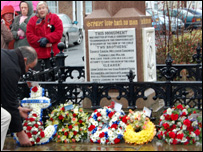
On 5th February 1909, George Gibbon, Melchoir Chadwick and Thomas Leng Major, fishermen, lost their lives attempting to rescue the crew of the coble Gleaner when it capsized. Their own boat also capsized, and all 6 lives were lost. A monument to this ‘Conspicuous Act of Bravery’ is in the village centre.


flambro

February 4th

On 4th February 1516, John Holme, labourer, of Ottringham, claimed sanctuary at the church of St John ‘for divers felonies’.

On 4th February 1634, William Kitching, 39, of Little Driffield, and 9 other men, were hanged at York for rioting at Hull about corn, for demolishing the dwellinghouse of Edward Cooper, and for stealing clothes. None of those convicted were from Hull.

On 4th February 1783, Hull Trinity House accepted the proposal of Mr Blaydes of Hull to build a yacht for £500; they used the yacht Humber for 23 years.

On 4th February 1809, Ebenezer Bettison and 2 others, of Hull, drowned during a storm when going in a boat to secure a lighter which appeared to be in danger.

On 4th February 1821, Thomas Wilkinson Wallis was born in Hull. The son of a cabinet maker, he became a wood carver. He was a pprenticed to Thos Ward in Waterworks St, Hull, and trained at the Mechanics Institute. His work can be found in the Victoria & Albert Museum, London. photo shows one of his carvings

On 4th February 1900, Sir Leo Schultz (Joseph Leopold Schultz) was born in Hull. He was  the Leader of Hull City Council from 1945-79. Was awarded the OBE in 1946 for war work, including as an air raid warden, and for his campaign to provide all households with a bomb shelter. He was knighted in 1966 for services to local government. Honorary Doctor of Law Hull University 1979. d 1991. photo above

On 4th February 1968, Hull trawler Ross Cleveland capsized and sank with all but 1 of the 20 crew. An enquiry concluded the ship was unable to cope with ice build-up. The wreckage was located in 2002.

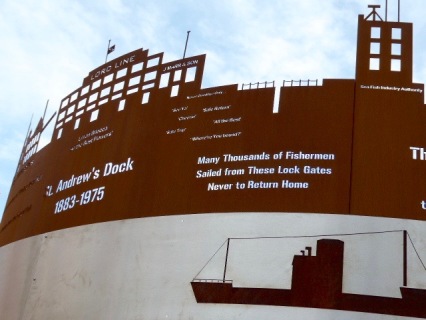
St Andrews Dock memorial

January 30th

Mary Ward

On 30th January 1499, Robert Colstone of Hull and Marmaduke Pateson of  Flambrough claimed sanctuary at the church of St John, Beverley – Colstone for debt and Pateson for the murder at Flambrough of John Mottows.

On 30th January 1645, Mary Ward died aged 60. A cousin of the Wright brothers of Welwick, she spent 5 years living there with her grandmother and spent a further 6 years at Osgodby. She founded the Institute of the Blessed Virgin Mary and championed women’s education. She was declared Venerable in 2009. (b23.1.1585 Mulwith Yorks) see photo

On 30th January 1901, Beverley Mayor Elwell proclaimed the accession of King Edward VII to a large crowd at the Market Cross, despite bitterly cold weather and a snow storm.

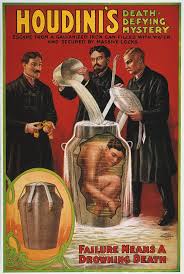
On 30th January 1913, Harry Houdini, escapologist, performed at the Palace Theatre, Hull. He escaped from a canvas sea bag and straps; the challenge was signed by seamen Dan Morris, Tom Carr and Robert Mason.

On 30th January 1983, Captain Derek Wharton of North Sea Ferry Norland spent the day sailing back and forth in Bridlington Bay, having arrived back from service in the Falklands War a little too early for the homecoming celebration planned for 1stFebruary.

Houdini copy


January 28th

On 28th January 1450, William de la Pole, Duke of Suffolk, was arrested and imprisoned for treason. King Henry VI saved him from execution and banished him for 5 years. On his way to Calais, he was captured and reportedly had his head cut off with a rusty sword.

On 28th January 1515, William Jakson of Belby, near Howden, claimed sanctuary at the church of St John, Beverley, for the murder of John (rest of name blank in the register).

On 28th January 1525, Robert Smyth, husbandman of Anlaby, claimed sanctuary at the church of St John, Beverley, for the murder of Robert Ekopp alias Hikkopp.

On 28th January 1700, Abraham de la Pryme, curate of Holy Trinity, Hull, reported of Swine that: ‘the town has formerly been very large and handsome, … though it is very mean and inconsiderable, nobody inhabiting the same but a few country clowns’.

On 28th January 1829, William Hurr of Roos was admitted to the Sculcoates Refuge for Pauper Lunatics; on 21 July that year his funeral is recorded.

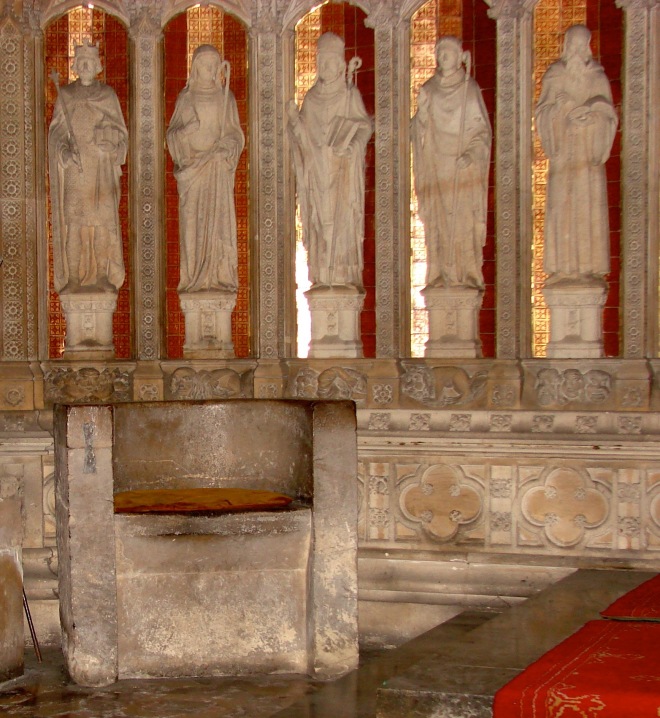
minster - frith stool.JPG

January 27th

Pilgr Grace

On 27th January 1332, Sir John de Sutton was summoned to Parliament by writ and thereafter become Lord Sutton of Holderness.

On 27th January 1537, John Hallam and others captured during the attempt by the Pilgrimage of Grace to seize Hull were examined by local justices; Hallam and 2 others were condemned to death and the rest awaited the arrival of the Duke of Norfolk for a decision on their fate.

On 27th January 1599, the Earl of Pembroke’s Players arrived at Londesborough House for a week performing plays for the Shrovetide period, for payment of £15shillings.

On 27th January 1645,  14 Hull burgesses gave evidence that Thomas Swann was  not a Royalist, and should not have his property sequestered, but in fact was owed money by Parliament because his new house was demolished to build a defences for the town. His appeal failed.

On 27th January 1882, the Prince of Wales, the future King Edward VII, joined the Holderness Hunt at Brantinghamthorpe, which recorded 1,400 horsemen, 4,000 on foot and 1,000 in carriages.

On 27th January 1901, Joseph Smith of Hull, on board SS Friary, was the 7thand last Hull passenger to have died of pneumonic plague contracted in the Mediterranean. He is commemorated in the columbarium at Hedon Road Cemetery.

On 27th January 1924, Brian Norman Roger Rix, Lord Rix of Whitehall in the City of Westminster and Hornsea in Yorkshire,  was born in Cottingham. He was a comic actor, specialising in Whitehall farce; awarded CBE for his charity work; campaigner for people with learning disability. He was also awarded 8 honorary degrees, 5 fellowships and many other awards, and was the first Chancellor of the University of East London, and vice Lord Lieutenant of Greater London. d20.8.2016


January 26th

St Andrews Dock memorial
Zebedee’s Yard

On 26th January 1509, William Ivenson, Hull tailor, claimed sanctuary at the church of St John, Beverley for debt.

On 26th January 1516, John Catton, husbandman, of Allerthorpe, claimed sanctuary at the church of St John, Beverley, for felony.

On 26th January 1884, former pupil of Hull Trinity House School John Blakeston drowned after falling into the sea while reefing sails on the Barque Cape City off Rosario, Cape Horn.

On 26th January 1926, Ronnie Hilton was born Adrian Hill  in Hull. A singer, had 9 top 20 hits in the 1950s, and was also a radio presenter and pantomime artiste.  d 21.2.2001

On 26th January 1968, Hull trawler Kingston Peridot made her last contact by radio. See 10.1

On 26th January 1972, students at Hull University held a sit-in, called The January 26 Movement, in the Students Union building. It was part of an anti-apartheid campaign to persuade Hull University to divest itself of shares in Reckitt & Colman, which had extensive interests in South Africa and Rhodesia. The sit-in ended on 7th February.

ronnie-hilton-a-windmill-in-old-amsterdam-1965