March 12th

On 12th March 1511, Elizabeth Nelson, spinster of Pollington, claimed sanctuary at the church of St John, Beverley, for felony and murder of an infant (possibly her own child) at Hull.

On 12th March 1553, on the surrender to King Edward VI of the castle and fortifications at Hull, the King granted to Ralph Constable former monastery lands in Swine, Newton Grange, and all the extensive lands formerly belonging to the dissolved Hospital of St Sepulchre, Hedon. He was also the tenant of the site of Hull Charterhouse.

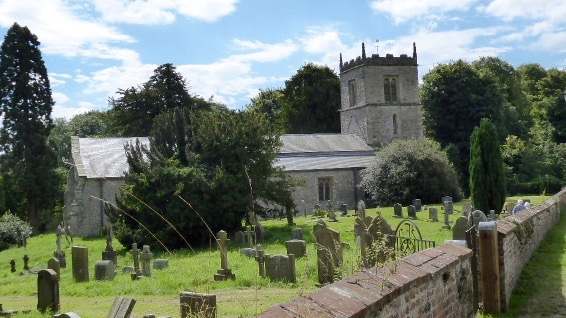
On 12th March 1622, Josias Lambert, schoolmaster, left the employment of Francis Clifford, Earl of Cumberland, after 9 months teaching ‘scholars’, which may have included some of the Londesborough House household staff and/or their children. The Earl also supported the village school at (Market) Weighton. photo shows Londesborough church

On 12th March 1647, Sir Matthew Boynton died at Bainton aged 56. Sheriff of Yorkshire twice, MP twice (once for Hedon and once for Scarborough), 1stBaronet, of Barmston. He helped capture Sir John Hotham when he intended to surrender Hull to the Royalists. His son Colonel Matthew Boynton was killed fighting for the Royalists in the Battle of Wigan Lane in 1651. (bapt 26.1.1591)

On 12th March 1697, the Brethren of Hull Trinity House charged almost £21 for the launch of the 60-gun Royal Navy ship HMS Kingston from Hessle. Work included laying buoys from the launching site to Hull.
Londesborough

March 5th

On 5th March 1514, John Taillour of Beverley claimed sanctuary at the church of St John, Beverley, for ‘the security of his body’, but the register does not state who was threatening him, or why.

On 5th March 1642, Queen Henrietta Maria stopped one night at the Manor House, Burton Fleming. She was still on her way to York to join her husband, Charles I, with arms from Holland. She is then said to have stayed 2 weeks at Boynton with the Stricklands. Luckily, Sir William, Parliamentary MP for Hedon, was away in London.

On 5th March 1646, Hull merchant Leonard Scott was fined £74 10s as a member of the Royalist army (a ‘delinquent’) in order to recover his goods which had been sequestered by Parliament.

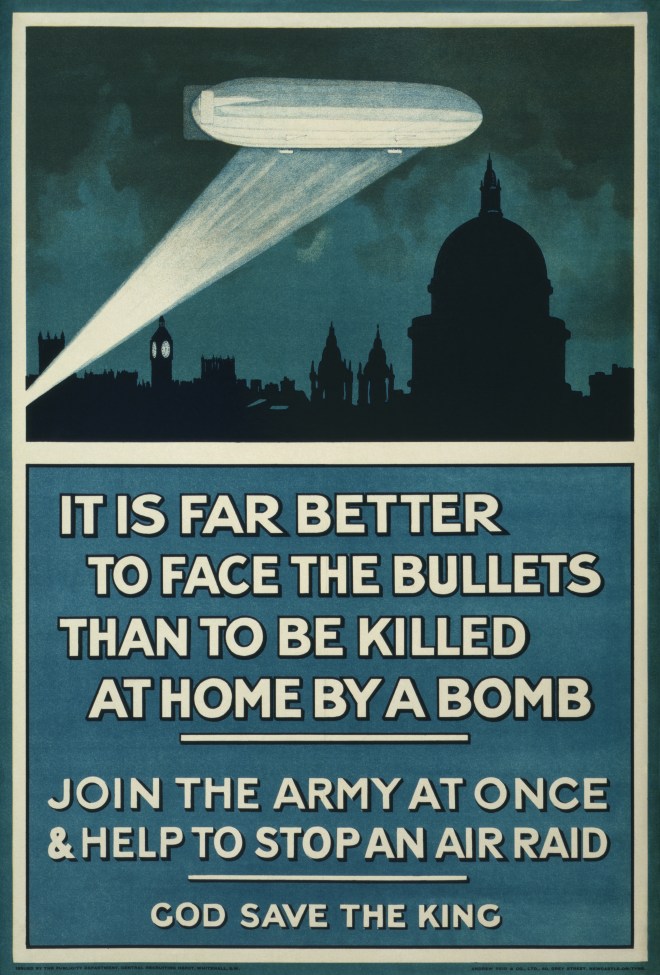
On 5th March 1916, Martha, Ethel and Mira Ingamells of Linnaeus St, Hull, were among the 18 people who died in the 2ndZeppelin raid on Hull; 60 people were injured. Queen Street was hit, as were Linnaeus St., Porter St., Church St and Selby St, and Earle’s shipyard. A mob afterwards smashed up a vehicle belonging to the Royal Flying Corps, presumably in anger at their failure to defend the town, resulting in hasty installation of 7 guns, and the general strengthening of defences around the Humber. Bombs were also dropped on Gembling and Woodmansey.

WWI Zeppelin

March 3rd

On 3rd March 742AD, Yolfrida, daughter of Earl Puch, Lord of the Manor of South Burton (now Bishop Burton), died and was buried at Beverley. She was a nun at Bishop Burton monastery.

On 3rd March 1195, Hugh de Puiset died, aged about 70, at the Bishop’s Palace, Howden.  He was Bishop of Durham for over 40 years. He had in 1190 been imprisoned in his palace at Howden for overstepping his authority. He supported the chronicler Roger of Howden.

On 3rd March 1642, James Watkinson, jnr, Hull Alderman, attended his last council meeting; considered a Royalist, he was ‘invited’ to leave town in April, his High St house was commandeered and he moved to York.

On 3rd March 1932, Albert Digby Willoughby committed suicide by gas inhalation in a hotel in Helensburgh. Chair of the Hull Housing and Town Planning Committee, he was due to be the chief witness in the Thorpe Enquiry into corruption on Hull Council, to give evidence into the purchase of land for housing estates in Hull. He also faced trial for demanding money with menaces. He had charged commission to owners of land which he knew the council wished to buy.

On March 1984, Harry Hudson Rodmell died in Hull aged 97. He studied at Hull School of Art, and was a marine artist and commercial artist. A series of his marine posters is available for sale by Hull Museums. (b 28.5.1896)

Harry Hudson Rodmell_

February 23rd

On 23rd February 1643, Queen Henrietta Maria was woken at 4a.m. in Bridlington Quay by a bombardment of the house by Parliamentary ships; she sheltered in a ditch until the ebb tide moved the ships out of range.

On 23rd February 1724, William Mason was born at Holy Trinity vicarage, Hull. A poet, biographer, composer and garden designer, in 1785 he was  William Pitt the Younger’s  choice as Poet Laureate,  but he refused the post. He is commemorated in Poets’ Corner, Westminster Abbey, and in Hull with a cream plaque. (d 7.4.1797) see picture below

On 23rd February 1830, a report in the Hull Packet said that Revd John Earle’s boarding school at Driffield had been relocated to Watton Abbey, the stately home of the Legard family. It remained there for 10 years, and Earle took on the living at Watton church.

On 23rd February 1919, Company Sgt Major Kelly died of flu in Hull Royal Infirmary. He had been discharged from the East Yorkshires a week before, after serving in WW1 from September 1914. He is buried in Hedon Road cemetery.

Wm Mason

February 18th

Pilgr Grace

On 18th February 1537, Sir Francis Bigod entered Beverley with 3-400 men on the renewed Pilgrimage of Grace.

On 18th February 1620, The King’s Players performed 5 plays at Londesborough House over a 4-day period at Shrovetide, for the Earl and Countess of Cumberland. The Cliffords regularly had entertainment at the house, hosting 13 different companies of players, and many musicians. Shakespeare had been the company’s leading playwright (he died in 1613).

On 18th February 1657, Sir Henry Slingsby, a Royalist prisoner in the Hull blockhouse, attempted to bribe Captain John Overton and incite the soldiers to go over to the King. Ralph Waterhouse, commander of the South Blockhouse, was also approached by Slingsby, who said that King Charles had offered him a commission, and said 600 men were at Paull ready to march into Hull. Slingsby was executed in 1658.

On 18th February 1786,  Elizabeth Dearing, aged 20, died in Fitling, cause unknown. She was the 3rdgeneration of the Dearing family to be recorded in the Humbleton parish register as Papist. Later generations who died there are not so described.

On 18th February 1945, Thomas Sheppard died aged 68 in Hull. He was a self-taught geologist, archaeologist and prolific author. He devoted 40 years of his life to Hull’s museums, abolished admission charges in 1902 and increased visitors to 2,000 per week. (born 2.10.1876 in South Ferriby) see photo

Thomas Sheppard Monster Footprint

February 17th

On 17th February 1646, Christopher Hildyard of Winestead was fined £109 as a former Lieut – Col in the Royalist army (a ‘delinquent’) in order to recover his goods which had been sequestered by Parliament.

On 17th February 1803, Burnett’s Daily Shipping List recorded that no ships arrived or departed in Hull on that day (apart from the ferry to Barton).

On 17th February 1821, Robert Sharp junior, an unemployed bricklayer’s labourer from Hull, gave evidence in the hearing of a petition in the House of Commons. Colonel John Baillie, MP for Hedon, was accused of bribery and corruption in the 1820 election. Sharp claimed to have spent the 2 weeks prior to election day at the Charles Saunders Inn (now the Shakespeare), eating and drinking at the expense of the candidate and finally, on election day, receiving 2 guineas from James Iveson, Baillie’s agent, for making himself ‘generally useful’.  William Mason also gave evidence of being offered 12 guineas by James Iveson, political agent for Col John Baillie, if he would vote for him. Baillie’s election was confirmed.

On 17th February 1961, Angela Eagle, MP and Maria Eagle MP were born in Bridlington. The Labour MPs are the first set of twins to sit in the House of Commons.

Eagle MPs copy


February 12th

On 12th February 1519, tailor William Bowman of Sewerby claimed anctuary in Flambrough parish church after assaulting William Johnson. At a coroner’s inquest at Bridlington 2 days later, the jurors reported that Bowman assaulted and killed Johnson with a staff on the king’s road between Sewerby and Bridlington, then fled to ‘Flaynburgh’. The King’s Bench declared Bowman an outlaw on 27.12.1519.

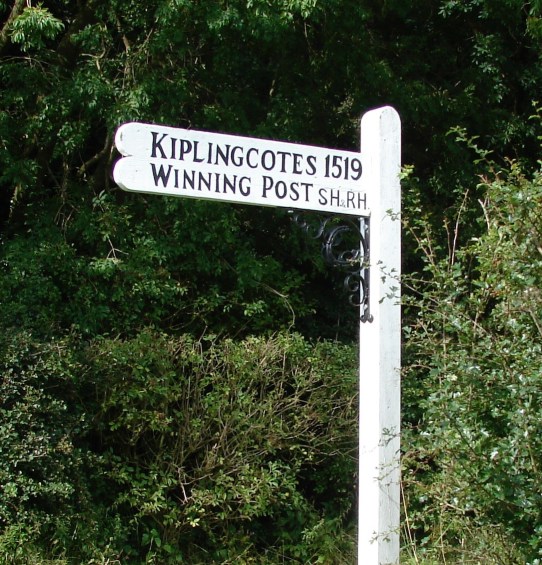
On 12th February 1556, in evidence given in court at York, Thomas Carter of Helperthorpe, 40, herdsman, made the first recorded reference to England’s oldest horse race, Kiplingcotes Derby.

On 12th February 1644, Sir William Constable of Flamborough led Parliamentary troops to capture the Royalist garrison at Bridlington, and took 159 prisoners. On their way back to Hull, they won a skirmish against the Royalists at Driffield.

On 12th February 1687, John Johnson, Rector of Cherry Burton recorded in his diary an earthquake at 3.45 on a Sunday afternoon.

Kiplingcotes

February 10th

On 10th February 1644, Sir William Constable of Flamborough led Parliamentary troops from Hull in routing the Royalists at Kilham.

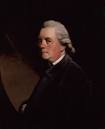
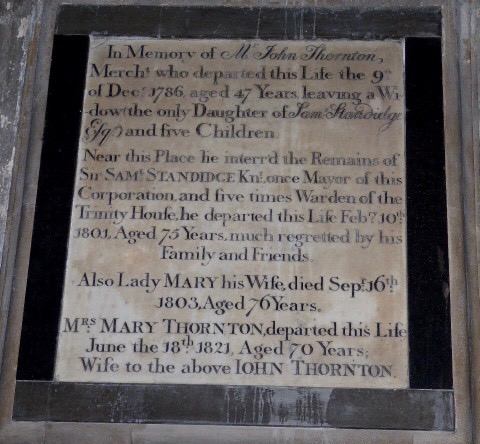
On 10th February 1801, Sir Samuel Standidge, aged 75, died at Thorngumbald. He was born at Bridlington, and at age 19 was taken prisoner by privateers and taken to Rhode Island. Later in life he traded goods to Rhode Island and bought lands in Holderness, building New York Farm, Preston, to mark his financial success in New York.  He is credited with restarting the Hull whaling industry, acting as master of his own whaler.  Sheriff of Hull, Mayor, and warden of Hull Trinity House 5 times. His memorial is  in St Mary’s Lowgate, Hull.

On 10th February 1866, 6 days after running aground on the Isle of Juist, Germany, 15 people were rescued from the rigging of the ‘Excelsior’ of Hull, where they survived without food and water. Mrs Newton was considered a hero for her support of her fellow survivors.

On 10th February 1871, at least 70 mariners lost their lives in Bridlington Bay in the Great Gale, including 6 lifeboatmen. 23 vessels were lost. There is a mass grave in the Bridlington Priory churchyard, and an annual Fishermen’s Service was held for 100 years.

On 10th February 1893, Revd Francis Orpen Morris died aged 82 at Nunburnholme. Vicar at Nafferton 1844-1854, rector of Nunburnholme to 1893. Irish-born naturalist and author of children’s books, and books on natural history and architecture. Anti-feminist, anti-hunting and opposed to Darwinism. (b25.3.1810)

On 10th February 1898, Commander Cave, of Humber guard ship Galatea, rescued the crew of SS Marbella in the River Humber, near Humber Dock, Hull. The Marbella had problems with its steering gear, and almost collided with 2 ships before hitting the Galatea. The only passenger had to swim to safety, and the Marbella’s cargo of 41 horses were all lost. The Galatea was itself later stranded on the Hebbles sandbank, but refloated later.

Saml Standidge memorial

February 1st

On 1st February 1639, King Charles I issued an order to enclose Hull and improve its fortifications.

On 1st February 1714, a great wind caused damage in several places, and blew down Richard Stevenson’s house in Kilpin, then the fire in the hearth destroyed the remains.

On 1st February 1884, at the Hull Sanitary Congress, Hull City Hall, Rev Joseph Malet Lambert called for bold action to save hundreds of lives, and improve thousands more, by dealing with dreadful housing conditions, some of them a stone’s throw from the City Hall. The slums were cleared 20 years later.

On 1st February 1893, Hedon Gymnastic Society put on an ‘Assault-at-Arms’, with an appearance by a clown, and followed by a dance in the Board School room, Roos.

On 1st February 1922, Robert Anderson, 26 of 7 Emily Terrace, Gillett St was lost with 9 shipmates when Hull trawler Magneta was wrecked off Murmansk, under Russian arrest.

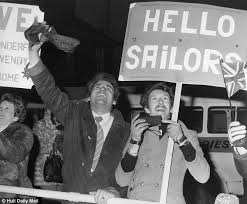
On 1st February 1983, 800 dignitaries, service representatives and families of the Norland crew gathered at the King George Dock Terminal Building, Hull. They were there to greet the return of North Sea Ferries Norland after over 9 months in the Falklands War supporting the troops. Unfortunately, 90 mph winds did not allow the ship to dock, and it rode out the storm in the Humber for several hours , by which time the banquet was over.  Hundreds of people were still there to greet them at the quayside in the evening. The Norland was refurbished and returned to the Rotterdam run on 20thApril.

Norland return

January 27th

Pilgr Grace

On 27th January 1332, Sir John de Sutton was summoned to Parliament by writ and thereafter become Lord Sutton of Holderness.

On 27th January 1537, John Hallam and others captured during the attempt by the Pilgrimage of Grace to seize Hull were examined by local justices; Hallam and 2 others were condemned to death and the rest awaited the arrival of the Duke of Norfolk for a decision on their fate.

On 27th January 1599, the Earl of Pembroke’s Players arrived at Londesborough House for a week performing plays for the Shrovetide period, for payment of £15shillings.

On 27th January 1645,  14 Hull burgesses gave evidence that Thomas Swann was  not a Royalist, and should not have his property sequestered, but in fact was owed money by Parliament because his new house was demolished to build a defences for the town. His appeal failed.

On 27th January 1882, the Prince of Wales, the future King Edward VII, joined the Holderness Hunt at Brantinghamthorpe, which recorded 1,400 horsemen, 4,000 on foot and 1,000 in carriages.

On 27th January 1901, Joseph Smith of Hull, on board SS Friary, was the 7thand last Hull passenger to have died of pneumonic plague contracted in the Mediterranean. He is commemorated in the columbarium at Hedon Road Cemetery.

On 27th January 1924, Brian Norman Roger Rix, Lord Rix of Whitehall in the City of Westminster and Hornsea in Yorkshire,  was born in Cottingham. He was a comic actor, specialising in Whitehall farce; awarded CBE for his charity work; campaigner for people with learning disability. He was also awarded 8 honorary degrees, 5 fellowships and many other awards, and was the first Chancellor of the University of East London, and vice Lord Lieutenant of Greater London. d20.8.2016