January 12th

On 12th January 1808, Robert Escritt and John Paul, agricultural labourers, were probably the last people to be sentenced to the pillory in Driffield. They were found guilty of blackmailing gentleman farmer Francis Brown of Kelleythorpe, after accusing him of raping John Paul. They were sentenced to stand in the pillory at Driffield on 3 consecutive market days, and to a year in the House of Correction, Beverley. N.B. Sodomy was punishable by hanging at the time.

On 12th January 1819, William Clowes, one of the founders of Primitive Methodism,  began an evangelical mission in Hull, preaching in an old factory in North Street.               (b12.3.1780 Burslem, d3.3.1851, buried in Western General Cemetery).

On 12th January 1963, Hull Pilot cutter J.H. Fisher sank west of Spurn Point after colliding with the oil tanker Esso Glasgow, heading for Saltend in a blinding snowstorm. All crew were safely taken off. During the coldest weather in Britain since 1740, pilots also had to cope with ice-floes off Spurn, and the River Humber itself freezing near Brough. photo credit: Ian Burrett

Big Freeze 1963


January 10th

st mary's sculcoates.JPG

On 10th January 1308, Ivo de Etton of Temple Hirst, near Selby, and William de la Fenne from Faxfleet had been preceptors (heads) of local houses of the outlawed Knights Templar order, when they were arrested and imprisoned by Henry II on instructions of Pope Clement V. Also arrested were Richard de Ryston, chaplain, Thomas Tyeth, claviger (or warden), and Roger de Hugunde or Hogyndon, a brother in residence at Faxfleet, and Adam de Crake, claviger, at Temple Hirst.

On 10th January 1511, Richard Elynor of North Cave claimed sanctuary at the church of St John, Beverley, for a felony, but the register does not give any detail of his crime.

On 10th January 1537, Sir Francis Bigod, of Settrington, and John Hallam, of Cawkeld near Watton, met to discuss rekindling the Pilgrimage of Grace, which had ended in December with promises to restore the monasteries and hold a Parliament at York. They planned to seize Hull and Scarborough before they could be fortified.

On 10th January 1646, Stephen Thompson of Humbleton was fined £400 as the owner of Scarborough Castle and a Royalist (a ‘delinquent’) in order to recover his goods which had been sequestered by Parliament.

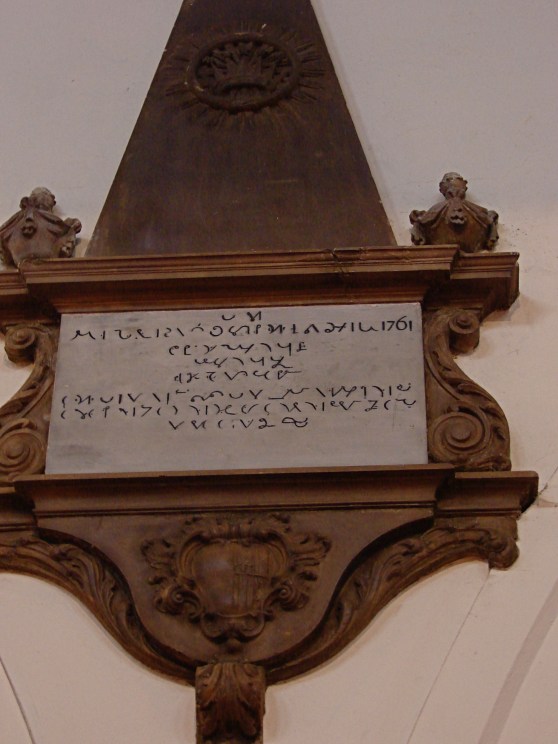
On 10th January 1761, Mrs Jane Delamoth died in Hull. Her memorial in St Mary’s Sculcoates may be the only memorial written in shorthand in the world. It says: ‘In the vault beneath this stone lies the body of Mrs Jane Delamoth, who departed this life 10thJanuary 1761. She was a poor sinner, but not wicked without holiness, departing from good works, and departed in the faith of the Catholic Church, in full assurance of eternal happiness, by the agony and bloody sweat, by the cross and passion, by the precious death and burial, by the glorious resurrection and ascension of Our Lord and Saviour Jesus Christ’. see photo

On 10th January 1783, Rear Admiral John Storr died in Hilston. He is buried in Westminster Abbey. (b 18.8.1709) He commanded the Revenge at the Battle of Quiberon Bay 20.11.1759. His father Joseph built Storr’s Tower at Hilston in 1750. It served as a hospital for troops camped on the coast in 1794–5 and later as a cottage, but was disused in 1990. His memorial is in Hilston church.

On 10th January 1849, Cottingham land agent Thomas Spenceley reported that he had measured the distance from the Spa Inn, Aldbrough to the sea in 1832 and again in 1848 and the loss of land due to coastal erosion was 28 yards in that period. On 6.8.1832 the distance was 160 yards; on 11.8.1848 it was 132 yards, an average loss of 5ft 3” per year.

On 10th January 1952, Madame Clapham (Mrs Emily Clapham) died aged 96, the former Court Dressmaker of Kingston Square, Hull. Her fashions for high society made Hull ‘the rage’ according to Sir Osbert Sitwell.

On 10th January 1968, Hull trawler St Romanus left port and made radio contact with the owners that evening. A Mayday call was heard, but not passed on. The official enquiry concluded ship probably lost on 11thJanuary, reason unknown.

On 10th January 1968, Hull trawler Kingston Peridot of Hull left port and was not contacted until after 26 January. The enquiry concluded she probably capsized on 26th  or 27th January, due to extreme weather.

January 6th

On 6th January every Plough Monday, in the15th and 16th centuries, Hull Trinity House  Guild presented the Miracle play of Noah in the streets of Hull.

On 6th January 1600, George Wolstenholme, Esq (59), Thomas Wilson, Esq (48), Richard Thomas (60), James Norrison (39), Robert Noke (43), Francis Mitchell (46), and Henry Hutchinson (29), all of Hull, murdered Captain Thomas Fletcher, of the ship Nancy, of Hull, mate Guy Foster, and William Forest and George Fowler, seamen of same ship. All 7 were convicted at York on Monday 2ndApril 1600 of murder and smuggling, and their bodies given to surgeons of York and Hull to be dissected and anatomized.

On 6th January 1764, flooding was so bad that the Holderness turnpike was unusable  between Hull and Bilton until 1stApril. One man and a horse were drowned attempting the route. The building of Holderness Drain was begun that year.

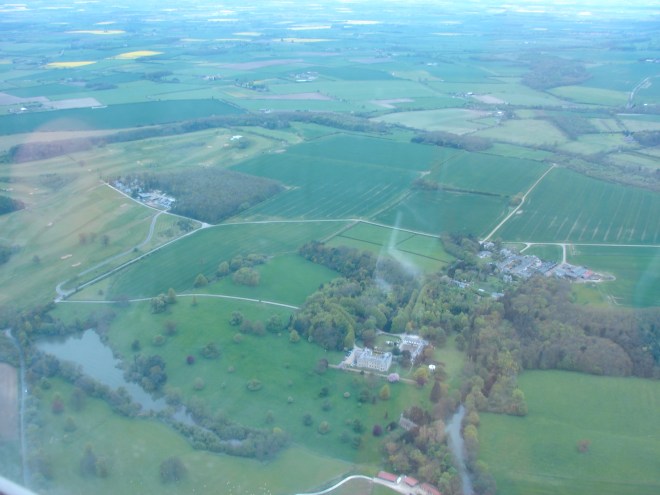
On 6th January 1839, the Nafferton house of Mr Thompson, a miller, was destroyed in ‘the Great Storm’ and his 2 sons, his daughter and a servant girl were all killed. Joseph Robinson Pease reported salt spray from the South-West on windows at Kilnwick Percy (i.e. it had come from the nearest coast in that direction, South Wales). photo shows Kilnwick Percy from the air

On 6th January 1840, William Dunn pleaded guilty at Beverley Sessions Court to a burglary. He was convicted and sentenced to transportation for life.

kilnwick percy.JPG


January 3rd

On 3rd January 1293, a jury set up by order of King Edward I found that the Abbot of Meaux owned most of the town of Wyke on Hull, with Lords Furnivall and Vescy owning smaller parts. They found 74 tenants, and that the Abbot held court there, and that there was space used for fairs and a market.

On 3rd January 1319, King Edward II issued orders at Beverley for defence against the Scots.

On 3rd January 1629, Francis Clifford, Earl of Cumberland, during a typical festive period for the Londesborough household, 84 staff were feasted, with 315 extra dinners and 251 extra suppers being served to tenants and guests during Christmas Week. The York Waits provided musical entertainment, in addition to the house musicians. photo shows the site of the house

On 3rd January 1933, Harry Anderson, age 19, deckie learner, of Edith Grove, Brighton St, Hull, died with 9 other crew of the trawler Endon (H161), after vessel found abandoned after a collision. Trawler Stronsay picked up his body, but superstition about having a corpse on board led them to return his body to the sea.

Londesborough Park

December 31st

On 31st Dec 1458, Robert Foster enrolled into post as Collector of Customs, joining existing staff Thomas Everyngham (Collector) and Thomas Maygne (Controller).

On 31st December 1501, William Croswet of Hull claimed sanctuary at the church of St John, Beverley, for debt.

On 31st December 1511, Audrey, or Etheldreda, spinster from Lincolnshire, claimed sanctuary at the church of St John, Beverley, for a felony; the register gives no detail of her offence.

On 31st December 1626, the Council of the North summoned a representative of the Hull Corporation to appear and explain Hull’s failure to provide ships ordered. (Under Charles I’s unpopular Ship Money tax, Hull was required to provide the cost of 3 ships in 1626, and appealed against the decision, saying it was too much).

On 31st December 2007, new research revealed that the Hell’s Gate, Hunsley archaeological dig site site was an Anglo-Saxon execution cemetery (mid 7thC to early 11thC). The heads would have been displayed on posts  at the site between Welton and Cave. 12 male Anglo-Saxon skeletons, 10 of them headless, were found in a Bronze Age barrow in the 1960s, and known as the Walkington Wold burials.

Hell's Gate

December 28th

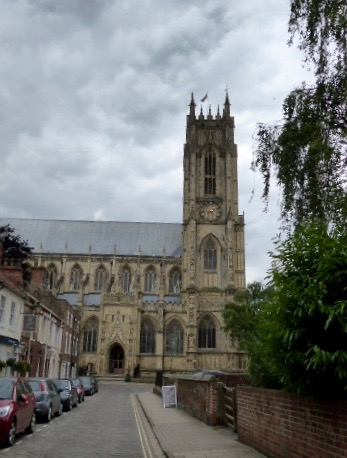
Beverley Minster


On 28th December 1703, an earthquake was felt in Beverley, and may have worsened the already poor condition of the fabric of the Minster.

On 28th December 1795, the Duke of Portland, Home Secretary,  wrote to the Hull Mayor and other town councils concerning methods to be adopted for reducing the consumption of wheat. There had been several years’ poor harvest, and supply was reduced by war with France. There were  food riots in Hull in August that year.


December 27th

On 27th December 1442, John Shale, mariner, and John Roper, chaplain, conveyed to William Riplyngham, merchant, a tenement and garden in Le Pavement, Hull.

On 27th December 1804, the crew of Danish ship Familian was rescued when their ship ran aground on Stoney Binks, off Spurn Point, on a journey from Longsound to Hull.

On 27th December 1822, Richard Walker of Beverley was robbed and murdered at Leconfield by William Johnson, 23. Johnson was convicted and hanged at York Castle 24.3.1823, and his body delivered to surgeons for dissection.

spurn lighthouse.JPG

December 26th

On 26th December 1220, William de Forz II, Count of Aumale and Lord of Holderness was with King Henry III at the Royal court at Oxford; the King made an appointment William hoped to get; disappointed, he left Oxford for Lincolnshire, and began a rebellion, known as the war of Bytham.

On 26th December 1489, George Gusterd, weaver of Bishop Burton, claimed sanctuary at Beverley for the murder of a servant of Edward Barnaby, a gentleman. He did not know the servant’s name.

On 26th December 1495, William Middleton was threatened with a pole-axe by John of Cottingham, John of Wawne, Thomas Warde, Robert Bate, and (- ) Mykill, and was so afraid for his life that he took sanctuary in Wawne church and stayed there for 10 hours, afterwards leaving the area. He applied to the Chancery Court for leave to prosecute his attackers, but the outcome is not recorded.

On 26th December 1645, Rev Nicholas Osgodby was reported to be using the forbidden Prayer Book in secret.

On 26th December 1750, the chapter house roof of Howden church collapsed, to join the rubble of the chancel which had collapsed in 1696.

On 26th December 1890, residents of Hornsea had a fair on the frozen surface of the Mere, and a sheep was roasted on the ice.

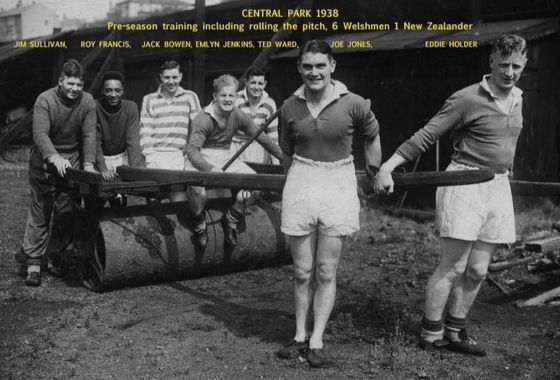
On 26th December 1955, Roy Francis played his last game after 6 years with Hull FC, and became UK’s first black professional sporting coach, and team manager 1971 to 1973.

roy-francis

December 25th

On 25th December 1703, Mrs Frances Maister of Penzance, born in Patrington, she left £10, the interest of which was to be given to the poor of Patrington every Christmas Day.

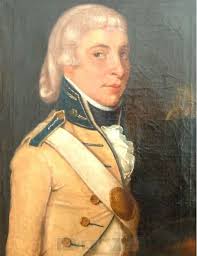
On 25th December 1794, fearing an invasion from France, the Beverley volunteers militia was uniformed and drilled for the first time in Saturday Market. The uniform was probably similar to the image below.

On 25th December 1876, during the rescue of the Grace Darling of Goole, sunk on Middle Bank, River Humber, Spurn lifeboatman Edward Weldrake had to jump into the sea and climb the rigging of the ship, and to prise the captain’s frozen fingers from the rigging. Awarded the RNLI silver medal for bravery.

EY Militia

December 24th

Coat_of_arms_of_the_baron_de_Ros_-_Premier_baron_of_England

On 24th December 1264, Robert de Ros of Roos and Helmsley was created Baron de Ros, probably the first English Barony created, and the title holder is styled the Premier Baron of England.

On 24th December 1510, Welwick labourer James Martynson claimed sanctuary at the church of St John for the murder of John Lewes of Welwickthorpe, labourer.

On 24th December 1592, the Council in the North ordered that no merchants carry goods or merchandise up the river or trade with other parts of the north except through the port of Hull.

On 24th December 1911, James Adamson, 34, deckhand, was lost overboard from Hull trawler Eldorado, 250 miles ENE of Spurn.