April 19th


charterhouse.JPGOn 19th April 1672, Rev John Shaw(e) died aged 64 . Puritan Lecturer at St Mary’s, Hull, then at Holy Trinity. In 1651 Master of the Charterhouse, where so many flocked to hear him preach that troops kept them out.  One Sunday more than 300 people camped out at night as the soldiers had closed all the town’s gates. (b 28.6.1608 Sykehouse)

On 19th April 1689, 4 Beverley aldermen recorded that they were considering prosecuting the vicar of St Mary and St Nicholas, Rev John Brereton. Before then, the town council had recorded their thanks to him for his generous gifts to the town. They then discovered that he had purloined several church collections, as well as money collected for the relief of persecuted French Protestants. 4 days later, Brereton resigned his posts and later left Beverley.

On 19th April 1821, an Act of Parliament approved lighting the town of Hull and adjacent places with gas (replacing lighting with whale oil). Gas manufactured from whale oil was used until 1830, when it was replaced with coal gas.

On 19th April 1891, former pupil of Hull Trinity House School Frank Dick, 23, died of yellow fever in Rio de Janeiro.

On 19th April 1902, Beilby, 3rdBaron Wenlock, of Escrick, spoke at a public meeting in Beverley to recruit for an East Riding Yeomanry Regiment; the meeting was poorly attended, as it was Market day.
 

April 18th

On 18th April 1801, Hull Trinity House gave financial support to 7 mariners who had returned home after being taken prisoner in the war against the French.

On 18th April 1864, Hull Mayor John Lumsden called a public meeting in Hull Town Hall, Lowgate. The topic was a petition to invite the Italian  nationalist General Garibaldi to Hull. He was in England, but unable to come to Hull, and returned to fight in Italy.

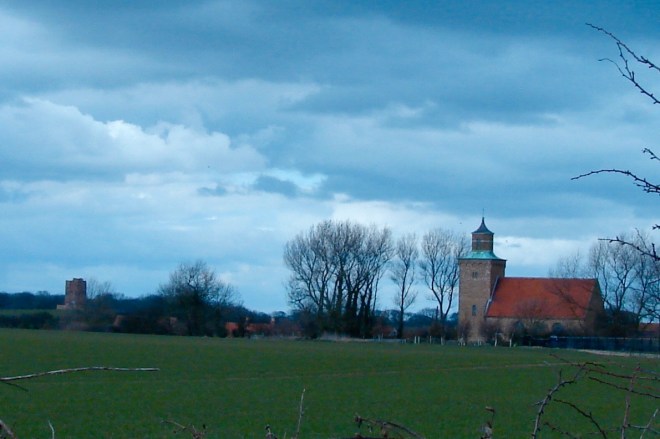
On 18th April 1911, Francis Frederick Johnson, was born in Bridlington, where he lived all his life. An architect, his early work was mostly local, and he did much restoration work on country houses. His work was increasingly recognised nationally and internationally, and he worked up to his death aged 84. He was awarded the CBE, for work including St Margaret’s Hilston; St Michael & All Angels, Orchard Park; Winestead Rectory restoration; Cottingham Rectory. Many of the buildings he designed were given listed status in 2017. He is buried at Reighton with his life partner, Edward Ingram, local historian.  (d 29.9.1995) photo shows Hilston church

On 18th April 1932, the Thorpe Enquiry into land deals on Hull Council reported its findings that Sir Digby Willoughby (who had committed suicide the month before), Alderman Francis Finn, and builder Robert Tarran, were involved in corrupt land deals.

hilston church & tower.JPG

April 17th

On 17th April 1595, a week after the birth of Frances Clifford at Londesborough House, her parents gave a feast for 70 people, including friends and family and local people; the menu included caviar, 11 types of fish, lamprey pies, turbot pies, eel, mutton, chicken and rabbit, salad, cheesecake and fruit tart and custard.

On 17th April 1627, army deserter Richard Towler was taken under escort to Hull with orders to either rejoin the forces heading for Germany from which he had deserted, or be returned to York as a prisoner. 1,350 soldiers had sailed from Hull in 1626 to support the King of Denmark in the Thirty Years War.

On 17th April 1797, Hull Trinity House paid £1 5 shillings to William Taylor and Robert Masgill, of the ship Jupiter, which had been captured by the French.

On 17th April 1803, George Wallis, aged 73, died in Hull. Hull’s most prominent locksmith, he created a collection of arms and armour, and opened what may have been Hull’s first museum. His painting can be seen in Wilberforce House. His son George invented a swivel-mounted harpoon gun for the whaling trade.  (b 20.4.1731 in Lockington).

On 17th April 1878, George Herbert Stancer, was born in Pocklington. He was a sports journalist and administrator of cycling associations. He beat the record for a tandem tricycle ride from London to Brighton in 1910 (with L.S. Leake) in 5hrs 59mins 51secs. He was awarded the OBE, Died October 1962.

Geo Herbert Stancer

April 16th

On 16th April 1313, Petronilla de Scarfon conveyed ownership of land to the East of Vicar Lane, Hull, to William Brimswein of Ottringham.  On the same day, John de London conveyed land on East side of Vicar Lane to Ingram Sonnolf of Ottringham. The town was growing, and drawing in landowners from the local area.

On 16th April 1454, William Eland, enrolled in post as Hull Collector of Customs, joining existing staff Richard Bryd (Collector) and Ralph Babthorp (Controller).

On 16th April 1532, Christopher Hoggeson, labourer of Thorngumbald, claimed the sanctuary of the church of St John, Beverley, for debt.

On 16th April 1680, Sir Edward Barnard wrote to Hull Mayor about ‘Darningham Springs’, one of several letters around this time from landowners concerned about ‘the placing of stops in land drains’. The stream was again getting polluted, and a dam was proposed to stop runoff from the land getting into the drinking water.

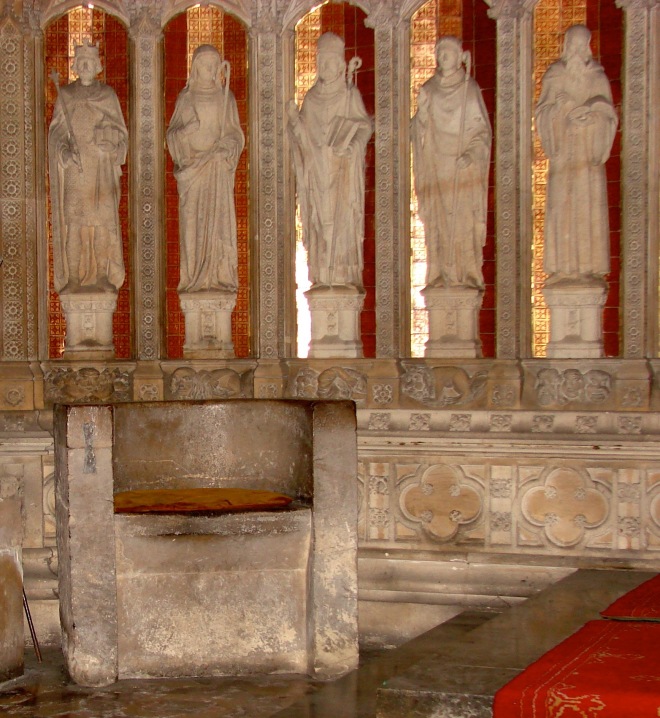
minster - frith stool.JPG

April 15th

On 15th April 1643, Captain John Hotham wrote to Queen Henrietta Maria that he had a plan involving both Hull and Lincoln, which would be a real service to the King.

On 15th April 1696, the Skipsea manor court appraised the value of timber which Stephen Grenestowe had found on the beach at 10d, which he had to pay to the Lord of the Manor, who owned all items washed up.

On 15th April 1801, James Glenmon and 2 shipmates, returning from being held prisoner in Holland,  received financial relief of 7s6d from Hull Trinity House.

On 15th April 1807, at the Humber Tavern, Paull, compensation was agreed by the Army to landowners and tenants (of at least 3 years) when land was taken to build Paull Battery to defend Hull against Napoleon.

On 15th April 1912, Joseph Groves Boxhall, 28, was 4thOfficer on the Titanic. In charge of lifeboat No.2, whose 25 passengers were the first survivors to reach the Carpathia. (b.23.3.1884 in Hull) right on photo below

On the same day, Algernon Henry Barkworth, 48, gentleman of Hessle, was a passenger on the Titanic. He survived by jumping from the ship and later climbing aboard a lifeboat. Few people in the water survived; he put his survival down to wearing a fur coat over his lifebelt and carrying a suitcase. far left on photo, taken at Tranby House, Hessle

On 15th April 1941, a heavy air raid sank a lighter in Hull’s Alexandra Dock, damaged rolling stock and warehouses, and demolished No 22 Warehouse.


April 14th

On 14th April 1511, Walter Rugbe of Paull, a cooper, claimed sanctuary at the church of St John, Beverley, for the murder of mariner Anthony Dowre of Boulogne.

On 14th April 1524, Sir Robert Constable of Flamborough, with 100 men, attacked the Rokebys’ manor house in Bishop Burton and abducted Ann Cresacre in a complex dispute over land and marriage agreements. Ann was 12 yearsold and an orphan. The case was heard in the Star Chamber. Ann eventually married the son of Sir Thomas More.  A descendant was the City Architect of Hull, Joseph Hirst. photo shows Holbein’s study for his picture of the More family – Ann is standing, rear.

On 14th April 1571, William Strickland of Boynton, MP, a leading Puritan, presented a Bill  to Parliament to reform the prayer book, including abolishing confirmation and the wearing of priests’ vestments.

On 14th April 1702, Jeremiah Northend was buried, aged 78 in Rowley. Aged 14, he had emigrated to Massachusetts with his Uncle Robert and cousin Ezekiel, with the dissenting community led by Rev Ezekiel Rogers, but returned home after about 9 years. Lived in Little Weighton. (b 26.9.1624).

Study_More_familyHans_Holbein

April 13th

On 13th April 1280, Richard de Vescy, also known as Kesham, was offered the post of Rector of North Ferriby by Lady Agnes de Vescy, but Archbishop Wickwane ran a campaign to remove illegitimate clergy, and declined.  Richard de Vescy and several supporters occupied the church, seized its property, and beat up priests and clerks trying to obtain possession ‘almost to death’. The archbishop did not recover the church until October, and ordered some of the supporters to perform penance.  2 years later, Richard de Vesci was appointed rector of Escrick.

On 13th April 1563, Hull Mayor John Smith presided over a council meeting that agreed that no ships in the Haven should carry a fire or lit candle at night on pain of a fine; this was imposed after a vessel called the Dragon was set alight by negligence, and put other ships nearby in danger. A further law was passed in 1584 prohibiting the heating of tar on board ships, and all gunpowder had to be offloaded within 24 hours of docking, on pain of 8 days in prison, and a 20shilling fine.

On 13th April 1743, Mary Maister (nee Cayley) , her baby son and 2 maidservants, died in a fire at the original Maister House, High Street, Hull, which spread quickly up the wooden staircase.  Henry Maister rebuilt the house the following year with a stone staircase. This National Trust property is currently closed.

On 13th April 1838, Hull & Selby Railway ran an excursion from Selby to Hull, returning the same day.  From Howdendike to Hull by packet boat, arriving Hull 1.00, leaving again 5.00p.m. First class and best cabin 8shillings, 2ndclass & common cabin 6shillings.

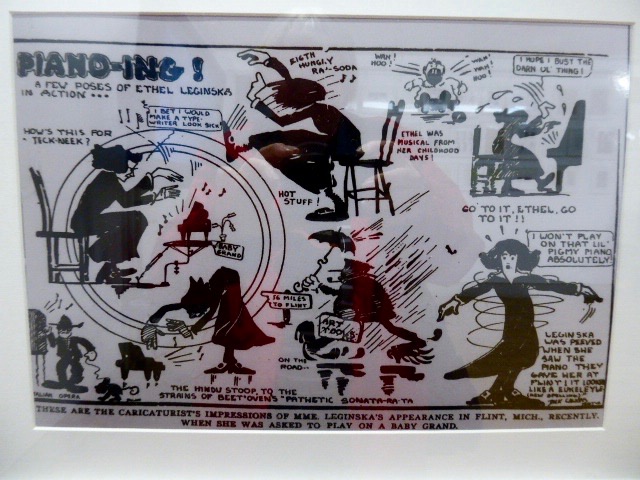
On 13th April 1886, Ethel Leginska, nee Liggins, was born in Pemberton Street, Sutton-on-Hull. A musical child prodigy,  she made her debut performance as a pianist on her 9thbirthday, at St George’s Hall, Hull, and was playing in London’s Queen’s Hall the following year. At 11, she went to study in Frankfurt. She was a concert pianist, conductor, teacher and composer. She established the Boston Philharmonic Orchestra, Boston English Opera company, and National Women’s Symphony Orchestra, and was director of Chicago Women’s Symphony Orchestra. (d 26.2.1970) . She was the first woman to conduct many of the world’s leading orchestras, first woman to conduct grand opera (her own opera), and a pioneer for women in music.

Ethel Leginska


April 12th

On 12th April 627AD, King Edwin of Northumbria convened his Great Council at  Londesborough and agreed to adopt Christianity; King Edwin’s high priest Coifi destroyed the pagan temple at Goodmanham.

On 12th April 1748, William Kent (orig Cant) died aged 63 . This Bridlington-born architect and polymath, originator of the English style of landscape gardening, also introduced the Palladian style of architecture to England.  His buildings include Treasury Buildings and Horseguards, both in Whitehall, and Holkham Hall. (bapt 1.1.1686) photo shows his house in Bridlington old town

On 12th April 1855, John Enderby Jackson’s  ‘The Withernsea Quadrilles’ were played for the first time at a ball to celebrate the opening of  Withernsea’s first hotel, Queens Hotel, for visitors travelling on the new Hull to Withernsea rail line. Before the railway opened the previous year, the village population was tiny (108 in 1801), with 1 inn, and farming was the main occupation.

William Kent's house

April 11th

On 11th April 1493, William Vasour of Newton, Wilberfoss, died in a field in Sutton-on-Derwent after being attacked by Henry Taillour with a dagger.  On 17thApril, Taillour arrived at the church of St John, Beverley, and claimed sanctuary for the crime.

On 11th April 1519, Robert Tailor, a weaver from Stamford Bridge, claimed the sanctuary of St John’s church, Beverley, for debt.

On 11th April 1803, Burnett’s Daily Shipping List reported that 3 vessels arrived in Hull, from Leith, Colchester, and Salou; 4 ships left, for Newcastle, Shields, Memel and Riga.

On 11th April 1941, Mrs Edith Robson died in Sutton House, Sutton-on-Hull. She bought a house as a free maternity home for poor mothers, ran it successfully, and donated it to Hull Corporation. Robson Way is named for her and her husband, Edwin; they donated land for a playing field in Church Street, Sutton, in memory of their daughter Barbara, who died aged 13 of meningitis in 1925.

On 11th April 1963, Karen Briggs was born in Holderness Road, Hull. She is one of Britain’s greatest judokas; she won 4 World Championships and 5 European championships. She was awarded an MBE, and an honorary doctorate from University of Hull 2013. Now Mrs Karen Inman.

karenbriggs2


April 10th

On 10th April 1694, John Roxby  & Thomas Spicer (Ferriby) and Peter Acy and Samuel Newton (Swanland) were chosen as parish Overseers for the Highways, (Ferriby and Swanland being in the same parish, but choosing separate officers). On the same date, Overseers of the Poor chosen were Paull Wollas and Wm Jefferson (Ferriby) and Robt Parker and Christopher Boynton (Swanland).

On 10th April 1733, Thomas Pelling, the “Flying Man’, set up a tightrope between Pocklington church steeple and the Star Inn, and fell to his death; he is buried in the churchyard.

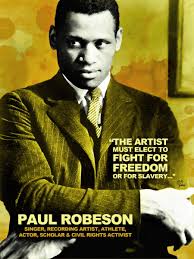
On 10th April 1956, Paul Robeson, singer, actor and political activist, performed at Hull City Hall to an audience of 2,000. Publicity described him as ‘the world’s greatest negro actor, singer and film star’.

Paul Robeson