On 20th December 1584, Rev John Lothropp was born and baptised in Etton. He became a Congregationalist minister, was imprisoned and released on condition he did not preach or hold meetings. He took some of his congregation with him to America and is considered one of the first American spiritual leaders.
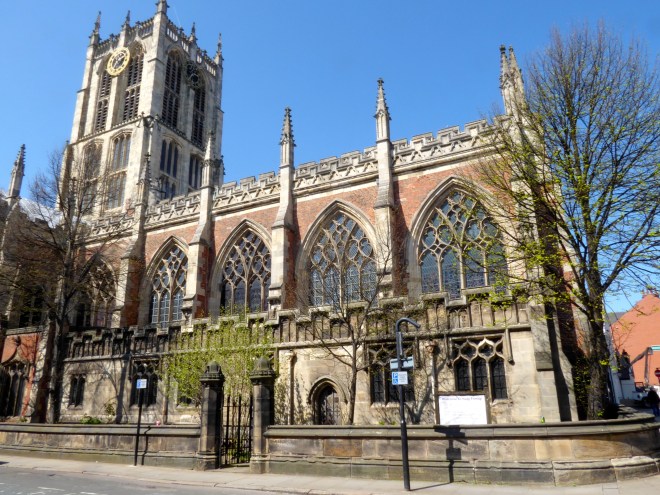
On 20th December 1661, an Act of Parliament was passed to separate the church and parish of Holy Trinity, Hull from Hessle, setting out the responsibility of the town for assessing and collecting a rate from which they should pay the vicar £100 a year.
On 20th December 1830, the Mayor of Hull started a collection for Greenland whalers and their families, after a disastrous season of ship losses and low catches.
On 12th December 1303, Hull burgess John Schayl left 20shillings in his will towards the rebuilding of Holy Trinity Church.
On 12th December 1659, James Primrose MD, aged 63, of Whitefriargate, Hull, signed his will, and died sometime in the same month. Raised and educated in France, related to James I’s principal surgeon and Scottish nobility. Prominent writer on medical matters, and highly respected Hull physician. Andrew Marvell referred to him in a poem. A religious nonconformist who was fined for non-attendance at church at least twice.
On 12th December 1895, Robin Pockley, coxswain of th eFlamborough lifeboat, saved the 3 crew of the fishing boat Elizabeth, who had been washed into the sea several miles off Flamborough Head; as there was not enough time to call out the lifeboat, he put out to sea with 2 colleagues in an ordinary fishing boat. He was awarded the RNLI silver medal.
On 12th December 1946, Barrie Rutter was born in Hull. Actor, director and founder of the Northern Broadsides theatre company; awarded OBE for services to drama. photo shows him (middle) in 2017 production of ‘Richard III’.
On 11th December 1538, Ellerton Gilbertine Priory was dissolved and the monks pensioned off. Sir John Aske of Aughton was granted the monastic lands, part of which became the parish church and graveyard. I have no record of the fate of the 13 poor elderly men whom the priory hospital was created to house.
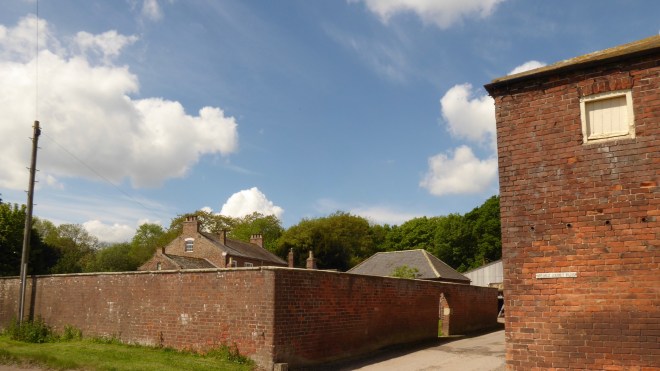
On 11th December 1539, the Abbot and monks of Meaux Abbey were pensioned off when the monastery was dissolved. The abbot retired to Skerne, and some of monks took up posts as curates in Welwick, Keyingham and Beeford. photo shows farm near the site
On 11th December 1647, priest John Saltmarsh, MA, died. Author, theologian, rector, deacon and Chaplain in the Parliamentary Army during the Civil War. Argued for religious toleration and liberty of conscience. Told Cromwell and Fairfax that God was angry with them for their treatment of the Levellers, and resigned his post with the Army. (b Saltmarsh date?)
On 11th December 1915, former Reckitt’s employee Private Edgar Winson was killed in action, serving with 10thBtn West Yorkshire Regiment. Born Spurn. No known grave.
On 8th December 1536, armed men from Holderness who had seized Hull in the Pilgrimage of Grace restored the town to the Mayor and dispersed.
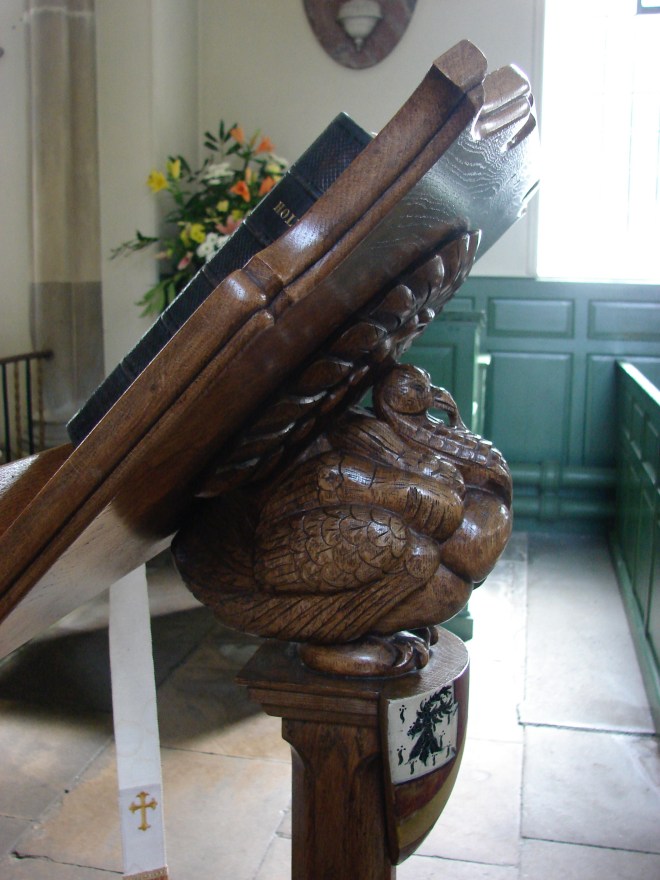
On 8th December 1598, William Strickland died in Boynton. When young, he had travelled to America on voyages of exploration with Sebastian Cabot, and is credited with introducing the turkey to England. Later became a prominent Puritan MP. photo shows the Turkey Lectern in Boynton church.
On 8th December 1629, George Acklam of Bewholme died aged 64, and left £5 to Hornsea church to distribute to the poor every year on Maundy Thursday ‘forever’.
On 8th December 1637, Hull Mayor John Ramsden was buried; he died of plague. Andrew Marvell gave the funeral oration. His son, also John Ramsden, became Hull MP. This outbreak of plague in Hull killed over 2,500 people, and many more left the town.
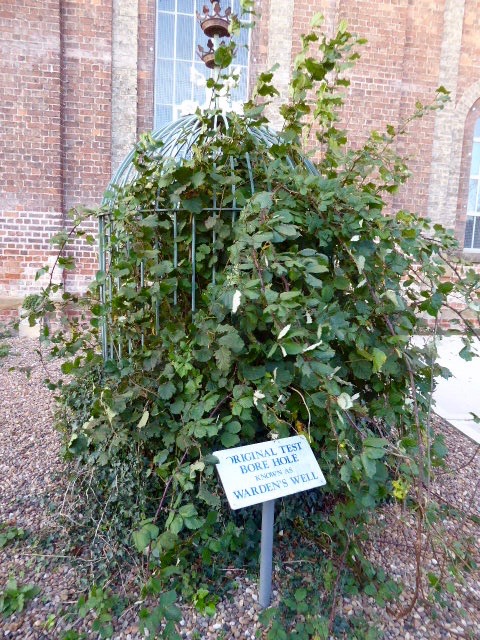
On 8th December 1879, William Walden, engineer and brewer, died aged 62. In a time when Hull was beset with cholera, he offered to supply Hull with clean water from Springhead at the rate of 5m gallons of water per day, at a fee of £500, or if he failed, be paid nothing. He succeeded. He is buried in Hull General Cemetery.
On 6th December, it was the tradition in many villages for a Boy Bishop to be elected, to serve to Christmas Eve.
On 6th December 1567, after being admitted to the Council in the North by the Archbishop of York, Sir John Constable of Halsham and Burton Constable was dismissed after opposition from protestant Sir Henry Gates.
On 6th December 1852, Henry ‘Box’ Brown, escaped US slave and actor, performed a panorama of African and American Slavery at The Music Hall, Hull.
On 4th December 1688, Capt Lionel Copley, vice-governor of Hull, in support of William of Orange, arrested Lord Langdale, governor of Hull, and Catholic officers supporting James II. Mobs attacked, ransacked and demolished Catholic houses and the ‘mass-house’, and the events of Town-Taking Day were celebrated into 20thC. It is believed that this is the event which was plotted in the parlour of the Olde White Harte.
On 4th December 1841, Joseph Davey, 28, became the new master of the Spurn lifeboat, and master of the tavern, replacing Robert Richardson, the first master, who had served in post for 31 years. Davey did not last so long – he was dismissed in February 1842 when the lifeboat failed to respond to a vessel run aground on the Stony Binks. Fortunately, the crew of the Elizabeth managed to refloat her, and there were no casualties.
On 4th December 1857, William Watson of Seaton Ross, maker of maps and sundials, died. (b 17.5.1784) photo shows Dial Cottage, Seaton Ross.
On 4th December 1894, Robert Butterfield was elected first Chair of the Nafferton Parish Council; earlier in the year, parish councils had been introduced by the Local Government Act, replacing a number of parish and manor courts dealing with minor local issues. This process was happening across the country. One of the PC’s first acts in Nafferton was to clean the beck, and appoint a beck-watcher to look after the 2 swans donated by Mr Butterfield.
On 30th November 1219, William de Forz II, count of Aumale, Lord of Holderness, was declared a rebel and excommunicated for offences against the Crown and the sheriffs of 6 counties were instructed not to give him any help; he had held onto castles after being ordered to restore them to their owners.
On 30th November 1280, the residents of Hedon petitioned government to fix their tax (fee farm) as they were ‘few and poor’ and competition from Ravenserod and Hull were increasing from day to day. The port was firmly in decline. Hedon ship motif can be found in St Augustine’s church.
On 30th November 1587, Alexander Crowe, Catholic priest, aged approx 34, was executed in York. Born in Howden, worked as a shoemaker and travelled to Douai; ordained at Rheims 1583. Captured at South Duffield while baptising the baby of Cecily Garnett.
On 30th November 1644, Sir John Hotham began his trial for treason at the Guildhall, London.
On 30th November 1832, Henry John Shepherd, attorney and JP, of Beverley, went bankrupt, having speculated in building projects; his creditors were reported to include mainly individuals who had given him money for investment with no security; the bankruptcy register describes him as ‘dealer and chapman’. Shepherd was again practising as a solicitor in 1833.
On 29th November 1486, John Thurleby started in a new post as Hull Collector of Customs, joining existing staff Thomas Annesley (collector) and John Wolleston (Controller).
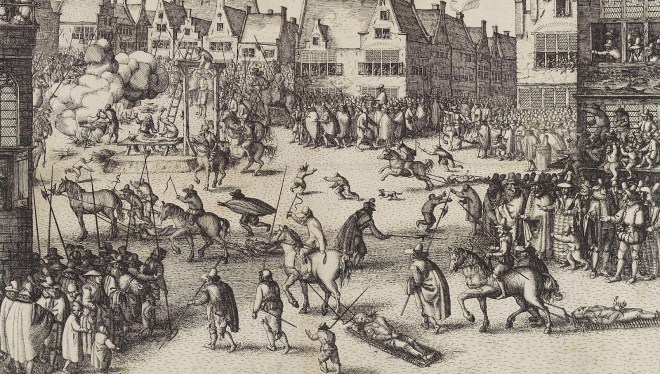
On 29th November 1596, William Knight of South Duffield, and Henry Abbot of Howden were hanged, drawn and quartered as traitors for their Catholic faith. Knight was beatified on 22.11.1987, Abbot 15.12.1929.
On 26th November 1319, Geoffrey Fitz Hugh and John de Wetewang conveyed property in Lyle Street (Mytongate), Hull, to Hugh and Ellen Le Taverner.
On 26th November 1525, Richard Haton, gentleman, from Hayton, claimed sanctuary in St Mary’s Church, Hertford, and confessed to the coroner that in October he had broken into a parish church in Essex and stolen a silver chalice; and in January he had burgled a house in Bucks and stolen jewellery and money. He abjured, i.e. renounced his country, and left through the port of Southampton.
On 26th November 1597, Sir Francis Barrington, Lord of the Manor of Cottingham (and uncle by marriage of Oliver Cromwell) wrote objecting to Hull Corporation’s drainage plan to move surplus water through his clough at Cottingham, which he said would risk flooding in the area.
On 26th November 1831, Joseph Robinson Pease, JP, spent his third consecutive day swearing in Special Constables to deal with anticipated riots; various sources say between 800 and 2,000 were sworn. James Acland had formed the Hull Political Union, and held meetings critical of the Hull Corporation, and said the aldermen were of out of touch and did not live in the town.
On 26th November 1847, Pocklington Canal Company agreed, at the Feathers Hotel, Pocklington, to sell the canal to the York & North Midland Railway, which also purchased the Market Weighton and Leven Canals. The canal had never been a financial success, and the railway company subsequently raised canal tolls so as to drive freight traffic onto the trains.
On 16th November 1503, Elizabeth of York, Duchess of Suffolk, died, aged 58. She was married to John de la Pole, 2ndDuke of Suffolk. The lands she held in Hull and Myton reverted to the Crown, and in 1514 Henry VIII gave them to William Sidney, buying them back in 1539 to build his fortifications in the town. She held 1,000 acres of land, including meadow, pasture, 100 dwelling houses, a mansion and gardens and the patronage of the Charterhouse.
On 16th November 1857, ‘A Dissenter’ issued a campaign leaflet encouraging religious dissenters to oppose plans by the Church of England to close down the school run by the Leonard Chamberlain Charity, the trustees of which were all dissenters. The writer estimated that 1/3 of Hessle people were not CofE members. The school remained open for a further 45 years.
On 16th November 1918, PC244 Harry Burgess filed a statement at Hull Central Police Station, reporting on 3 US sailors and 1 American soldier being followed by a large crowd. The Americans used obscene language, threatened to fight, and refused to go to their billets. Police escorted them to the Grosvenor Hotel, guarded the gate and dispersed the crowd, who accused the Americans of attacking British and Canadian soldiers. The US commander later ordered his men, based at Killingholme US Naval Air Station, not to visit Hull without orders.
On 16th November 2017, Queen Elizabeth II visited Hull and met some of the City of Culture volunteers, had lunch with the Bee Lady among others, visited Siemens, and the new Allam Medical Centre at Hull University.





 Hull & East Yorkshire History Calendar