April 7th

john-hotham-1-sized

On 7th April 1615, George Goodgion, senior servant to Francis Clifford, Earl of Cumberland, ordered tenants to cart coals to the big house, which was out of fuel, and to note the names of those who refused. Tenants were required in their leases to do this work, but had to fit it in with their own farming work.

On 7th April 1643, Sir John Hotham wrote several letters to people on the Parliament side; the post for London was captured, and his letters published by the Royalists at Oxford, revealing his double-dealing.

On 7th April 1787, John Morrit, 34, was hanged at York for murdering John Argyle, aka Roundell, of Howden.

On 7th April 1810, Mr William Iveson, Steward to Francis Constable of Burton Constable, proposesd to Hull Trinity House to erect a lifeboat house on Spurn Point, provide 12 crew from Kilnsea, and open a tavern to create an income for the boat’s master.

On 7th April 1828, Joseph Robinson Pease, JP, made his first committal as JP in Cottingham, of a man who disobeyed an Order of Bastardy, i.e. he was jailed for refusing to pay maintenance for an illegitimate child.

On 7th April 1893, a rioting Hull mob destroyed 37 bags of carrots being taken on rullies to the docks, and used them as missiles to attack the police.

On 7th April 1943, pupils at Paull Primary School escaped unhurt when a barrage balloon escaped its mooring in the Humber, and exploded, setting fire to the school building.


April 2nd

Chas I trial

On 2nd April 1380, Alexander Neville, Archbishop of York, granted to the burgesses of Beverley the Westwood and all rights attached to the land.

On 2nd April 1607, John Alured was baptised in All Saints Church, Preston. He was elected MP for Hedon in 1640, and was a judge at the trial of Charles I. Died 1654. picture above shows the trial

On 2nd April 1652, Luke Hinderson, aged 45, of Stamford Bridge, was hanged outside Walmgate Bar, York, with 3 others, for robbing Peter Ellison, butcher of York, and leaving him for dead.

On 2nd April 1660, John Ramsden & Andrew Marvell were elected MPs for Hull; the votes cast were: John Ramsden 227, Andrew Marvell 141, Mr Barnard 113, Wm Lister 80, Matthew Allured 55 and Baron Thorp 35, in all 651.

On 2nd April 1774, George Belt of Howden was hanged at York Castle for breaking into and robbing the house of Mr Althorpe, near Howden.

On 2nd April 1785, William Riley, 23, was hanged for robbing John Borr of Hull near Newland.

On 2nd April 1916, a BE 2c aircraft of Beverley Royal Flying Corps Squadron 47, crashed at the Racecourse due to engine failure while defending the area from a Zeppelin attack.


March 29th

On 29th March 1241, William de Forz II, count of Aumale, Lord of Holderness, died of illness beside the Mediterranean, en route to Jerusalem, aged between 45 and 50. At times close to Kings John and Henry III, he changed sides and rebelled several times, was excommunicated twice, having to seek sanctuary in Fountains Abbey, but was pardoned.

On 29th March 1689, Sir John Hotham, 2ndbaronet, was buried, after dying aged 57 of a violent cold. He had just been greeted enthusiastically as the new governor of Hull, having come from Holland with William of Orange. He was the grandson of Sir John Hotham, the Hull governor who turned away Charles I.

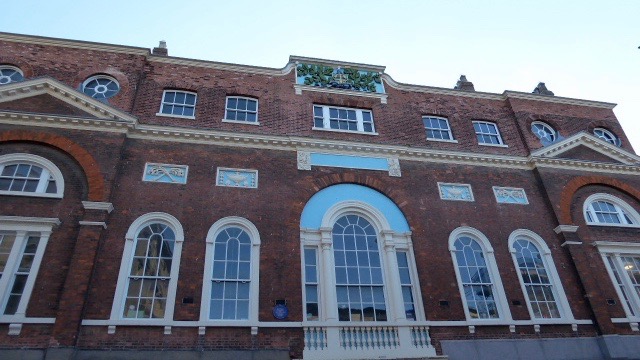
On 29th March 1759, John Courtney recorded in his diary that the Beverley Assembly Rooms in North Bar Street/Lairgate hosted ‘a very splendid show of ladies and gentlemen and a very agreeable ball’; Beverley lacked industry, but was a desirable place for gentry to build large Georgian houses.

On 29th March 1776, Eliza Bordington and Thomas Akerman, 37, of Flambrough, were hanged at York Micklegate Bar for poisoning Mr Bordington (presumably Eliza’s husband), and Eliza’s body was also burnt.

On 29th March 1874, John William Duncan, aged 12, was a member of  Hull’s Spring Bank Orphanage’s new brass band. The band gave its first performance, marching from the Trinity House Almshouses, Beverley Road, to Victoria Pier and back. They only knew 4 tunes. They went on to play by request at cricket matches, school treats and concerts.

On 29th March 1972, Joseph Arthur Rank died aged 83. The son of Joseph Rank (see 28.3), he ran his flour milling company, and became interested in films began as a way of getting the Methodist message across. He set up The Rank Organisation in 1937, producing films, and owning 650 cinemas and 5 film studios. 1stBaron Rank. (B 22.12.1888 at Chestnut Villas, Holderness Rd, Hull).

joseph rank

March 27th

On 27th March 1349, an earthquake was recorded at Meaux and in Beverley, as in much of Eastern England. The monks were at prayer, and had reached the 2ndverse of Psalm 60 – ‘Thou hast made the earth to tremble; Thou hast broken it’.

On 27th March 1570, Thomas Bishop of Pocklington was tried at York Castle, and hanged, drawn and quartered for his part in the Northern Catholic rebellion against Queen Elizabeth. Anthony Langdale of Sancton escaped to Rome, and others may have fled to exile in Paris.

On 27th March 1575, Frederick Gottfried, aged 37, of Hull, was convicted of coining guineas and hanged in York.

On 27th March 1634, Mr Vavasour of Hesslewood (we don’t know if this was Thomas, 1stbaronet, Walter, 2ndbart, or another) was riding past Micklegate Bar in York when he saw moving earth, and helped convicted felon John Bartendale out of his grave. Bartendale was a travelling musician, who had been tried, hanged and buried. He was returned to prison, and at the next Assizes was given a full pardon.

On 27th March 1679, Mary Trot the daughter of Angel Trot died in infancy in Ellerker, and was buried, even though her father was a pauper, in a woollen shroud, following an Act passed to protect the woollen trade.

On 27th March 1615, Marmaduke Stutt of South Frodingham was buried in Winestead Lane after drowning whilst walking along the road.

On 27th March 1799, George Pycock died in Hull aged 50. He was the principal architect and builder in Hull at the time. He built Mytongate jail, the Infirmary, Prospect St, and St Giles Church, Marfleet. His only surviving building is the Neptune Inn, Whitefriargate.  (b1749)

Neptune Inn

March 26th

On 26th March 1646, Hull merchant James Watkinson was fined £400 as a member of the Royalist army (delinquent) in order to recover his goods which had been sequestered by Parliament.

On 26th March 1706, the congregation of Cottingham church gave 4s in a collection for the repair of Beverley Minster.

On 26th March 1740, John Burnham and Ralph Burnsall of Preston bought 2 fields from Benjamin Waive of Hull, half the income from which was used to give to the poor, and half to pay for a schoolmaster to educate poor children in the village.

On 26th March 1827, an evening’s entertainment at Theatre Hedon (presumably in the Town Hall) included a performance of Hamlet, a recitation, and a farce.

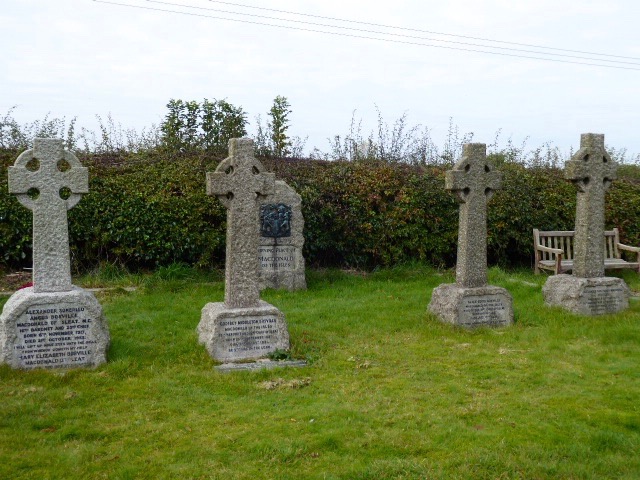
On 26th March 1933, Sir Alexander Wentworth Macdonald Bosville Macdonald of the Isles, 13thbaronet, died at Rudston aged 67  and is buried in the churchyard. (b26.9.1865)

MacDonalds of the Isles

March 25th

Warton's Hospital.JPG


On 25th March 1725, Sir John Warton died at 77 in Beverley. He was reputed to be the richest man in England, even though his father’s estates had been depleted by fines to Parliament for Royalism. He was elected MP for Hull, and twice MP for Beverley, but took little active interest in Parliament.  In his will, he left £4,000 for the repair of Beverley Minster, £1,000 to Warton’s Hospital, £500 to the charity school, £100 to the poor and £100 to each parish in Beverley. photo shows Warton’s Hospital

On 25th March 1780, Peter Horsfield, a negro servant to Mr Knowsley, curate of Boynton, married Elizabeth Lawson, daughter of the vicar of Weaverthorpe. It was fashionable at the time for rich families to employ black servants.

On 25th March 1868, Rev John Healey Bromby died at 97 at Hull Charterhouse; he was up to then the oldest working minister of the Church of England.

On 25th March 1904, a ‘Smoking Café and Lounge’ was opened in the basement of the Prudential Building, Victoria Square, a landmark Hull building. In 1941, the whole building was demolished by a German bomb.

On 25th March 1927, the Ministry of Agriculture closed the Crown Colony at Sunk Island, a failed experimental farm settlement for ex-servicemen set up during WW1. This is referred to in Winifred Holtby’s ‘South Riding’ as Cold Harbour colony.

Sunk

March 21st

The spring equinox was the original date for April Fool’s day. Medieval rituals made fun of church figures, until they were outlawed in the 16thcentury. The date changed to April 1st, and the foolery lost its religious focus. Or have I just fooled you?

On 21st March 1863, Sir Tatton Sykes died at Sledmere aged 91. 4thbaronet, landowner, stock breeder and racehorse owner. He rode his own horse Hudibras at Malton in 1805, and won. 3,000 people attended his funeral. He continued to wear 18th Century dress all his life. (b Wheldrake 1772)

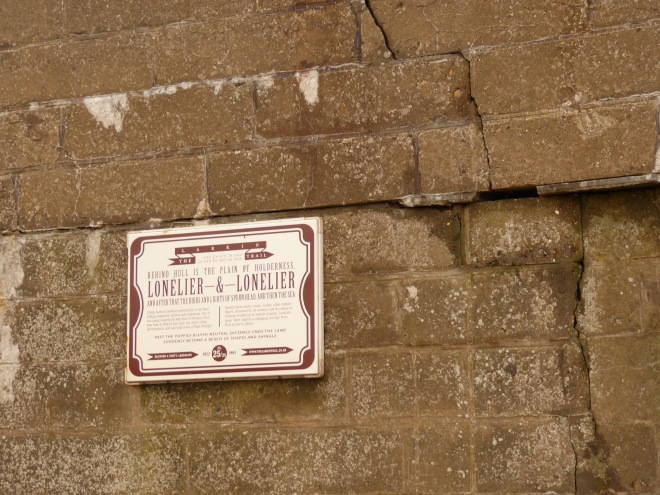
On 21st March 1955, Philip Larkin took up the post of Librarian at Hull University. photo shows part of the Larkin Trail.

Larkin trail Spurn

March 18th

On 18th March 1293, the name ‘Kingston upon Hull’  was first used by a jury called to value land in order to improve roads in the town which King Edward I had just purchased.

On 18th March 1708, the Hull Mayor and Chief Magistrates received a letter from the Council in the North instructing them to get all ‘dangerous or disaffected persons’ to sign an oath of allegiance to Queen Anne and to swear that Charles (Bonnie Prince Charlie) had no claim to the throne.

On 18th March 1859, John Sanderson was recruited to ‘work the Force Pump when necessary for the water closets’  at the Ladies Hospital, College St, Sutton-on-Hull. It seems the elderly residents found the pump too difficult to operate.

On 18th March 1924, Sir James Reckitt died in Hull aged 90. A businessman, JP, politician and philanthropist, he joined his father’s business, and created Garden Village as a model village for the company’s workers. Amongst his charitable works were contributions to Hull Royal Infirmary, Newland Homes for Seamen’s Children, the building of the city’s first public library, donated to the city, and the donation of Withernsea Convalescent Home to the Infirmary. He established the Sir James Reckitt Charity.  (b 15.11.1833)

jamesreckitt

March 17th

Kiplingcotes

On 17th March 1646, Henry Hildyard of Winestead was fined £4,660 as a Royalist (a ‘delinquent’) in order to recover his goods which had been sequestered by Parliament. (He had been a  Colonel of the trained bands which formed King Charles’ bodyguard for about 2 weeks in 1642, then retired to Surrey for the rest of the war). The fine was later reduced by half in payment for Hull Manor House which had belonged to him and which Parliament had given to the town of Hull.

On 17th March 1930, Judith Patricia (Pat) Albeck was born in Hull to Polish migrant parents. She was an award-winning designer of textiles and ceramics, known for her work for the National Trust. She is commemorated in Hull with a cream plaque. (d 2.9.2017)

On 17th March 1945, a cinema queue outside the Savoy Cinema, Holderness Road, Hull (the site is now Boyes store) was bombed and strafed; 12 people were killed, 22 wounded.

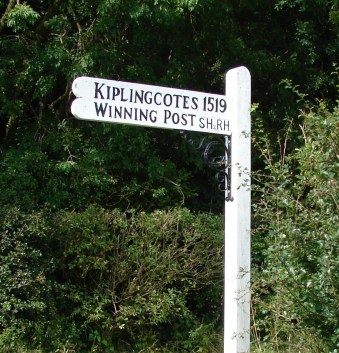
On 17th March 1966, Barbara Foster fFailed to win the Kiplingcotes Derby when her horse collapsed and died.

Pat Albeck


March 16th

Kiplingcotes

On 16th March 1589, Robert Dalby (or Drury), priest, was executed for treason as a Catholic priest. Born in Hemingbrough, he was a Protestant minister, then ordained as a Catholic priest at Chalons in 1588, and was arrested on landing at Scarborough.

On 16th March 1660, the ship of Richard Williamson of Scarborough rammed the dolphin at the entrance to the River Hull, and was sunk. Trinity House was entitled to charge for repairs, but were lenient and only fined him £3.

On 16th March 1695, John Roxby & John Field (Ferriby) and Henry Watson and Benjamin Galland (Swanland) were chosen by the parish as Overseers for the Highways for the following year, Ferriby and Swanland being in the same parish, but choosing separate officers.

On 16th March 1879, Colonel Sir Tatton Benvenuto Mark Sykes, (usually known as Sir Mark) was born in Sledmere. He was a traveller, author, MP for Hull Central, advisor to the Government on Middle East affairs, and co-author of the Sykes-Picot Agreement, which partitioned the Ottoman Empire. (died of flu 16.2.1919)

On 16th March 1939, Jean Farrow of Hull was the first ever female winner of the Kiplingcotes Derby, on Masterful.

Sykes-Picotagmt1916