Coming up this week

March 7th

On 7th March 1759, the allowance Hull Trinity House paid to retired grocer William Robinson was stopped as William was given a place in the Charterhouse.

On 7th March 1803, Mr William Iveson, Steward of Francis Constable of Burton Constable, agreed to Hull Trinity House’s proposal to establish a lifeboat at Spurn. No further action was taken until 1810.

On 7th March 1866, Archbishop of York called a ‘day of humiliation’ when East Riding ministers were instructed to ‘exhort the people to accept this grievous murrain as a chastisement from the hand of our loving Father’, in response to the Great Cattle Plague. Rinderpest had been introduced from Russia through Hull cattle imports, leading to widespread slaughter, and restrictions on the movement of cattle. Many areas of the country were affected.

On 7th March 1888, Rev Henry Kemp, Master of Hull Charterhouse, died after 20 years in post, having pressed for change, including an end to evicting widows when their husband died.

On 7th March 1919, after the death of her husband, Central Hull MP Sir Mark Sykes, the Hull Conservative Party unanimously voted to invite Lady Edith Sykes to stand as candidate in the by-election.  Lady Edith cited her responsibility to her family as the reason for refusing their offer.

OLYMPUS DIGITAL CAMERA

March 6th

On 6th March 1851, two days of severe storms, coupled with high tides, caused several breaches in Spurn Point, and made the Low Light insecure. The lifeboat was damaged, and several of the crew’s cottages were flooded. The extraction of gravel was halted, but did not finally end for many years.

On 6th March 1862, Joseph Wildridge, aged 14, apprentice, was attacked by another apprentice, probably named William Webb, on board Hull fishing smack Fairy. He was  so severely injured that he had to be returned home by another vessel, and died on 9thApril. He was unable to report on the events leading up to his attack, and a court case failed to prove a case against his assailant, as the crew would not testify.

On 6th March 1883, a great storm affecting the whole of the East coast resulted in huge losses in the Hull fishing fleet. Accounts vary: up to 230 Hull fishermen and 32 fishing smacks are recorded as lost.

On 6th March 1916, Zeppelin L14, after attacking Hull, dropped bombs on Burstwick and Owstwick, with no further casualties, before passing out to sea.

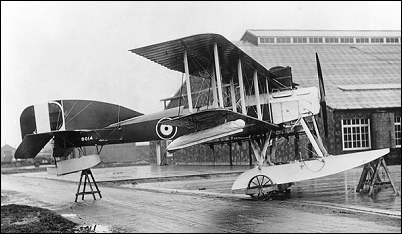
On 6th March 1919, the RAF Squadron 248 at Hornsea Mere seaplane station disbanded. From August 1918, it flew coastal patrols with Short 184 and Fairey Hamble Baby floatplanes off the Yorkshire coast. photo shows a short 184


short-184

March 5th

On 5th March 1514, John Taillour of Beverley claimed sanctuary at the church of St John, Beverley, for ‘the security of his body’, but the register does not state who was threatening him, or why.

On 5th March 1642, Queen Henrietta Maria stopped one night at the Manor House, Burton Fleming. She was still on her way to York to join her husband, Charles I, with arms from Holland. She is then said to have stayed 2 weeks at Boynton with the Stricklands. Luckily, Sir William, Parliamentary MP for Hedon, was away in London.

On 5th March 1646, Hull merchant Leonard Scott was fined £74 10s as a member of the Royalist army (a ‘delinquent’) in order to recover his goods which had been sequestered by Parliament.

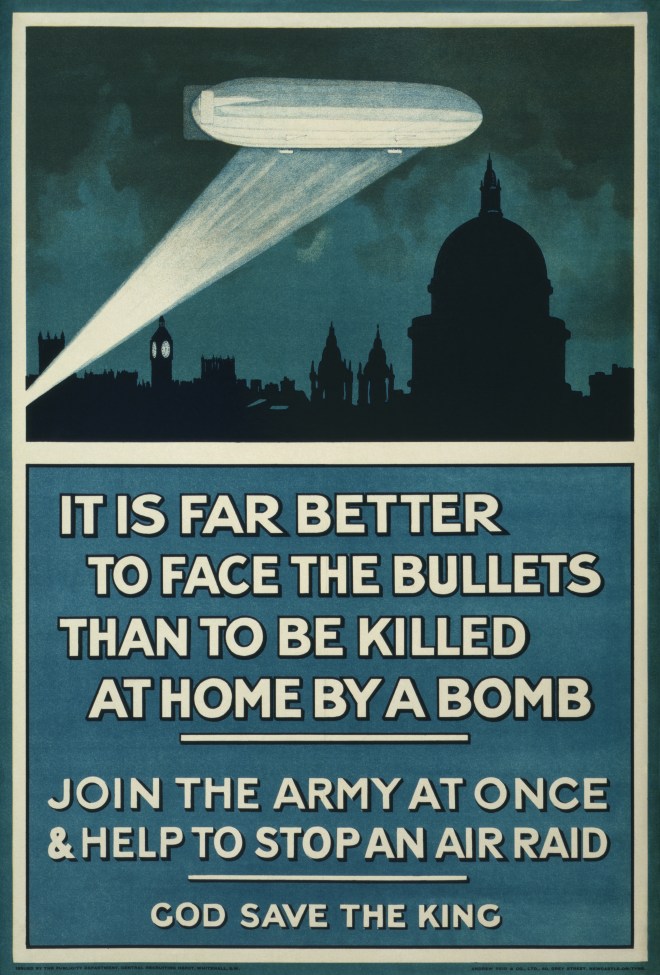
On 5th March 1916, Martha, Ethel and Mira Ingamells of Linnaeus St, Hull, were among the 18 people who died in the 2ndZeppelin raid on Hull; 60 people were injured. Queen Street was hit, as were Linnaeus St., Porter St., Church St and Selby St, and Earle’s shipyard. A mob afterwards smashed up a vehicle belonging to the Royal Flying Corps, presumably in anger at their failure to defend the town, resulting in hasty installation of 7 guns, and the general strengthening of defences around the Humber. Bombs were also dropped on Gembling and Woodmansey.

WWI Zeppelin

March 4th

On 4th March 1666, Edward Grey, Mayor of Beverley, and Robert Hildyard were in correspondence with the Mayor of Hull about plague in North Frodingham and the precautions taken in Beverley against infection; a week later, they sent a certificate that North Frodingham was clear of infection.

On 4th March 1752, Elizabeth Plaxton paid for 4 brass chandeliers to be installed in the choir of Holy Trinity, Hull, at a cost of £100.

On 4th March 1791, Sarah Metcalfe, originally of Hull, died in Humbleton aged 45. No cause of death is given; she was the mother of 13 children, 4 of which died in their infancy.

On 4th March 1903, Dorothy Mackaill was born in Newstead Street, Hull. She became a stage actor in London and Paris before moving to Broadway and, in 1920, making her first film. In 1932 she starred with Humphrey Bogart in “Love Affair’, and retired 5 years later, though she did return to acting on TV. She died aged 87 (12.8.1990)

On 4th March 1908, Cornelius O’Kelly, PC 249, later Olympic gold medallist, was one of 4 police fire officers injured when a 20ft wall collapsed during a fire at Frank Soulsby’s saw mill, Thomas Street, Hull. Unable to work for 27 days, he received £5 15s8d from his employer’s liability assurance. (and see 3.11)

dorothy-mackaill


March 3rd

On 3rd March 742AD, Yolfrida, daughter of Earl Puch, Lord of the Manor of South Burton (now Bishop Burton), died and was buried at Beverley. She was a nun at Bishop Burton monastery.

On 3rd March 1195, Hugh de Puiset died, aged about 70, at the Bishop’s Palace, Howden.  He was Bishop of Durham for over 40 years. He had in 1190 been imprisoned in his palace at Howden for overstepping his authority. He supported the chronicler Roger of Howden.

On 3rd March 1642, James Watkinson, jnr, Hull Alderman, attended his last council meeting; considered a Royalist, he was ‘invited’ to leave town in April, his High St house was commandeered and he moved to York.

On 3rd March 1932, Albert Digby Willoughby committed suicide by gas inhalation in a hotel in Helensburgh. Chair of the Hull Housing and Town Planning Committee, he was due to be the chief witness in the Thorpe Enquiry into corruption on Hull Council, to give evidence into the purchase of land for housing estates in Hull. He also faced trial for demanding money with menaces. He had charged commission to owners of land which he knew the council wished to buy.

On March 1984, Harry Hudson Rodmell died in Hull aged 97. He studied at Hull School of Art, and was a marine artist and commercial artist. A series of his marine posters is available for sale by Hull Museums. (b 28.5.1896)

Harry Hudson Rodmell_

March 2nd


Flambro 'Danish tower'

On 2nd March 1406, James, Duke of Rothesay, son of Robert III of Scotland, was on his way to sanctuary in France, when he was captured by pirates, held in the Danish Tower in Flamborough for a time, then handed over to English King Henry IV. photo shows the Danish Tower

On 2nd March 1829, Rev John Scott, vicar of St Mary’s Lowgate, with many others, spoke at a public meeting in Hull Market Place to consider petitioning Parliament against Catholic Emancipation. Daniel Sykes, Whig MP for Hull, did not believe these vocal agitators were representative of the majority in Hull.

On 2nd March 1905, Cuthbert Brodrick died in Jersey aged 83. Nationally renowned architect of Leeds Town Hall, Scarborough’s Grand Hotel, Hull Town Hall (demolished 1912) and Hull’ s Royal Institution. (b Hull 1.12.1821)


March 1st

On 1st March 1384, Michael de la Pole, Earl of Suffolk, left in his will instructions to found the Charterhouse Hospital which his father had begun, and endowed it with land, nominating Sir Richard de Killing as the first Master, and left money to support 13 poor men and 13 poor women, feeble and old.

On 1st March 1838, the steam packet ferry services from Hull to Selby, Goole and Gainsbrough were restored, after severe frosts disrupted them from the 2ndweek in January.

On 1st March 1916,  a new Royal Flying Corps Squadron, the No 47 Home Defence Squadron, was formed at Beverley, on the racecourse site.

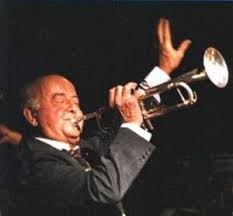
On 1st March 1921, Kenny Baker was born  in Withernsea. Musician and composer, considered the best British trumpeter, 3 times winner of best jazz trumpet player award, he played for Frank Sinatra, Sammy Davis, the Beatles, and on TV and film soundtracks, including James Bond scores, The Muppet show, and ‘The Beiderbecke Trilogy’. (died 7.12.1999) see photo

On 1st March 1990, Sister Agnes Walsh was recognised by Yad Vashem as one of 27 British people known as Righteous Among the Nations for her part in protecting Jews during the Holocaust. Trapped in France when the country was occupied by the Nazis, she gave refuge to a local Jewish family in spite of being in grave danger herself as a foreigner. She was born Clare Walsh in Hull in 1896 (died 1993).

Kenny Baker


February 29th

On 29th February 1912, Frederick Richard Soulsby, Master of the steamship Bayardo, was examined as part of a Formal Investigation in Hull Law Courts into the stranding and loss of his ship, returning from Gothenburg to Hull. The Bayardo went aground on 21st January on the Middle Sand in the Humber and could not be refloated. Soulsby was found to be at fault, and was severely censured.

On 29th February 1920, Ronald William Huzzard was born in Hull. A Quaker, he refused to be recruited during WW2, and was an active peace campaigner; he was the first General Secretary of Labour Action for Peace, and was awarded the Frank Cousins Peace Award by the TGWU. (died 30.12.1988)

On 29th February 1960, Hull’s last sidewinder trawler was launched at Beverley. The Arctic Corsair was built by Cook, Welton & Gemmell for the Boyd Line. It is now a museum run by volunteers, moored in the River Hull.

Arctic Corsair

February 28th

On 28th February 1803, Burnett’s Daily Shipping List reported that no ships arrived in Hull, and nothing sailed, for the 2ndday in a row. A heavy gale on Saturday and Sunday 26th& 27thresulted in a number of ships losing their anchors, running ashore and collisions. 8 ships were named as affected.

On 28th February 1823, the conditions of employment of the Matron of the workhouse at Nafferton recorded she was paid 5 guineas a year, plus 5 chaldrons of coals and half a load of whins; her tasks included mending clothes and laundry. There was also a Workhouse Master. (Nafferton was included in Driffield poor law union in 1836).

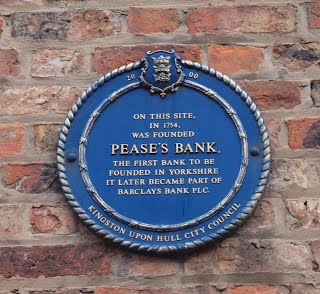
On 28th February 1826, Joseph Robinson Pease, Hull banker, reported in his diary that confidence in banks was being restored, that the credit of Liddell & Pease Bank stood high, and he believed that the Hull banks ‘never stood better’ after the recent national economic crisis.

pease

February 27th

On 27th February 1468, the will of Joan de Twyer directs that she be buried in the chapel of the Hospital of St Sepulchre ‘juxta Hedon’, a leper hospital endowed by the Twyer family.

On 27th February 1895, Lancelot George Prickett, FCH, engineer, died aged 38 in the service of the Indian Government; as an engineer working on Indian railways. Born 15.12.1856 in Bridlington.

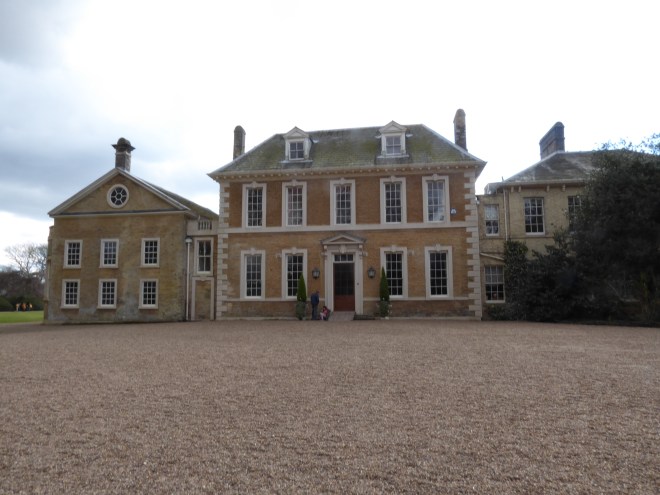
On 27th February 1941, 2 bombs landed in Hotham village, throwing the owner, Colonel Clitherow, into the fireplace. No other injuries are recorded. North Cave church lost its East window in the blast. photo shows Hotham Hall today

On 27th February 1976, Fred Peart, Minister of Ag, Fisheries & Food, reopened Hull’s Albert Dock after refurbishment for the fishing industry. The Cod War which ended in 1976 effectively put an end to Hull’s fishing industry.

hotham hall