Coming up this week

January 17th

On 17th January 1527, George Ableson, a wheelwright from Hutton Cranswick, claimed sanctuary at the church of St John, Beverley, for debt.

On 17th January 1583, William Lyon, fisherman of Yarmouth, obtained permission to move with his family to Hull, to become a freeman, to set up business as a fisherman and train others in the trade, giving a surety of £40, but also receiving £10 in expenses towards his costs.

On 17th January 1786, Capt Edward Thompson died of fever in post, aged about 48.   Born in Hull, the son of a merchant. Naval commodore; he wrote an account of the Battle of Quiberon Bay in 1759; he was responsible for organising the government of West Indian colonies of Berbice, Demerara and Essequibo. He was acquitted at court martial of leaving his station in 1781. He published a number of satirical poems, sea songs, plays and a report of naval life. b c1738

Capt EdwdThompson


January 16th

On 16th January 1518, John Frost of Twing on the Wold (presumably modern Thwing) claimed sanctuary at the church of St John, Beverley, for debt.

On 16th January 1537, John Hallam and about 20 men entered Hull on market day, planning to seize the town and re-start the Pilgrimage of Grace. Hallam was betrayed by a man called Fowberry of Newbald, and arrested.

On 16th January 1642, William Cavendish, Earl of Newcastle, was appointed by King Charles I as the Governor of Hull, but the Parliament’s choice of Hotham prevailed with the support of the Mayor and aldermen.

Pilgr Grace

January 15th

On 15th January 1741, John Jenkinson of Hull was indicted at Hull Quarter Sessions for ‘laying his dirt at Beverley Gates’.

On the same day, Jeremiah Gibson was also indicted for ‘scattering dirt from the High Church (i.e. Holy Trinity) all the way to without Mytongates’.

On 15th January 1885, Thomas Escritt died aged 87 at Cranswick. Known as ‘the Bishop of Cranswick’, he was a powerful Primitive Methodist preacher. Each day for 60 years, on his walk to farm work at Burn Butts, he stopped at the same spot to pray for the people of Cranswick. It was said that no grass would grow on this spot, until the 1930s, when the airfield was built over it. photo shows view from Burn Butts

On 15th January 1993, Don Suddaby, Fellow Royal Institute of Chemistry, played himself in the film “Lorenzo’s Oil’, released on this date. Suddaby was an analytical chemist working for Croda International, Hull, who took on a challenge to find a formula for erucic acid to halt neurological damage. Suddaby died later in 1993.


sledmere from...

January 14th

On 14th January 1180, Hawisa, Lord of Holderness, of the county of Aumale in Normandy, with lands in several English counties, the barony of Copeland and the honour of Skipton, and one of the richest women in the country, was married by Henry II to William de Mandeville, Earl of Essex.

On 14th January 1642, Sir John Hotham arrived in Hull to take up the post of Governor, and was refused entry at Beverley Gate by the Mayor, Thomas Raikes. A messenger was sent to Parliament, who ordered the Mayor to accept Hotham and his forces, and to resign his post, or face a charge of high treason.  Hotham was admitted.

john-hotham-1-sized


January 13th

On 13th January 1096, King William Rufus found Count Odo, Lord of Holderness, guilty of a plot to kill the King and place his son Stephen (William I’s nephew) on the throne; Odo got off lightly with loss of his lands, and Stephen went on crusade. Holderness was granted to Arnulf, son of Earl Roger of Salisbury.

On 13th January 1621, Stephen Doughton left his job as servant of the Francis Clifford, Earl of Cumberland, and received 2 years’ arrears of wages, a total of £5 6s8d. The family was short of cash, and servants were often not paid until they left the Earl’s employ.

On 13th January 1954, the crew of Flamborough lifeboat Friendly Forester saved the 3 crew of the fishing coble Silver Line.

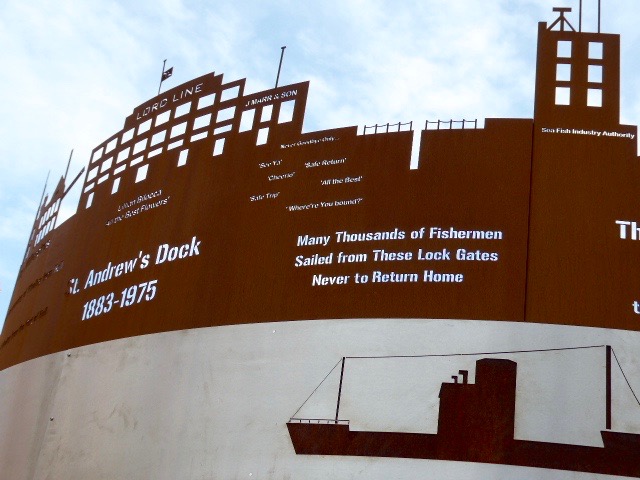
On 13th January 1968, a liferaft belonging to the St Romanus of Hull was found.

St Andrews Dock memorial
Zebedee’s Yard


January 12th

On 12th January 1808, Robert Escritt and John Paul, agricultural labourers, were probably the last people to be sentenced to the pillory in Driffield. They were found guilty of blackmailing gentleman farmer Francis Brown of Kelleythorpe, after accusing him of raping John Paul. They were sentenced to stand in the pillory at Driffield on 3 consecutive market days, and to a year in the House of Correction, Beverley. N.B. Sodomy was punishable by hanging at the time.

On 12th January 1819, William Clowes, one of the founders of Primitive Methodism,  began an evangelical mission in Hull, preaching in an old factory in North Street.               (b12.3.1780 Burslem, d3.3.1851, buried in Western General Cemetery).

On 12th January 1963, Hull Pilot cutter J.H. Fisher sank west of Spurn Point after colliding with the oil tanker Esso Glasgow, heading for Saltend in a blinding snowstorm. All crew were safely taken off. During the coldest weather in Britain since 1740, pilots also had to cope with ice-floes off Spurn, and the River Humber itself freezing near Brough. photo credit: Ian Burrett

Big Freeze 1963


January 11th

On 11th January 1582, Hull widow Jane Smyth was ordered to be put in the stocks at the next market, with a paper on her head, and given notice to quit the house she rented from the town, for cursing and slandering the mayor, justices, aldermen and the preacher, accusing them of  ‘punishing the town with water’ and punishing her son.

On the same day, Henrie Wakewood of Hull was ordered either to pay 10d a week to Elizabeth Bratton for the support of their child Isabell, and be whipped on market day, or to marry her and have his punishment deferred. Decision on Elizabeth’s punishment was deferred until she had been churched.

On 11th January 1642, Sir John Hotham was appointed by Parliament as the Governor of Hull.

john-hotham-1-sized


January 10th

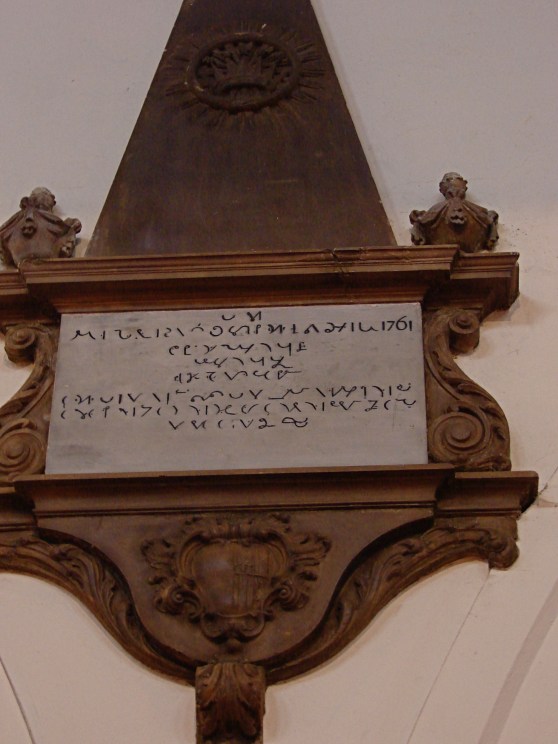
st mary's sculcoates.JPG

On 10th January 1308, Ivo de Etton of Temple Hirst, near Selby, and William de la Fenne from Faxfleet had been preceptors (heads) of local houses of the outlawed Knights Templar order, when they were arrested and imprisoned by Henry II on instructions of Pope Clement V. Also arrested were Richard de Ryston, chaplain, Thomas Tyeth, claviger (or warden), and Roger de Hugunde or Hogyndon, a brother in residence at Faxfleet, and Adam de Crake, claviger, at Temple Hirst.

On 10th January 1511, Richard Elynor of North Cave claimed sanctuary at the church of St John, Beverley, for a felony, but the register does not give any detail of his crime.

On 10th January 1537, Sir Francis Bigod, of Settrington, and John Hallam, of Cawkeld near Watton, met to discuss rekindling the Pilgrimage of Grace, which had ended in December with promises to restore the monasteries and hold a Parliament at York. They planned to seize Hull and Scarborough before they could be fortified.

On 10th January 1646, Stephen Thompson of Humbleton was fined £400 as the owner of Scarborough Castle and a Royalist (a ‘delinquent’) in order to recover his goods which had been sequestered by Parliament.

On 10th January 1761, Mrs Jane Delamoth died in Hull. Her memorial in St Mary’s Sculcoates may be the only memorial written in shorthand in the world. It says: ‘In the vault beneath this stone lies the body of Mrs Jane Delamoth, who departed this life 10thJanuary 1761. She was a poor sinner, but not wicked without holiness, departing from good works, and departed in the faith of the Catholic Church, in full assurance of eternal happiness, by the agony and bloody sweat, by the cross and passion, by the precious death and burial, by the glorious resurrection and ascension of Our Lord and Saviour Jesus Christ’. see photo

On 10th January 1783, Rear Admiral John Storr died in Hilston. He is buried in Westminster Abbey. (b 18.8.1709) He commanded the Revenge at the Battle of Quiberon Bay 20.11.1759. His father Joseph built Storr’s Tower at Hilston in 1750. It served as a hospital for troops camped on the coast in 1794–5 and later as a cottage, but was disused in 1990. His memorial is in Hilston church.

On 10th January 1849, Cottingham land agent Thomas Spenceley reported that he had measured the distance from the Spa Inn, Aldbrough to the sea in 1832 and again in 1848 and the loss of land due to coastal erosion was 28 yards in that period. On 6.8.1832 the distance was 160 yards; on 11.8.1848 it was 132 yards, an average loss of 5ft 3” per year.

On 10th January 1952, Madame Clapham (Mrs Emily Clapham) died aged 96, the former Court Dressmaker of Kingston Square, Hull. Her fashions for high society made Hull ‘the rage’ according to Sir Osbert Sitwell.

On 10th January 1968, Hull trawler St Romanus left port and made radio contact with the owners that evening. A Mayday call was heard, but not passed on. The official enquiry concluded ship probably lost on 11thJanuary, reason unknown.

On 10th January 1968, Hull trawler Kingston Peridot of Hull left port and was not contacted until after 26 January. The enquiry concluded she probably capsized on 26th  or 27th January, due to extreme weather.

January 9th

On 9th January 1779, Morfitt Kilham, Richard Basehead, Isaac Cockshaw, John Emerson and Robt Fowler were each paid 1s for a day’s work filling the ice house on Beilby Thompson’s estate at Escrick Hall from the river, together with a share in a cheese worth 4s8d.

On 9th January 1836, Hull Trinity House provided relief to the families of men whose vessels were shipwrecked at the Davis Straits fishery.

On 9th January 1875, drivers Charles Sissons and William Jackson, and conductor Edward Read staffed Hull’s first tram when the Beverley Road line opened, and carried 1,116 passengers on the first day. The fare for the whole distance was 2d. Two trams operated a half hourly service, hauled by Flemish horses.

On 9th January 1935, Clarence Tomlinson aged 17, and 12 (some sources say 14) shipmates, died on board trawler Edgar Wallace off St Andrews Dock, Hull, when the ship foundered on a sand bank and sank, returning to home dock after trip to Bear Island.  The engineer of the salvage team also died when the tug Boatman capsized. 3 survived.


January 8th

On 8th January 1902, James Bell, 26, skipper of Hull trawler Jupiter was lost with all his crew when she stranded on Rumble Holm, Shetland.

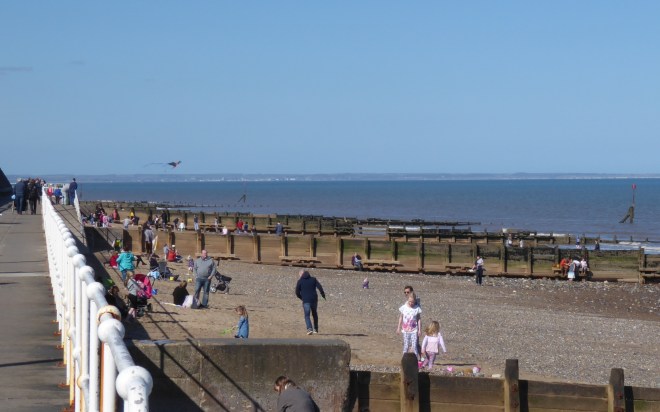
On 8th January 1910, Alfred Spencer, shoemaker, was working in his shop in Marine Drive, Hornsea, during a storm when the cliff edge collapsed.  As he could not get through the door he had to be rescued through a hole knocked in the wall. Only one source for this story, so if anyone can verify it, I would be grateful for a source. photo shows modern Hornsea


Hornsea