July 18th

On 18th July 1509, Lockington labourer Christopher Wylton claimed sanctuary at the church of St John, Beverley, for theft.

On 18th July 1511, Tailor Thomas Mateson, of Stamford Bridge, claimed sanctuary at Beverley for the homicide of John Pott, also of Stamford Bridge, labourer.

On 18th July 1642, the first Hull siege ended after 17 days; as the Royalists withdrew to Beverley, they destroyed the sluice at Hull Bank, causing flooding in Newland, and probably set fire to St Andrew’s Church at Paull.

On 18th July 1833, the work of the Humber Pilots involved more than directing ships into harbour; the day’s work included: relaying 14 buoys; taking carpenters to Bull Float and relaying Transport buoy (at the entrance of the River Hull).

On 18th July 1878, Anthony Bannister JP died at Hessle aged 61; twice Sheriff and twice Mayor of Hull, Vice commodore of the Royal Yorkshire Yacht Club. Promoted the Hull to Withernsea rail line; he is commemorated by a street in Withernsea, by a statue in Hull, and an effigy in Hessle.

On 18th July 1929, Boothferry Bridge opened to traffic across the River Ouse, replacing the ferry which had operated there since the 14thcentury.

On 18th July 1941, Ernest Dean Hodgson of Deepdale Grove, Hull, member of the Rescue Service, was commended for the rescue of Mrs Pounder and her 3 children from a damaged air raid shelter in rustenburg St. For their actions on the same night, John Joseph McHugh of Lilly Grove, and Arthur George Dixon were both awarded the British Empire Medal.  The same raid caused major damage to Reckitt’s Dansom Lane HQ, about 75% of the buildings being destroyed.

On 18th July 1969, Barry Francis, 22, decky learner, was lost overboard from Hull trawler Arctic Vandal off the North Cape.

July 14th

On 14th July 1746, William Pulteney, MP for Hedon, Baron Hedon and the Earl of Bath, stepped down when after “48 hours, three quarters, seven minutes, and eleven seconds” he failed to form a government, and is now reckoned to be England’s shortest-serving Prime Minister. photo shows his portrait in Hedon Town Hall.

On 14th July 1873, Hull hosted the Royal Agricultural Show at Newington, on the site of the former race course; the event has been held at Stoneleigh since 1963.

On 14th July 1943, Ernest Wilson of Hutt Street, Air Raid Warden, and Charles Henry Burgess rescued Mr Cherry from his home in Leonard Street, Hull, during an air raid. Wilson was later awarded the British Empire Medal.

On 14th July 2007, (Florence) Eva Crackles, MA, MBE,  died aged 89. Botanist and teacher; Honorary Doctor of Science, Univ of Hull 1991; Fellow of the Linnean Socy; and Honorary Life member Botanical Societyy of Britain & Ireland. Some of her work can be seen on the external wall of the Wilberforce Health Centre, and she is commemorated by a cream plaque. (born 23.1.1918)

Wm Pulteney, Hedon MP

July 8th

On 8th July 1497, Thomas Thompson, labourer of Stamford Bridge, claimed sanctuary at the church of St John ‘for the security of his body’. The register does not state why he was in fear for his life.

On 8th July 1642, King Charles I sent a troop of infantry and cavalry to set fire to windmills outside Hull, aiming to starve the besieged town; they were repulsed. John Shawe, Holy Trinity lecturer said this incident incensed many previously uncommitted Hull people and turned them against the Royalists. Charles also issued a proclamation from ‘our court at Beverley’, part of the continuing ‘paper war’.

On 8th July 1840, the 3rd day of a horse racing meet at the George Inn, Aldbrough, offered prizes up to £4, and included a men’s foot race for a hat valued at 10s, and a wrestling match to win a pair of gloves. In later years, the prizes for the horse race included a purse of gold, saddles and bridles.  However, the field where the sports were held may have been lost to the sea.

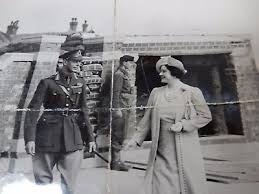
On 8th July 1940, Mrs Evelyn Cardwell of East Carlton Farm, Aldbrough, arrested and disarmed a German airman who had parachuted from a crashed bomber. She was presented on 1.8 with the British Empire Medal by King George VI at Marine Hotel, Hornsea.


royal visit Hornsea

June 28th

On 28th June 1578, the Mayors and Aldermen of York and Hull  reached an amicable solution to disputes about trade with an agreement regulating all commercial rights and privileges.

On 28th June 1643, Capt Moyer, commander of the Hercules, defending Hull, informed the Hull Mayor of the Hothams’ plot to take the town, and by 3a.m. had briefed 1500 men on a plan to secure the town and arrest the Sir John Hotham and his son Captain John H.

On 28th June 1904, Hull City AFC was founded; early matches were played at the Boulevard.

On 28th June 1996, RAF Driffield at Eastburn closed as an RAF station, having opened in 1936, and being used by several bomber squadrons in WW2.

Hull_City_Crest_2014.svg

June 27th

On 27th June 1658, William Thorpe, clerk to the parish of Ellerker (which may have meant minister) was buried in Ellerker. In his will he gave 10s to be paid yearly for the relief of the poor ‘for ever’.

On 27th June 1908, Princes Avenue Wesleyan Sunday School held its Annual Treat at the Old Polo Ground,  Westbourne Avenue, Hull. Games were played before tea, with races and balloons after, and prizes given.

On 27th June 1927, Thomas Jacques Somerscales, RA, died aged 85 in Princes Avenue, Hull. A respected marine artist who began his professional career in Valparaiso, Chile, and later returned as an unknown to his native country, where his work can be seen in the Tate Gallery. (b Hull 29.10.1842)

On 27th June 2010, Barbara Buttrick was inducted into the Florida Boxing Hall of Fame, aged 80. Born in Cottingham in 1930, she began boxing in 1945, married her manager and moved to Florida in 1952. At 4’ 11”, she was known as the Mighty Atom.  She retired from boxing with a record of 30:1:1.   https://www.youtube.com/watch?v=lTvwtinq5qg thomas-somerscales-port-of-iquique-chile-1903-thomas-somerscales

June 25th

On 25th June 1488, brewers Cornelius Jonson and William Rowyll, both of Hull, claimed sanctuary at the church of St John, Beverley, for a murder they both admitted; unfortunately, the register does not record who they killed, or why.

On 25th June 2007, Michael Barnett died of hypothermia in Hessle during catastrophic flooding when he became trapped trying to unblock a drain; 10,500 homes were evacuated in Hull and East Riding; many people were unable to return home for several months. photo shows Wold Road area of Hull.

On 25th June 2010, Alan Plater, playwright and prolific TV dramatist, died on this day. Lived in Hull from age 3, and a life-long Hull City supporter. In 1970, co-founded the Humberside Arts Centre, in Spring Street (later Humberside, then Spring St Theatre). Wrote ‘Don’t build a bridge, drain the river’ about Hull, and ‘Sweet Sorrow’ for Hull Truck about Philip Larkin. Awarded several BAFTAs and a Lifetime Achievement Award from the Writers’ Guild of Great Britain. (b 15.4.1935 Jarrow)

Hull Floods 2007

June 17th

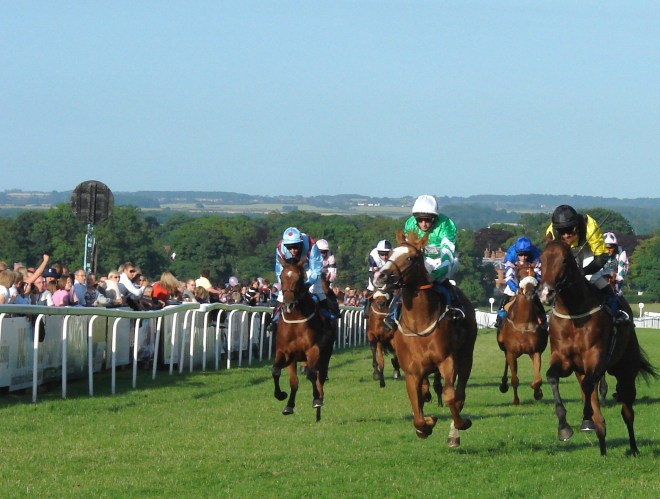
On 17th June 1763, it was the 3rd day of Beverley Races, held on Westood, between the Newbald and Walkington roads. On each morning a cock fight was held for a prize of 4 guineas, 40 to the overall winner. An assembly was held every night at the new Assembly Rooms. In Whitsun Week 1765, the Races were held on the Hurn for the first time. In 1769, a stand was built. photo shows modern racecourse.

On 17th June 1987, St Andrews C of E Junior High School, Sutton, was broken into over night. Some damage to windows and the video security case badly damaged.

On 17th June 2017, David Lonsdale won the first ever Hull Hnefatafl Tournament against Steve Lonsdale at Hull & East Yorkshire Museum. The board game was developed by the Vikings, and pieces have been excavated in Hull.

racecourse

June 11th

On 11th June 1312, a miracle was recorded when some boys whose sight was failing had their eyes smeared with oil which flowed from the tomb of St John of Beverley. Their sight then began to improve.

On 11th June 1909, the Hornsea Golf Club officially opened; a large gathering of golfers from Hull, Leeds, Doncaster, Scarborough, Beverley and Bridlington took part in various competitions.

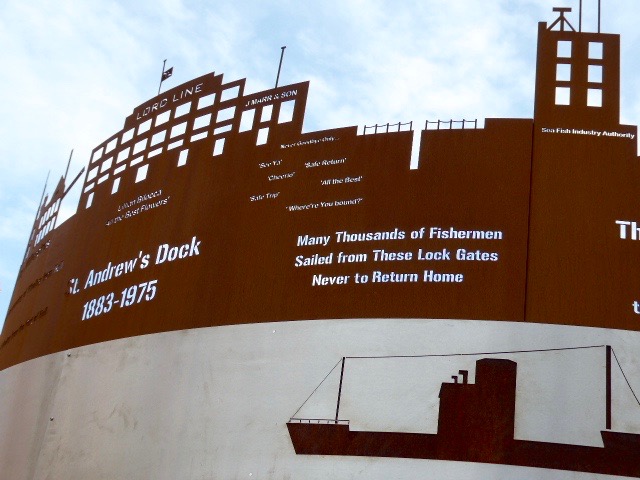
On 11th June  1925, John Ball, 17, deckhand of Michael St, Hull, was lost overboard from Hull trawler Wheatstone 182 miles ExN of Spurn.

St Andrews Dock memorial


June 1st

On 1st June 1787, William Wilberforce asked the King to make a Royal Proclamation for the Encouragement of Piety and Virtue. Concerned at the large number of death sentences being carried out, he reasoned that those punished for small crimes, such as swearing, would be less likely to commit serious crimes, such as murder. The Society for the Reformation of Manners was established in Hull as a result.

On 1st June 1798, William Wickham, Superintendent of Aliens, wrote advising on the tightening of the Aliens Act, with particular relation to Italian pedlars landing at Hull.

On 1st June 1820, Rev Arthur Strickland and 6 other gentlemen adopted the rules of the Bridlington Cricket Club; cricket was clearly a game for the gentry, as subscriptions were 10s6d. Visitors and occasional residents could be invited to play for the summer. the pitch was in the field between Bessingby and the mill.

On 1st June 1829, Hull’s Junction Dock opened, completing the line of docks connecting the Hull and the Humber, along the line of the old wall . Later renamed Princes Dock after HRH the Prince Consort.

On 1st June 1853, Malton & Driffield Junction Railway opened its 19 miles of track to public traffic.

On 1st June 1875, Alice Elizabeth Rawson was the first person to be baptised in the newly created parish of Newington, in Newington parish Mission Room, Edinburgh St, before the church was built in 1878.

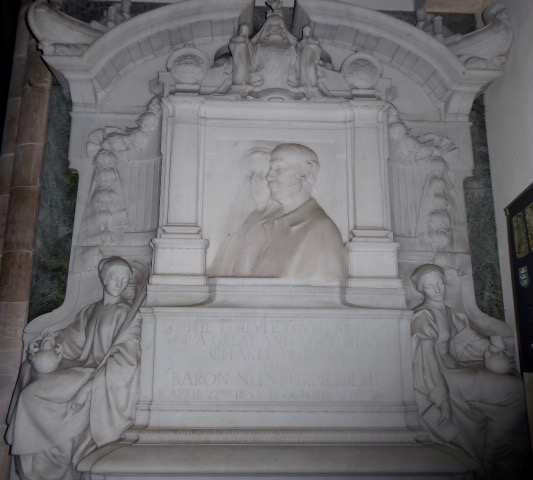
On 1st June 1891, the Royal Baccarat Scandal trial was the first time the heir to the throne was called as a witness in court. It began at a house party at Tranby Croft, Anlaby, (now Hull Collegiate School) home of Charles Wilson,  when Sir William Gordon-Cumming was accused of cheating at cards. Gordon-Cumming lost the slander case, and was dismissed from his army post the day after the trial ended. photo shows Charles Wilson’s memorial in Warter church.

Chas Wilson Nunburnholme

May 23rd

On 23rd May 1260, William de Forz III, count of Aumale and Lord of Holderness, died, aged about 45. He gave away his claim to the earldom of Chester in return for 2 small manors, including Driffield. Acted as ambassador for Henry III to Scotland and France, and was a member of the Council of Fifteen, advising the King on government matters. Gave land to Meaux Abbey on ‘the island called Ravenser Odd in the Humber’. His heir, Thomas, was 6 and he and the count’s lands were put into the King’s care.

On 23rd May 1510, Howden tiler Robert Colstayne claimed sanctuary at the church of St John, Beverley, for ‘the security of his body’; the register gives no detail of who was pursuing him, or why.

On 23rd May 1596, Howden churchwardens gave 6d to 2 poor men (presumably travelling through on their way to their home parish).

On 23rd May 1642, Hull Governor Sir John Hotham called a meeting of ‘knights and gentlemen’ to give a ‘learned speech’ explaining why he refused to allow King Charles into the town. This was part of the ‘paper war’ between the King and Parliament.

On 23rd May 1822, Hull merchant Joseph R. Pease attended a public meeting for the Relief of the Suffering Irish, due to famine in the West. He reported it thinly attended.

On 23rd May 1853, a Government enquiry into electoral corruption was opened at the Mansion House, Hull.  This followed a petition from the Conservative Party objecting to the election of James Clay and Viscount Goderich as MPs for Hull in the previous year. Hull was unrepresented in Parliament for almost 2 years; the Commission sat for 57 days and produced a report weighing over 11 tons and costing £5,000. (and see 16.8)

On 23rd May 1904, on Whit Monday, the Holderness Polo club held a polo match which attracted 6,000 spectators. This was held at the Polo Ground, Westbourne Avenue, Hull (modern Westbourne Ave West to Perth St West)The last matches were played in 1907.

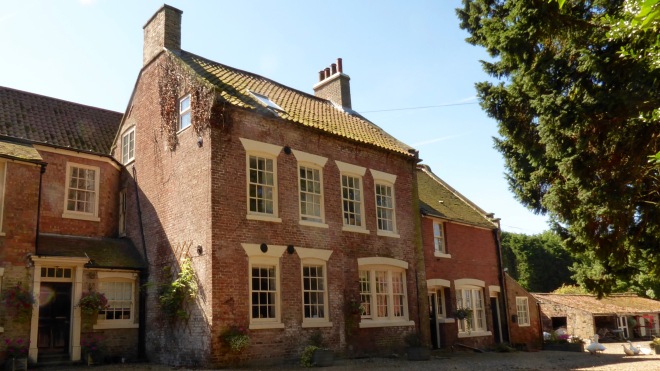
On 23rd May 1907, the Mayoress of Hull opened a new military rifle range at Rolston, for use by Militia, Volunteers and Yeomanry. The land was leased from Rolston Hall.  below – Rolston Hall.

On 23rd May 1911, a fire began in the kitchen chimney of Sledmere House, which 24 hours later had destroyed the whole house. Fire engines from Driffield and Malton attended. There were no injuries.


Rolston Hall.jpg