January 28th

On 28th January 1450, William de la Pole, Duke of Suffolk, was arrested and imprisoned for treason. King Henry VI saved him from execution and banished him for 5 years. On his way to Calais, he was captured and reportedly had his head cut off with a rusty sword.

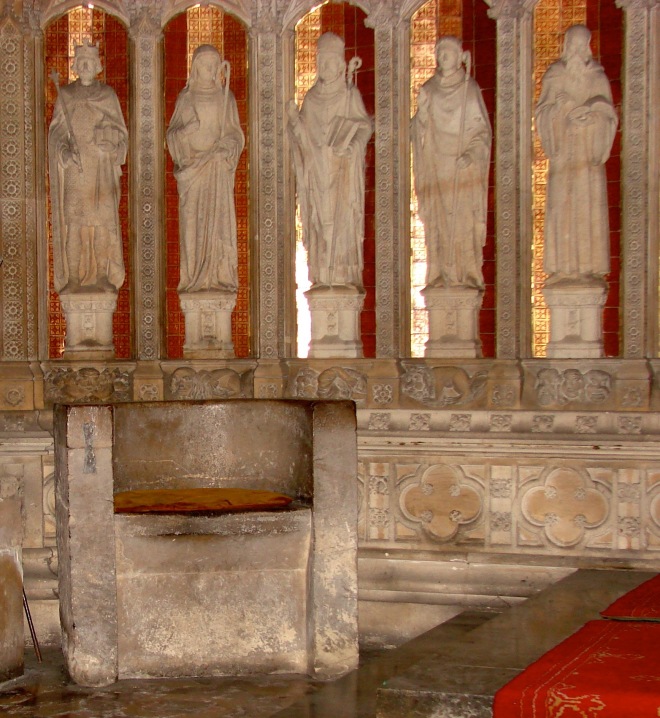
On 28th January 1515, William Jakson of Belby, near Howden, claimed sanctuary at the church of St John, Beverley, for the murder of John (rest of name blank in the register).

On 28th January 1525, Robert Smyth, husbandman of Anlaby, claimed sanctuary at the church of St John, Beverley, for the murder of Robert Ekopp alias Hikkopp.

On 28th January 1700, Abraham de la Pryme, curate of Holy Trinity, Hull, reported of Swine that: ‘the town has formerly been very large and handsome, … though it is very mean and inconsiderable, nobody inhabiting the same but a few country clowns’.

On 28th January 1829, William Hurr of Roos was admitted to the Sculcoates Refuge for Pauper Lunatics; on 21 July that year his funeral is recorded.

minster - frith stool.JPG

January 27th

Pilgr Grace

On 27th January 1332, Sir John de Sutton was summoned to Parliament by writ and thereafter become Lord Sutton of Holderness.

On 27th January 1537, John Hallam and others captured during the attempt by the Pilgrimage of Grace to seize Hull were examined by local justices; Hallam and 2 others were condemned to death and the rest awaited the arrival of the Duke of Norfolk for a decision on their fate.

On 27th January 1599, the Earl of Pembroke’s Players arrived at Londesborough House for a week performing plays for the Shrovetide period, for payment of £15shillings.

On 27th January 1645,  14 Hull burgesses gave evidence that Thomas Swann was  not a Royalist, and should not have his property sequestered, but in fact was owed money by Parliament because his new house was demolished to build a defences for the town. His appeal failed.

On 27th January 1882, the Prince of Wales, the future King Edward VII, joined the Holderness Hunt at Brantinghamthorpe, which recorded 1,400 horsemen, 4,000 on foot and 1,000 in carriages.

On 27th January 1901, Joseph Smith of Hull, on board SS Friary, was the 7thand last Hull passenger to have died of pneumonic plague contracted in the Mediterranean. He is commemorated in the columbarium at Hedon Road Cemetery.

On 27th January 1924, Brian Norman Roger Rix, Lord Rix of Whitehall in the City of Westminster and Hornsea in Yorkshire,  was born in Cottingham. He was a comic actor, specialising in Whitehall farce; awarded CBE for his charity work; campaigner for people with learning disability. He was also awarded 8 honorary degrees, 5 fellowships and many other awards, and was the first Chancellor of the University of East London, and vice Lord Lieutenant of Greater London. d20.8.2016


January 26th

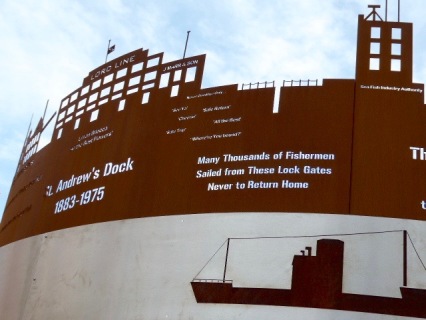
St Andrews Dock memorial
Zebedee’s Yard

On 26th January 1509, William Ivenson, Hull tailor, claimed sanctuary at the church of St John, Beverley for debt.

On 26th January 1516, John Catton, husbandman, of Allerthorpe, claimed sanctuary at the church of St John, Beverley, for felony.

On 26th January 1884, former pupil of Hull Trinity House School John Blakeston drowned after falling into the sea while reefing sails on the Barque Cape City off Rosario, Cape Horn.

On 26th January 1926, Ronnie Hilton was born Adrian Hill  in Hull. A singer, had 9 top 20 hits in the 1950s, and was also a radio presenter and pantomime artiste.  d 21.2.2001

On 26th January 1968, Hull trawler Kingston Peridot made her last contact by radio. See 10.1

On 26th January 1972, students at Hull University held a sit-in, called The January 26 Movement, in the Students Union building. It was part of an anti-apartheid campaign to persuade Hull University to divest itself of shares in Reckitt & Colman, which had extensive interests in South Africa and Rhodesia. The sit-in ended on 7th February.

ronnie-hilton-a-windmill-in-old-amsterdam-1965

January 21st

On 21st January 1516, William Wilbert, husbandman of Brantingham, claimed sanctuary at the church of St John, Beverley, for asportation, which usually referred to theft, in this case described as ‘a felony committed over a sheep’.

On 21st January 1585, William Roper, Hull market keeper, was ordered to inspect all fish landed by Flemings and ensure it was fit for human consumption before being sold in the market.

On 21st January 1795, Henry Wolsey Bayfield was born in Hull. He joined the Navy at age 10, advancing to the rank of admiral. He took part in surveying the Canadian lakes, and was a notable artist. He lived to the age of 90, and is considered a Canadian hero, with many places named for him. Watch: https://www.youtube.com/watch?v=hGVmyGOjc04

January 18th

On 18th January 1482, William Rougthwayt, baker, of Beverley, claimed sanctuary in Durham cathedral for killing John Thomson at Beverley on 8 Dec; he claimed it was in self-defence. He wounded Thomson in the thigh with a dagger, and he died of the wound later that day, presumably from loss of blood.

On 18th January 1511, tailor Thomas Bonfay of Everingham claimed sanctuary at the church of St John, Beverley, for the theft of goods and chattels from Nicholas Suttell, a gentleman.

On 18th January 1582, Hull draper William Robertson was fined 5s8d for buying herrings landed from a Scottish ship, against the port regulations. Because he was ignorant of the statute, and promised not to reoffend, he was allowed to keep the herrings.

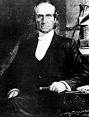
On 18th January 1801, James Evans was born in Hull. A teacher, Methodist minister and linguist, he developed a script for the previously unwritten Ojibwe and Cree languages, leading to almost universal literacy among speakers of these languages. d23.11.1846 in Canada.

james evans

January 17th

On 17th January 1527, George Ableson, a wheelwright from Hutton Cranswick, claimed sanctuary at the church of St John, Beverley, for debt.

On 17th January 1583, William Lyon, fisherman of Yarmouth, obtained permission to move with his family to Hull, to become a freeman, to set up business as a fisherman and train others in the trade, giving a surety of £40, but also receiving £10 in expenses towards his costs.

On 17th January 1786, Capt Edward Thompson died of fever in post, aged about 48.   Born in Hull, the son of a merchant. Naval commodore; he wrote an account of the Battle of Quiberon Bay in 1759; he was responsible for organising the government of West Indian colonies of Berbice, Demerara and Essequibo. He was acquitted at court martial of leaving his station in 1781. He published a number of satirical poems, sea songs, plays and a report of naval life. b c1738

Capt EdwdThompson


January 16th

On 16th January 1518, John Frost of Twing on the Wold (presumably modern Thwing) claimed sanctuary at the church of St John, Beverley, for debt.

On 16th January 1537, John Hallam and about 20 men entered Hull on market day, planning to seize the town and re-start the Pilgrimage of Grace. Hallam was betrayed by a man called Fowberry of Newbald, and arrested.

On 16th January 1642, William Cavendish, Earl of Newcastle, was appointed by King Charles I as the Governor of Hull, but the Parliament’s choice of Hotham prevailed with the support of the Mayor and aldermen.

Pilgr Grace

January 10th

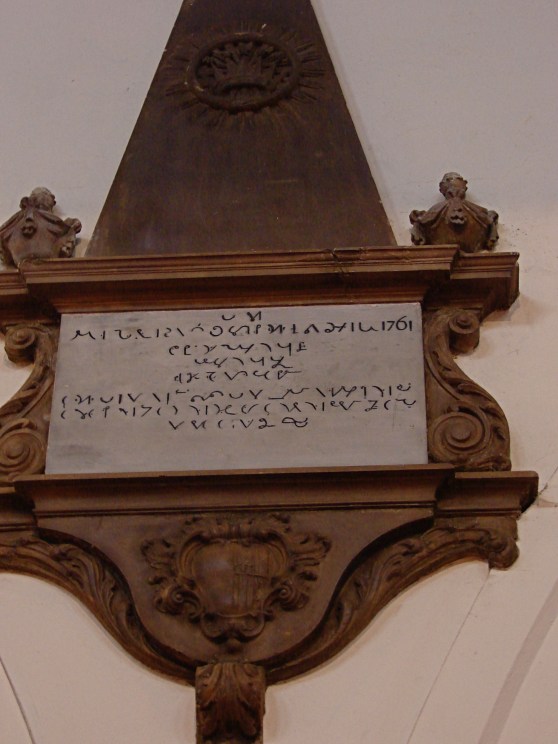
st mary's sculcoates.JPG

On 10th January 1308, Ivo de Etton of Temple Hirst, near Selby, and William de la Fenne from Faxfleet had been preceptors (heads) of local houses of the outlawed Knights Templar order, when they were arrested and imprisoned by Henry II on instructions of Pope Clement V. Also arrested were Richard de Ryston, chaplain, Thomas Tyeth, claviger (or warden), and Roger de Hugunde or Hogyndon, a brother in residence at Faxfleet, and Adam de Crake, claviger, at Temple Hirst.

On 10th January 1511, Richard Elynor of North Cave claimed sanctuary at the church of St John, Beverley, for a felony, but the register does not give any detail of his crime.

On 10th January 1537, Sir Francis Bigod, of Settrington, and John Hallam, of Cawkeld near Watton, met to discuss rekindling the Pilgrimage of Grace, which had ended in December with promises to restore the monasteries and hold a Parliament at York. They planned to seize Hull and Scarborough before they could be fortified.

On 10th January 1646, Stephen Thompson of Humbleton was fined £400 as the owner of Scarborough Castle and a Royalist (a ‘delinquent’) in order to recover his goods which had been sequestered by Parliament.

On 10th January 1761, Mrs Jane Delamoth died in Hull. Her memorial in St Mary’s Sculcoates may be the only memorial written in shorthand in the world. It says: ‘In the vault beneath this stone lies the body of Mrs Jane Delamoth, who departed this life 10thJanuary 1761. She was a poor sinner, but not wicked without holiness, departing from good works, and departed in the faith of the Catholic Church, in full assurance of eternal happiness, by the agony and bloody sweat, by the cross and passion, by the precious death and burial, by the glorious resurrection and ascension of Our Lord and Saviour Jesus Christ’. see photo

On 10th January 1783, Rear Admiral John Storr died in Hilston. He is buried in Westminster Abbey. (b 18.8.1709) He commanded the Revenge at the Battle of Quiberon Bay 20.11.1759. His father Joseph built Storr’s Tower at Hilston in 1750. It served as a hospital for troops camped on the coast in 1794–5 and later as a cottage, but was disused in 1990. His memorial is in Hilston church.

On 10th January 1849, Cottingham land agent Thomas Spenceley reported that he had measured the distance from the Spa Inn, Aldbrough to the sea in 1832 and again in 1848 and the loss of land due to coastal erosion was 28 yards in that period. On 6.8.1832 the distance was 160 yards; on 11.8.1848 it was 132 yards, an average loss of 5ft 3” per year.

On 10th January 1952, Madame Clapham (Mrs Emily Clapham) died aged 96, the former Court Dressmaker of Kingston Square, Hull. Her fashions for high society made Hull ‘the rage’ according to Sir Osbert Sitwell.

On 10th January 1968, Hull trawler St Romanus left port and made radio contact with the owners that evening. A Mayday call was heard, but not passed on. The official enquiry concluded ship probably lost on 11thJanuary, reason unknown.

On 10th January 1968, Hull trawler Kingston Peridot of Hull left port and was not contacted until after 26 January. The enquiry concluded she probably capsized on 26th  or 27th January, due to extreme weather.
December 31st

On 31st Dec 1458, Robert Foster enrolled into post as Collector of Customs, joining existing staff Thomas Everyngham (Collector) and Thomas Maygne (Controller).

On 31st December 1501, William Croswet of Hull claimed sanctuary at the church of St John, Beverley, for debt.

On 31st December 1511, Audrey, or Etheldreda, spinster from Lincolnshire, claimed sanctuary at the church of St John, Beverley, for a felony; the register gives no detail of her offence.

On 31st December 1626, the Council of the North summoned a representative of the Hull Corporation to appear and explain Hull’s failure to provide ships ordered. (Under Charles I’s unpopular Ship Money tax, Hull was required to provide the cost of 3 ships in 1626, and appealed against the decision, saying it was too much).

On 31st December 2007, new research revealed that the Hell’s Gate, Hunsley archaeological dig site site was an Anglo-Saxon execution cemetery (mid 7thC to early 11thC). The heads would have been displayed on posts  at the site between Welton and Cave. 12 male Anglo-Saxon skeletons, 10 of them headless, were found in a Bronze Age barrow in the 1960s, and known as the Walkington Wold burials.

Hell's Gate

December 26th

On 26th December 1220, William de Forz II, Count of Aumale and Lord of Holderness was with King Henry III at the Royal court at Oxford; the King made an appointment William hoped to get; disappointed, he left Oxford for Lincolnshire, and began a rebellion, known as the war of Bytham.

On 26th December 1489, George Gusterd, weaver of Bishop Burton, claimed sanctuary at Beverley for the murder of a servant of Edward Barnaby, a gentleman. He did not know the servant’s name.

On 26th December 1495, William Middleton was threatened with a pole-axe by John of Cottingham, John of Wawne, Thomas Warde, Robert Bate, and (- ) Mykill, and was so afraid for his life that he took sanctuary in Wawne church and stayed there for 10 hours, afterwards leaving the area. He applied to the Chancery Court for leave to prosecute his attackers, but the outcome is not recorded.

On 26th December 1645, Rev Nicholas Osgodby was reported to be using the forbidden Prayer Book in secret.

On 26th December 1750, the chapter house roof of Howden church collapsed, to join the rubble of the chancel which had collapsed in 1696.

On 26th December 1890, residents of Hornsea had a fair on the frozen surface of the Mere, and a sheep was roasted on the ice.

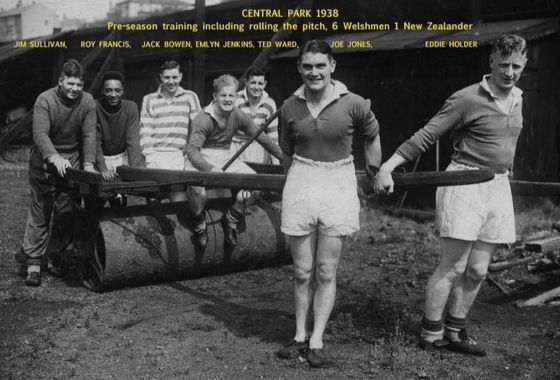
On 26th December 1955, Roy Francis played his last game after 6 years with Hull FC, and became UK’s first black professional sporting coach, and team manager 1971 to 1973.

roy-francis