February 18th

Pilgr Grace

On 18th February 1537, Sir Francis Bigod entered Beverley with 3-400 men on the renewed Pilgrimage of Grace.

On 18th February 1620, The King’s Players performed 5 plays at Londesborough House over a 4-day period at Shrovetide, for the Earl and Countess of Cumberland. The Cliffords regularly had entertainment at the house, hosting 13 different companies of players, and many musicians. Shakespeare had been the company’s leading playwright (he died in 1613).

On 18th February 1657, Sir Henry Slingsby, a Royalist prisoner in the Hull blockhouse, attempted to bribe Captain John Overton and incite the soldiers to go over to the King. Ralph Waterhouse, commander of the South Blockhouse, was also approached by Slingsby, who said that King Charles had offered him a commission, and said 600 men were at Paull ready to march into Hull. Slingsby was executed in 1658.

On 18th February 1786,  Elizabeth Dearing, aged 20, died in Fitling, cause unknown. She was the 3rdgeneration of the Dearing family to be recorded in the Humbleton parish register as Papist. Later generations who died there are not so described.

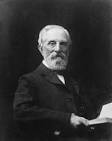
On 18th February 1945, Thomas Sheppard died aged 68 in Hull. He was a self-taught geologist, archaeologist and prolific author. He devoted 40 years of his life to Hull’s museums, abolished admission charges in 1902 and increased visitors to 2,000 per week. (born 2.10.1876 in South Ferriby) see photo

Thomas Sheppard Monster Footprint

February 3rd

On 3rd February 1727, John Marshall of Preston left in his will the income from land rents, to be used to buy 6 white loaves, given to the poor in Preston every Sunday. Marshall Avenue in the village is named for him.

On 3rd February 1832, James Acland was escorted by a crowd of many thousands of supporters (he said 20,000) on returning to Hull after being prosecuted for libel by Hull Corporation (he had accused them of corruption). The town won the case, but were awarded damages of a farthing. Acland, however, was unable to pay his legal costs.

On 3rd February 1854, Robert Bowser, treasurer Hull Zoological Gardens, and ship’s surgeon William Gedney introduced to Queen Victoria 3 Inuit people; they had come to Hull the previous year with Capt Bowlby. Tookoolito had learned English from whalers, and was later to have a long career as an interpreter. She, her husband Ipirvik and a boy Akulukjuk, returned to the Arctic after 2 years.

Tookoolito

January 15th

On 15th January 1741, John Jenkinson of Hull was indicted at Hull Quarter Sessions for ‘laying his dirt at Beverley Gates’.

On the same day, Jeremiah Gibson was also indicted for ‘scattering dirt from the High Church (i.e. Holy Trinity) all the way to without Mytongates’.

On 15th January 1885, Thomas Escritt died aged 87 at Cranswick. Known as ‘the Bishop of Cranswick’, he was a powerful Primitive Methodist preacher. Each day for 60 years, on his walk to farm work at Burn Butts, he stopped at the same spot to pray for the people of Cranswick. It was said that no grass would grow on this spot, until the 1930s, when the airfield was built over it. photo shows view from Burn Butts

On 15th January 1993, Don Suddaby, Fellow Royal Institute of Chemistry, played himself in the film “Lorenzo’s Oil’, released on this date. Suddaby was an analytical chemist working for Croda International, Hull, who took on a challenge to find a formula for erucic acid to halt neurological damage. Suddaby died later in 1993.


sledmere from...

January 12th

On 12th January 1808, Robert Escritt and John Paul, agricultural labourers, were probably the last people to be sentenced to the pillory in Driffield. They were found guilty of blackmailing gentleman farmer Francis Brown of Kelleythorpe, after accusing him of raping John Paul. They were sentenced to stand in the pillory at Driffield on 3 consecutive market days, and to a year in the House of Correction, Beverley. N.B. Sodomy was punishable by hanging at the time.

On 12th January 1819, William Clowes, one of the founders of Primitive Methodism,  began an evangelical mission in Hull, preaching in an old factory in North Street.               (b12.3.1780 Burslem, d3.3.1851, buried in Western General Cemetery).

On 12th January 1963, Hull Pilot cutter J.H. Fisher sank west of Spurn Point after colliding with the oil tanker Esso Glasgow, heading for Saltend in a blinding snowstorm. All crew were safely taken off. During the coldest weather in Britain since 1740, pilots also had to cope with ice-floes off Spurn, and the River Humber itself freezing near Brough. photo credit: Ian Burrett

Big Freeze 1963


January 10th

st mary's sculcoates.JPG

On 10th January 1308, Ivo de Etton of Temple Hirst, near Selby, and William de la Fenne from Faxfleet had been preceptors (heads) of local houses of the outlawed Knights Templar order, when they were arrested and imprisoned by Henry II on instructions of Pope Clement V. Also arrested were Richard de Ryston, chaplain, Thomas Tyeth, claviger (or warden), and Roger de Hugunde or Hogyndon, a brother in residence at Faxfleet, and Adam de Crake, claviger, at Temple Hirst.

On 10th January 1511, Richard Elynor of North Cave claimed sanctuary at the church of St John, Beverley, for a felony, but the register does not give any detail of his crime.

On 10th January 1537, Sir Francis Bigod, of Settrington, and John Hallam, of Cawkeld near Watton, met to discuss rekindling the Pilgrimage of Grace, which had ended in December with promises to restore the monasteries and hold a Parliament at York. They planned to seize Hull and Scarborough before they could be fortified.

On 10th January 1646, Stephen Thompson of Humbleton was fined £400 as the owner of Scarborough Castle and a Royalist (a ‘delinquent’) in order to recover his goods which had been sequestered by Parliament.

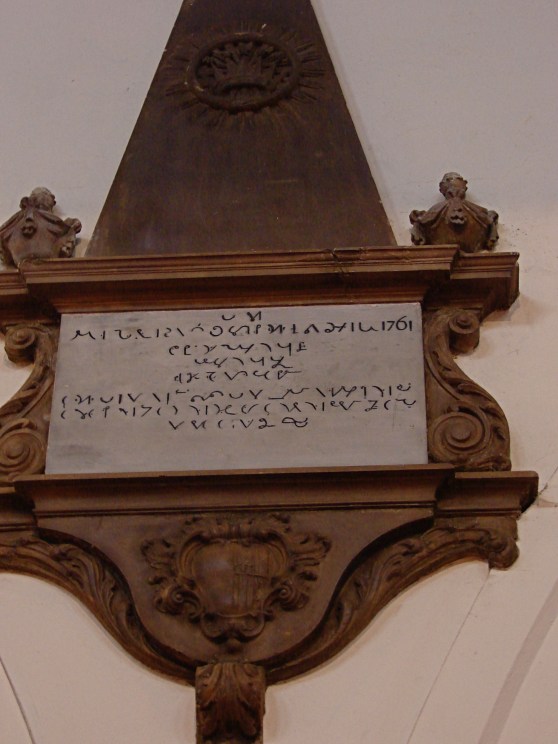
On 10th January 1761, Mrs Jane Delamoth died in Hull. Her memorial in St Mary’s Sculcoates may be the only memorial written in shorthand in the world. It says: ‘In the vault beneath this stone lies the body of Mrs Jane Delamoth, who departed this life 10thJanuary 1761. She was a poor sinner, but not wicked without holiness, departing from good works, and departed in the faith of the Catholic Church, in full assurance of eternal happiness, by the agony and bloody sweat, by the cross and passion, by the precious death and burial, by the glorious resurrection and ascension of Our Lord and Saviour Jesus Christ’. see photo

On 10th January 1783, Rear Admiral John Storr died in Hilston. He is buried in Westminster Abbey. (b 18.8.1709) He commanded the Revenge at the Battle of Quiberon Bay 20.11.1759. His father Joseph built Storr’s Tower at Hilston in 1750. It served as a hospital for troops camped on the coast in 1794–5 and later as a cottage, but was disused in 1990. His memorial is in Hilston church.

On 10th January 1849, Cottingham land agent Thomas Spenceley reported that he had measured the distance from the Spa Inn, Aldbrough to the sea in 1832 and again in 1848 and the loss of land due to coastal erosion was 28 yards in that period. On 6.8.1832 the distance was 160 yards; on 11.8.1848 it was 132 yards, an average loss of 5ft 3” per year.

On 10th January 1952, Madame Clapham (Mrs Emily Clapham) died aged 96, the former Court Dressmaker of Kingston Square, Hull. Her fashions for high society made Hull ‘the rage’ according to Sir Osbert Sitwell.

On 10th January 1968, Hull trawler St Romanus left port and made radio contact with the owners that evening. A Mayday call was heard, but not passed on. The official enquiry concluded ship probably lost on 11thJanuary, reason unknown.

On 10th January 1968, Hull trawler Kingston Peridot of Hull left port and was not contacted until after 26 January. The enquiry concluded she probably capsized on 26th  or 27th January, due to extreme weather.

January 7th

On 7th January 1651, John Shaw was confirmed in post as Master of Hull Charterhouse; a radical, he was already a very popular Lecturer (i.e. preacher) at Holy Trinity. The previous incumbent at the Charterhouse, Wm Styles, had said he would never quit the post voluntarily if Shaw were to replace him.

On 7th January 1884, the steamer European landed in Hull, bringing the Spurn lifeboat for repair from Holland, where it had been found on the Dutch island of Texel after breaking from its moorings in a gale on Christmas Day.

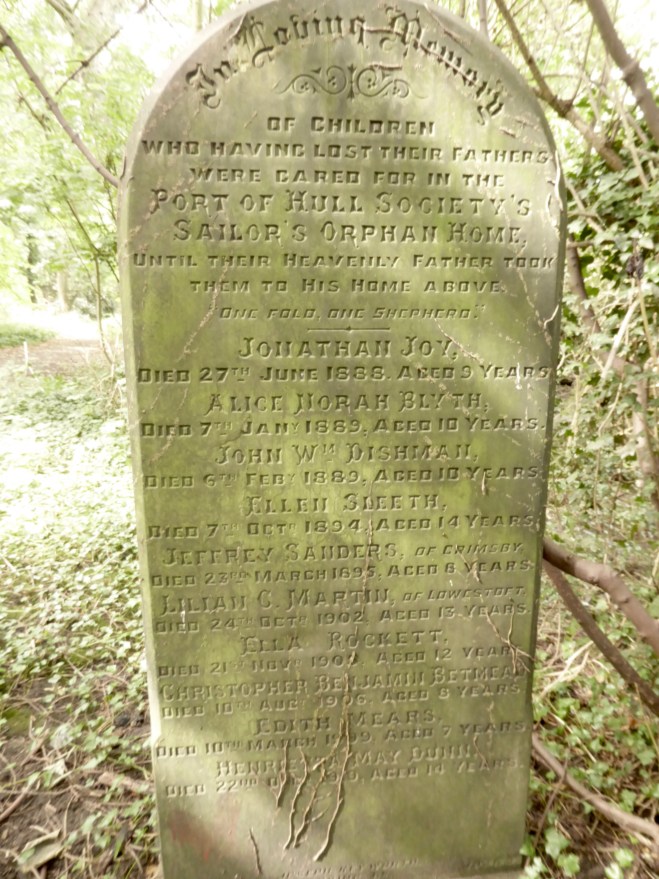
On 7th January 1889, Alice Norah Blyth, aged 10, died in the care of Port of Hull Society’s Sailor’s Orphan Home.

Orphan deaths, Sailor's Orphan Home
Western General Cemetery

January 5th

On 5th January 1304, Sir John de Sutton was pardoned, because of his military service to King Edward II in Scotland, for taking hares in the King’s warren of Holderness.

On 5th January 1773, Mrs Bridget Briggs of Sproatley died and left money in her will to educate 10 poor boys and 10 poor girls in the village.

On 5th January 1824, the Port of Hull Society for the Religious Instruction of Seamen set up a nautical school for seamen and apprentices to receive practical and academic instruction, open several evenings a week. Many of the early students were illiterate.

On 5th January 1836, Captain James Clark Ross left Hull on an expedition to resupply 11 whaling vessels trapped in Arctic ice. About 600 men were in the overwintering ships.

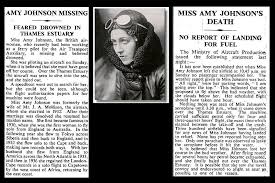
On 5th January 1941, Amy Johnson, while flying for the Air Transport Auxiliary from Blackpool to RAF Kidlington, went off course in bad weather and bailed out as her aircraft crashed.  An attempt was made to rescue her, but she died and her body was never recovered. There is still, however, controversy surrounding the circumstances of her death in the Thames.

AmyJohnson death

December 26th

On 26th December 1220, William de Forz II, Count of Aumale and Lord of Holderness was with King Henry III at the Royal court at Oxford; the King made an appointment William hoped to get; disappointed, he left Oxford for Lincolnshire, and began a rebellion, known as the war of Bytham.

On 26th December 1489, George Gusterd, weaver of Bishop Burton, claimed sanctuary at Beverley for the murder of a servant of Edward Barnaby, a gentleman. He did not know the servant’s name.

On 26th December 1495, William Middleton was threatened with a pole-axe by John of Cottingham, John of Wawne, Thomas Warde, Robert Bate, and (- ) Mykill, and was so afraid for his life that he took sanctuary in Wawne church and stayed there for 10 hours, afterwards leaving the area. He applied to the Chancery Court for leave to prosecute his attackers, but the outcome is not recorded.

On 26th December 1645, Rev Nicholas Osgodby was reported to be using the forbidden Prayer Book in secret.

On 26th December 1750, the chapter house roof of Howden church collapsed, to join the rubble of the chancel which had collapsed in 1696.

On 26th December 1890, residents of Hornsea had a fair on the frozen surface of the Mere, and a sheep was roasted on the ice.

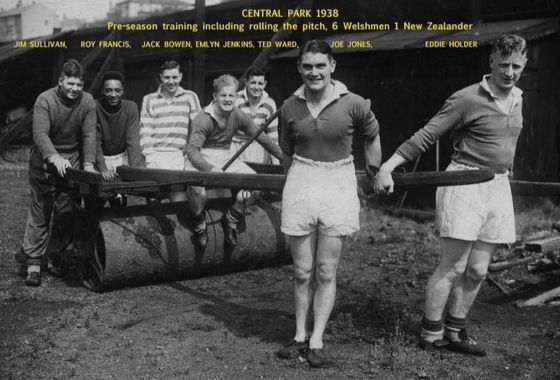
On 26th December 1955, Roy Francis played his last game after 6 years with Hull FC, and became UK’s first black professional sporting coach, and team manager 1971 to 1973.

roy-francis

December 20th

On 20th December 1584, Rev John Lothropp was born and baptised in Etton. He became a Congregationalist minister, was imprisoned and released on condition he did not preach or hold meetings. He took some of his congregation with him to America and is considered one of the first American spiritual leaders.

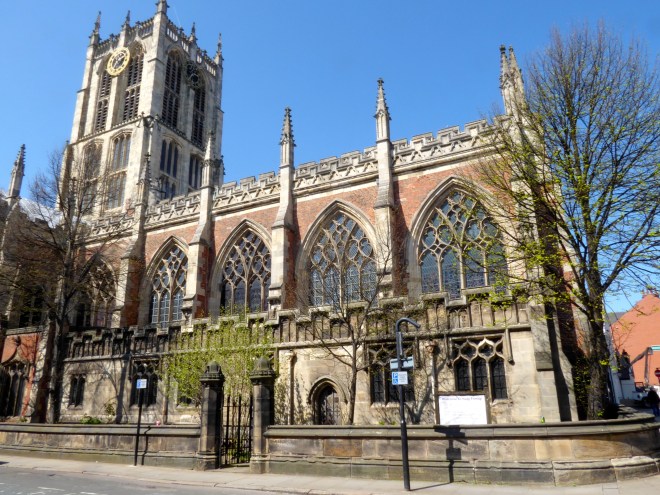
On 20th December 1661, an Act of Parliament was passed to separate the church and parish of Holy Trinity, Hull from Hessle, setting out the responsibility of the town for assessing and collecting a rate from which they should pay the vicar £100 a year.

On 20th December 1830, the Mayor of Hull started a collection for Greenland whalers and their families, after a disastrous season of ship losses and low catches.


Holy Trinity

December 18th

On 18th December 1594, Katherine Johns, chambermaid to the Clifford family, on behalf of Lady Grissell, paid 2s to the Beverley waits, presumably for performing at Londesborough House.

On 18th December 1612, Sir Francis Clifford bought 30 young elm trees to enhance the woodland of the house; it took 3 men with a cart and 5 horses to transport them.

On 18th December 1745, Thomas Owst of Halsham, a ‘popish recusant’, was given licence to travel to Drax to see his wife, who was ill. Catholics were forbidden to travel more than 5 miles from home without permission.

On 18th December 1824, Sir John Hall was born in Hull. Emigrated aged 27 to New Zealand, where he became the 12thPrime Minister, and moved the Parliamentary Bill that gave women the vote in 1893. (d 25.6.1907, Christchurch NZ) see photo

On 18th December 1919, the Clerk to the Hull Local Profiteering Committee, wrote to the Board of Trade, suggesting that an inquiry be held into possible profiteering by Hammonds Ltd. They had sold to Mr E.R. Kidby of Plane Street, 4 knitting needles for 1s 01/2d, on which Hammonds said they made 1 1/2d profit. The complaint was not upheld, as the needles were bought before the Profiteering Act 1919 came into force, but the BoT suggested making another purchase, and they could then investigate.

Sir John Hall