March 22nd

On 22nd March 1503, Elizabeth, Duchess of Suffolk, died and the Hull Mayor acquired  the Charterhouse and the lands it owned in Cottingham, Hessle, Westella, Myton, Willerby, and Tranby.

On 22nd March 1581, Hull surgeon John Kydd was made a burgess of the town in consideration of his service on local ships setting out to apprehend pirates.

On 22nd March 1834, labourer Robert Billany of Thorngumbald  was found guilty at York Castle Assizes of setting fire to a stack of straw belonging to Peter Ingleby, and was sentenced to execution, although he was reprieved as there was doubt as to the soundness of his mind.

johnnykidd&pirates.jpeg

March 16th

Kiplingcotes

On 16th March 1589, Robert Dalby (or Drury), priest, was executed for treason as a Catholic priest. Born in Hemingbrough, he was a Protestant minister, then ordained as a Catholic priest at Chalons in 1588, and was arrested on landing at Scarborough.

On 16th March 1660, the ship of Richard Williamson of Scarborough rammed the dolphin at the entrance to the River Hull, and was sunk. Trinity House was entitled to charge for repairs, but were lenient and only fined him £3.

On 16th March 1695, John Roxby & John Field (Ferriby) and Henry Watson and Benjamin Galland (Swanland) were chosen by the parish as Overseers for the Highways for the following year, Ferriby and Swanland being in the same parish, but choosing separate officers.

On 16th March 1879, Colonel Sir Tatton Benvenuto Mark Sykes, (usually known as Sir Mark) was born in Sledmere. He was a traveller, author, MP for Hull Central, advisor to the Government on Middle East affairs, and co-author of the Sykes-Picot Agreement, which partitioned the Ottoman Empire. (died of flu 16.2.1919)

On 16th March 1939, Jean Farrow of Hull was the first ever female winner of the Kiplingcotes Derby, on Masterful.

Sykes-Picotagmt1916


March 12th

On 12th March 1511, Elizabeth Nelson, spinster of Pollington, claimed sanctuary at the church of St John, Beverley, for felony and murder of an infant (possibly her own child) at Hull.

On 12th March 1553, on the surrender to King Edward VI of the castle and fortifications at Hull, the King granted to Ralph Constable former monastery lands in Swine, Newton Grange, and all the extensive lands formerly belonging to the dissolved Hospital of St Sepulchre, Hedon. He was also the tenant of the site of Hull Charterhouse.

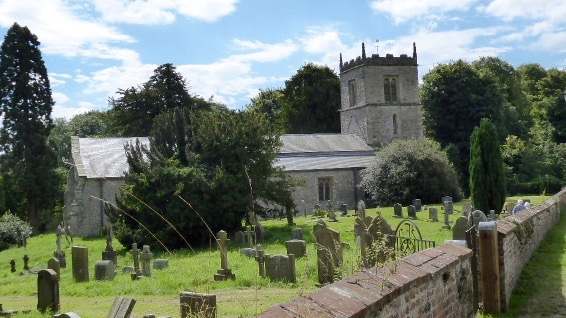
On 12th March 1622, Josias Lambert, schoolmaster, left the employment of Francis Clifford, Earl of Cumberland, after 9 months teaching ‘scholars’, which may have included some of the Londesborough House household staff and/or their children. The Earl also supported the village school at (Market) Weighton. photo shows Londesborough church

On 12th March 1647, Sir Matthew Boynton died at Bainton aged 56. Sheriff of Yorkshire twice, MP twice (once for Hedon and once for Scarborough), 1stBaronet, of Barmston. He helped capture Sir John Hotham when he intended to surrender Hull to the Royalists. His son Colonel Matthew Boynton was killed fighting for the Royalists in the Battle of Wigan Lane in 1651. (bapt 26.1.1591)

On 12th March 1697, the Brethren of Hull Trinity House charged almost £21 for the launch of the 60-gun Royal Navy ship HMS Kingston from Hessle. Work included laying buoys from the launching site to Hull.

Londesborough

March 11th

bearward

On 11th March 1214, Hawise, Countess of Aumale and heir of the Seigniory of Holderness, died single, having been widowed 3 times.  In 1212, she refused to marry for a 4thtime, for which she had to pay a fine to King John of 5,000 marks (about £1700) (some sources say she died before 8.3.1214)

On 11th March 1296, John Romanus (John le Romaine) Archbishop of York, died aged about 66 in the Archbishop’s Palace, Bishop Burton; he was buried in York Minster. He protected poor villagers in 1286 by ordering his parish priests in Holderness not to demand tithes from those earning 5shillings a year or less.

On 11th March 1522, Beverley bearward John Grene was tried for slander, by calling Percevall Robson, draper, a ‘Scottish bird’. Grene apologised for speaking in anger, and was rebuked and forgiven by Robson.

On 11th March 1616, Father Thomas Atkinson was hanged, drawn and quartered at York Castle at the age of 70. Born in the East Riding and trained in Douai as a Catholic priest, Atkinson spent 30 years as an itinerant priest in the Howden area, ministering to local Catholics, and hiding in their homes. He was captured in the Vavasour house in Willitoft. He was beatified 1987. A young man at the execution bought the priest’s stockings from the hangman, as a holy relic. Identified as a Catholic, he was imprisoned.

On 11th March 1858, Brother John of the Yorkshire Catholic Reformatory took some boys, for a treat, to slide on the ice-covered Market Weighton Canal; 5 boys fell through and, attempting to save them, he also fell through the ice. They all had to be rescued by passing bargemen.

On 11th March 1859 at 6a.m., ostler John Sissons was found hanged in one of the stables of the George & Dragon Inn, Aldbrough. He was described as an aged man of respectable family. The inquest verdict was of suicide due to temporary insanity.

March 9th

Trinity House

On 9th March 1767, Beverley Coroner’s Court jury found  (James?) Brown, aged 30, guilty of poisoning his wife, aged 45 and of independent means. Brown appears to have escaped to London, but was arrested and found guilty, his sentence commuted to 7 years’ transportation.

On 9th March 1801, at the request of the Admiralty, Hull Trinity House sent 12 Hull men as North Sea pilots to support the naval force at Yarmouth preparing to attack Copenhagen.

On 9th March 1858, servant Sarah West was overtaken by a severe snowstorm at Newbald Wold whilst returning from a visit to her parents in Market Weighton; she was under a snowdrift for 2 days, but was discovered by a shepherd and nursed back to health.

On 9th March 1984, Christopher Laverack, aged 9, of Anlaby, disappeared from his sister’s home, and his body was found in Beverley Beck 2 days later. It was not until 2012 that the murder enquiry was closed, when police identified his uncle, Melvyn Read, as the killer. Read had died in 2008.

March 6th

On 6th March 1851, two days of severe storms, coupled with high tides, caused several breaches in Spurn Point, and made the Low Light insecure. The lifeboat was damaged, and several of the crew’s cottages were flooded. The extraction of gravel was halted, but did not finally end for many years.

On 6th March 1862, Joseph Wildridge, aged 14, apprentice, was attacked by another apprentice, probably named William Webb, on board Hull fishing smack Fairy. He was  so severely injured that he had to be returned home by another vessel, and died on 9thApril. He was unable to report on the events leading up to his attack, and a court case failed to prove a case against his assailant, as the crew would not testify.

On 6th March 1883, a great storm affecting the whole of the East coast resulted in huge losses in the Hull fishing fleet. Accounts vary: up to 230 Hull fishermen and 32 fishing smacks are recorded as lost.

On 6th March 1916, Zeppelin L14, after attacking Hull, dropped bombs on Burstwick and Owstwick, with no further casualties, before passing out to sea.

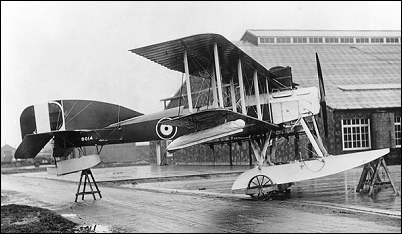
On 6th March 1919, the RAF Squadron 248 at Hornsea Mere seaplane station disbanded. From August 1918, it flew coastal patrols with Short 184 and Fairey Hamble Baby floatplanes off the Yorkshire coast. photo shows a short 184


short-184

February 26th

On 26th February 1381, Archbishop of York Alexander Neville announced his intention to visit Beverley, provoking a mass walk-out of Beverley clergy, most going to Lincoln or London. Neville replaced them with vicars choral from York but failed in his power struggle.

On 26th February 1552, Sir Michael Stanhope was executed on Tower Hill, London, for instigating rebellion, and conspiring to murder John Dudley, Duke of Northumberland. Stanhope was a Nottinghamshire knight, twice Governor of Hull, where the townspeople complained to the Privy Council of his high-handedness. He also acquired a great deal of land after the Dissolution, including in Sutton-on-Hull.

On 26th February 1671, Robert Constable, Viscount Dunbar of Burton Constable, was indicted at Middlesex Sessions Court with the murder of Peter Varnall and confessed. Hi accomplices were Peter Savage and John Fennick. It seems that Varnall was the innocent victim of young aristos on a drunken spree.

On 26th February 1869, Christopher Sykes, MP for the East Riding of Yorkshire, moved the Bill which later in the year became the Sea Birds Preservation Act, supported by Rev HF Barnes-Lawrence of Bridlington. Up to 232,000 seabirds and eggs were killed, often shot for sport, each breeding season. This earned Sykes the nickname ‘The Gulls’ Friend’. See cartoon below.  Link is to film of ‘climmers’. https://www.youtube.com/watch?v=B5ynIfnmVK0

On 26th February 1903, Martin Samuelson, marine engineer, died at Hessle, aged 78. Owner of Martin Samuelson & Co, of Neptune Street, Hull, and later Sammy’s Point, who built hydraulic presses, steel boilers and early steel vessels, and the North Bridge. Hull councillor from 1853, Sheriff 1857, Mayor 1858, first colonel of Royal East Yorkshire Volunteer Artillery and JP. (born 2.1.1825 in Liverpool).

On 26th February 1914, the Coverdale family of Hollym played a football match against another family with 11 sons, the Charlesworths of Scunthorpe. The Coverdales won 3: 0.

On 26th February 1935, Thomas Edward Lawrence, known as T.E.Shaw, (‘Lawrence of Arabia’) left Bridlington when discharged from the RAF; he had been supervising armour-plating power launches for target practice. Whilst in Bridlington, he had lived at the Ozone Hotel, Bridlington (now Royal Yorkshire Yacht Club). There is a sundial dedicated to him in South Cliff Gardens.

On 26th February 1942, Pilot F/Sgt Reginald Francis Robb and 5 crew of Wellington bomber Z8536 took off from RAF Pocklington and crash landed at Yapham due to an engine fire. They jettisoned their bombs, but were caught in the blast and all the crew were lost. 4 are buried in Barmby Moor.
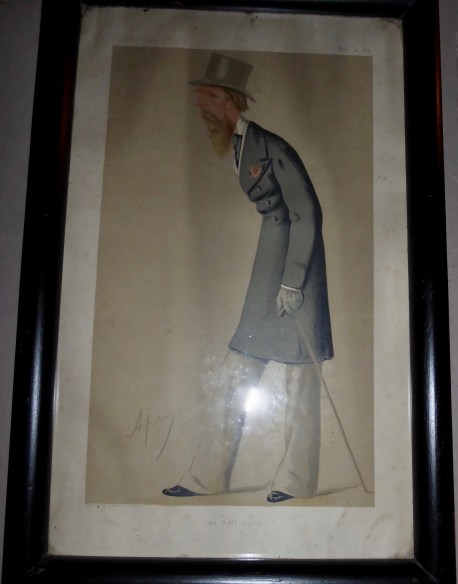
Christopher Sykes MP

February 24th

On 24th February 1814, John Taylor, aged 62, of Soffham Farm, Sutton-on-Hull, was in Chamberlain Road, on his way home from Hull, when he was shot by a man who leapt out from the hedge, robbed him of £30 and ran off. Taylor died a week later, but had identified his assailant as James Forbes, an Irishman. Forbes was tried at York but acquitted despite being identified, for lack of corroborating evidence.

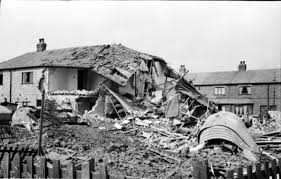
On 24th February 1942, Charles James Kent of Bristol Road, Hull, a foreman in the Rescue Party Service, was awarded the George Medal for gallantry in the rescue of Mrs Crawford (deceased) and Miss Crawford. They were trapped when their house in Eva’s Terrace, De la Pole Avenue, was demolished, and Kent managed to crawl to them and create space for jacks to be used.

On 24th February 1943, Thomas Cooper Kinchin, aged 27, 2ndofficer, of North Ferriby, was lost by enemy action aboard SS Stockport of Grimsby, an Atlantic convoy rescue ship.

Blitz

February 21st

On 21st February 1651, George Holroyd, vicar of Foston, was tried at York Castle and imprisoned for uttering a seditious sermon; he had preached against bloodshed on a day of thanksgiving for military and naval successes.

On 21st February 1803, Burnett’s Daily Shipping List reported that more than 100 small vessels got out of Hull harbour that morning and the night before.

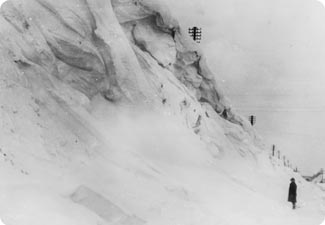
On 21st February 1947, 9 Jackson’s bread delivery lorries were trapped in a snowdrift overnight  on Arras Hill, Market Weighton. They were dug out by colleagues, who had to walk miles to reach them. The East Riding Council reported spending £3,000 a day to the Army to keep the roads open and get supplies to villages cut off by snow. photo shows Little Weighton railway cutting during that period

little weighton cutting 1947

February 19th

Pilgr Grace

On 19th February 1408, Henry Percy, 1stEarl of Northumberland, was killed in battle against King Henry IV, after supporting Edmund Mortimer’s claim to the throne. The Percies held lands across Yorkshire, the Lakes and Northumberland, but their main seat appeared to be Leconfield until the 16thC.

On 19th February 1499, William Fechet of Harpham claimed sanctuary at St Cuthbert’s church, Durham, for assaulting William Fox on 22ndOctober, striking him in several places with a sword; he assumed that Fox had died from his wounds, and fled.

On 19th February 1537, Sir Ralph Ellerker, the elder, chased Sir Francis Bigod and his men out of Beverley, and took 62 prisoners, who were taken to Hull. Bigod escaped. This appeared to be the end of the Pilgrimage of Grace in East Yorkshire.

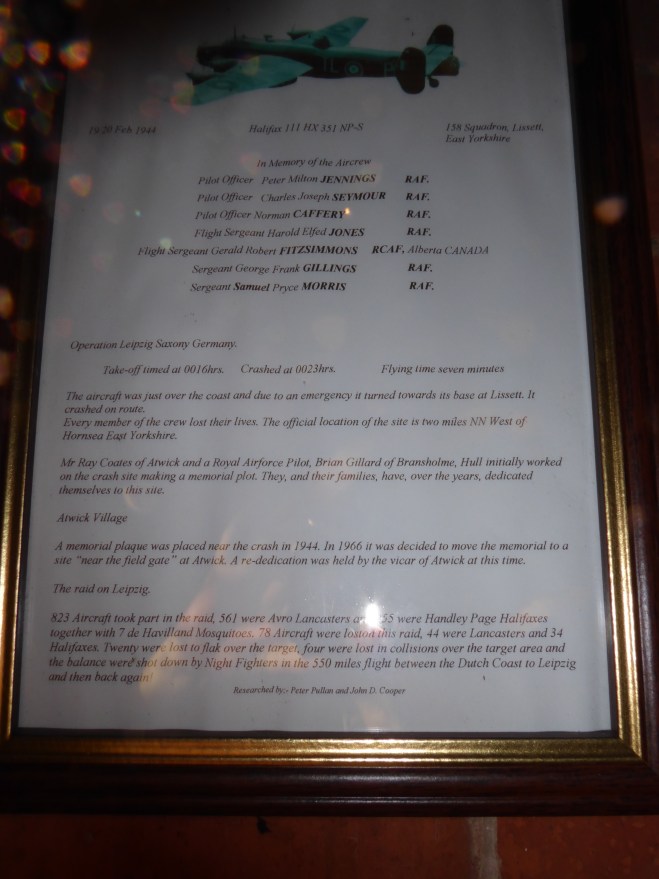
On 19th February 1944, a Halifax bomber crashed 2m NNW of Hornsea shortly after take-off, killing all 7 crew. Photo -notice in Atwick church. Sadly, I was unable to find the memorial.

Atwick Halifax crash