February 12th

On 12th February 1519, tailor William Bowman of Sewerby claimed anctuary in Flambrough parish church after assaulting William Johnson. At a coroner’s inquest at Bridlington 2 days later, the jurors reported that Bowman assaulted and killed Johnson with a staff on the king’s road between Sewerby and Bridlington, then fled to ‘Flaynburgh’. The King’s Bench declared Bowman an outlaw on 27.12.1519.

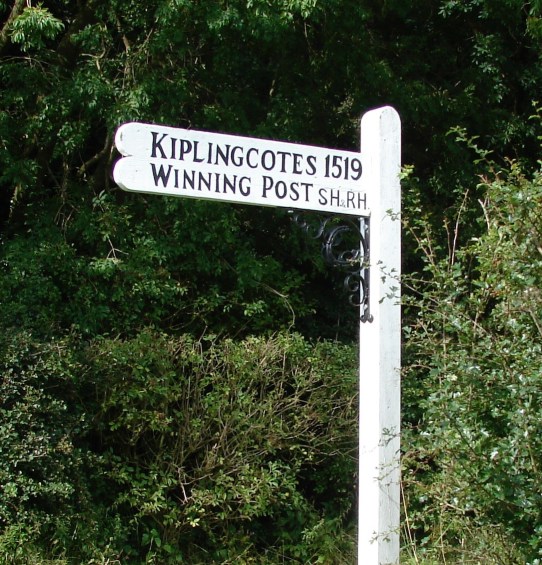
On 12th February 1556, in evidence given in court at York, Thomas Carter of Helperthorpe, 40, herdsman, made the first recorded reference to England’s oldest horse race, Kiplingcotes Derby.

On 12th February 1644, Sir William Constable of Flamborough led Parliamentary troops to capture the Royalist garrison at Bridlington, and took 159 prisoners. On their way back to Hull, they won a skirmish against the Royalists at Driffield.

On 12th February 1687, John Johnson, Rector of Cherry Burton recorded in his diary an earthquake at 3.45 on a Sunday afternoon.

Kiplingcotes

February 11th

On 11th February 1346, William de la Pole agreed to resume lending money to King Edward III, in return for the return of all his goods that were in the hands of the sheriff. Relations between the king and his banker were precarious, but he remained in favour for the time being…

On 11th February 1657, Thomas Cowlam, labourer, and Jane Millington were married in a private alehouse at Spaldington by Robert Browne, vicar of Eastrington.

On 11th February 1941 at 5.30p.m., an anti-aircraft shell fell in Jalland Street, Hull, with no casualties. The blitz on Hull reached its peak in May that year.

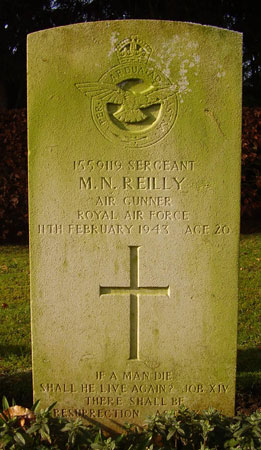
On 11th February 1943, Flt Sgt 785073 Harold E.R. Saunders died with 6 other crew (1 survived) when mechanical problems caused his Halifax bomber to crash near North Dalton, shortly after taking off from Pocklington. 6 of them are buried in Barmby Moor churchyard.

Halifax crash Feb 43


February 10th

On 10th February 1644, Sir William Constable of Flamborough led Parliamentary troops from Hull in routing the Royalists at Kilham.

On 10th February 1801, Sir Samuel Standidge, aged 75, died at Thorngumbald. He was born at Bridlington, and at age 19 was taken prisoner by privateers and taken to Rhode Island. Later in life he traded goods to Rhode Island and bought lands in Holderness, building New York Farm, Preston, to mark his financial success in New York.  He is credited with restarting the Hull whaling industry, acting as master of his own whaler.  Sheriff of Hull, Mayor, and warden of Hull Trinity House 5 times. His memorial is  in St Mary’s Lowgate, Hull.

On 10th February 1866, 6 days after running aground on the Isle of Juist, Germany, 15 people were rescued from the rigging of the ‘Excelsior’ of Hull, where they survived without food and water. Mrs Newton was considered a hero for her support of her fellow survivors.

On 10th February 1871, at least 70 mariners lost their lives in Bridlington Bay in the Great Gale, including 6 lifeboatmen. 23 vessels were lost. There is a mass grave in the Bridlington Priory churchyard, and an annual Fishermen’s Service was held for 100 years.

On 10th February 1893, Revd Francis Orpen Morris died aged 82 at Nunburnholme. Vicar at Nafferton 1844-1854, rector of Nunburnholme to 1893. Irish-born naturalist and author of children’s books, and books on natural history and architecture. Anti-feminist, anti-hunting and opposed to Darwinism. (b25.3.1810)

On 10th February 1898, Commander Cave, of Humber guard ship Galatea, rescued the crew of SS Marbella in the River Humber, near Humber Dock, Hull. The Marbella had problems with its steering gear, and almost collided with 2 ships before hitting the Galatea. The only passenger had to swim to safety, and the Marbella’s cargo of 41 horses were all lost. The Galatea was itself later stranded on the Hebbles sandbank, but refloated later.
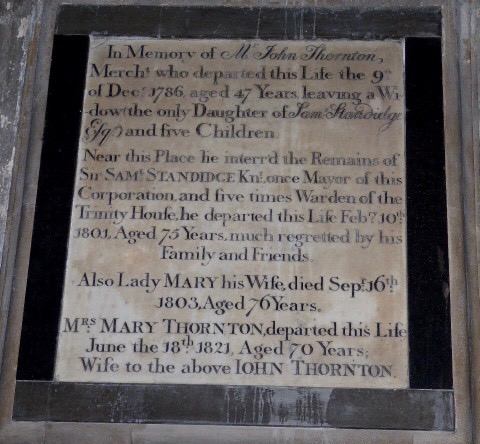
Saml Standidge memorial

February 6th

On 6th February 1611, Stephen Taylor, steward of the household and receiver-general at Londesborough House, home of the Earl of Cumberland, bought a barrel of white herrings from Hull merchant Mr Foddle. He also bought sea fish landed at Scarborough and Carlisle, but had bought eels from Thomas Williamson of Hull the previous December.

On 6th February 1889, John William Dishman, aged 10,  Died in the care of Port of Hull Society’s Sailor’s Orphan Home – photo: memorial in Hull Western General Cemetery

On 6th February 1901, William Bernard Traynor, a sergeant in the 2ndBattalion, West Yorkshire Regiment, went to the aid of a wounded man under heavy fire at Bothwell Camp, South Africa, and was severely injured; he was awarded the Victoria Cross ‘for valour’. Traynor was born in Moxon Street, Hull. (31.12.1870)

Orphan deaths, Sailor's Orphan Home
Western General Cemetery


February 5th

On 5th February 1538, widow Mabel Brygge, 32, servant of Holmpton, was examined by an enquiry headed by Sir Ralph Ellerker the younger. She was alleged to have carried out a ‘black fast’ with the aim of injuring King Henry VIII and the Duke of Norfolk, in relation to the King’s divorce and the Reformation. She was executed at York, along with John Dobson, vicar of Muston, and John Ainsworth, priest, who had also spoken out against the royal supremacy and Act of Succession.

On 5th February 1856, Humphry Sandwith, junior, MD, aged 34, had a public breakfast given in his honour as a war hero at Royal Station Hotel Hull.  He gained the Orders of St Stanislaus, Nishan Iftahar and Mejidie, and French Legion of Honour in the Crimean War. He was head surgeon at Hull General Infirmary 1847-48. Author of a number of memoirs, as well as 3-volume novel “Minsterborough’ about his upbringing in Beverley.

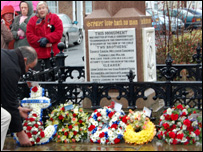
On 5th February 1909, George Gibbon, Melchoir Chadwick and Thomas Leng Major, fishermen, lost their lives attempting to rescue the crew of the coble Gleaner when it capsized. Their own boat also capsized, and all 6 lives were lost. A monument to this ‘Conspicuous Act of Bravery’ is in the village centre.


flambro

February 2nd

On 2nd February 1141, during the Anarchy, William of Aumale, Lord of Holderness and Earl of York led part of the cavalry protecting King Stephen, but were overrun by the Welsh and fled. The King was captured, and Matilda took the throne for a time. William remained loyal to Stephen.

On 2nd February 1786, Revd T.O. Rogers Hull opened the new Trinity House School with 36 pupils.

On 2nd February 1799, Capt Henry Gunter RN was in charge of HMS Nautilus when she was wrecked in a storm Off Flamborough Head; all the crew survived. She was leading a convoy of 22 merchantmen returning from the Baltic; one of the other ships was also wrecked.

On 2nd February 1801, Hull Trinity House paid relief of £1 1s to 4 seamen who had escaped from captivity in Russia.

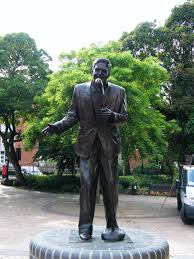
On 2nd February 1925, David Whitfield was born in Hull. A popular singer, he was the first UK male vocalist to earn a gold disc, and the first British artiste to reach No 1 simultaneously in the US and the UK. Commemorated by a statue outside the New Theatre. d 16.1.1980

David Whitfield


February 1st

On 1st February 1639, King Charles I issued an order to enclose Hull and improve its fortifications.

On 1st February 1714, a great wind caused damage in several places, and blew down Richard Stevenson’s house in Kilpin, then the fire in the hearth destroyed the remains.

On 1st February 1884, at the Hull Sanitary Congress, Hull City Hall, Rev Joseph Malet Lambert called for bold action to save hundreds of lives, and improve thousands more, by dealing with dreadful housing conditions, some of them a stone’s throw from the City Hall. The slums were cleared 20 years later.

On 1st February 1893, Hedon Gymnastic Society put on an ‘Assault-at-Arms’, with an appearance by a clown, and followed by a dance in the Board School room, Roos.

On 1st February 1922, Robert Anderson, 26 of 7 Emily Terrace, Gillett St was lost with 9 shipmates when Hull trawler Magneta was wrecked off Murmansk, under Russian arrest.

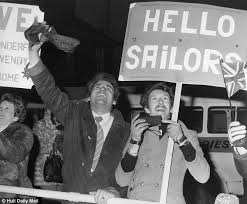
On 1st February 1983, 800 dignitaries, service representatives and families of the Norland crew gathered at the King George Dock Terminal Building, Hull. They were there to greet the return of North Sea Ferries Norland after over 9 months in the Falklands War supporting the troops. Unfortunately, 90 mph winds did not allow the ship to dock, and it rode out the storm in the Humber for several hours , by which time the banquet was over.  Hundreds of people were still there to greet them at the quayside in the evening. The Norland was refurbished and returned to the Rotterdam run on 20thApril.

Norland return

January 31st

Thos Ferres memorial

On 31st January 1631, Thomas Ferres died, aged 63. Mayor of Hull, Sheriff, and alderman, warden of Hull Trinity House. He left the Whitefriargate estate to Hull Trinity House, the rents to be used for the poor of the House. He also left bequests of over £1,000 to the poor. His memorial by local sculptor Earle is in Hull Minster.

On 31st January 1918, former Reckitt’s employee George William Trowell, 27, private with the East Yorkshire Regiment, win action on 23.4.17. No known grave. Was posted as missing, believed killed.  He was wounded in September 1916, discharged from hospital and returned to France.  He died in action on 23.4.17. He has no known grave.


January 27th

Pilgr Grace

On 27th January 1332, Sir John de Sutton was summoned to Parliament by writ and thereafter become Lord Sutton of Holderness.

On 27th January 1537, John Hallam and others captured during the attempt by the Pilgrimage of Grace to seize Hull were examined by local justices; Hallam and 2 others were condemned to death and the rest awaited the arrival of the Duke of Norfolk for a decision on their fate.

On 27th January 1599, the Earl of Pembroke’s Players arrived at Londesborough House for a week performing plays for the Shrovetide period, for payment of £15shillings.

On 27th January 1645,  14 Hull burgesses gave evidence that Thomas Swann was  not a Royalist, and should not have his property sequestered, but in fact was owed money by Parliament because his new house was demolished to build a defences for the town. His appeal failed.

On 27th January 1882, the Prince of Wales, the future King Edward VII, joined the Holderness Hunt at Brantinghamthorpe, which recorded 1,400 horsemen, 4,000 on foot and 1,000 in carriages.

On 27th January 1901, Joseph Smith of Hull, on board SS Friary, was the 7thand last Hull passenger to have died of pneumonic plague contracted in the Mediterranean. He is commemorated in the columbarium at Hedon Road Cemetery.

On 27th January 1924, Brian Norman Roger Rix, Lord Rix of Whitehall in the City of Westminster and Hornsea in Yorkshire,  was born in Cottingham. He was a comic actor, specialising in Whitehall farce; awarded CBE for his charity work; campaigner for people with learning disability. He was also awarded 8 honorary degrees, 5 fellowships and many other awards, and was the first Chancellor of the University of East London, and vice Lord Lieutenant of Greater London. d20.8.2016


January 22nd

On 22nd January 1430, Katherine Brigham of Ganstead died at Preston aged 6 months. She had been sent by her family to a wet nurse with the Twyer family and was buried at St Sepulchre’s Hospital.

On 22nd January 1621, John Ramsay, a Scottish aristocrat, was created 1stand only Earl of Holderness by James I; he appears to have had no connection with Holderness.

On 22nd January 1643, Nicholas Osgodby, vicar of St Mary’s Beverley, left his post to join the Royalist army.

On 22nd January 1907, John (Jack) Symons died in Hull aged 83. He was the first Jew to hold public office in Hull; 1857 Guardian of the Poor, 1875 alderman, 1890 Sheriff; a local historian with many publications, including ‘Hullinia’ and ‘Kingstoniana’.


St Mary's Beverley