July 18th

On 18th July 1509, Lockington labourer Christopher Wylton claimed sanctuary at the church of St John, Beverley, for theft.

On 18th July 1511, Tailor Thomas Mateson, of Stamford Bridge, claimed sanctuary at Beverley for the homicide of John Pott, also of Stamford Bridge, labourer.

On 18th July 1642, the first Hull siege ended after 17 days; as the Royalists withdrew to Beverley, they destroyed the sluice at Hull Bank, causing flooding in Newland, and probably set fire to St Andrew’s Church at Paull.

On 18th July 1833, the work of the Humber Pilots involved more than directing ships into harbour; the day’s work included: relaying 14 buoys; taking carpenters to Bull Float and relaying Transport buoy (at the entrance of the River Hull).

On 18th July 1878, Anthony Bannister JP died at Hessle aged 61; twice Sheriff and twice Mayor of Hull, Vice commodore of the Royal Yorkshire Yacht Club. Promoted the Hull to Withernsea rail line; he is commemorated by a street in Withernsea, by a statue in Hull, and an effigy in Hessle.

On 18th July 1929, Boothferry Bridge opened to traffic across the River Ouse, replacing the ferry which had operated there since the 14thcentury.

On 18th July 1941, Ernest Dean Hodgson of Deepdale Grove, Hull, member of the Rescue Service, was commended for the rescue of Mrs Pounder and her 3 children from a damaged air raid shelter in rustenburg St. For their actions on the same night, John Joseph McHugh of Lilly Grove, and Arthur George Dixon were both awarded the British Empire Medal.  The same raid caused major damage to Reckitt’s Dansom Lane HQ, about 75% of the buildings being destroyed.

On 18th July 1969, Barry Francis, 22, decky learner, was lost overboard from Hull trawler Arctic Vandal off the North Cape.

July 17th

On 17th July 1882, deckhand John Fryer, 18, was lost overboard from Hull trawler Superb in the North Sea.

On 17th July 1930, Amy Johnson sent a telegram to Ethel Leginska congratulating her on her brilliant pioneer achievement in conducting the Carl Rosa Opera Company’s production of Madame Butterfly  in London.

amy-leginska telegram

July 16th

On 16th July 1796, 10 days after the introduction of the Dog Tax of 5s per dog per year, the Hull Advertiser reported a considerable number of rotting dog carcases, after owners killed their dogs and threw them in the street.

On 16th July 1802, Dorothy Wordsworth, sister of poet William, visited Beverley with friends, commenting on the beauty of the town and the minster.

On 16th July 1807, a Bastardy examination of Ann Linwood, single woman of Hedon
revealed that the father of her son, born on 28 Jun 1807 in Hull was gunsmith Owen Probin. Owen Probin was murdered 7 years later (the events are probably not related).

On 16th July 1885, Hull & Barnsley Railway and the Alexandra Dock officially opened.

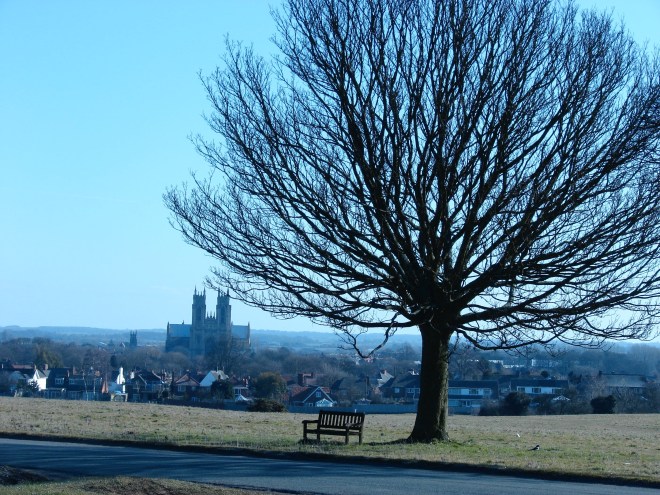
On 16th July 1904, the Beverley Guardian reported a new phenomenon, ‘the hatless brigade’, when pedestriansof both sexes had been seen in Hornsea without any head covering whatsoever.minster beverley.JPG

July 15th

On 15th July 1855, Hull-born John Sheppard, a Boatswain’s mate, attempted single-handedly to blow up a Russian warship at Sebastopol, Crimea, and was awarded the Victoria Cross ‘for valour’.

On 1th July 1868, John Ellerthorpe, the ‘Hero of the Humber’ died aged 62. He had rescued 39 people from drowning and was awarded the Royal Humane Society Silver Medal. Buried in Hull General Cemetery. (b 1806)

On the night of 14/15 July 1943, Bill Shepherd, engineer at Wm Jackson & Son Ltd, Derringham St, Hull, died when the factory was bombed; his colleague Sid Charlton escaped injury, as they dived for cover in opposite directions.


July 14th

On 14th July 1746, William Pulteney, MP for Hedon, Baron Hedon and the Earl of Bath, stepped down when after “48 hours, three quarters, seven minutes, and eleven seconds” he failed to form a government, and is now reckoned to be England’s shortest-serving Prime Minister. photo shows his portrait in Hedon Town Hall.

On 14th July 1873, Hull hosted the Royal Agricultural Show at Newington, on the site of the former race course; the event has been held at Stoneleigh since 1963.

On 14th July 1943, Ernest Wilson of Hutt Street, Air Raid Warden, and Charles Henry Burgess rescued Mr Cherry from his home in Leonard Street, Hull, during an air raid. Wilson was later awarded the British Empire Medal.

On 14th July 2007, (Florence) Eva Crackles, MA, MBE,  died aged 89. Botanist and teacher; Honorary Doctor of Science, Univ of Hull 1991; Fellow of the Linnean Socy; and Honorary Life member Botanical Societyy of Britain & Ireland. Some of her work can be seen on the external wall of the Wilberforce Health Centre, and she is commemorated by a cream plaque. (born 23.1.1918)

Wm Pulteney, Hedon MP

July 13th

On 13th July 1496, Bartholomew Pereson of Driffield claimed sanctuary at the church of St John, Beverley, for the murder of John Elyot.

On 13th July 1854, 3 men and a boy drowned when they fell off the Dowthorpe as it was being launched. About 300 people had boarded the ship before the launch, and deliberately rocked the boat. Many fell into the water and 4 drowned. A tug “Ann Scarborough’ was capsized by the number of people trying to board her from the water.

On 13th July 1936, Oswald Mosley, leader of British Union of Fascists,  found himself unable to book a hall in Hull. Mosley planned to give a speech in Corporation Fields, to recruit blackshirts to his organisation, but they were met with a large and hostile group of local people, and a riot ensued. Mosley was not able to give his speech.

On 13th July 1951, a fire broke out in No 1 Shed, Humber Dock, Hull, destroying £100,000’s worth of cargo awaiting shipping. The probable cause was said to be a discarded cigarette, and made worse by a gas leak.

Dowthorpe July 1854?


July 12th

On 12th July 1537, Robert Aske of Aughton was hanged in chains outside Cliffords Tower, York, after being convicted of treason in Westminster, as the leader of the Pilgrimage of Grace.

On 12th July 1641, Sir Thomas Glemham resigned his post as Governor of Hull, having only been appointed the previous year.

On 12th July 1714, Elizabeth Hodgson, a single woman of Hedon, was sentenced at Hedon Quarter Sessions to be stripped to the waist and whipped with birch or willows from the Town Hall to Harrison Lane and from there to the jail and to remain in jail at hard labour until ‘sufficient security’ was found for her good behaviour. Her crime was to give birth to her 4thillegitimate child. There is no record of any punishment for the father. An Act of 1792 forbade whipping females for any reason whatsoever.

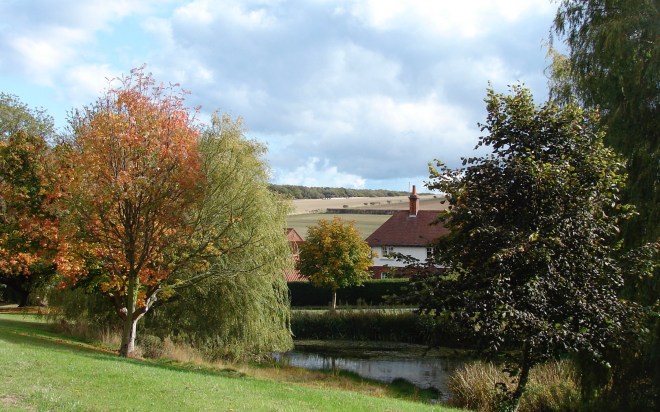
On 12th July 1826, (in one of the driest summers on record) Hessle banker Joseph Robinson Pease recorded in his diary there was no grass for the cattle, who had to be given linseed cake. Ponds and water tanks dry.  Around this time, too, the pond at Fridaythorpe dried up, and villagers went on a Sunday to nearby Fimber to take water from one of their 2 ponds, resulting in a pitched battle, referred to as ‘the Second Battle of Waterloo’. photo shows the remaining village pond at Fimber.

fimber pond.JPG

July 11th

On 11th July 1843, Archdeacon Wilberforce preached the last ever sermon in St Faith’s church, Leven, before it was demolished, leaving only the chancel, which was itself demolished in 1882.

On 11th July 1941, Special Constable George Brignall Marshall, aged 54, was killed in Hull by enemy action whilst on duty with East Riding of Yorkshire Constabulary during an air raid. Damage north of Paragon station and a major fire at Blundell Spence factory. 20 other people died, and 46 were seriously injured.

St Faith Leven

July 10th

On 10th July 1157, Eustace FitzJohn, Lord of Alnwick, died this day.  He acquired substantial lands in the north, and married into the ER family of de Vescy. Fought on the Scottish side in the Battle of the Standard in 1138. Founded priories in Bridlington, Watton and North Ferriby.

On 10th July 1508, John Tod of Swine claimed sanctuary at the church of St Cuthbert, Durham, for the theft of a horse and 5 marks from chaplain N. Dale, the steward of the Lord of Hastings, and also for debt. As he claimed the theft happened 10 years earlier, presumably the debt concerned him more.

On 10th July 1642, Sir John Meldrum arrived in Hull by boat with 500 Parliamentary troops, and money, to support the town being besieged in the 1st siege of Hull. A further 1,500 troops were sent later.

On 10th July 1869, Mr Tasker of Sheffield was found guilty at Bridlington of shooting 28 protected seabirds, and fined 2s6d for each bird killed, plus 9s costs.

On 10th July 1931, Paul Robeson, singer, actor and political activist,  performed at Bridlington Spa Royal Hall on his first trip to Yorkshire,  receiving several encores; when the Royal Hall re-opened after refurbishment in 1933, he returned to Bridlington.

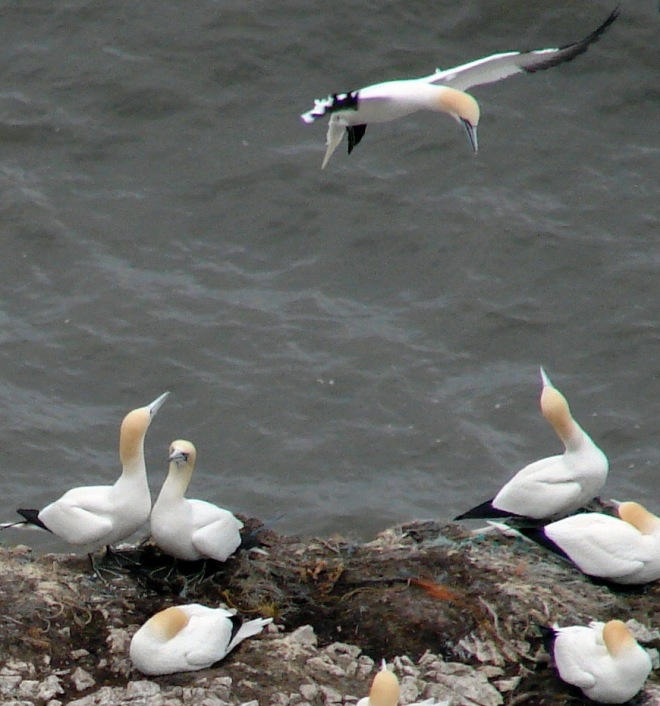
gannets

July 9th

On 9th July 1905, Robert Skilling, Hull chauffeur,  caused possibly Hornsea’s first motoring offence, when under the influence of drink, he drove at 20mph from Market Place into Newbegin without sounding his horn. About 200 people who had just come out of the parish church, had to scatter.  At Leven Petty Sessions Skilling was fined £3.

On 9th July 1915, Albert Baxter, private, and former Reckitt’s employee, died in action with the East Yorkshire Regiment and is buried in RE Farm Cemetery, Heuvelland.

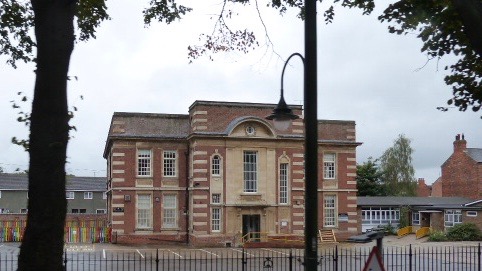
On 9th July 1952, Henry Saunderson, aged 13, the son of the skipper of the Cape Duner,  was a cadet at the Boulevard Nautical School who joined his father for a pleasure trip during the summer break, and was lost overboard. His father presented a cup in his memory at the school’s prizegiving day.


Nautical School Boulevard