February 26th

On 26th February 1381, Archbishop of York Alexander Neville announced his intention to visit Beverley, provoking a mass walk-out of Beverley clergy, most going to Lincoln or London. Neville replaced them with vicars choral from York but failed in his power struggle.

On 26th February 1552, Sir Michael Stanhope was executed on Tower Hill, London, for instigating rebellion, and conspiring to murder John Dudley, Duke of Northumberland. Stanhope was a Nottinghamshire knight, twice Governor of Hull, where the townspeople complained to the Privy Council of his high-handedness. He also acquired a great deal of land after the Dissolution, including in Sutton-on-Hull.

On 26th February 1671, Robert Constable, Viscount Dunbar of Burton Constable, was indicted at Middlesex Sessions Court with the murder of Peter Varnall and confessed. Hi accomplices were Peter Savage and John Fennick. It seems that Varnall was the innocent victim of young aristos on a drunken spree.

On 26th February 1869, Christopher Sykes, MP for the East Riding of Yorkshire, moved the Bill which later in the year became the Sea Birds Preservation Act, supported by Rev HF Barnes-Lawrence of Bridlington. Up to 232,000 seabirds and eggs were killed, often shot for sport, each breeding season. This earned Sykes the nickname ‘The Gulls’ Friend’. See cartoon below.  Link is to film of ‘climmers’. https://www.youtube.com/watch?v=B5ynIfnmVK0

On 26th February 1903, Martin Samuelson, marine engineer, died at Hessle, aged 78. Owner of Martin Samuelson & Co, of Neptune Street, Hull, and later Sammy’s Point, who built hydraulic presses, steel boilers and early steel vessels, and the North Bridge. Hull councillor from 1853, Sheriff 1857, Mayor 1858, first colonel of Royal East Yorkshire Volunteer Artillery and JP. (born 2.1.1825 in Liverpool).

On 26th February 1914, the Coverdale family of Hollym played a football match against another family with 11 sons, the Charlesworths of Scunthorpe. The Coverdales won 3: 0.

On 26th February 1935, Thomas Edward Lawrence, known as T.E.Shaw, (‘Lawrence of Arabia’) left Bridlington when discharged from the RAF; he had been supervising armour-plating power launches for target practice. Whilst in Bridlington, he had lived at the Ozone Hotel, Bridlington (now Royal Yorkshire Yacht Club). There is a sundial dedicated to him in South Cliff Gardens.

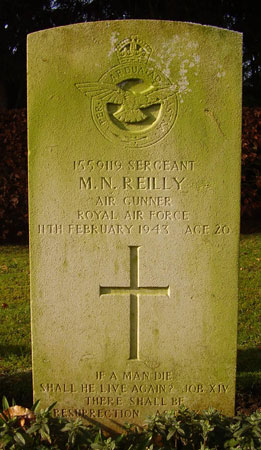
On 26th February 1942, Pilot F/Sgt Reginald Francis Robb and 5 crew of Wellington bomber Z8536 took off from RAF Pocklington and crash landed at Yapham due to an engine fire. They jettisoned their bombs, but were caught in the blast and all the crew were lost. 4 are buried in Barmby Moor.
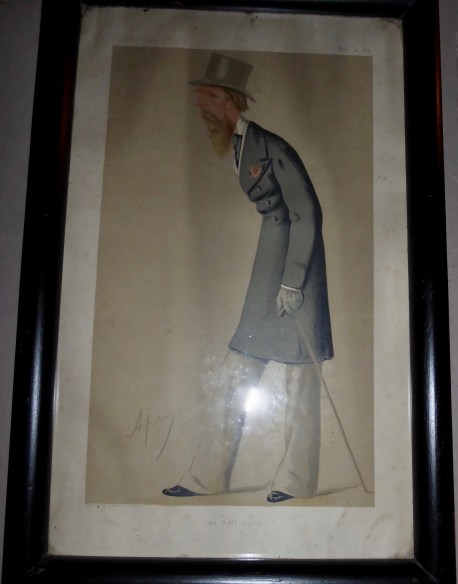
Christopher Sykes MP

February 25th

On 25th February 1325, Nicholas le Couper conveyed property in Aldegate, abutting on ‘Wycote Dyk’, to Robert de Preston, draper.

On 25th February 1803, Burnett’s Daily Shipping List reported the arrival of 1 ship from Wells (Wells-next-the Sea, Norfolk?) and 14 ships left the port, for the Davis Straits, London, Lisbon, Rotterdam, Hamburg, Valencia, and Amsterdam.

On 25th February 1862, Miss Turner and Miss Broadley paid for the building work, and donated the land, for Turner Court, Midland Street, Hull. This is the only example of Model Dwellings built outside London by the Labourer’s Friend Society, (founded by Lord Shaftesbury) which became the Society for Improving the Conditions of the Labouring Classes. The first tenants of flat No 8 were James and Mary Ann Adam, 38, their 9 children and 1 grandchild.

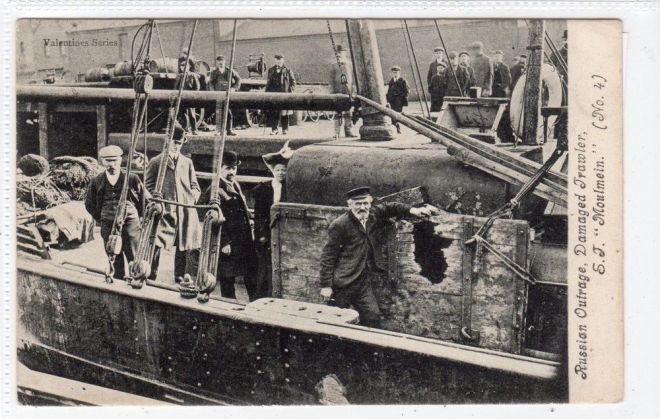
On 25th February 1905, an International Commissionin Paris reported that the Russian Rozhestvensky did all he could to prevent Hull trawlers being fired on in the “Russian Outrage’ (also known as the Dogger Bank Incident’) which killed 3 Hull men. Russia voluntarily paid £66,000 to the fishermen.

On 25th February 1971, Rupert Alec-Smith, Lord Mayor of Hull, formally opened BBC Radio Humberside.

Russian Outrage

February 23rd

On 23rd February 1643, Queen Henrietta Maria was woken at 4a.m. in Bridlington Quay by a bombardment of the house by Parliamentary ships; she sheltered in a ditch until the ebb tide moved the ships out of range.

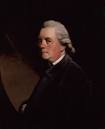
On 23rd February 1724, William Mason was born at Holy Trinity vicarage, Hull. A poet, biographer, composer and garden designer, in 1785 he was  William Pitt the Younger’s  choice as Poet Laureate,  but he refused the post. He is commemorated in Poets’ Corner, Westminster Abbey, and in Hull with a cream plaque. (d 7.4.1797) see picture below

On 23rd February 1830, a report in the Hull Packet said that Revd John Earle’s boarding school at Driffield had been relocated to Watton Abbey, the stately home of the Legard family. It remained there for 10 years, and Earle took on the living at Watton church.

On 23rd February 1919, Company Sgt Major Kelly died of flu in Hull Royal Infirmary. He had been discharged from the East Yorkshires a week before, after serving in WW1 from September 1914. He is buried in Hedon Road cemetery.

Wm Mason

February 20th

On 20th February 1889, ‘Riding the stang’ took place in Hedon, for the 3rdconsecutive night, for a man who beat his wife; a procession sang, shouted, hit pans, banged drums and whistled and finally burned the man’s effigy on Market Hill. Also known as charivari, skimmington, or rough music in other areas.

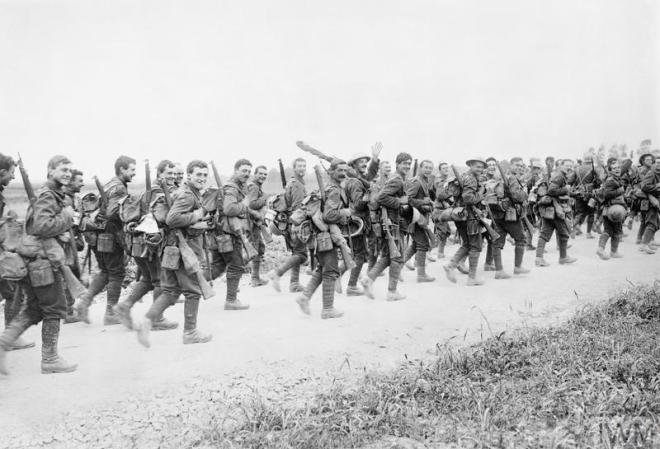
On 20th February 1918, former Reckitt’s employee Private George Charlton, 32, was killed in action on service with 11thEast Yorks (2ndHull Pals). Buried Roclincourt, France. photo (Imperial War Museum) shows some of the Hull PALS.

Hull PALS

February 19th

Pilgr Grace

On 19th February 1408, Henry Percy, 1stEarl of Northumberland, was killed in battle against King Henry IV, after supporting Edmund Mortimer’s claim to the throne. The Percies held lands across Yorkshire, the Lakes and Northumberland, but their main seat appeared to be Leconfield until the 16thC.

On 19th February 1499, William Fechet of Harpham claimed sanctuary at St Cuthbert’s church, Durham, for assaulting William Fox on 22ndOctober, striking him in several places with a sword; he assumed that Fox had died from his wounds, and fled.

On 19th February 1537, Sir Ralph Ellerker, the elder, chased Sir Francis Bigod and his men out of Beverley, and took 62 prisoners, who were taken to Hull. Bigod escaped. This appeared to be the end of the Pilgrimage of Grace in East Yorkshire.

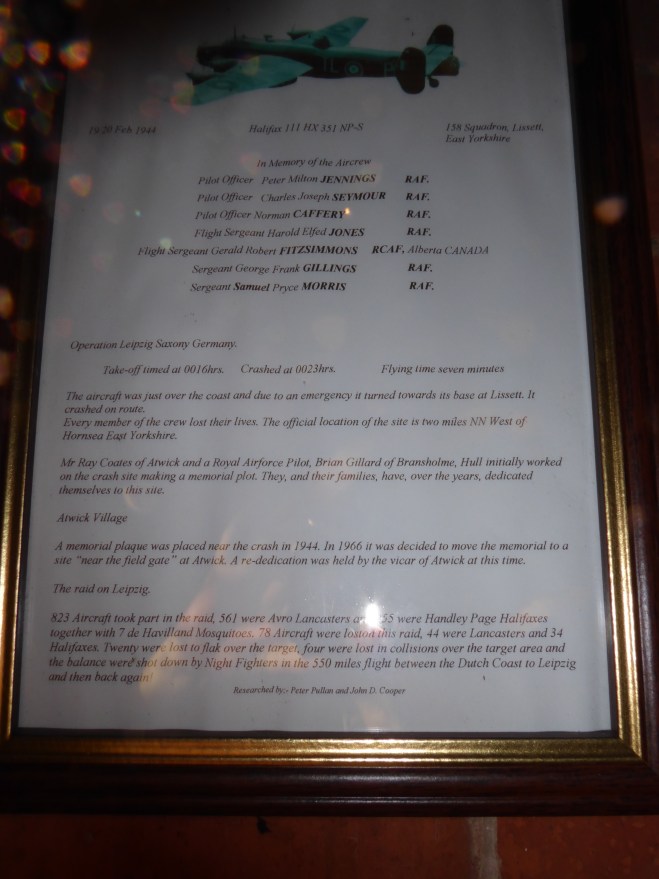
On 19th February 1944, a Halifax bomber crashed 2m NNW of Hornsea shortly after take-off, killing all 7 crew. Photo -notice in Atwick church. Sadly, I was unable to find the memorial.

Atwick Halifax crash

February 18th

Pilgr Grace

On 18th February 1537, Sir Francis Bigod entered Beverley with 3-400 men on the renewed Pilgrimage of Grace.

On 18th February 1620, The King’s Players performed 5 plays at Londesborough House over a 4-day period at Shrovetide, for the Earl and Countess of Cumberland. The Cliffords regularly had entertainment at the house, hosting 13 different companies of players, and many musicians. Shakespeare had been the company’s leading playwright (he died in 1613).

On 18th February 1657, Sir Henry Slingsby, a Royalist prisoner in the Hull blockhouse, attempted to bribe Captain John Overton and incite the soldiers to go over to the King. Ralph Waterhouse, commander of the South Blockhouse, was also approached by Slingsby, who said that King Charles had offered him a commission, and said 600 men were at Paull ready to march into Hull. Slingsby was executed in 1658.

On 18th February 1786,  Elizabeth Dearing, aged 20, died in Fitling, cause unknown. She was the 3rdgeneration of the Dearing family to be recorded in the Humbleton parish register as Papist. Later generations who died there are not so described.

On 18th February 1945, Thomas Sheppard died aged 68 in Hull. He was a self-taught geologist, archaeologist and prolific author. He devoted 40 years of his life to Hull’s museums, abolished admission charges in 1902 and increased visitors to 2,000 per week. (born 2.10.1876 in South Ferriby) see photo

Thomas Sheppard Monster Footprint

February 17th

On 17th February 1646, Christopher Hildyard of Winestead was fined £109 as a former Lieut – Col in the Royalist army (a ‘delinquent’) in order to recover his goods which had been sequestered by Parliament.

On 17th February 1803, Burnett’s Daily Shipping List recorded that no ships arrived or departed in Hull on that day (apart from the ferry to Barton).

On 17th February 1821, Robert Sharp junior, an unemployed bricklayer’s labourer from Hull, gave evidence in the hearing of a petition in the House of Commons. Colonel John Baillie, MP for Hedon, was accused of bribery and corruption in the 1820 election. Sharp claimed to have spent the 2 weeks prior to election day at the Charles Saunders Inn (now the Shakespeare), eating and drinking at the expense of the candidate and finally, on election day, receiving 2 guineas from James Iveson, Baillie’s agent, for making himself ‘generally useful’.  William Mason also gave evidence of being offered 12 guineas by James Iveson, political agent for Col John Baillie, if he would vote for him. Baillie’s election was confirmed.

On 17th February 1961, Angela Eagle, MP and Maria Eagle MP were born in Bridlington. The Labour MPs are the first set of twins to sit in the House of Commons.

Eagle MPs copy


February 14th

On 14th February 1763, Mr Newmarch, lighthouse keeper at Spurn Point, reported to his employer that the low light had ‘washed down wholly all together’.

On 14th February 1792, Thomas Wilson, son of a lighterman, was baptised at Dagger Lane Independent Chapel, Hull, He became a clerk, then salesman, set up a business  importing iron, and eventually became owner of Thomas Wilson, Sons & Co, the beginning of the Wilson Line, a multi-national business; his son Charles became Lord Nunburnholme.

On 14th February 1803, Burnett’s Shipping List reported the departure of the first whaler leaving for the fishing grounds that season: the Adventure, captain’s name Gibson, headed for the Davis Strait, got into the roads, but it was a week before it got under way. 5 other whalers left in February, followed by 33 in March. 2 other Hull whalers, the Thomas and the Lynx, appear not to have sailed that season.

On 14th February 1927, 12 Rail passengers died in a head-on rail collision near Hull Paragon Station; 40 others were injured. The outgoing Hull to Scarborough train was put on the same track as the train arriving from Withernsea.

TrainCrash1927

February 12th

On 12th February 1519, tailor William Bowman of Sewerby claimed anctuary in Flambrough parish church after assaulting William Johnson. At a coroner’s inquest at Bridlington 2 days later, the jurors reported that Bowman assaulted and killed Johnson with a staff on the king’s road between Sewerby and Bridlington, then fled to ‘Flaynburgh’. The King’s Bench declared Bowman an outlaw on 27.12.1519.

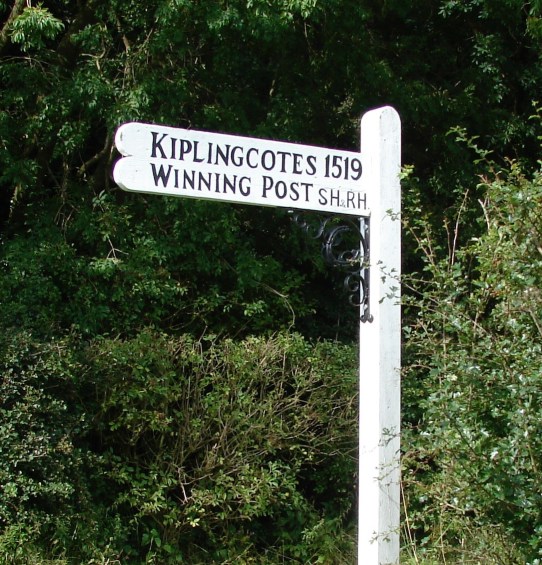
On 12th February 1556, in evidence given in court at York, Thomas Carter of Helperthorpe, 40, herdsman, made the first recorded reference to England’s oldest horse race, Kiplingcotes Derby.

On 12th February 1644, Sir William Constable of Flamborough led Parliamentary troops to capture the Royalist garrison at Bridlington, and took 159 prisoners. On their way back to Hull, they won a skirmish against the Royalists at Driffield.

On 12th February 1687, John Johnson, Rector of Cherry Burton recorded in his diary an earthquake at 3.45 on a Sunday afternoon.

Kiplingcotes

February 11th

On 11th February 1346, William de la Pole agreed to resume lending money to King Edward III, in return for the return of all his goods that were in the hands of the sheriff. Relations between the king and his banker were precarious, but he remained in favour for the time being…

On 11th February 1657, Thomas Cowlam, labourer, and Jane Millington were married in a private alehouse at Spaldington by Robert Browne, vicar of Eastrington.

On 11th February 1941 at 5.30p.m., an anti-aircraft shell fell in Jalland Street, Hull, with no casualties. The blitz on Hull reached its peak in May that year.

On 11th February 1943, Flt Sgt 785073 Harold E.R. Saunders died with 6 other crew (1 survived) when mechanical problems caused his Halifax bomber to crash near North Dalton, shortly after taking off from Pocklington. 6 of them are buried in Barmby Moor churchyard.

Halifax crash Feb 43