Coming up this week

March 17th

Kiplingcotes

On 17th March 1646, Henry Hildyard of Winestead was fined £4,660 as a Royalist (a ‘delinquent’) in order to recover his goods which had been sequestered by Parliament. (He had been a  Colonel of the trained bands which formed King Charles’ bodyguard for about 2 weeks in 1642, then retired to Surrey for the rest of the war). The fine was later reduced by half in payment for Hull Manor House which had belonged to him and which Parliament had given to the town of Hull.

On 17th March 1930, Judith Patricia (Pat) Albeck was born in Hull to Polish migrant parents. She was an award-winning designer of textiles and ceramics, known for her work for the National Trust. She is commemorated in Hull with a cream plaque. (d 2.9.2017)

On 17th March 1945, a cinema queue outside the Savoy Cinema, Holderness Road, Hull (the site is now Boyes store) was bombed and strafed; 12 people were killed, 22 wounded.

On 17th March 1966, Barbara Foster fFailed to win the Kiplingcotes Derby when her horse collapsed and died.

Pat Albeck


March 16th

Kiplingcotes

On 16th March 1589, Robert Dalby (or Drury), priest, was executed for treason as a Catholic priest. Born in Hemingbrough, he was a Protestant minister, then ordained as a Catholic priest at Chalons in 1588, and was arrested on landing at Scarborough.

On 16th March 1660, the ship of Richard Williamson of Scarborough rammed the dolphin at the entrance to the River Hull, and was sunk. Trinity House was entitled to charge for repairs, but were lenient and only fined him £3.

On 16th March 1695, John Roxby & John Field (Ferriby) and Henry Watson and Benjamin Galland (Swanland) were chosen by the parish as Overseers for the Highways for the following year, Ferriby and Swanland being in the same parish, but choosing separate officers.

On 16th March 1879, Colonel Sir Tatton Benvenuto Mark Sykes, (usually known as Sir Mark) was born in Sledmere. He was a traveller, author, MP for Hull Central, advisor to the Government on Middle East affairs, and co-author of the Sykes-Picot Agreement, which partitioned the Ottoman Empire. (died of flu 16.2.1919)

On 16th March 1939, Jean Farrow of Hull was the first ever female winner of the Kiplingcotes Derby, on Masterful.

Sykes-Picotagmt1916


March 15th

On 15th March 1471, King Edward IV’s army regrouped at Kilnsea, but met resistance in Holderness, with 6,000 men led by Sir John Westerdale, vicar of Keyingham, and/or Martin de la See, Lord of Barmston; Westerdale was later imprisoned in the Marshalsea. Edward was allowed to pass to Hull, where Mayor John Tutbury shut the gates and refused to let him in. From there Edward proceeded to York via Beverley.

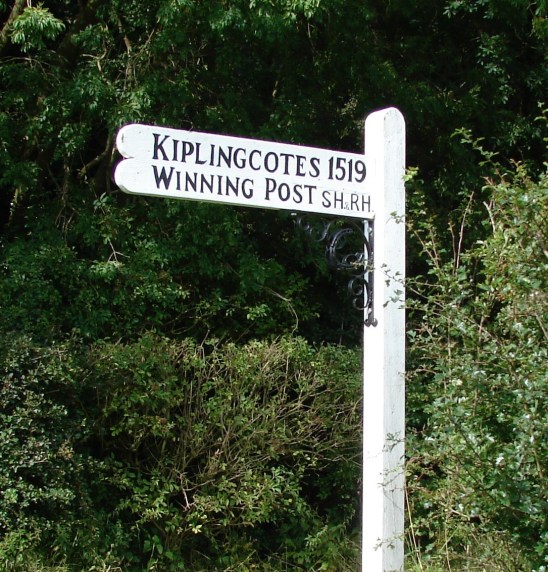
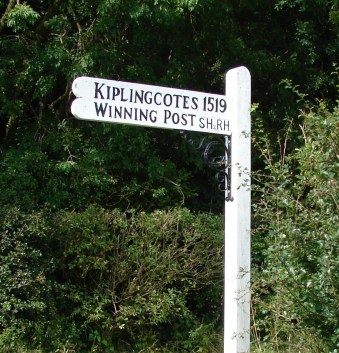
On 15th March 1618, the 1strecorded Kiplingcotes Derby was run; it is said to date back to 1519.  The winner receives £50, but the 2ndreceives the sum of the entry fees, which may be much more.  Even in wartime, severe weather or foot and mouth outbreaks, at least 1 horse has completed the course to ensure the continuity of the event.  In 2018, due to flooding, one rider walked the course. Race rules state that if the race is not run one year, it must never be run again. https://www.youtube.com/watch?v=SJu7HI3SXIc

On 15th March 1783, Thomas Perronet Thompson was born in Hull. He was an anti-slavery activist, MP, businessman, soldier, author and first governor of Sierra Leone (d 6.9.1869)

On 15th March 1979, Helen Grocock, 13 years, failed to win the Kiplingcotes Derby when her pony collapsed and died a few yards from the finishing post.

On 15th March 2001, Farmer Stephen Crawford was the only participant in the Kiplingcotes Derby, due to foot and mouth disease. Course clerk Sue Hillaby appealed to people to stay away.

Kiplingcotes
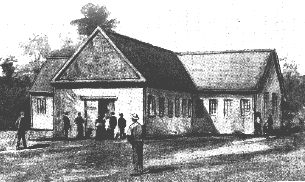
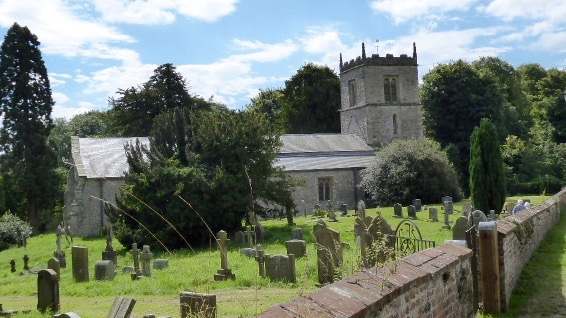
East Yorkshire monuments – the country’s oldest horse race at Kiplingcotes. The winner’s prize is worth less than 2nd prize.

March 14th

On 14th March 1293, as part of the process of creating his new port of Kingston upon Hull, King Edward I had Myton valued, at £24 8s a year, including 2 windmills, a grange, a sheep farm, arable land and 2 areas called Southwick and Milnwick.  He purchased lands in both Wyke and Myton from Meaux Abbey, but it took many years before they were content that they had been suitably repaid.

On 14th March 1471, during the Wars of the Roses, King Edward IV landed about 2,000 men at Ravenspurn when a storm drove them into the Humber for shelter. Some ships landed as far west as Paull.

On 14th March 2013, Norman Collier died aged 87. Comedian, famed for TV stand-up routines, including the ‘faulty mic’. (b 25.12.1925 in Grotto Square, Mason Street, Hull)

normancollier

March 13th

On 13th March 1640, on instructions from the Duke of Northumberland, Sir Edward Osborne, for the Council in the North, arranged for 2,000 horse and men to be quartered in and around Hull, together with arms for them.

On 13th March 1801, Hull Trinity House sent a further 6 North Sea Pilots to Yarmouth to support the naval attack on Copenhagen.

On 13th March 1827, Revd Richard Johnson died, aged about 71. Known as Australia’s First Preacher, he and his wife Mary joined the first Fleet, and he became chaplain to the prison colony of New South Wales in 1786. They created a school and both taught up to 200 children. He returned to Hull in 1800 and was curate to Rev Thomas Dykes at St John’s church for a time. (B Welton c1756) picture shows Australia’s first church, built by Richard Johnson in 1793

On 13th March 1942, Alexander Gallacher, 37, donkeyman, of Hull, died by enemy action, whilst a merchant seaman on board SS Destro, of Hull, off Tobruk.

first-church-Aus1793

March 12th

On 12th March 1511, Elizabeth Nelson, spinster of Pollington, claimed sanctuary at the church of St John, Beverley, for felony and murder of an infant (possibly her own child) at Hull.

On 12th March 1553, on the surrender to King Edward VI of the castle and fortifications at Hull, the King granted to Ralph Constable former monastery lands in Swine, Newton Grange, and all the extensive lands formerly belonging to the dissolved Hospital of St Sepulchre, Hedon. He was also the tenant of the site of Hull Charterhouse.

On 12th March 1622, Josias Lambert, schoolmaster, left the employment of Francis Clifford, Earl of Cumberland, after 9 months teaching ‘scholars’, which may have included some of the Londesborough House household staff and/or their children. The Earl also supported the village school at (Market) Weighton. photo shows Londesborough church

On 12th March 1647, Sir Matthew Boynton died at Bainton aged 56. Sheriff of Yorkshire twice, MP twice (once for Hedon and once for Scarborough), 1stBaronet, of Barmston. He helped capture Sir John Hotham when he intended to surrender Hull to the Royalists. His son Colonel Matthew Boynton was killed fighting for the Royalists in the Battle of Wigan Lane in 1651. (bapt 26.1.1591)

On 12th March 1697, the Brethren of Hull Trinity House charged almost £21 for the launch of the 60-gun Royal Navy ship HMS Kingston from Hessle. Work included laying buoys from the launching site to Hull.

Londesborough

March 11th

bearward

On 11th March 1214, Hawise, Countess of Aumale and heir of the Seigniory of Holderness, died single, having been widowed 3 times.  In 1212, she refused to marry for a 4thtime, for which she had to pay a fine to King John of 5,000 marks (about £1700) (some sources say she died before 8.3.1214)

On 11th March 1296, John Romanus (John le Romaine) Archbishop of York, died aged about 66 in the Archbishop’s Palace, Bishop Burton; he was buried in York Minster. He protected poor villagers in 1286 by ordering his parish priests in Holderness not to demand tithes from those earning 5shillings a year or less.

On 11th March 1522, Beverley bearward John Grene was tried for slander, by calling Percevall Robson, draper, a ‘Scottish bird’. Grene apologised for speaking in anger, and was rebuked and forgiven by Robson.

On 11th March 1616, Father Thomas Atkinson was hanged, drawn and quartered at York Castle at the age of 70. Born in the East Riding and trained in Douai as a Catholic priest, Atkinson spent 30 years as an itinerant priest in the Howden area, ministering to local Catholics, and hiding in their homes. He was captured in the Vavasour house in Willitoft. He was beatified 1987. A young man at the execution bought the priest’s stockings from the hangman, as a holy relic. Identified as a Catholic, he was imprisoned.

On 11th March 1858, Brother John of the Yorkshire Catholic Reformatory took some boys, for a treat, to slide on the ice-covered Market Weighton Canal; 5 boys fell through and, attempting to save them, he also fell through the ice. They all had to be rescued by passing bargemen.

On 11th March 1859 at 6a.m., ostler John Sissons was found hanged in one of the stables of the George & Dragon Inn, Aldbrough. He was described as an aged man of respectable family. The inquest verdict was of suicide due to temporary insanity.

March 10th

Holy Trinity

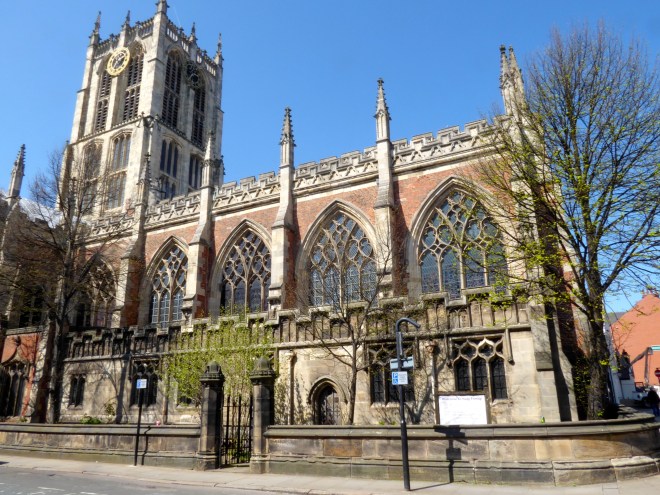
On 10th March 1425, Hull Holy Trinity Church, was consecrated; building began in 1291 and was interrupted by the Black Death.

On 10th March 1447, Henry VI issued a charter enlarging the county of Hull to include Hessle, North Ferriby, Swanland, West Ella, Kirk Ella, Tranby, Willerby, Wolfreton, Anlaby, the site of Haltemprice Priory and Derringham Dike.

On 10th March 1623, George Tummond, butcher, of Patrington, was found dying at sunrise in Winestead, after starting to walk home from the alehouse in Ottringham. Holderness was notorious for its floods.

On 10th March 1800, George Hudson, the “Railway King’, was born in Howsham.  He  made a great business and political career from sharp practice and bribery (was MP for Sunderland, and Lord Mayor of York). He became hugely rich, but was disgraced, and imprisoned for debt, though released when his debts were paid by public subscription. In 1845, he bought the Londesborough Estate for £470,000. D14.12.1871

On 10th March 1823, John Bacchus Dykes was born in Hull. By the age of 10, was assistant organist at St John’s Church, Myton. Became a vicar, and composed over 300 hymn tunes, including ‘Eternal Father, Strong to Save’ and ‘We plough the fields and scatter’. (d 22.1.1876)

On 10th March 1921, Mr J.H. Tate proposed a motion at Hornsea Golf Club that ’Old Jack be shot’! It is assumed Old Jack was the horse used to pull mowers and rollers on the course.

On 10th March 1954, Alex May, master of the tug Fenman, died in hospital after the tug was overrun by the ship she was towing, the Rudolf, and sank, on the way into Hull’s Alexandra Dock. 2 of the crew were swept away. There was 1 survivor.

March 9th

Trinity House

On 9th March 1767, Beverley Coroner’s Court jury found  (James?) Brown, aged 30, guilty of poisoning his wife, aged 45 and of independent means. Brown appears to have escaped to London, but was arrested and found guilty, his sentence commuted to 7 years’ transportation.

On 9th March 1801, at the request of the Admiralty, Hull Trinity House sent 12 Hull men as North Sea pilots to support the naval force at Yarmouth preparing to attack Copenhagen.

On 9th March 1858, servant Sarah West was overtaken by a severe snowstorm at Newbald Wold whilst returning from a visit to her parents in Market Weighton; she was under a snowdrift for 2 days, but was discovered by a shepherd and nursed back to health.

On 9th March 1984, Christopher Laverack, aged 9, of Anlaby, disappeared from his sister’s home, and his body was found in Beverley Beck 2 days later. It was not until 2012 that the murder enquiry was closed, when police identified his uncle, Melvyn Read, as the killer. Read had died in 2008.

March 8th

On 8th March 1517, Thomas Tode, cutler, of Beverley, claimed sanctuary at the church of St John, Beverley, for theft.

On 8th March 1517, Thomas Stokell, 19, boatsteerer on the Hull whaler Three Brothers, received a certificate of protection from impressment, certifying that he was a seaman having completed 3 voyages in the Greenland Trade and could not by law be pressed into the Navy.

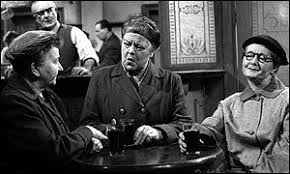
On 8th March 1897, Kathleen Mary Margaret Bryant was born in Hull. As actor Margot Bryant, she played many parts on stage and screen, but won fame at the age of 63 in the role of Minnie Caldwell on Coronation Street (on left in photo). died 1.1.88

On 8th March 1939, George H. Newton, 2ndengineer, and 8 other crewmen, were lost when the returning Hull trawler Lady Jeanette grounded on a sandbank on her way into dock.

Margot Bryant