January 28th

On 28th January 1450, William de la Pole, Duke of Suffolk, was arrested and imprisoned for treason. King Henry VI saved him from execution and banished him for 5 years. On his way to Calais, he was captured and reportedly had his head cut off with a rusty sword.

On 28th January 1515, William Jakson of Belby, near Howden, claimed sanctuary at the church of St John, Beverley, for the murder of John (rest of name blank in the register).

On 28th January 1525, Robert Smyth, husbandman of Anlaby, claimed sanctuary at the church of St John, Beverley, for the murder of Robert Ekopp alias Hikkopp.

On 28th January 1700, Abraham de la Pryme, curate of Holy Trinity, Hull, reported of Swine that: ‘the town has formerly been very large and handsome, … though it is very mean and inconsiderable, nobody inhabiting the same but a few country clowns’.

On 28th January 1829, William Hurr of Roos was admitted to the Sculcoates Refuge for Pauper Lunatics; on 21 July that year his funeral is recorded.
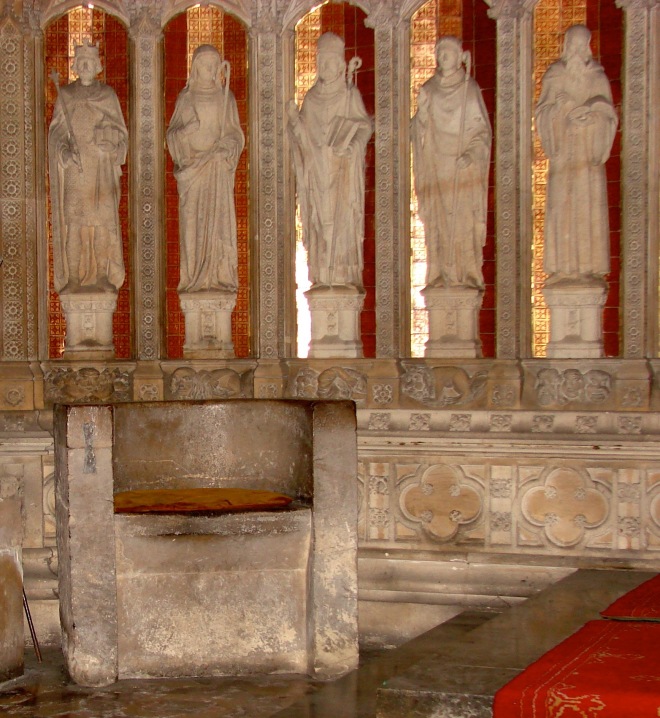
minster - frith stool.JPG

January 27th

Pilgr Grace

On 27th January 1332, Sir John de Sutton was summoned to Parliament by writ and thereafter become Lord Sutton of Holderness.

On 27th January 1537, John Hallam and others captured during the attempt by the Pilgrimage of Grace to seize Hull were examined by local justices; Hallam and 2 others were condemned to death and the rest awaited the arrival of the Duke of Norfolk for a decision on their fate.

On 27th January 1599, the Earl of Pembroke’s Players arrived at Londesborough House for a week performing plays for the Shrovetide period, for payment of £15shillings.

On 27th January 1645,  14 Hull burgesses gave evidence that Thomas Swann was  not a Royalist, and should not have his property sequestered, but in fact was owed money by Parliament because his new house was demolished to build a defences for the town. His appeal failed.

On 27th January 1882, the Prince of Wales, the future King Edward VII, joined the Holderness Hunt at Brantinghamthorpe, which recorded 1,400 horsemen, 4,000 on foot and 1,000 in carriages.

On 27th January 1901, Joseph Smith of Hull, on board SS Friary, was the 7thand last Hull passenger to have died of pneumonic plague contracted in the Mediterranean. He is commemorated in the columbarium at Hedon Road Cemetery.

On 27th January 1924, Brian Norman Roger Rix, Lord Rix of Whitehall in the City of Westminster and Hornsea in Yorkshire,  was born in Cottingham. He was a comic actor, specialising in Whitehall farce; awarded CBE for his charity work; campaigner for people with learning disability. He was also awarded 8 honorary degrees, 5 fellowships and many other awards, and was the first Chancellor of the University of East London, and vice Lord Lieutenant of Greater London. d20.8.2016


January 25th

On 25th January 1201, King John and Queen Isabella visited Cottingham and Beverley on their way to Driffield, where they stayed on 27th.

On 25th January 1582, Christofer Danbroke, Hull merchant, and John Whelpdaile, draper, were fined 10shillings and 6s8d respectively for buying herrings from a Scottish ship, against the port regulations.

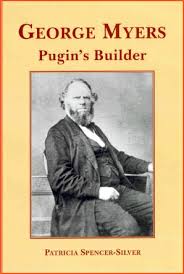
On 25th January 1875, George Myers died aged 72 in London. A Hull-born builder with a national reputation, particularly for his work with Pugin; he was involved in restoring Holy Trinity, in erecting the Wilberforce column, and in building the Royal Pavilion at Aldershot for Prince Albert.  His blue plaque is at 131 St George’s Road, London SE1. (b1803)

On 25th January 1886, Hull Philharmonic Society adopted a rule that evening dress be compulsory at concerts in the body of the hall.

On 25th January 1898, Mr Good and 19 other Hornsea gentlemen met at Fairfield’ Cliff Road, Hornsea, to form Hornsea Golf Club, and invited Capt F.C.S. Constable of Wassand Hall to become its President. The first ground was at Old Hall Fields.

George Myers

January 23rd

On 23rd January 1221, William de Forz II, Count of Aumale and Lord of Holderness, was excommunicated for the second time, for rebelling against the King, fortifying castles which were not his, and failing to fulfil a vow to go on crusade.

On 23rd January 1803, Burnett’s Shipping List reported 5 ships arriving in Hull from London that day; the Hope had lost an anchor and cable, and the Manchester had lost an anchor. 2 ships sailed for Yarmouth, 1 for Shields, and 1 for London.

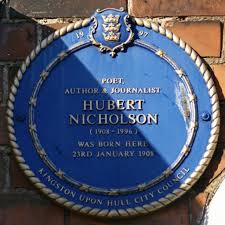
On 23rd January 1908, Hubert Nicholson was born in Washinton Street, Hull. He was a journalist, poet and novelist, best known for “Sunk Island’ 1956. He took holidays in the Holderness marshes, the strong attachment to the area being reflected in his writing.       d Epsom 11.1.1996 Commemorated by a blue plaque.

Hubert Nicholson

January 14th

On 14th January 1180, Hawisa, Lord of Holderness, of the county of Aumale in Normandy, with lands in several English counties, the barony of Copeland and the honour of Skipton, and one of the richest women in the country, was married by Henry II to William de Mandeville, Earl of Essex.

On 14th January 1642, Sir John Hotham arrived in Hull to take up the post of Governor, and was refused entry at Beverley Gate by the Mayor, Thomas Raikes. A messenger was sent to Parliament, who ordered the Mayor to accept Hotham and his forces, and to resign his post, or face a charge of high treason.  Hotham was admitted.

john-hotham-1-sized


January 13th

On 13th January 1096, King William Rufus found Count Odo, Lord of Holderness, guilty of a plot to kill the King and place his son Stephen (William I’s nephew) on the throne; Odo got off lightly with loss of his lands, and Stephen went on crusade. Holderness was granted to Arnulf, son of Earl Roger of Salisbury.

On 13th January 1621, Stephen Doughton left his job as servant of the Francis Clifford, Earl of Cumberland, and received 2 years’ arrears of wages, a total of £5 6s8d. The family was short of cash, and servants were often not paid until they left the Earl’s employ.

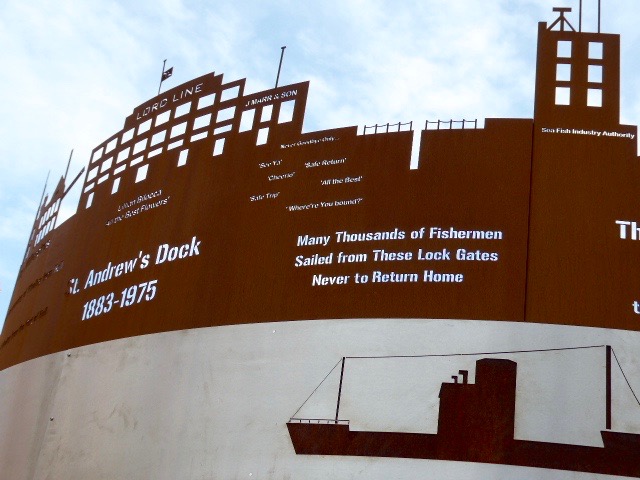
On 13th January 1954, the crew of Flamborough lifeboat Friendly Forester saved the 3 crew of the fishing coble Silver Line.

On 13th January 1968, a liferaft belonging to the St Romanus of Hull was found.

St Andrews Dock memorial
Zebedee’s Yard


January 3rd

On 3rd January 1293, a jury set up by order of King Edward I found that the Abbot of Meaux owned most of the town of Wyke on Hull, with Lords Furnivall and Vescy owning smaller parts. They found 74 tenants, and that the Abbot held court there, and that there was space used for fairs and a market.

On 3rd January 1319, King Edward II issued orders at Beverley for defence against the Scots.

On 3rd January 1629, Francis Clifford, Earl of Cumberland, during a typical festive period for the Londesborough household, 84 staff were feasted, with 315 extra dinners and 251 extra suppers being served to tenants and guests during Christmas Week. The York Waits provided musical entertainment, in addition to the house musicians. photo shows the site of the house

On 3rd January 1933, Harry Anderson, age 19, deckie learner, of Edith Grove, Brighton St, Hull, died with 9 other crew of the trawler Endon (H161), after vessel found abandoned after a collision. Trawler Stronsay picked up his body, but superstition about having a corpse on board led them to return his body to the sea.

Londesborough Park

December 31st

On 31st Dec 1458, Robert Foster enrolled into post as Collector of Customs, joining existing staff Thomas Everyngham (Collector) and Thomas Maygne (Controller).

On 31st December 1501, William Croswet of Hull claimed sanctuary at the church of St John, Beverley, for debt.

On 31st December 1511, Audrey, or Etheldreda, spinster from Lincolnshire, claimed sanctuary at the church of St John, Beverley, for a felony; the register gives no detail of her offence.

On 31st December 1626, the Council of the North summoned a representative of the Hull Corporation to appear and explain Hull’s failure to provide ships ordered. (Under Charles I’s unpopular Ship Money tax, Hull was required to provide the cost of 3 ships in 1626, and appealed against the decision, saying it was too much).

On 31st December 2007, new research revealed that the Hell’s Gate, Hunsley archaeological dig site site was an Anglo-Saxon execution cemetery (mid 7thC to early 11thC). The heads would have been displayed on posts  at the site between Welton and Cave. 12 male Anglo-Saxon skeletons, 10 of them headless, were found in a Bronze Age barrow in the 1960s, and known as the Walkington Wold burials.

Hell's Gate

December 26th

On 26th December 1220, William de Forz II, Count of Aumale and Lord of Holderness was with King Henry III at the Royal court at Oxford; the King made an appointment William hoped to get; disappointed, he left Oxford for Lincolnshire, and began a rebellion, known as the war of Bytham.

On 26th December 1489, George Gusterd, weaver of Bishop Burton, claimed sanctuary at Beverley for the murder of a servant of Edward Barnaby, a gentleman. He did not know the servant’s name.

On 26th December 1495, William Middleton was threatened with a pole-axe by John of Cottingham, John of Wawne, Thomas Warde, Robert Bate, and (- ) Mykill, and was so afraid for his life that he took sanctuary in Wawne church and stayed there for 10 hours, afterwards leaving the area. He applied to the Chancery Court for leave to prosecute his attackers, but the outcome is not recorded.

On 26th December 1645, Rev Nicholas Osgodby was reported to be using the forbidden Prayer Book in secret.

On 26th December 1750, the chapter house roof of Howden church collapsed, to join the rubble of the chancel which had collapsed in 1696.

On 26th December 1890, residents of Hornsea had a fair on the frozen surface of the Mere, and a sheep was roasted on the ice.

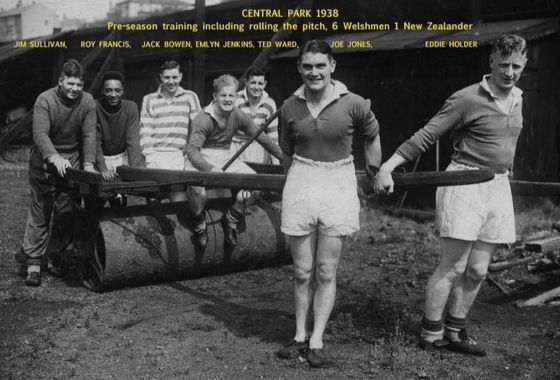
On 26th December 1955, Roy Francis played his last game after 6 years with Hull FC, and became UK’s first black professional sporting coach, and team manager 1971 to 1973.

roy-francis

December 17th

On 17th December 1216, William de Forz was given as a hostage with his mother Aveline to the new King Henry III when his father, William de Forz II, count of Aumale and Lord of Holderness, supported the barons. Presumably this was to assure the king of his loyalty, as he had been a supporter of King John.

On 17th December 1965, North Sea Ferries began operating a ferry service from Hull to Rotterdam, for freight vehicles and private cars. MV Norwave’s maiden voyage saw a force 10 gale, which caused some trailers to break free of their shackles, but damage was minimal. The sister ship Norwind joined the service in March 1966.

Norwave